
Develop plush, animal and novelty slippers from your reference image, sketch, physical sample or tech pack. UTOP helps translate your concept into a wearable sample by reviewing character proportions, fabrics, dimensional details, facial features, fit and sole construction together. Share your design priorities and fixed requirements so we can identify what needs confirmation before sampling.
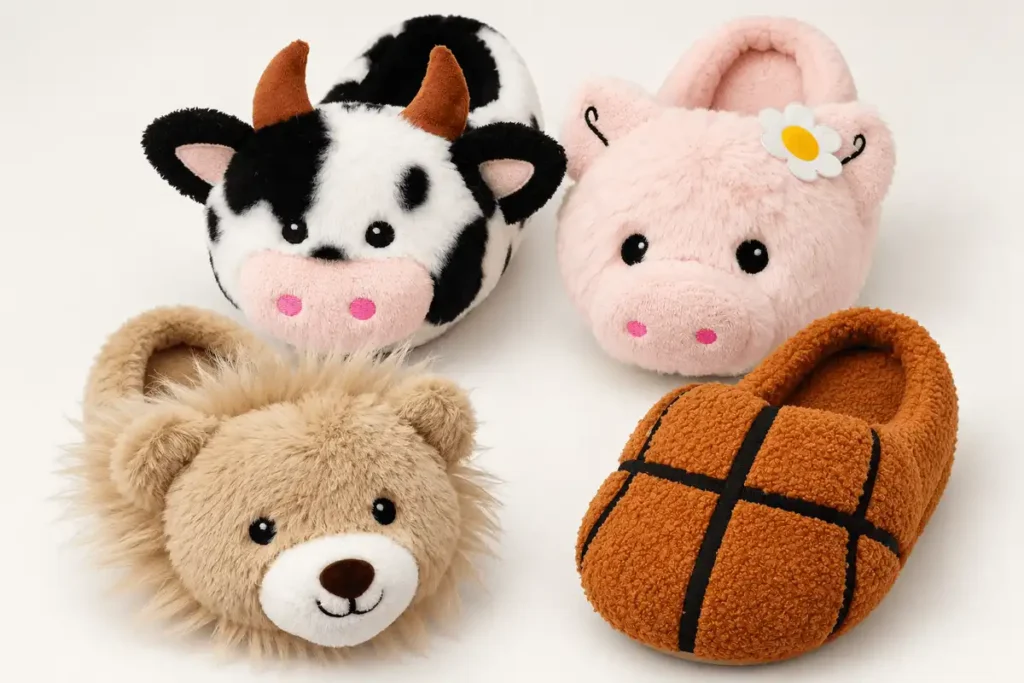
Explore how character shapes, seasonal themes and novelty concepts influence slipper development—from proportions and fabrics to dimensional details, fit and sample approval.
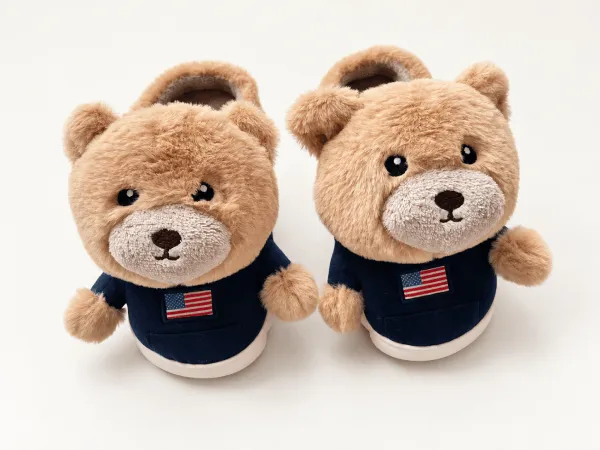
A dimensional bear head, rounded ears and arms combine with a navy clothing panel. The face gives the design its identity, while the opening and overall volume still need to work as footwear.
For a related concept, agree on head size, muzzle shape, eye position and the balance between plush and clothing details. Review the pair together so that expression and component placement follow the approved reference.
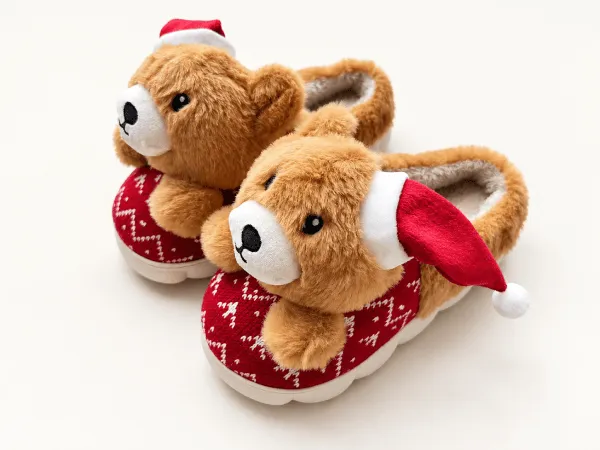
This Christmas bear direction brings together a red-and-white patterned upper, a Santa hat and plush character parts. It illustrates how seasonal details can extend beyond a colour change.
Confirm the position and size of added components, their relationship to the foot opening, and how the design should be presented in its packaging. Pattern placement and the appearance of the left and right slippers belong in the sample review.
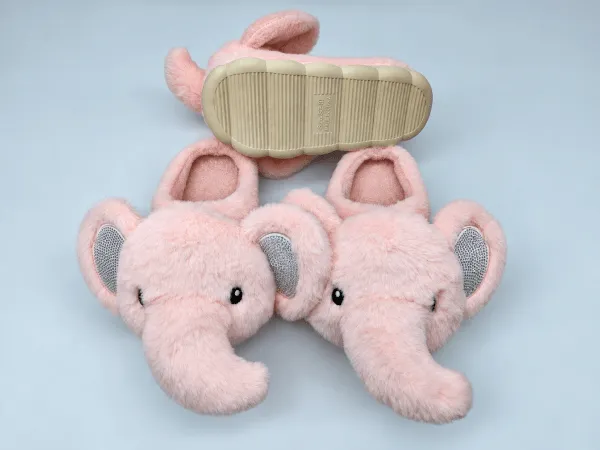
The elephant reference uses projecting trunks, broad ears and contrasting decorative panels to create a recognisable silhouette. These elements should be reviewed from the front, side and above.
For a similar direction, discuss projection length, orientation and placement alongside the intended size range. The sample review should consider clearance, wearing access and packing—not only whether a photograph resembles the concept.
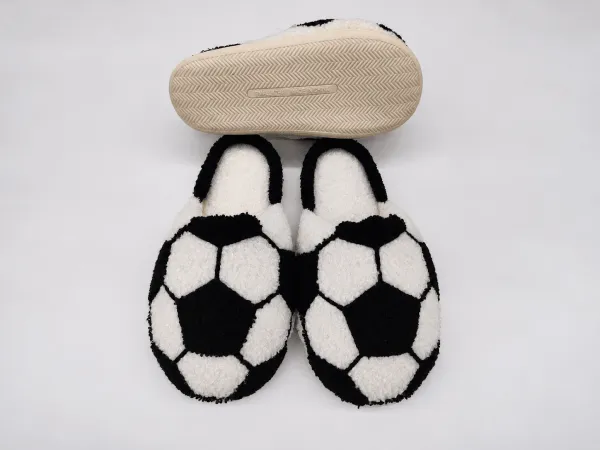
A soccer theme builds its identity through contrasting panels and a rounded outline rather than an animal face. The pattern layout and overall shape need to be considered together.
Review panel proportions, seam alignment, the opening and the appearance of the pair. The intended wearer and bottom specification should guide development; the photographed appearance alone does not establish material composition or performance.
Representative development samples only. Final materials, sizes, order quantities and production specifications are confirmed for each project.
Review the character design and footwear requirements together—from proportions and fabrics to fit, sole construction and packaging. Agree on the key details before approving the sample as the reference for production.
Identify the features that make the concept recognisable: a broad muzzle, upright ears, an oversized head or a particular outline. Agree which proportions must be preserved and where adjustments are acceptable to accommodate the opening, size range and intended use.
Pile length, direction and fabric texture can change how a face or contour reads. Select the intended surface appearance and colour combinations using suitable references or material samples. Do not assume that two similarly coloured fabrics will produce the same finished shape.
Ears, arms, tails, trunks and hats add volume and assembly decisions. Define their approximate dimensions, position and desired feel. Filling and attachment details should be reviewed in the sample, with any project-specific checks agreed before approval.
Embroidery, appliqué and printing can produce different edge definition and surface effects. Choose a method around the artwork, fabric and desired expression. Confirm scale, placement and colour on the actual sample rather than relying only on a flat illustration.
Decorative volume must leave appropriate space for the foot and access through the opening. Confirm the size reference, lining and underfoot build, then review the proposed outsole and connection method. Do not select the bottom only to match a photograph.
Raised components can change the space a pair occupies and how it looks after packing. Discuss presentation, tags and packaging early. Where appearance after unpacking matters, include that condition in the agreed sample review instead of assuming every packing format will suit the design.
Keep the review focused on the decisions that cannot be settled on a drawing alone. Record revisions clearly so that the final reference is not confused with an earlier version.
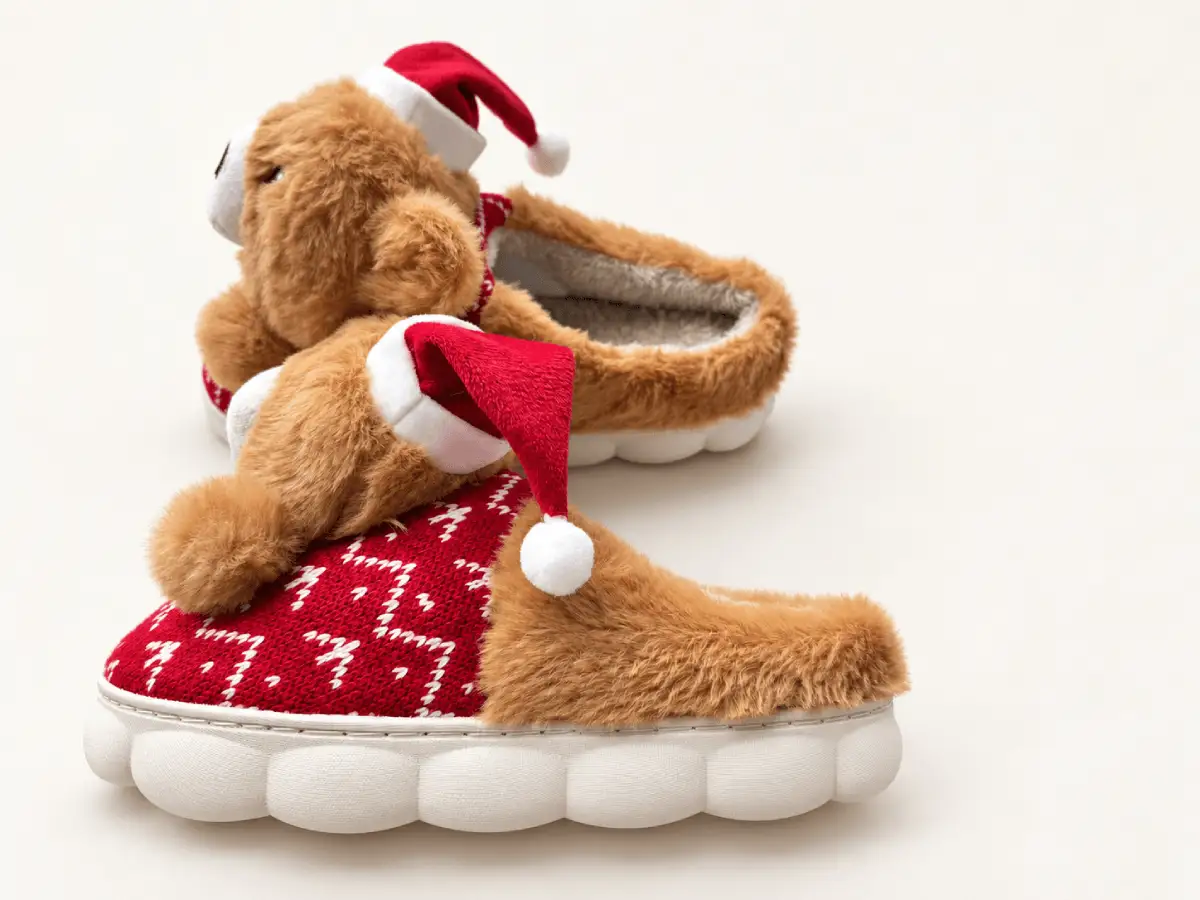
Side-view reference
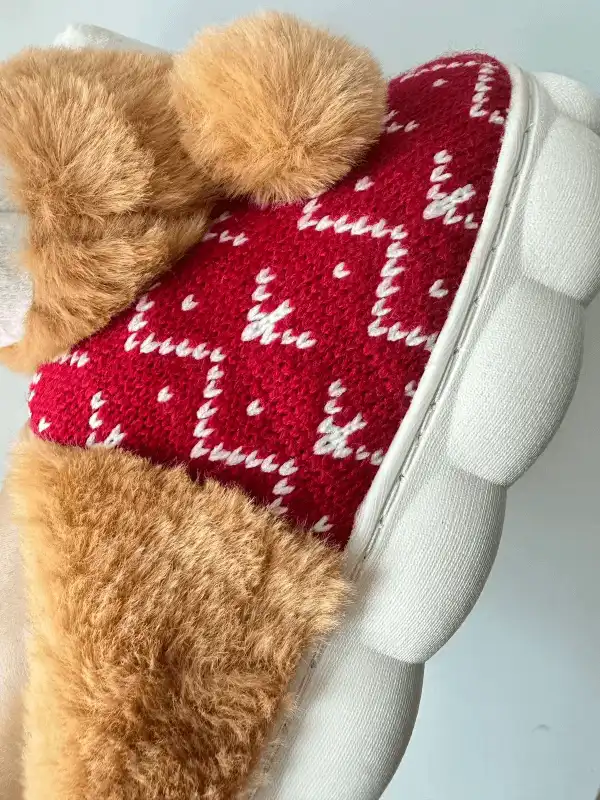
Surface and seam details
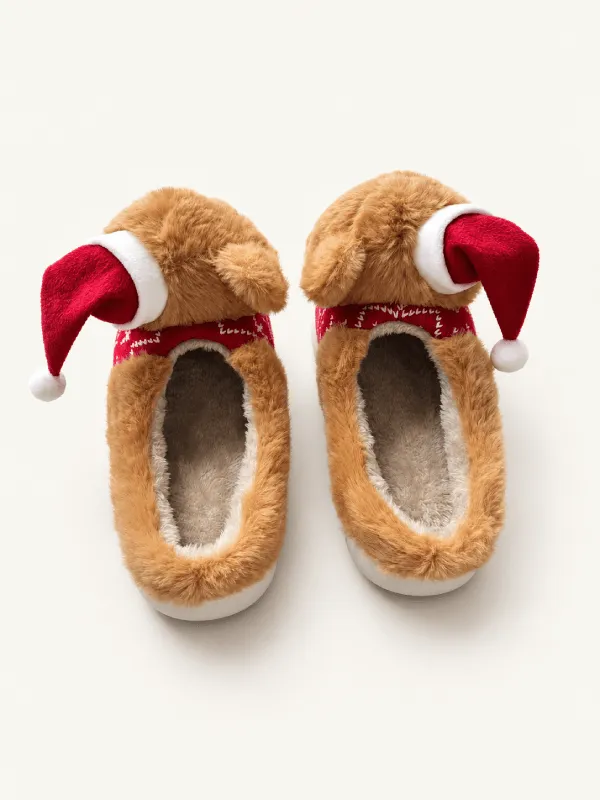
Opening and lining
Views of one representative sample—not a revision sequence or evidence of fit or tested performance.
01
Share front and side references where possible. Mark the essential shape, expression, colours and details, and identify anything that can be adjusted. If references conflict, agree which one controls each feature before developing the sample.
02
Review the silhouette, pair balance and foot opening against the intended size reference. Use photos to discuss appearance and a physical sample to assess feel and wearing space.
03
A smaller head, different pile or relocated ear can change more than one feature. Record requested changes against a dated version, then recheck the affected shape, expression, opening and assembly details when the revised sample is available.
04
Agree on the accepted physical sample and written specifications, including relevant material, size, colour, component and packing details. Record any outstanding checks separately.
For the wider enquiry-to-production workflow, see our custom slipper development services. This page focuses on character and novelty design decisions.
Confirm the silhouette, head and muzzle proportions, face placement and acceptable visual variation. Use consistent viewing angles when comparing samples.
Record the location, orientation and attachment specification of ears, arms, hats and other projections. Agree on any relevant attachment checks.
Confirm the size reference, opening and wearing space. Review left and right slippers together for the intended balance of shape, artwork and components.
Identify approved fabric references, pile appearance, lining, decorative methods and colour standards. Record substitutions for review rather than treating them as automatic equivalents.
Confirm the intended pair arrangement, labels and packaging. Include any agreed review of component appearance after unpacking.
Photographs do not establish attachment strength, sole bonding, slip resistance or other tested properties. The intended wearer, destination market and buyer requirements should guide any testing or documentation agreed for the project. Review slipper construction methods when deciding how the upper and bottom should connect.
You do not need a finished tech pack to start a discussion. A clear reference and a short list of priorities are more useful than leaving the important details implicit.
Send sketches, photos or a physical sample, with the key viewing angles and any must-keep details marked. Explain whether the reference is for shape, texture, expression or a combination of these.
List required colours, fabrics, artwork and raised components. Supply artwork you are authorised to use. Tell us which details are fixed and which may be adapted during development.
Share the intended wearer, size range, target market, estimated quantity and required timing. Note any buyer testing, labelling or packing requirements that the proposed sample needs to address.
Missing details can be identified during review. Explore materials and components for related choices, or see the slipper manufacturing process for the broader production context.
Yes. Share the reference and explain which features matter most. UTOP can review the available information and identify what needs clarification before sampling. Additional views or a physical reference may be useful for details that a single image does not show.
A size range can be reviewed, but the character should not simply be enlarged or reduced without checking the result. Head proportions, raised components, openings and fit may need adjustment. Confirm the proposed range and size references during development.
The choice depends on the artwork, fabric surface and intended appearance. Embroidery, appliqué and printing offer different effects and constraints. Review the proposed method on the chosen material, and confirm the expression, scale and placement in the sample.
Yes. Differences in pile, thickness, backing or stretch can affect the visible contour and assembly. Review material substitutions against the approved appearance and fit requirements, especially when changing fabrics around the head, muzzle, opening or other dimensional details.
Yes. An internal SKU or published product page is not required to review a concept. Send the relevant image, sketch or sample and describe the intended changes. Feasibility, specifications and order requirements are confirmed for the proposed project.
Specify the intended age group, destination market and buyer requirements at the start. Component choices, attachment details and any required testing or documentation need project-specific review. The sample images on this page do not represent a certification or a compliance claim.
Send a reference image, sketch, sample or tech pack with your estimated quantity, target market and must-keep design details. UTOP will review the proposed direction and help identify the information needed for sampling.