
Explore slipper outsole solutions with UTOP, including molded TPR and cut-sheet EVA options for your custom slipper project. We review intended use, dimensions, tread, appearance and upper-to-sole compatibility together. Share a slipper or outsole sample, drawing or tech pack, and tell us what to retain or change before confirming the proposed bottom assembly.
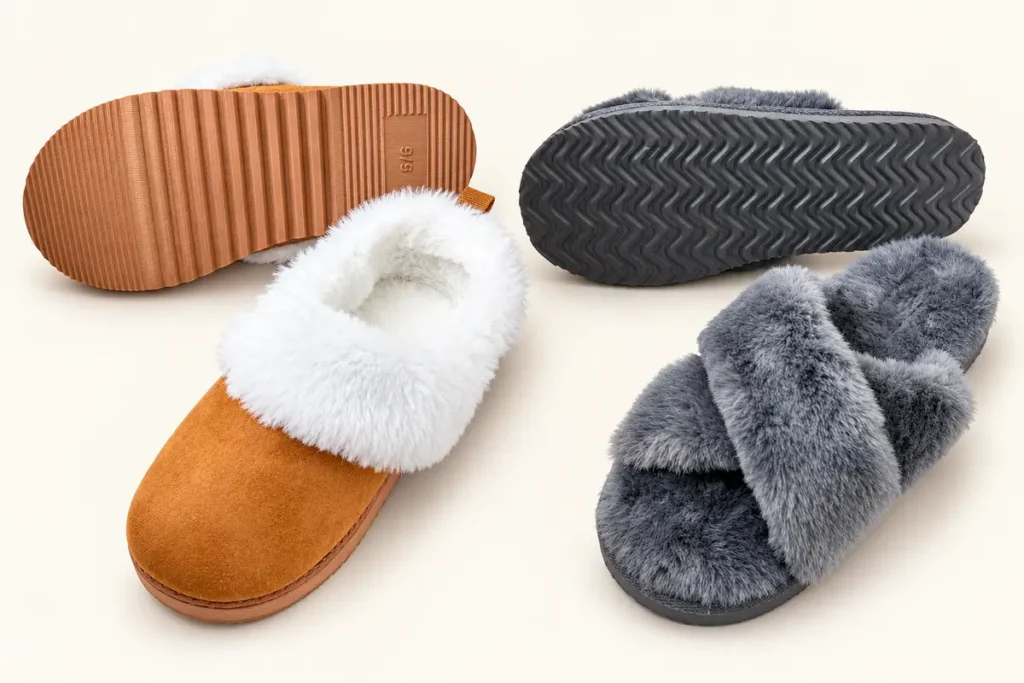
Choose the outsole around the intended use, slipper design and connection method. UTOP reviews molded TPR and cut-sheet EVA options against your reference sample and project requirements.
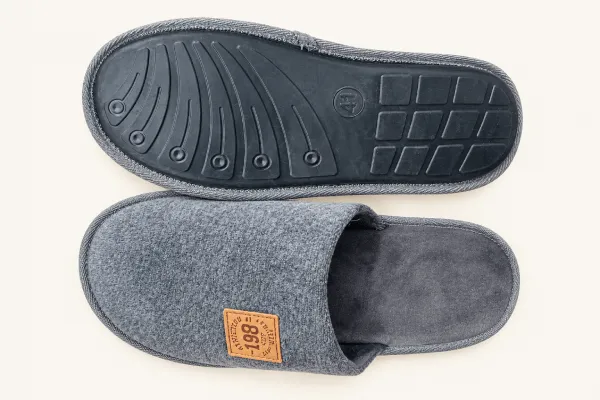
Molded TPR offers a defined outsole profile, sidewall and tread for custom house shoes. UTOP commonly considers this option for indoor-outdoor projects involving frequent, brief outdoor use.
We review the outsole together with the upper and size range, checking the proposed shape, feel and connection before confirming the sample.
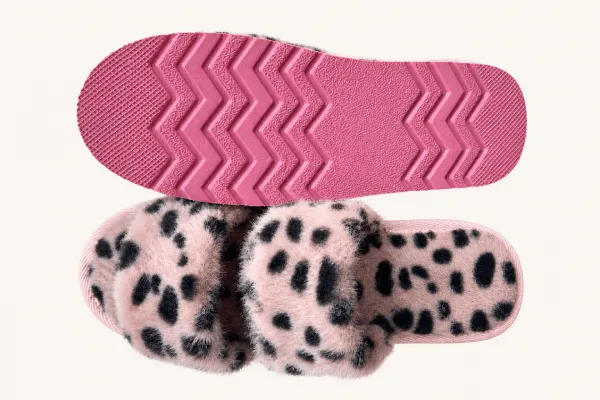
UTOP commonly uses cut-sheet EVA bottoms for lightweight, flexible indoor slippers. The EVA bottom is combined with a separate upper, with its thickness, outline and connection matched to the finished slipper.
We use your material or finished sample to review the required feel and appearance, including any additional layers in the bottom assembly.
For indoor-outdoor use, describe the expected surfaces and frequency of outdoor wear. Grip and durability depend on the formulation, specification, tread, construction and use conditions, and should be confirmed for the proposed product.
Share your outsole sample, drawing or tech pack, and identify which details must stay the same. UTOP reviews the following specifications with the proposed material and slipper construction.
Provide an outsole sample, drawing or dimension references. Confirm length, width and left/right pairing across the required sizes, checking how the outsole outline matches the upper—not just the fit of one sample size.
Define the thickness profile and applicable hardness or density reference. Use a sample to confirm the required feel and weight, specifying whether the weight refers to one outsole, one finished slipper or a pair.
Share a color reference and confirm the required texture, finish and visible edge. Agree on a physical approval sample so the intended appearance is clear beyond what can be judged from a screen image.
Describe the expected floor surfaces and any outdoor use. Review the tread layout and contact areas with the proposed material and construction. Confirm any required slip-resistance testing separately; tread appearance alone does not establish performance.
Provide authorized artwork with the required logo position, size and orientation. Custom molded branding or tread may require dedicated tooling. Confirm feasibility and the tooling scope before finalizing the design.
Review the upper edge, outsole sidewall and any additional bottom layers with the proposed connection method. Changes to material, thickness or outline should be checked in the assembled slipper sample before approval.
Start with your reference slipper or outsole and the changes you need. UTOP reviews whether an existing option, revised specification or new molded design fits the project before confirming the sampling and tooling scope.
01
Share the reference style and required size range. We check whether a suitable outsole is available, then review its dimensions, appearance and fit with the upper before confirming it for sampling.
02
Identify changes to color, material specification, thickness, outline, tread or branding. We review which changes suit the existing option and which require different tooling or another outsole design.
03
A custom tread, molded logo or different outsole shape or size may require dedicated tooling. Confirm the drawings, size range, tooling costs, approval stages and development timing before proceeding.
Tooling requirements for cut-sheet EVA are reviewed separately from molded outsole development. Confirm any tooling charges, ownership, storage and reuse terms for the specific project.
TPR and EVA describe material directions; welt-stitching, side-stitching and cold-cementing describe connection methods. Review the proposed combination rather than choosing either in isolation.
TPR or EVA
In UTOP projects, welt-stitched construction can use TPR or EVA bottoms. Review the welt, upper edge, stitching area and bottom assembly together. A material substitution still needs sample confirmation.
Commonly paired with TPR
UTOP commonly pairs side-stitched construction with TPR outsoles. The sidewall and stitching area need to suit the upper and proposed connection. Confirm the actual sole and seam arrangement, not just a visible line in a photo.
Commonly paired with EVA
UTOP commonly uses EVA bottoms in cold-glued projects. TPR can also be cold-cemented with appropriate surface preparation, adhesive and pressing. Confirm the proposed materials and process for the specific product.
A change in material, thickness, outline or upper construction can require another fit and connection review. For the full comparison, explore slipper construction methods.
Review both the outsole and the assembled slipper against the agreed requirements. Confirm the sample, specification version and inspection criteria that will serve as the reference for production.
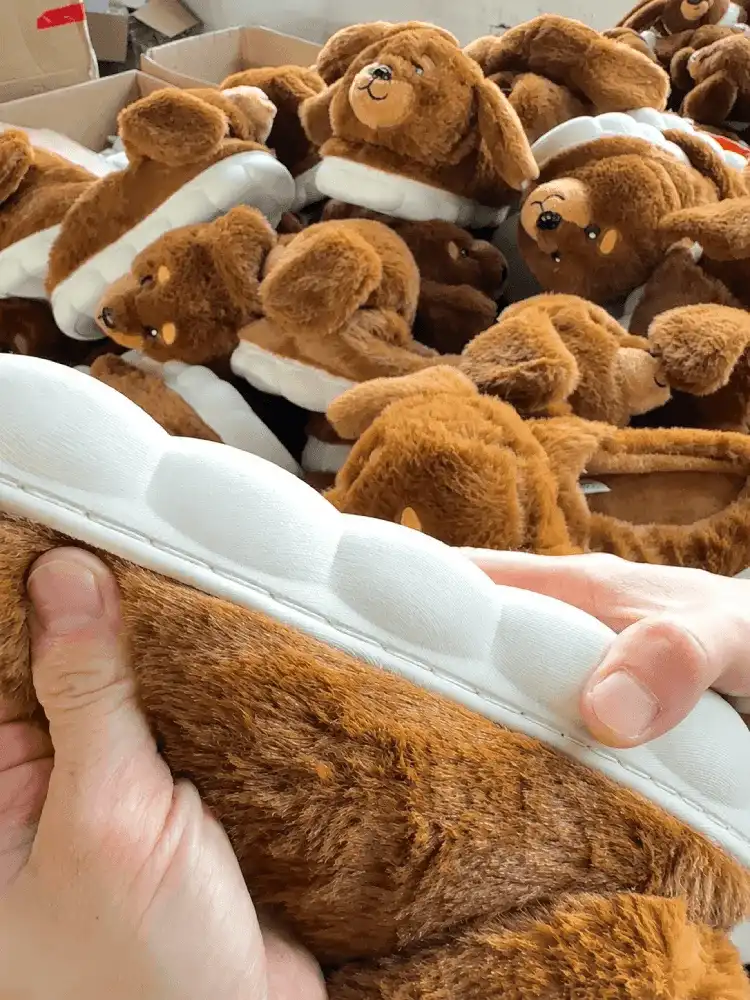
Check the material, color, odor, surface finish, tread and visible edges against the agreed reference. Identify the approved material or outsole version in the sample records.
Check outsole length, width, thickness, flatness, left/right pairing and weight. Confirm the applicable hardness or density references, measurement methods and agreed tolerances for the order.
Review sole-to-upper alignment, stitching or bonded edges, and the flexing location. Check the finished slipper’s fit and appearance, particularly when the outsole material, thickness or shape has changed.
Agree on the production checks required for weight, hardness, dimensions or flexing. Specify any slip-resistance, abrasion or chemical testing requirements by target market and buyer standard, and confirm the results needed for approval.
Keep the approved sample and specification records aligned. See the bulk slipper quality-control framework for order inspection, or the slipper manufacturing process for the production sequence.
Yes, subject to a review of the upper, size range and proposed outsole. Changes to material, thickness, shape or connection details should be confirmed in a revised sample before approval.
No. A suitable existing outsole may be available. A custom molded tread, logo, shape or size may require dedicated tooling. UTOP reviews the proposed design and size range before confirming the tooling scope.
Yes, subject to the selected material, outsole design and production method. Share artwork you are authorized to use, including the required position and size. Molded branding may require dedicated tooling, and the result should be confirmed in the sample.
No. Cut-sheet EVA bottoms are combined with a separate upper using an agreed connection method. One-piece EVA slippers follow a different construction and production route. UTOP commonly uses cut-sheet EVA bottoms for its indoor slipper projects.
No. Grip depends on the material formulation, hardness, tread, construction and floor conditions. Share the intended use and any required slip-resistance test standard. The material name or tread appearance alone does not establish slip resistance.
Yes. Send clear bottom and side views, available dimensions, the required size range and intended changes. Photos can begin the discussion, but a physical sample or further details may be needed before feasibility and pricing can be confirmed.
Share your slipper or outsole reference, intended use, size range and estimated quantity. Tell us which details must stay the same, along with any material, tread, branding or testing requirements. UTOP will review your project and identify the next steps for sampling.