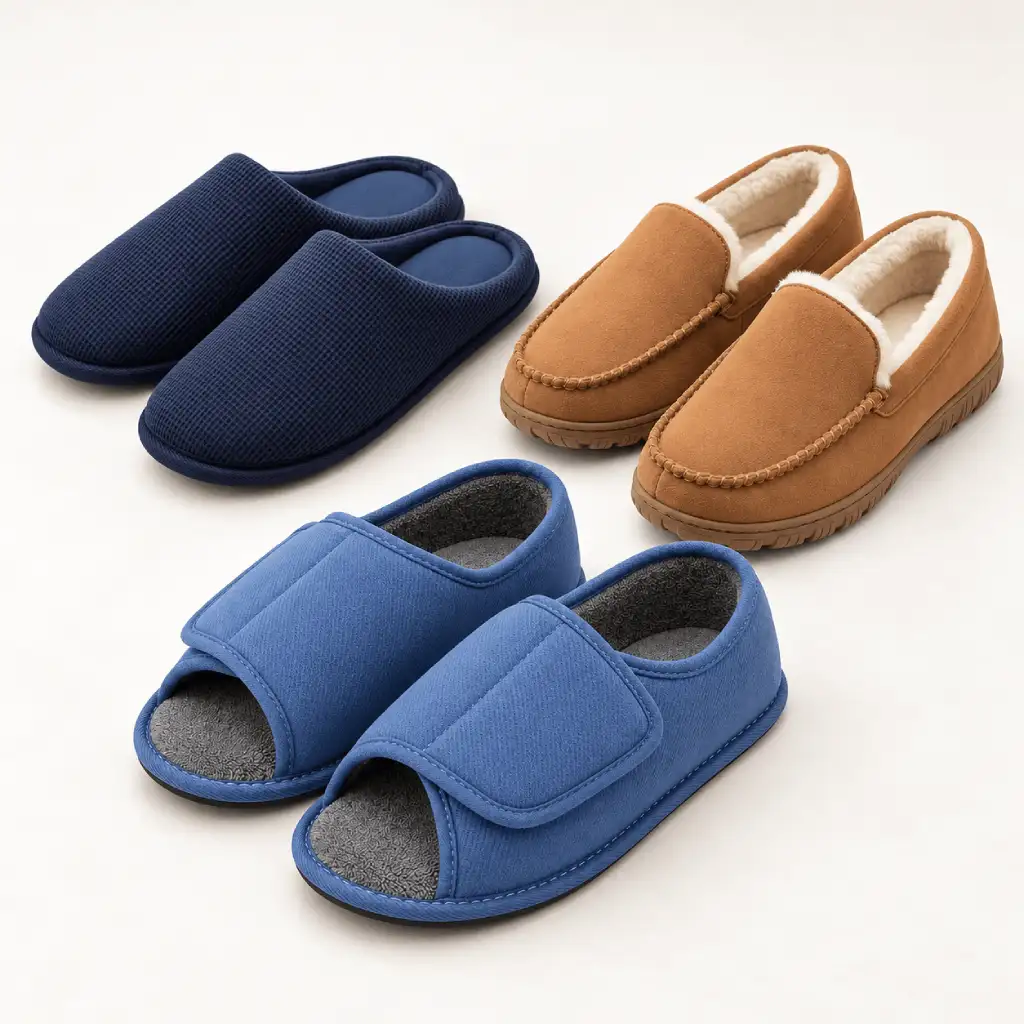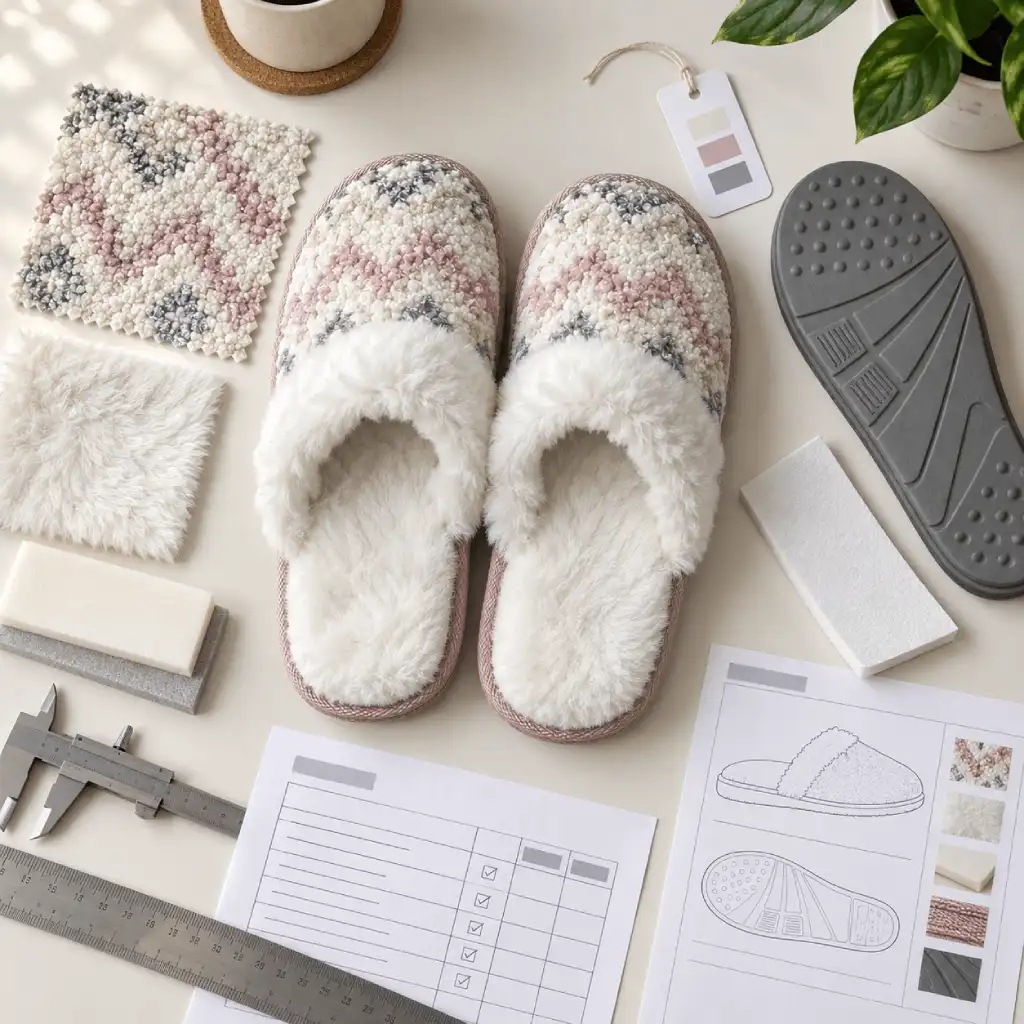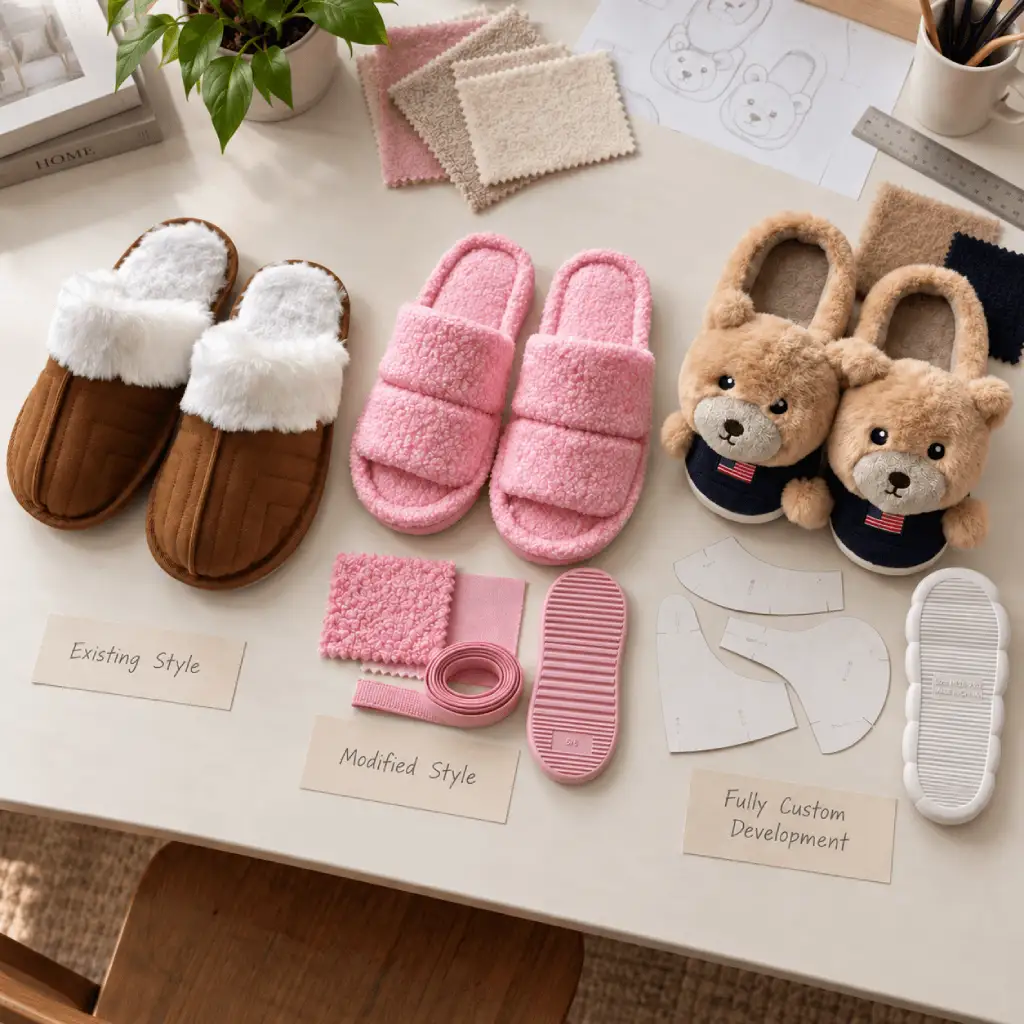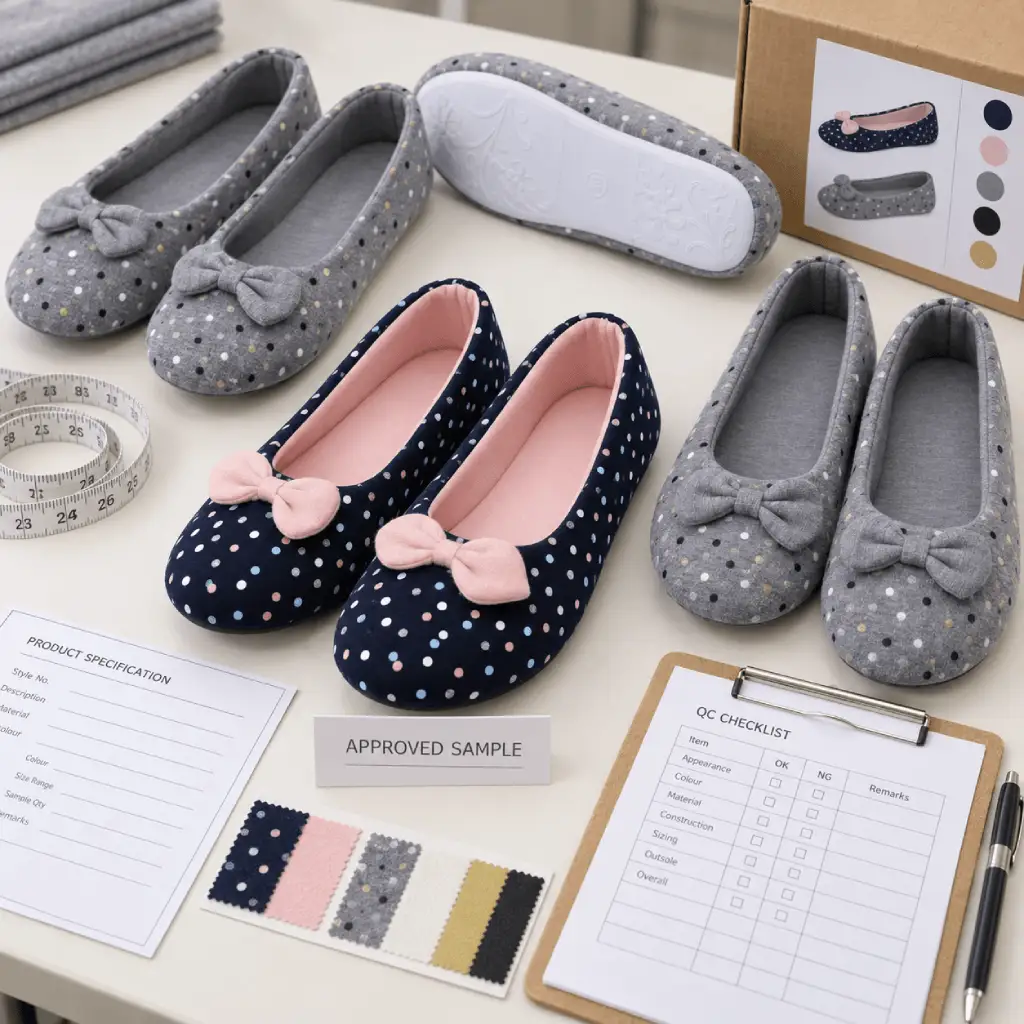
When buyers ask for a custom slipper quotation, the outsole is often described in only a few words: “TPR sole,” “EVA sole,” or “non-slip bottom.” That is enough to start a conversation, but it is not enough to define how the finished slipper should feel, bend, grip, weigh, or perform in bulk production.
This is why a TPR vs EVA sole comparison should not stop at material names. Two TPR soles can behave differently if the hardness, thickness, tread depth, molded profile, outsole shape, or compound changes. EVA soles also vary. Cut-sheet EVA, compression-molded EVA, and injection-molded EVA do not create the same structure, appearance, or production requirements.
For wholesale buyers, the practical question is not simply “Which material is better?” A more useful question is: which outsole specification fits the slipper design, target market, construction method, approved sample standard, and required price range?
Buyer takeaway: TPR and EVA can both work well for indoor slippers, but they should be compared by specification, not by material name alone. A molded TPR outsole can usually create a clearer outsole profile, sidewall, and tread pattern, which may suit house shoes that need a more defined sole structure. A cut-sheet EVA outsole is usually lightweight and flexible, which may suit simpler indoor slippers where softness and easy wearing are important. The final choice should be confirmed through the complete outsole specification, sample review, and production requirements.
This guide compares tpr vs eva sole options for slippers from a wholesale sourcing perspective, including material structure, flexibility, cost factors, sample approval, and bulk quality control.
Written by the UTOP Slippers Sourcing Team, with product input from our slipper development team.
Table of Contents
- TPR vs EVA Sole: Quick Comparison for Buyers
- What Are TPR and EVA Soles?
- TPR vs EVA Sole: Eight Factors Wholesale Buyers Should Compare
- Which Sole Works Better for Different Slipper Categories?
- How TPR and EVA Soles Work with Different Slipper Constructions
- What Buyers Should Check During Sample Approval
- Bulk Quality Checks for TPR and EVA Slipper Soles
- What Information Buyers Should Send Before Quotation or Sampling
- Common Mistakes When Comparing TPR and EVA Sole Options
- FAQs About TPR vs EVA Sole for Slippers
1. Quick Answer: Is TPR or EVA Better for Slippers?
Neither TPR nor EVA is automatically the best sole material for slippers. Both can be suitable, but they solve different product needs.
TPR sole for slippers
A TPR sole for slippers is usually considered when buyers want a molded outsole with a clearer profile, visible tread design, or a more defined bottom structure. It is often used for house shoes, indoor slippers with stronger outsole appearance, and styles where the sole is part of the product’s visual and functional design.
EVA sole for slippers
An EVA sole for slippers is usually considered when buyers want a lighter and more flexible outsole. Depending on the EVA type and thickness, it can work well for lightweight indoor slippers, simple house slippers, hotel or spa slippers, and styles where easy wearing comfort is more important than a heavy molded outsole.
The final decision should not be based on material name alone. Buyers should compare the full outsole specification: material type, thickness, density or hardness, outsole weight, tread design, construction method, upper material, size range, packaging method, and expected use environment.
Cost should be reviewed by project
Cost should also be reviewed by project, not assumed from the material name. A TPR outsole and an EVA outsole can vary in cost depending on material grade, thickness, weight, molding method, tooling requirements, order quantity, and supplier quotation.
In short, TPR is often a good option when the project needs a molded outsole shape, clearer tread detail, or a more structured sole appearance. EVA is often a good option when the project needs a lightweight and flexible indoor sole. For most wholesale projects, the right answer depends on the product brief, sample standard, and production specification, not on a universal ranking of “better” or “worse.”
Quick Comparison: TPR Sole vs EVA Sole for Slippers
| Comparison Point | TPR Sole for Slippers | EVA Sole for Slippers |
|---|---|---|
| General structure | Usually molded, with clearer outsole shape, sidewall, and tread detail | Often lightweight and flexible; may be cut-sheet, compression-molded, or injection-molded |
| Weight | Can feel more substantial depending on thickness and compound | Often lighter, especially in cut-sheet EVA or thinner constructions |
| Flexibility | Depends on hardness, thickness, outsole shape, and tread design | Usually flexible, but still depends on density, thickness, and EVA type |
| Grip | Depends on tread design, compound, hardness, floor type, and test conditions | Depends on surface texture, material density, tread or embossing, and floor condition |
| Appearance | Can create a more defined outsole profile and molded bottom design | Usually simpler in cut-sheet form; molded EVA can offer more shape detail |
| Construction compatibility | Often used with welt-stitched or side-stitched slipper constructions; can also be glued with suitable treatment | Often used with cold-glued or lightweight indoor slipper constructions; can also work with other constructions depending on design |
| Cost factors | Affected by compound, weight, thickness, mold, outsole design, and order quantity | Affected by EVA type, density, thickness, cutting or molding method, waste rate, and order quantity |
| Best used when | The project needs a molded outsole look, clear tread detail, or a more structured sole appearance | The project needs a lightweight, flexible, simple indoor outsole |
| Buyer check point | Do not judge only by “TPR.” Confirm hardness, thickness, tread, weight, and bonding or stitching method | Do not judge only by “EVA.” Confirm EVA type, density, thickness, weight, and construction method |
2. What Are TPR and EVA Soles?
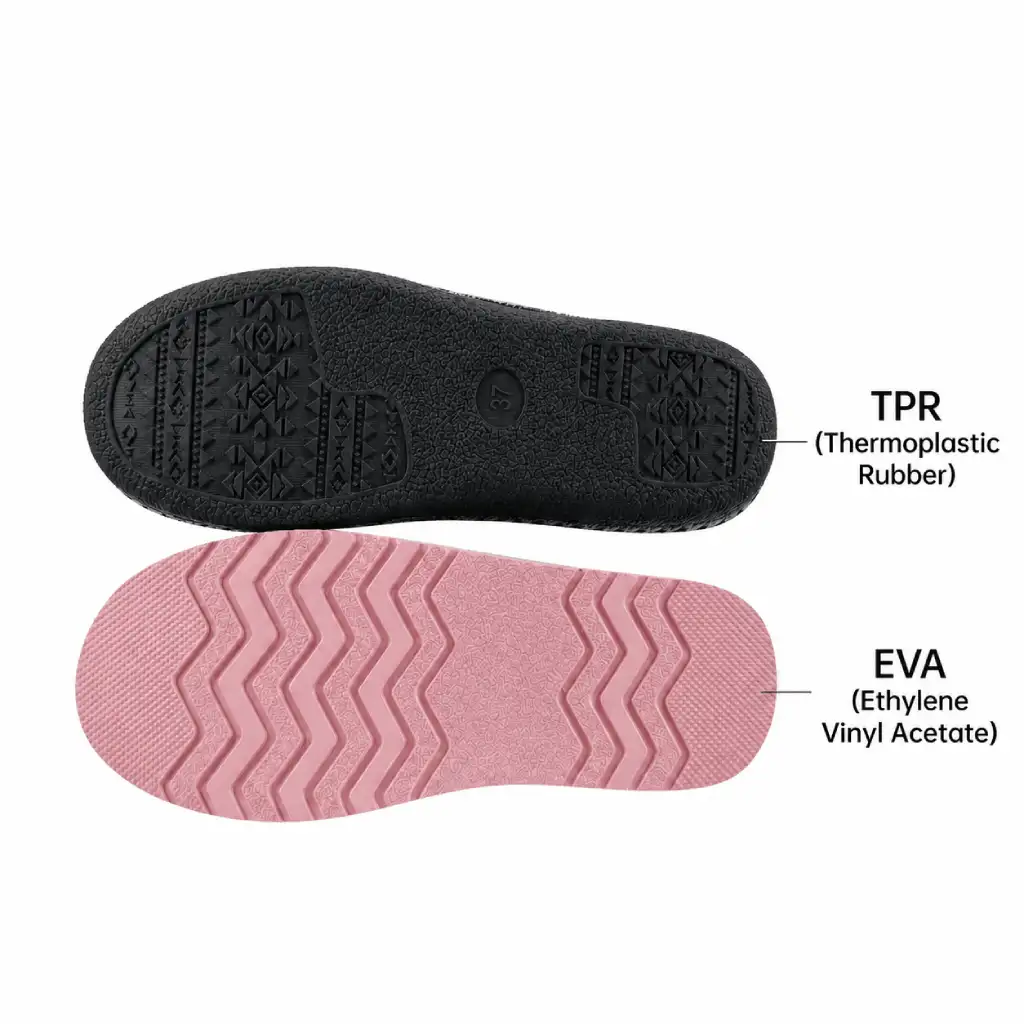
Before comparing tpr sole vs eva sole options, buyers need to understand one basic point: TPR and EVA are material categories, not finished outsole specifications.
The same material name can lead to different results when the formula, hardness, density, thickness, molding method, tread pattern, or construction method changes. That is why two suppliers may both quote a “TPR sole” or an “EVA sole,” but the finished slippers may feel and perform differently.
What Is a TPR Sole?
TPR stands for thermoplastic rubber. In slipper production, a TPR outsole is usually molded into a defined sole shape. It can include outsole curves, sidewalls, logo areas, tread patterns, and different color effects depending on the mold and material specification.
For indoor slippers and house shoes, TPR is often selected when the outsole needs a clearer molded profile or a more visible bottom design. It can be used for many slipper styles, but buyers should not judge performance by the word “TPR” alone.
What Is an EVA Sole?
EVA stands for ethylene-vinyl acetate. In slipper production, EVA can appear in different forms, including cut-sheet EVA, compression-molded EVA, and injection-molded EVA. These are not the same in appearance, structure, or production process.
For many indoor slippers, cut-sheet EVA is commonly used when buyers want a lightweight and flexible outsole. It can work well for simple indoor slippers, soft house slippers, hotel slippers, spa slippers, and other styles where easy wearing comfort is important.
A TPR sole should be reviewed together with:
- outsole hardness
- thickness
- compound and color
- tread design
- outsole weight
- surface finish
- bonding or stitching method
- target floor condition
- required testing standard, if any
A thicker or heavier TPR outsole may give the slipper a more substantial bottom feel, but it can also change the finished weight and flexibility. A softer or thinner TPR outsole may feel different again. The approved sample should therefore define the actual outsole standard.
EVA performance can change based on:
- EVA type
- density
- thickness
- outsole shape
- cutting or molding method
- surface texture
- weight
- upper construction
- packaging pressure during shipping
A very soft EVA sole may feel comfortable, but it may also need review for compression, shape retention, and floor contact. A firmer EVA sole may provide a different wearing feel. As with TPR, the final decision should be based on a confirmed sample and clear production specification.
Why the Material Name Alone Is Not Enough
For wholesale buyers, the question is not only “eva vs tpr sole.” The more useful question is: what exact outsole is being quoted?
A complete slipper outsole specification should define the material type, thickness, hardness or density, outsole weight, tread or surface texture, color, construction method, and quality check points. Without these details, buyers may receive samples that all sound correct on paper but behave differently in actual use.
This is especially important when comparing prices from different suppliers. A cheaper quote may not mean the same outsole standard. It may reflect a different thickness, weight, density, molding method, or construction process.
For this reason, buyers should ask suppliers to confirm the outsole specification before comparing price, approving samples, or moving into bulk production.
3. TPR vs EVA Sole: Eight Factors Wholesale Buyers Should Compare
When buyers compare tpr vs eva sole options, the discussion should move from material names to finished product behavior. A slipper outsole affects more than the bottom of the shoe. It changes the weight, flexibility, walking feel, construction method, packing result, and even the customer’s first impression when holding the finished pair.
For wholesale orders, buyers should review the following eight factors before confirming a sole for sampling or bulk production.
1. Weight and Finished-Slipper Balance
Weight is one of the first differences buyers notice when comparing a TPR sole and an EVA sole.
A molded TPR outsole may give the slipper a more substantial bottom feel, especially when the sole is thicker or has a defined sidewall. This can work well for house shoes or indoor slippers where buyers want the product to feel more structured in hand.
An EVA outsole, especially cut-sheet EVA, is often used when the project needs a lighter finished slipper. This can be useful for simple indoor slippers, hotel slippers, spa slippers, or programs where shipping weight and easy wearing comfort matter.
However, weight should not be judged by material name only. A thin TPR sole and a thick EVA sole may not follow the usual expectation. Buyers should confirm the actual outsole weight, finished pair weight, and size grading before approving the sample.
2. Cushioning and Underfoot Feel
The outsole material can influence the step-in feeling, but it is not the only factor. Insole foam, lining thickness, upper structure, outsole thickness, and footbed shape also affect comfort.
EVA is often associated with a softer and lighter underfoot feel, especially in simple indoor slipper constructions. But the result depends on EVA density, thickness, and whether the sole is cut, molded, or combined with other layers.
TPR can also feel comfortable when the outsole design, hardness, and insole cushioning are well balanced. A TPR outsole that is too hard, too thin, or mismatched with the upper may feel less comfortable than expected.
For this reason, buyers should not ask only for the “best sole material for slippers.” They should test the full slipper sample, including the upper, lining, insole, outsole, and intended wearing environment.
3. Flexibility and Bend Point
Flexibility is important for indoor slippers because the outsole needs to move naturally with the foot. But too much flexibility can make the slipper feel unstable, while too little flexibility may make it feel stiff.
EVA soles are often flexible, especially in lighter indoor constructions. Still, flexibility changes with EVA type, density, thickness, and outsole shape.
TPR soles can also be flexible, but the result depends on hardness, sole profile, tread layout, and wall thickness. A molded outsole with a thick edge or deep structure may bend differently from a thinner, simpler TPR outsole.
Buyers should check where the slipper bends, whether the bend point matches the foot movement, and whether the outsole returns to shape after repeated flexing.
4. Grip and Tread Design
Grip is one of the most common reasons buyers compare eva vs tpr sole options, but it is also one of the easiest areas to oversimplify.
A TPR sole does not automatically mean better grip. An EVA sole does not automatically mean poor grip. Floor type, outsole texture, tread depth, material hardness, contact area, dust, moisture, and testing method all affect the result.
For indoor slippers, buyers should review:
- tread pattern
- outsole contact area
- material hardness or density
- surface texture
- expected floor type
- dry or wet condition
- target market requirement
- whether slip-resistance testing is needed
If the buyer has a specific safety or compliance requirement, it should be discussed before sampling. Without testing data, suppliers should not make absolute claims about slip resistance.
5. Abrasion and Compression
Abrasion and compression affect how the outsole looks and feels after use, storage, and shipping.
TPR and EVA can both perform differently depending on the exact material specification. A more robust molded TPR outsole may be suitable for some house shoe projects, but its performance still depends on compound, hardness, tread design, thickness, and use condition.
EVA soles may need more attention to compression, especially when the slipper is packed tightly or shipped in bulk cartons. A soft EVA sole may feel comfortable, but buyers should check whether it becomes flattened, marked, or distorted after packing pressure.
For bulk orders, buyers should review the approved sample and ask how the outsole will be checked during production. Weight, thickness, hardness feel, outsole dimensions, and appearance consistency can all be useful control points.
6. Walking Noise and Floor Contact
Walking noise is sometimes overlooked during sample review, but it can affect customer experience.
A harder outsole may create more noticeable sound on some floors. A softer outsole may feel quieter, but the result depends on floor type, outsole texture, contact area, and the way the slipper is constructed.
For indoor slippers, buyers should test samples on the type of floor where the product is likely to be used, such as tile, wood, laminate, or hotel-room flooring. A slipper that feels acceptable on a sample table may behave differently during actual walking.
This is especially relevant for house shoes, hospitality slippers, and soft indoor footwear where quiet wearing comfort is part of the expected product experience.
7. Molding, Color, and Surface Design
TPR and EVA can both be customized, but the design possibilities and production requirements are different.
A molded TPR outsole can usually create clearer outsole shapes, sidewalls, tread patterns, and logo areas. If the project needs a specific bottom design, special tread, or branded outsole detail, buyers may need to confirm whether a new mold is required.
EVA can also be customized by type, thickness, density, color, cutting shape, surface texture, or molding process. Cut-sheet EVA is usually simpler in appearance, while molded EVA can create more defined shapes depending on the production method.
For both materials, buyers should confirm color tolerance, surface finish, logo method, and whether the outsole design requires tooling before comparing prices.
8. Cost and Production Factors
Cost should be reviewed by project, not assumed from the material name.
A TPR sole for slippers and an EVA sole for slippers may vary in cost depending on material grade, compound, density, thickness, weight, molding method, tooling requirements, order quantity, waste rate, and supplier quotation.
For example, a simple EVA sole may be suitable for a lightweight indoor slipper program, while a more complex molded EVA or customized outsole may require different cost calculation. A TPR outsole with a common mold may be straightforward, while a new outsole shape, special tread, or branded logo area may increase development cost.
When comparing quotations, buyers should make sure each supplier is quoting the same slipper sole material specification. Otherwise, the lowest price may simply reflect a different outsole standard, not a better offer.
The safest approach is to compare outsole samples, specifications, and pricing together. Material name alone is not enough for a reliable sourcing decision.
4. Which Sole Works Better for Different Slipper Categories?
The best sole choice is rarely decided by material name alone. In real sourcing work, buyers usually start with the slipper category first: who will wear it, where it will be used, how soft or structured it should feel, and how the finished pair should look in hand.
That is why the same slipper sole material can be right for one project and unsuitable for another. A sole that works well for a lightweight spa slipper may feel too thin for a men’s house shoe. A molded outsole that looks solid on a structured slipper may feel too heavy on a soft plush mule.
The following category notes can help buyers narrow the discussion before sampling.
Women’s Indoor Slippers
For Women’s Indoor Slippers, the sole needs to support the overall look without making the product feel bulky. Many women’s styles rely on soft uppers, warm linings, rounded shapes, or decorative details, so the outsole should not overpower the design.
EVA is often worth reviewing when the project needs a lighter, softer indoor feel. It can work well for simple home slippers, spa slippers, soft textile slippers, and styles where comfort and easy wearing are more important than a strong molded bottom.
TPR may be considered when the design needs more outsole definition, such as a clearer edge, visible bottom pattern, or a more house-shoe-like appearance. This can be useful when the slipper is positioned as warmer home footwear rather than a simple bedroom slipper.
The key check is proportion. A sole that is too thick may make a soft women’s slipper look heavy, while a sole that is too light may not match a more structured upper.
Men’s House Slippers
Men’s House Slippers often need a more substantial bottom feel, especially when the product is sold as a house shoe rather than a soft bedroom slipper.
In this category, a molded TPR outsole is often reviewed because it can help create a clearer sole profile, sidewall, and tread appearance. These details can make the finished pair feel more solid in hand and more structured on the foot.
That does not mean EVA should be excluded. For lighter men’s indoor slippers, travel slippers, or simple home-use styles, EVA may still be suitable if the thickness, density, and construction are matched well.
For men’s styles, buyers should pay close attention to finished pair weight, outsole width, heel stability, bend point, and whether the sole visually matches the upper. A good sample should feel balanced, not just “heavy” or “light.”
Kids’ Slippers
Kids’ Slippers need a careful balance. The sole should be light enough for easy movement, flexible enough for indoor wear, and appropriate for the expected floor condition.
EVA may be a practical option for lightweight indoor kids’ slippers, especially when the buyer wants a soft and easy-wearing product. However, the sole should still be checked for compression, shape retention, and floor contact.
TPR may be used when the design needs a molded bottom, clearer tread, or a more defined outsole appearance. But if the sole becomes too thick or stiff, the slipper may feel less comfortable for children.
For kids’ projects, the outsole should be reviewed together with the size range. A sole that works in one sample size may need adjustment when graded into smaller or larger sizes.
Plush and Felt Slippers
Plush, sherpa, faux fur, fleece, and felt slippers all have one common challenge: the upper is usually soft, but the sole still needs to give the product enough shape.
For very soft plush slippers, EVA can help keep the finished pair light and flexible. This is often useful for seasonal home slippers, gift programs, simple indoor slippers, and soft comfort-focused styles.
TPR may be useful when the project needs a more defined outsole shape or a clearer tread design. However, buyers should check whether the added outsole structure changes the soft look of the upper. This is especially important for mule slippers, open-back styles, and thick plush uppers.
For felt slippers, construction is especially important. The outsole may be stitched, glued, or combined with another process. The same slipper outsole materials can perform differently depending on how the sole is attached to the upper.
Hotel and Spa Slippers
Hotel and Spa Slippers usually focus on light weight, simple comfort, packing efficiency, and project-based cost control. Many of these products are designed for short-term indoor use, so the outsole does not always need a heavy molded structure.
EVA is often reviewed first for this type of product because it can support a lightweight and flexible indoor slipper. The exact choice still depends on thickness, density, surface texture, and packaging method.
TPR is less common for very simple disposable-style hotel slippers, but it may still be considered for higher-positioned hospitality slippers, reusable guest slippers, or room products where the buyer wants a more substantial outsole.
For hospitality programs, the buyer should confirm the use scenario first: room slipper, spa slipper, premium guest slipper, or reusable indoor slipper. These are not the same product, and they should not automatically use the same outsole specification.
Practical Category Selection Guide
A practical way to compare TPR sole for slippers and EVA sole for slippers is to begin with the product brief, not the material name.
If the project needs lightweight comfort, flexible indoor use, simple packing, and a softer wearing feel, EVA may be the first option to review. If the project needs a molded outsole look, clearer tread detail, or a more defined sole shape, TPR may be the first option to review.
But this is only a starting point. The final decision should come from the approved sample, outsole specification, construction method, and bulk quality requirements. In wholesale slipper production, the right sole is the one that fits the product, not the one that sounds better on paper.
5. How TPR and EVA Soles Work with Different Slipper Constructions
In real sourcing work, a tpr vs eva sole comparison should always include the construction method, because the same outsole material may perform differently when it is stitched, side-stitched, or cold-glued. For wholesale buyers, this is where a simple tpr sole vs eva sole comparison needs to become more practical.
Before approving a sample, buyers should confirm not only the outsole material, but also how the outsole is attached to the upper. The connection method affects appearance, flexibility, production consistency, and how the slipper holds together during use.
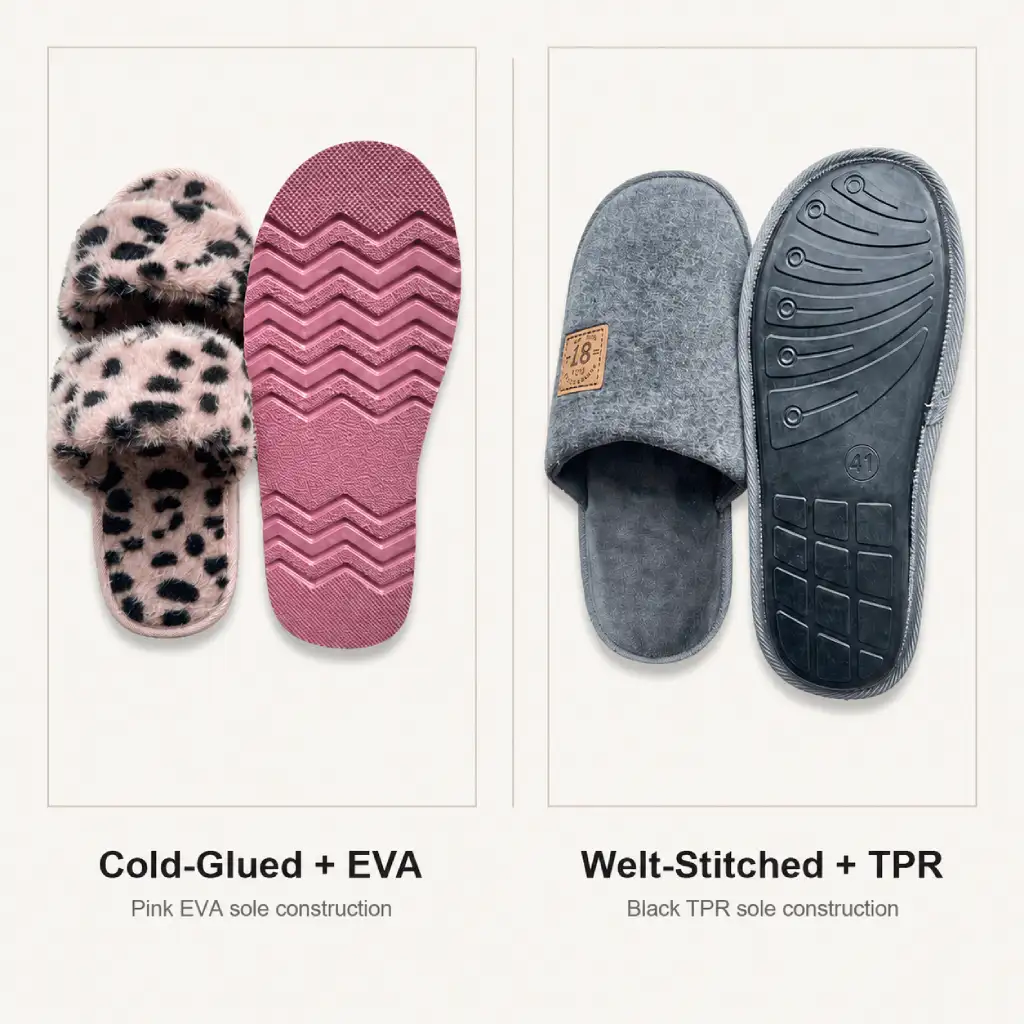
Welt-Stitched Construction
Welt-stitched construction is often used when the buyer wants a visible stitching line and a more crafted look. In this structure, the upper and sole are connected through stitching around the edge.
For UTOP slipper projects, welt-stitched styles can usually work with either TPR or EVA soles, depending on the design and outsole specification. The key is whether the outsole thickness, edge shape, and upper material can support clean and consistent stitching.
A molded TPR sole may help create a clearer sole edge and more defined bottom shape. EVA may be suitable when the project needs a lighter and more flexible indoor slipper. In both cases, the stitch position, thread tension, and edge finish should be checked during sample approval.
Buyers should not assume that stitching alone proves the sole is stronger or more supportive. It mainly describes the connection method. The actual structure still depends on the outsole material, thickness, upper design, and production standard.
Side-Stitched Construction
Side-stitched construction is commonly used for slipper styles where the upper is stitched to the sole from the side. This method can create a secure visible connection and a clear handmade or house-shoe appearance.
In many UTOP projects, side-stitched slippers are usually paired with TPR soles. A molded TPR outsole can provide an edge structure that works well with side stitching, especially when the design needs a clear sidewall or outsole profile.
That said, the final result still depends on the specific outsole design. If the sidewall is too low, too soft, or not shaped properly for stitching, the appearance may become uneven. Buyers should check stitch spacing, sidewall height, thread tension, and whether the left and right shoes look consistent.
For wholesale orders, side stitching should be reviewed not only on the sample pair, but also as part of bulk production consistency.
Cold-Glued Construction
Cold-glued construction is often used for lightweight indoor slippers and simple outsole structures. In this method, the outsole is attached to the upper by adhesive and pressing rather than visible stitching.
EVA soles are often used with cold-glued slipper constructions, especially when the buyer wants a lightweight, flexible, and clean indoor style. Cut-sheet EVA can be practical for many simple house slippers, hotel slippers, spa slippers, and soft indoor styles.
TPR can also be used with cold-glued construction, but it should not be treated as automatic. The outsole surface, adhesive type, surface treatment, pressing process, and production control all need to match. If these details are not handled correctly, bonding consistency may become a risk.
For cold-glued slippers, buyers should review the bonding edge, glue marks, sole flatness, and whether the upper and outsole stay aligned after bending.
Combined Stitching and Adhesive Methods
Some slipper projects may combine stitching and adhesive methods. This can be useful when the design needs both a clean upper shape and a more secure sole connection.
However, a combined method also means more production details to control. Buyers should confirm which parts are glued, which parts are stitched, and whether the construction remains consistent across all sizes.
This is especially important for soft uppers, thick linings, plush materials, and slippers with curved outsole shapes. Small alignment differences may become more visible in bulk production than they appear on one sample pair.
Construction Comparison Guide
| Construction Method | Common Use | TPR Sole Considerations | EVA Sole Considerations | Buyer Check Point |
|---|---|---|---|---|
| Welt-stitched | Slippers needing a visible stitched edge and crafted appearance | Can work when the edge shape and thickness support clean stitching | Can work when the project needs lighter weight and flexibility | Check stitch position, edge finish, and left-right consistency |
| Side-stitched | House shoes or slippers with visible side connection | Commonly paired with molded TPR soles that have suitable sidewall structure | Less common; depends on outsole shape and design | Check sidewall height, stitch spacing, and thread tension |
| Cold-glued | Lightweight indoor slippers, simple house slippers, hotel or spa slippers | Possible, but needs suitable surface treatment, adhesive, and pressing process | Commonly used, especially for lighter indoor constructions | Check bonding edge, glue marks, sole flatness, and alignment |
| Combined method | Styles needing both bonding and stitching support | Can work if stitching and bonding areas are clearly defined | Can work if material thickness and flexibility are controlled | Confirm which areas are stitched, glued, or both |
What Buyers Should Confirm Before Sampling
Before choosing between a TPR sole for slippers and an EVA sole for slippers, buyers should ask the supplier how the outsole will be attached to the upper.
A useful sample request should include:
- outsole material and type
- outsole thickness and hardness or density
- construction method
- stitching position, if any
- adhesive requirement, if any
- upper material and lining thickness
- expected flexibility
- outsole edge shape
- sample review points for bonding or stitching
For wholesale production, the best sole choice is the one that works with the construction method. A good slipper sole material on paper can still fail if the attachment method is not suitable for the upper, outsole shape, or production process.
6. What Buyers Should Check During Sample Approval
Sample approval is where the outsole decision becomes real. A specification may look correct in a quotation, but the finished sample can still feel too heavy, too soft, too stiff, too thin, or poorly matched with the upper.
For a tpr vs eva sole project, buyers should not approve the sample only by checking the material name. The sample should confirm how the outsole works with the complete slipper: upper material, lining, insole, construction method, outsole thickness, tread, and finished weight.
A practical sample review should include both visual checks and hand-feel checks.
1. Confirm the Outsole Material and Type
If the sample uses a molded TPR outsole, buyers should review the outsole shape, sidewall, tread pattern, color, and overall molded profile. If the sample uses an EVA outsole, buyers should confirm whether it is cut-sheet EVA, compression-molded EVA, or another EVA construction.
This matters because “TPR sole” and “EVA sole” are broad terms. Two suppliers may quote the same material name but deliver different sole structures, thicknesses, densities, and surface finishes.
2. Check Weight and Thickness
Weight affects both product feel and shipping cost. A heavier outsole may give the slipper a more solid hand feel, but it may also increase carton weight. A lighter outsole can make the slipper easier to wear indoors, but it still needs enough thickness and shape stability for the intended product.
Buyers should record the single-pair weight, outsole thickness, heel and forefoot consistency, and overall proportion before approving the sample.
3. Review Hardness, Density, and Bend Feel
Hardness and density are not always obvious from photos. Buyers should press, bend, and compare the outsole against the intended slipper category.
For a TPR sole for slippers, the hardness should match the expected outsole structure and tread design. For an EVA sole for slippers, buyers should review density, compression feel, and whether the sole returns to shape properly after bending.
The bend point should also feel natural. If the sole bends in the wrong area, the finished slipper may feel awkward even if the material itself is acceptable.
4. Inspect Tread and Floor Contact
Tread should be reviewed visually and practically. Buyers should check tread depth, tread clarity, contact area, and whether the sole sits flat on the floor.
The material name alone does not prove grip performance. If the order has a specific slip-resistance requirement, the buyer should confirm the required test standard before final approval.
5. Check Color, Odor, and Surface Finish
Color should be checked against the approved reference, especially for light colors, pastel soles, and fashion styles. Odor should also be reviewed early, because outsole smell can become a buyer complaint after packing.
Buyers should also look for uneven texture, trimming marks, contamination, excessive shine, rough edges, or surface differences between the left and right slipper.
6. Review the Upper-to-Sole Connection
The outsole cannot be reviewed separately from the construction method. For stitched slippers, buyers should check stitch spacing, stitch tension, stitch position, and left-right consistency. For cold-glued slippers, buyers should check the bonding edge, glue marks, alignment, flatness, and whether the sole remains connected after bending.
The same slipper sole material may perform differently depending on how it is attached to the upper.
| Sample Check Point | What Buyers Should Confirm |
|---|---|
| Outsole material | TPR, EVA, or another requested material |
| Construction method | Welt-stitched, side-stitched, cold-glued, or another structure |
| Weight | Single-pair weight and carton weight impact |
| Thickness | Heel, forefoot, and edge consistency |
| Hardness or density | Hand feel, compression, and bend behavior |
| Tread | Pattern clarity, depth, contact area, and floor contact |
| Color | Match with approved color reference |
| Odor | Whether the outsole smell is acceptable before packing |
| Surface finish | Texture, trimming, shine, marks, and contamination |
| Left-right matching | Shape, color, outsole placement, and finished appearance |
| Upper-to-sole connection | Stitching, bonding, alignment, and edge finish |
| Bulk reference | Approved sample, written specifications, and confirmed tolerance points |
Buyer tip: The approved sample should become the production reference, not just a nice-looking photo. If weight, thickness, density, tread, and connection details are not confirmed at the sample stage, they are much harder to correct during bulk production.
7. Bulk Quality Checks for TPR and EVA Slipper Soles
Approving a sample is only the first step. For wholesale orders, the more important question is whether bulk production can stay close to the approved sample.
This is especially important when buyers compare eva vs tpr sole options, because outsole performance is affected by more than the material name. Weight, thickness, hardness, density, tread, color, trimming, and the way the sole is attached to the upper all need to remain consistent during production.
For bulk orders, buyers should not rely only on a final visual inspection. A simple outsole QC plan can help identify problems earlier.
Check Weight Consistency
Weight is one of the easiest points to track in bulk production.
If the outsole becomes heavier than the approved sample, the slipper may feel different and carton weight may increase. If the outsole becomes lighter, buyers should check whether the thickness, density, or material quality has changed.
For large orders, buyers can ask the supplier to record single-pair weight or outsole weight during production, especially when the order is sensitive to shipping cost or product feel.
Check Thickness and Shape
Outsole thickness should be checked at the heel, forefoot, and edge. Even small changes can affect the finished slipper’s appearance and walking feel.
For molded TPR soles, buyers should review whether the sidewall shape, outsole edge, and tread pattern remain clear. For EVA soles, buyers should check whether the sole shape is cut or molded evenly and whether the edge finish is clean.
The goal is not to make every pair mathematically identical, but to keep the bulk goods within the approved range.
Check Hardness, Density, and Bend Feel
Hardness and density should stay close to the approved sample. If a sole feels softer, harder, thinner, or less stable than expected, the finished slipper may no longer match the original approval.
For a tpr sole vs eva sole comparison, this point is important because both materials can be adjusted by formula, thickness, and production method. Buyers should compare bulk pairs with the approved sample by pressing, bending, and checking the natural flex point.
A quick hand-feel check is not a laboratory test, but it can help catch obvious changes before the goods are packed.
Check Tread and Bottom Surface
Tread should remain clear and complete across bulk production. Buyers should check whether the pattern is too shallow, uneven, poorly formed, or damaged during trimming.
The bottom surface should also be checked for contamination, color transfer, rough edges, and visible defects. If a specific grip or slip-resistance requirement applies, it should be confirmed through the agreed test method instead of assumed from the outsole material.
Check Bonding or Stitching Consistency
A good outsole still fails if the connection is weak.
For stitched slippers, buyers should check stitch spacing, skipped stitches, loose thread, edge position, and whether the left and right shoes are consistent. For cold-glued slippers, buyers should check glue marks, open edges, outsole alignment, and bonding after bending.
This is where outsole material, construction method, and workmanship come together. A bulk QC plan should review the finished slipper, not only the separate sole.
Practical Bulk QC Points
For most slipper orders, buyers can use a simple checklist:
- Compare bulk pairs with the approved sample
- Check outsole material and construction method
- Record pair weight if weight matters
- Check outsole thickness at key points
- Review hardness, density, and bend feel
- Inspect tread clarity and bottom surface
- Check outsole color and odor
- Review trimming and edge finish
- Check left-right matching
- Inspect stitching or bonding strength
- Confirm carton packing does not deform the outsole or upper
Buyer takeaway: Bulk QC for slipper outsole materials should focus on consistency. The question is not only whether the order uses TPR or EVA, but whether the final slippers match the approved sample in weight, thickness, shape, tread, connection, and overall feel.
For wholesale buyers, this is the safest way to turn a good sample into a reliable production order.
8. What Information Buyers Should Send Before Quotation or Sampling
A clear outsole brief saves time before quotation and sampling. If a buyer only asks for “EVA sole” or “TPR sole,” the supplier may still need to guess the thickness, construction, hardness, tread, color, and price level.
For a tpr vs eva sole decision, the better approach is to share the product context first. The outsole should be selected around the slipper category, target customer, expected wearing scene, construction method, and order requirements.
Product Type and Target Use
Buyers should first explain what kind of slipper they are developing.
A lightweight bedroom slipper, a structured men’s house shoe, a plush winter slipper, and a hotel slipper may all use different outsole solutions. Even when the same slipper sole material is considered, the final sole specification may not be the same.
Useful details include:
- Slipper category
- Men’s, women’s, kids’, hotel, spa, or retail use
- Indoor-only or occasional indoor-outdoor use
- Target season
- Expected price range
- Target market or sales channel
These details help the supplier recommend a more realistic outsole direction instead of choosing by material name alone.
Construction Method
The construction method should be discussed early.
If the project uses welt-stitched construction, side-stitching, or cold-gluing, the outsole needs to match that structure. A sole that works well for one construction method may not be the best choice for another.
For example, a molded TPR outsole may be reviewed when the buyer wants a clearer sidewall and tread profile. A cut-sheet EVA outsole may be considered when the product needs a lighter and more flexible indoor feel. But the final decision still depends on the complete construction, not only on the outsole material.
Outsole Thickness, Weight, and Feel
If the buyer has a reference sample, it is useful to provide the outsole thickness, pair weight, or finished slipper weight.
If there is no reference sample, the buyer can describe the desired feel:
- Lightweight
- Soft and flexible
- More structured
- Thicker underfoot
- Lower profile
- Softer step-in feel
- More stable walking feel
These words are not exact specifications, but they help the supplier understand the direction before making a technical recommendation.
Tread and Surface Requirements
Tread design should also be discussed before sampling.
Some buyers only need a simple indoor bottom. Others may want a clearer tread pattern, a specific outsole texture, or a customized tread design. If the order needs a special tread, logo, or exclusive outsole shape, the buyer should confirm whether a separate mold is required.
If grip performance is important, buyers should not rely only on terms such as “non-slip” or “anti-slip.” The required testing method, floor condition, or market standard should be confirmed separately.
Color, Branding, and Packing
Outsole color can affect both appearance and production planning. Buyers should provide a color reference when the sole color is important, especially for light colors, fashion colors, and seasonal styles.
Branding details should also be shared early. If the outsole needs a logo, size mark, custom tread, printed mark, or molded detail, the supplier needs to review whether the design requires tooling or a different production method.
Packing should be mentioned as well, because tight packing may affect some soft or flexible slippers. If the outsole or upper can be compressed easily, the buyer should confirm the packing method before final approval.
Quantity, Size Range, and Market Requirements
MOQ, size range, and destination market may affect the outsole recommendation.
A small sampling order, a retail bulk order, and a private label seasonal program may not need the same outsole solution. If the destination market has chemical, labeling, or slip-resistance requirements, buyers should inform the supplier before sampling instead of waiting until final inspection.
| Information to Share | Why It Matters |
|---|---|
| Slipper category | Helps match the outsole to the product type |
| Wearing scene | Indoor-only, hotel, home, spa, or occasional indoor-outdoor use |
| Preferred sole direction | TPR, EVA, or open to supplier recommendation |
| Construction method | Affects outsole compatibility |
| Target weight or feel | Helps control comfort and carton weight |
| Thickness reference | Reduces misunderstanding during sampling |
| Tread requirement | Affects grip appearance, tooling, and mold discussion |
| Color reference | Helps avoid shade differences |
| Branding requirement | May affect mold, printing, or outsole design |
| Size range | Affects grading and outsole proportion |
| Order quantity | Affects production method and cost discussion |
| Market requirement | Helps confirm testing or compliance needs early |
Buyer takeaway: The best sole material for slippers cannot be decided from the material name alone. A supplier needs enough product context to recommend the right sole structure, thickness, construction method, and QC points.
For buyers comparing TPR sole for slippers and EVA sole for slippers, a clear brief is the simplest way to reduce sampling revisions and get a more accurate quotation.
9. Common Mistakes When Comparing TPR and EVA Sole Options
When buyers compare tpr vs eva sole options, the biggest mistakes usually come from judging the outsole too quickly. A material name can be useful as a starting point, but it does not tell the full story.
The right decision should be based on the finished slipper, not only on whether the outsole is called TPR or EVA.
Mistake 1: Assuming One Material Is Always Better
Some buyers ask which material is better, but the better question is: better for which slipper?
A molded TPR outsole may be useful when the design needs a clearer bottom shape, sidewall, or tread profile. A cut-sheet EVA outsole may work well when the slipper needs a lighter, softer, more flexible indoor feel.
But neither material is automatically the best choice in every case. Formula, thickness, density, hardness, tread, construction, and production quality all affect the final result.
Mistake 2: Comparing Price Without Comparing Specifications
A lower quotation is not always a real saving if the sole thickness, density, weight, or construction method is different.
For example, two suppliers may both quote an EVA sole, but one may use a thinner cut-sheet EVA while another may quote a thicker or different EVA structure. The same issue can happen with TPR: outsole weight, mold detail, compound, and tread design can all affect the final price.
When comparing quotations, buyers should compare the full outsole specification, not only the unit price.
Mistake 3: Treating “Non-Slip” as a Fixed Material Feature
Many buyers ask for a “non-slip sole,” but this phrase is too general for production.
Grip performance depends on tread design, material formula, hardness, outsole surface, floor type, and whether the floor is dry or wet. A supplier may describe a sole as non-slip based on normal indoor use, but that does not replace a clear test requirement.
If slip resistance is important for the market or sales channel, buyers should confirm the test method and acceptance standard before bulk production.
Mistake 4: Ignoring Construction Compatibility
The outsole material must match the way the slipper is assembled.
A sole that works well for a cold-glued slipper may not be the most practical choice for a stitched construction. A molded outsole with a clear edge may be easier to review for some stitched styles, while a lighter EVA outsole may be more suitable for certain flexible indoor slippers.
This is why slipper outsole materials should always be reviewed together with the upper design and construction method.
Mistake 5: Approving a Sample Without Recording Key Details
A sample can look acceptable, but if the buyer does not record the key details, the factory has less control reference for bulk production.
Buyers should record or confirm:
- Outsole material and type
- Thickness
- Weight
- Hardness or density direction
- Tread pattern
- Color reference
- Construction method
- Approved sample photos
- Any test or market requirement
Mistake 6: Choosing Sole Material Too Late
The outsole should not be treated as a final add-on after the upper design is finished.
Sole material affects product weight, flexibility, structure, outsole appearance, packing, quotation, mold discussion, and sometimes the development timeline. If the buyer waits too long to confirm the sole direction, sampling may need to be repeated.
For private label or seasonal orders, it is better to discuss the outsole at the same time as upper material, lining, insole, branding, and packaging.
Buyer takeaway: When comparing eva vs tpr sole options, buyers should avoid simple conclusions such as “TPR is better” or “EVA is cheaper.” Those statements are too broad for real product development.
The safer approach is to compare the complete slipper: outsole structure, material type, thickness, weight, tread, construction method, sample performance, and bulk QC requirements.
10. FAQs About TPR vs EVA Sole for Slippers
Buyers often compare TPR and EVA by material name first, but most outsole decisions need more context. These common questions can help clarify how to review sole material, construction, cost, grip, and sampling before production.