Plan Women’s Summer Slippers Around Coverage and Use
Warm-season slippers are not defined by color alone. Upper coverage, material weight, footbed construction, flexibility, sole structure, and intended indoor use should be considered together.
| Product direction |
Typical role |
Details to confirm |
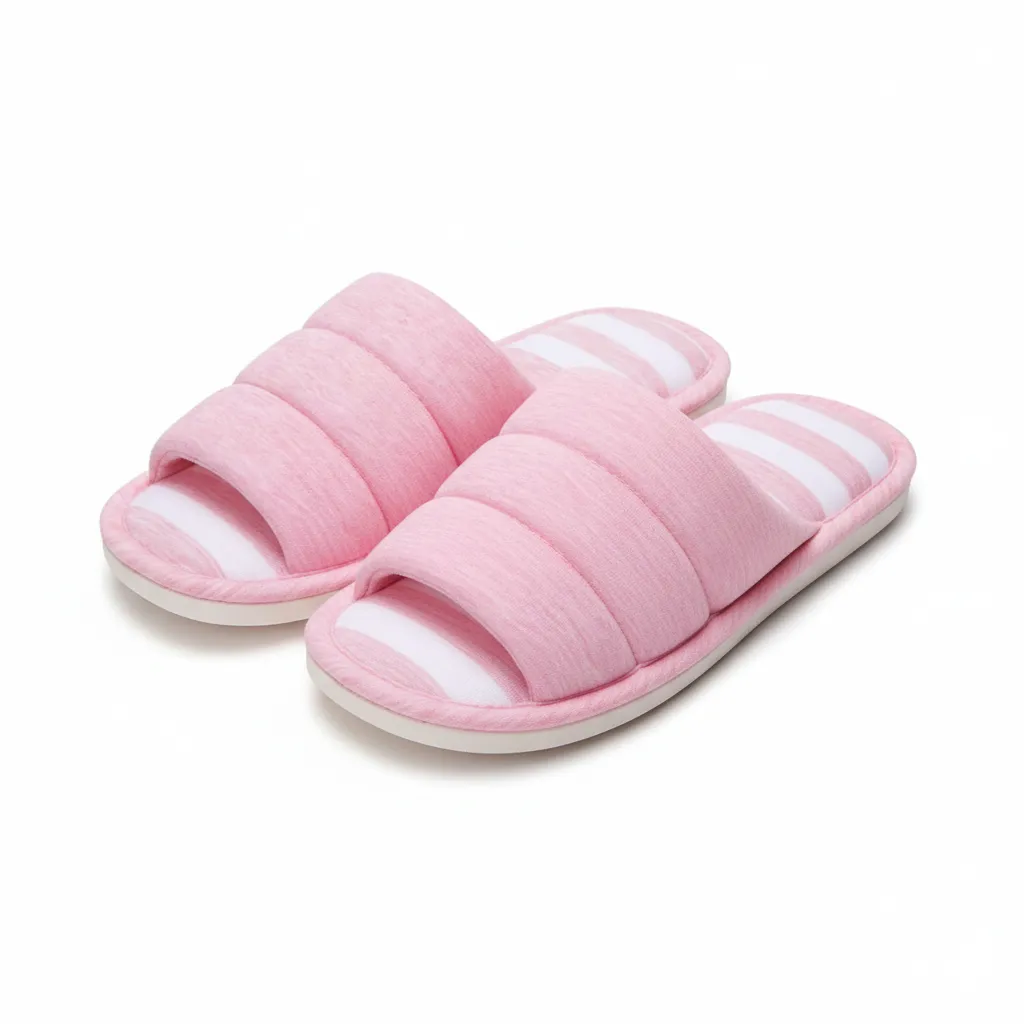
| Open-toe slippers |
Warm-season homewear and casual retail |
Toe opening, forefoot coverage, edge binding, footbed, and fit stability |
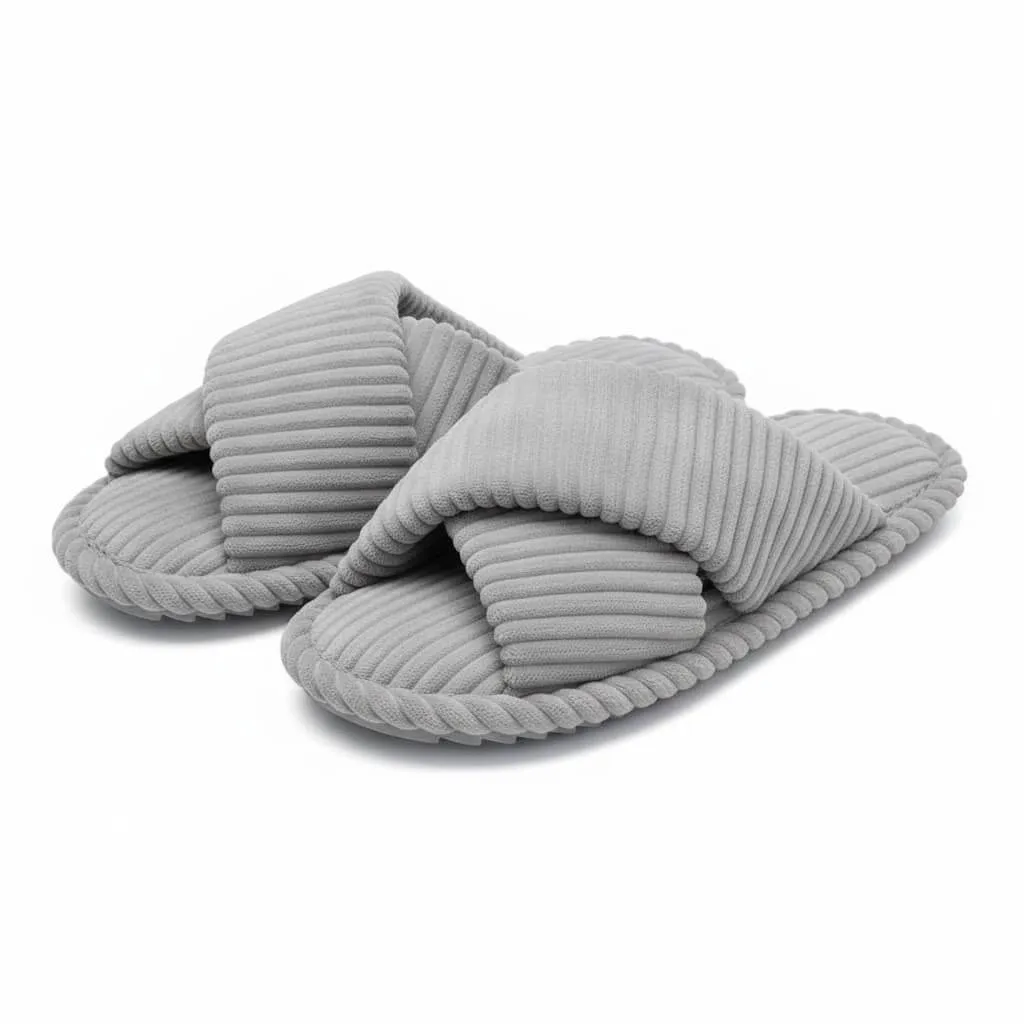
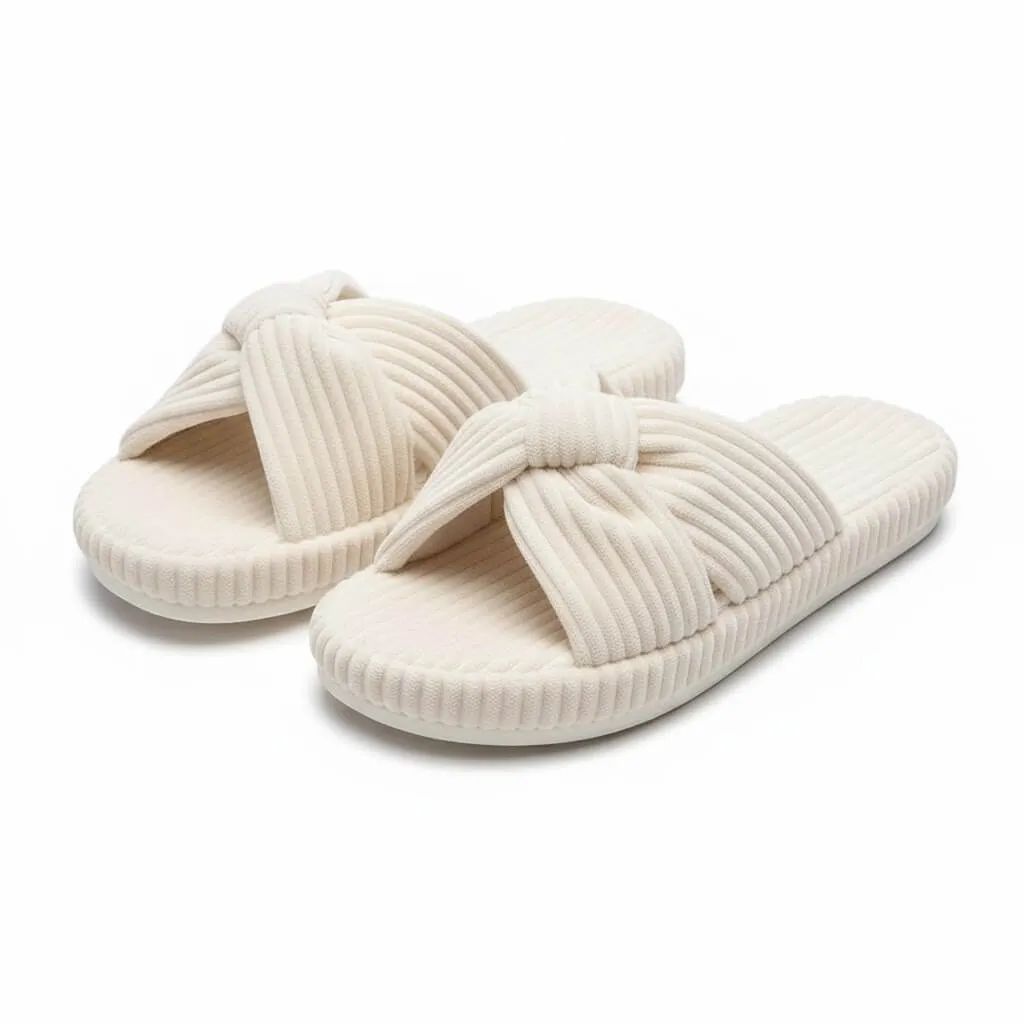
| Cross-band slippers |
Lifestyle, gift, and color-led collections |
Band width, crossover position, material thickness, opening, and pair symmetry |
| Lightweight scuffs |
Travel, compact packing, and lighter indoor ranges |
Upper depth, product weight, flexibility, shape recovery, and packing method |
| Textile seasonal slippers |
Fashion-led and retailer-specific programs |
Fabric hand feel, color, print or logo, seams, size range, and retail presentation |
For broader product directions, return to the wholesale women’s slippers category.
Customize Materials, Colors, Sizes, and Branding
Existing products can be used as OEM/ODM references where the construction permits. Material and color selection should match the target price, season, retail positioning, logo method, and expected bulk consistency.
- Upper coverage and panel shape
- Suitable textile, lining, binding, and footbed materials
- Core, seasonal, and retailer-specific colors
- Women’s size range and quantity ratio by size
- Cushioning and outsole construction
- Embroidery, labels, printing, insole branding, hang tags, and packaging
Terms such as breathable, anti-slip, or wear-resistant should only be used when the product specification and agreed test evidence support them.
Confirm Fit and Sole Construction During Sampling
Open-toe and cross-band designs require careful control of the opening and upper position. A band that is too loose can reduce fit stability, while one that is too tight can restrict entry. The final fit also depends on footbed thickness, seam allowance, material stretch, and sole shape.
- Opening width, upper position, and forefoot coverage
- Internal length and width across representative sizes
- Band symmetry, seam placement, and edge finishing
- Footbed feel, outsole flatness, and upper-to-sole connection
- Left-right matching and appearance after packing
TPR or EVA may be considered where suitable. Their performance depends on the exact formulation, hardness, thickness, tread, construction, use conditions, and test method—not the material name alone.
Approve Retail Presentation and the Bulk Standard
Summer ranges often rely on coordinated colors and compact presentation. Approve the color standard on production material and confirm logo placement, size labels, hang tags, barcodes, individual packing, inserts or hangers, carton quantities, and carton marks.
The approved sample and written specification should define every component. Bulk reviews can cover materials, color, sizing, seams, pair symmetry, outsole attachment, branding, packing, and final quantities against that reference.
Women’s Summer Slipper Development Resources
Use these guides to review women’s slipper sourcing and outsole decisions in greater detail:
- Wholesale Women’s Slippers Sourcing Guide
Review product positioning, materials, fit, size planning, branding, packaging, sampling, and bulk quality requirements.
- TPR vs EVA Sole for Slippers
Compare outsole structure, thickness, weight, flexibility, tread, construction, and intended use for the confirmed product.
For plush winter, novelty, ballerina-style, and more covered indoor products, explore Utop’s complete wholesale women’s slipper range.
Request a Women’s Summer Slipper Quotation
Send the preferred SKU or reference, estimated quantity, size plan, materials, colors, branding, packaging, destination market, and requested schedule.
Discuss Your Summer Slipper Range
FAQ About Wholesale Women’s Summer Slippers
What styles can be developed for a summer range?
Possible directions include open-toe slippers, cross-band styles, lightweight scuffs, and other warm-season indoor designs. Feasibility depends on the required materials, construction, sizes, quantity, and target market.
Can colors and branding be customized?
Yes, where suitable for the selected material and construction. Buyers can discuss color references, embroidery, labels, printing, insole branding, hang tags, and retail packaging.
How should open-toe fit be approved?
Review opening width, band position, forefoot coverage, footbed length and width, material stretch, and representative fitted sizes rather than relying only on a general size chart.
What information is needed for a quotation?
Provide a product or design reference, estimated quantity, size range and ratio, colors, materials, logo, packaging, destination market, and requested schedule.
Does a lightweight summer slipper automatically mean it is breathable?
No. Breathability depends on the upper, lining, footbed, openings, construction, and any applicable test method. Marketing claims should match the confirmed specification and evidence.
How is MOQ determined for summer slippers?
MOQ depends on the construction, upper and footbed materials, number of colors, size assortment, logo method, outsole, packaging, and customization level. Share the intended range for review.



United States