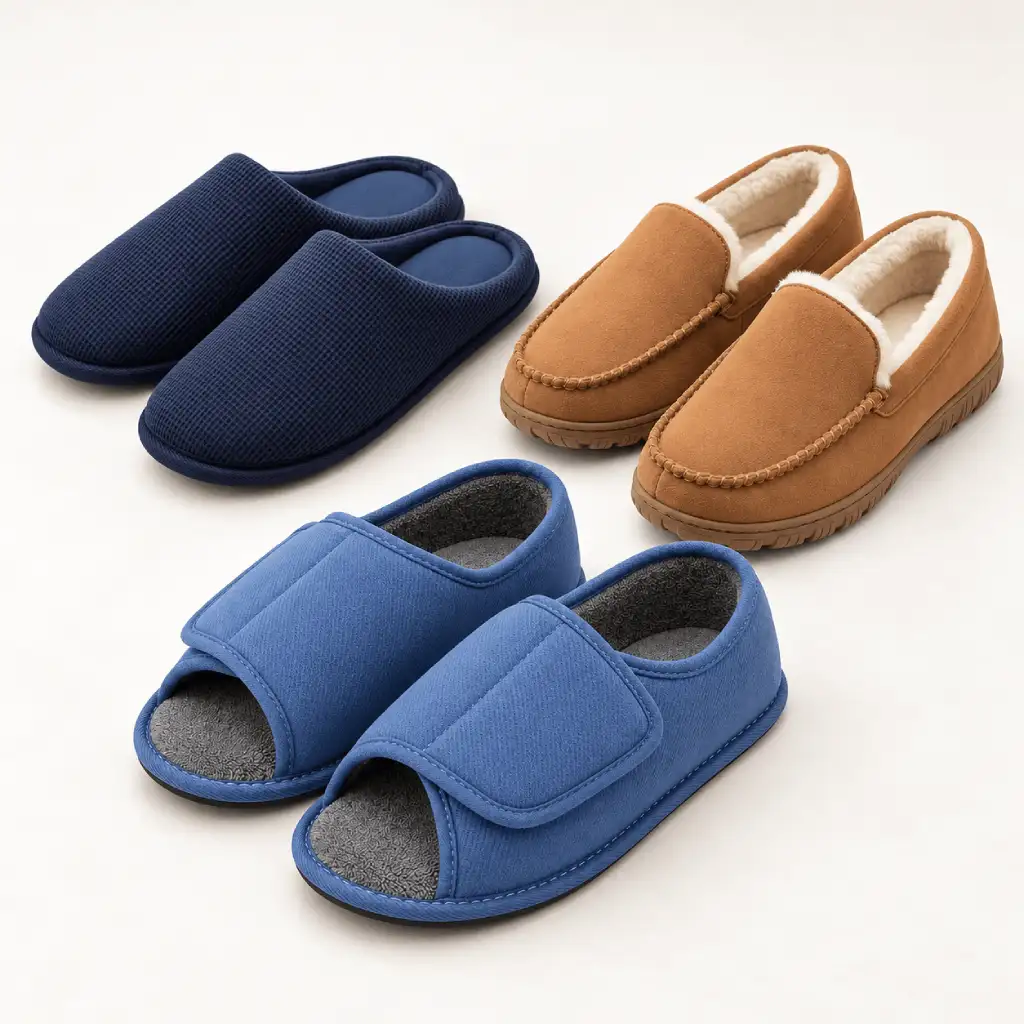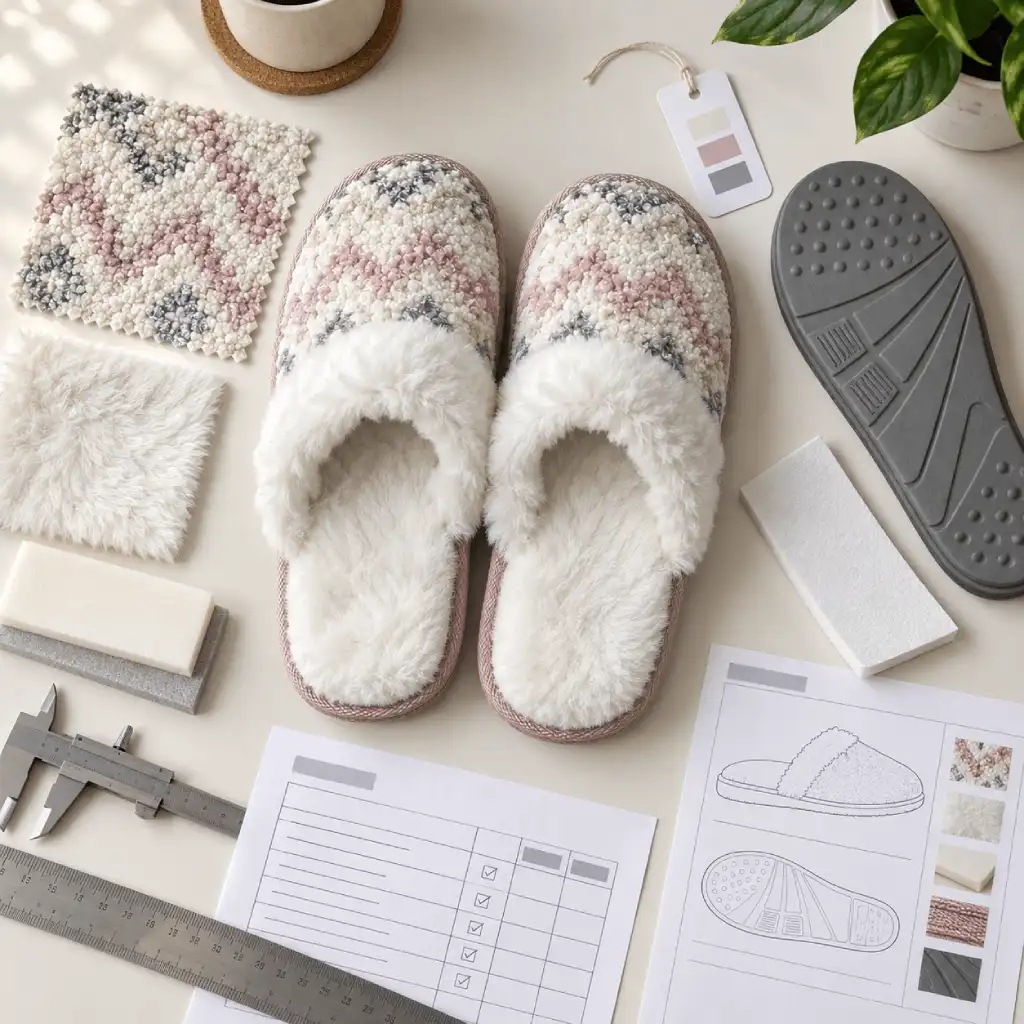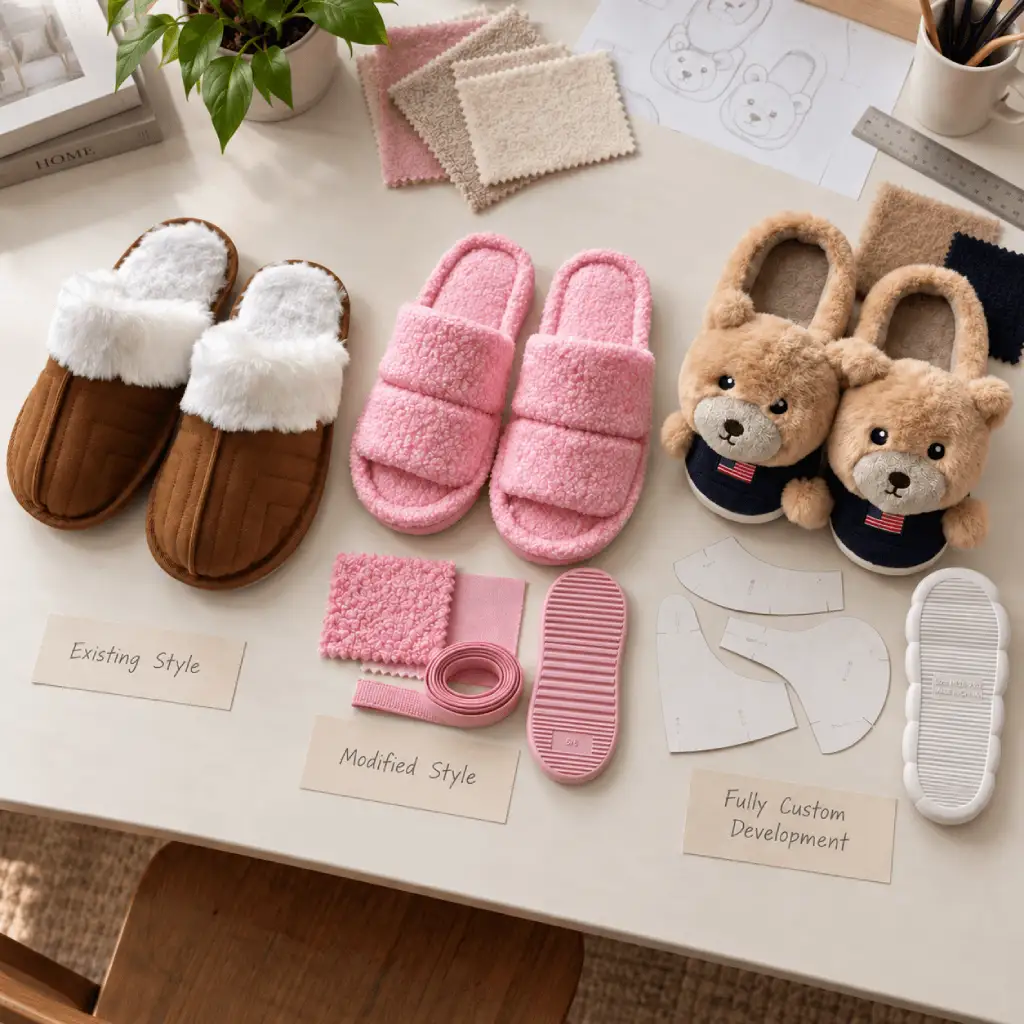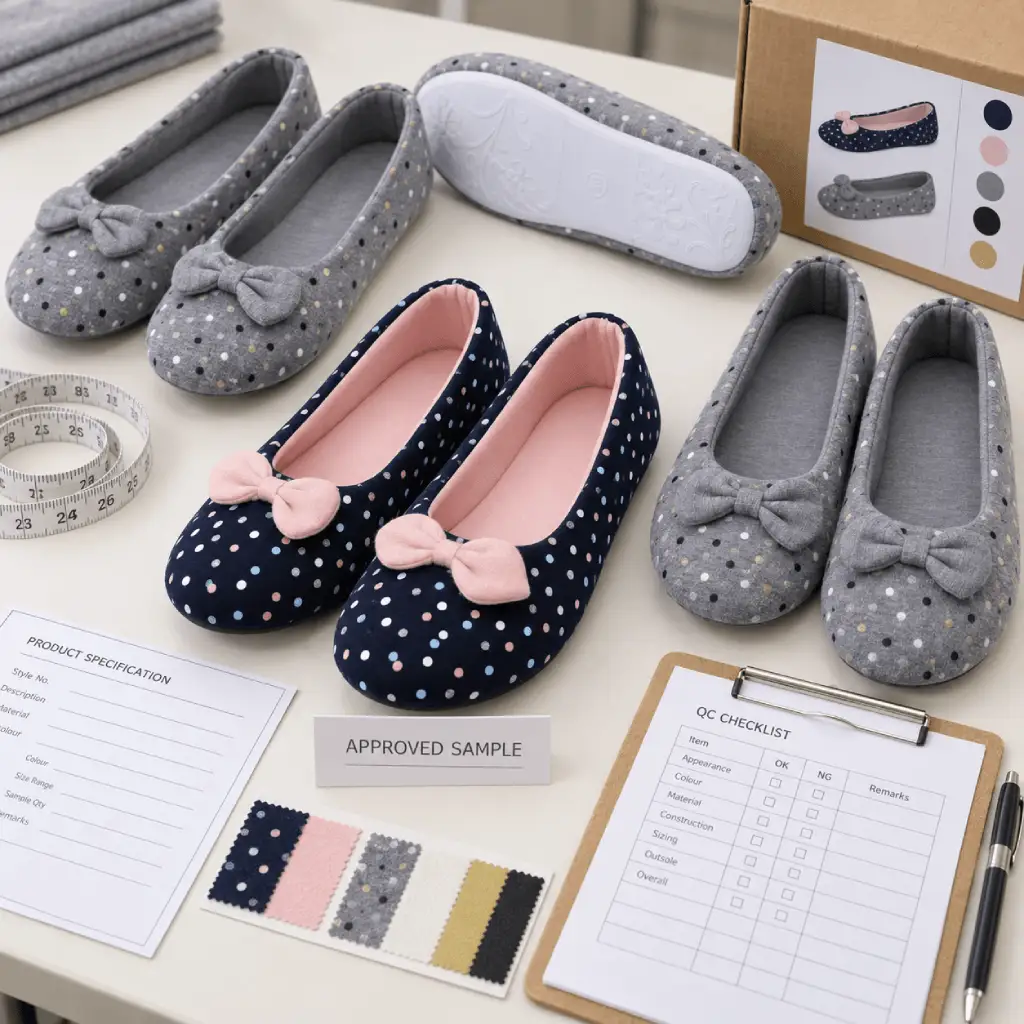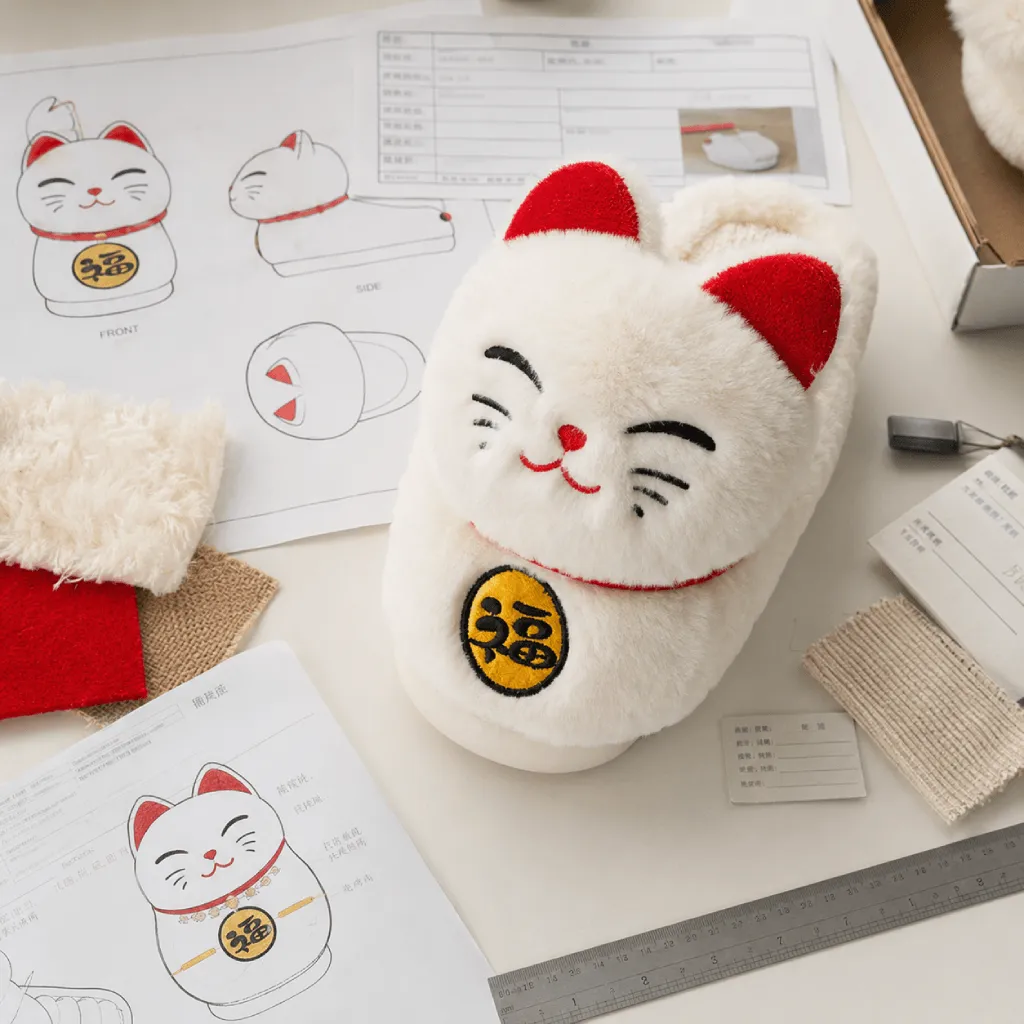
Knowing how to choose a women’s slipper manufacturer matters most after the quotations begin to look similar. Two suppliers may offer the same upper description, sole material, logo method, and delivery window, yet interpret the product very differently once sampling starts.
Women’s slippers are especially sensitive to details that are easy to miss on a price sheet: pile direction, lining volume, usable internal space, opening shape, foam feel, decoration placement, pair appearance, and recovery after packing. A supplier should be able to turn those details into a repeatable specification, not leave them to memory.
This guide gives wholesale buyers a practical way to compare women’s slipper manufacturers before committing to bulk production. The aim is not to find a supplier that says yes to everything. It is to identify the one that understands the order, shows relevant evidence, raises the right questions, and can carry an approved sample into a consistent shipment.
Buyer takeaway: compare suppliers against one written brief and one evidence checklist. A confident sales reply is useful; a traceable product, sample, quality, and delivery process is more useful.
Scope: this is a B2B supplier-evaluation guide for wholesale, OEM, ODM, and private label projects. It does not replace a product-specific factory audit, compliance review, contract, inspection plan, or laboratory test.
Buyers who are still defining the product range can first review UTOP’s custom women’s slippers category. Once the style direction is clear, the checks below can be used to compare potential manufacturing partners on the same basis.
1. Write One Brief Before You Compare Suppliers
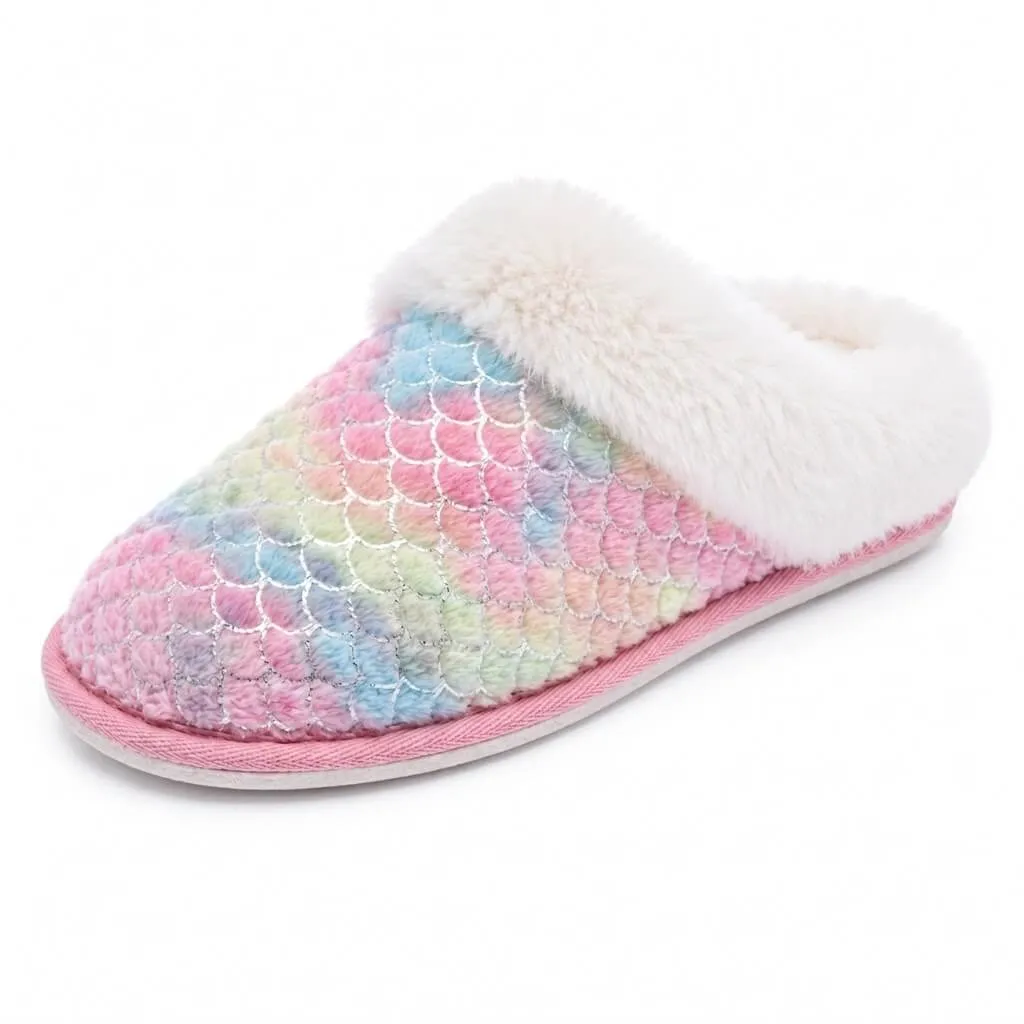
A supplier comparison is only useful when every factory is pricing and reviewing the same product. If one supplier assumes a lightweight EVA bottom, another allows for a molded TPR outsole, and a third has included a retail box that no one else quoted, the prices are not competing offers. They are different products.
Start the women’s slipper sourcing process with a short brief. It does not need to answer every technical question, but it should separate confirmed requirements from open decisions. This gives the manufacturer room to make practical recommendations without quietly changing the commercial target.
| Brief item | What to state | Why it changes supplier selection |
|---|---|---|
| Market and channel | Country, retailer type, price position, season, and intended use | Sets product, documentation, packaging, and delivery expectations |
| Product direction | Reference style, construction, upper, lining, cushioning, and outsole direction | Shows whether the supplier has relevant technical experience |
| Assortment | Estimated total, colors, sizes, and quantity ratio | Reveals material, labor, tooling, and MOQ constraints |
| Brand and pack | Logo method, labels, barcodes, individual pack, and carton requirements | Tests private label and retail-order capability |
| Timing and approval | Required delivery point, sample stages, reviewers, tests, and approval owner | Makes the schedule and decision path visible |
Send the same files, quantities, destination, and requested delivery point to each candidate. Ask suppliers to identify assumptions and exclusions in writing. That single habit prevents a great deal of confusion later.
Useful signal: a capable supplier does not merely return a price. It notices missing information that affects construction, fit, repeatability, compliance, or delivery and explains what must be confirmed.
For a wider development framework, see UTOP’s footwear development process for custom slippers.
2. Match the Manufacturer to the Product You Actually Need
A broad slipper catalogue is not proof that the factory is right for your order. Ask for recent examples that resemble the proposed product in construction, material behavior, decoration, sizing, and packaging—not merely in color or overall silhouette.
For a plush closed-back house shoe, relevant experience may include controlling pile direction, lining volume, upper shape, usable internal space, and a stitched or bonded upper-to-sole connection. For a lightweight open-toe style, the important work may be band placement, footbed feel, edge finishing, flexibility, and compact packing. A reliable slipper manufacturer should understand why those two programs need different development and inspection plans.
Ask for evidence that matches the difficult part
- Products using a similar upper, lining, cushioning, outsole, and connection method
- Representative size sets rather than one attractive middle-size sample
- Decoration made on the proposed production material, especially embroidery on plush or knit
- Packing examples that show how structured uppers, bows, faux fur, or raised details recover after compression
- Quality records or inspection examples relevant to the same product family
The right questions are specific. “Have you made women’s slippers?” will almost always receive a yes. “How would you control opening shape and internal space when this lining becomes thicker?” gives the supplier something technical to answer.
Material names alone are not enough. Jersey knit is not wool felt, and molded TPR is not the same production route as cut EVA. Construction also matters: welt-stitched, side-stitched, and cold-glued products place different demands on patterns, components, equipment, and process control. UTOP’s slipper materials and components guide provides a fuller reference for these specification decisions.
Selection rule: evaluate the supplier against the product’s hardest-to-control feature. Easy details rarely reveal the real capability gap.
3. Verify the Factory and the Production Route
The question is not simply whether a supplier owns a factory. What matters is who will perform each important step, who controls the specification, and who is responsible when work moves between facilities.
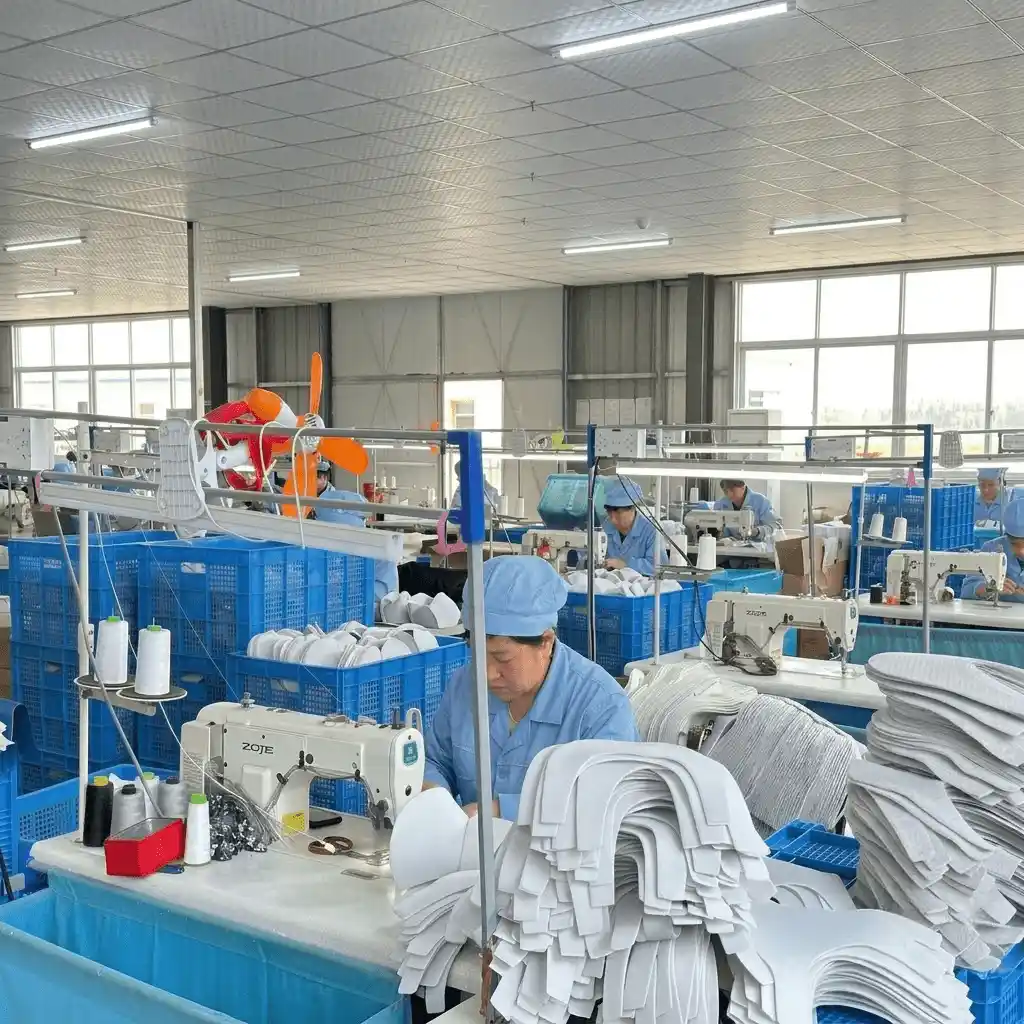
Some women’s slipper manufacturers keep cutting, stitching, assembly, inspection, and packing within one main site. Others coordinate selected materials, embroidery, molded outsoles, tooling, printing, or specialist operations through approved partners. Either model can work. The risk appears when the production route is vague or changes after approval without the buyer knowing.
Ask for a live or recent view of the areas relevant to your product. A showroom proves that samples exist; it does not show how the bulk order will be made. Follow one comparable style through material receiving, cutting, sewing, sole preparation or attachment, finishing, inspection, and packing.
| Check | Evidence to request | What you are trying to confirm |
|---|---|---|
| Business identity | Legal company details, quotation entity, payment entity, and export role | Who is contracting and accountable |
| Production route | Process flow for the proposed construction | Where each critical operation happens |
| People and equipment | Relevant line, machines, supervisors, sample room, and inspectors | Whether the process matches the claimed capability |
| External operations | Named outsourced steps and incoming-control method | How third-party variation is controlled |
| Order traceability | Style, color, size, material-lot, inspection, and packing identification | Whether problems can be traced and contained |
A useful slipper supplier evaluation follows the order, not the tour route prepared for visitors. If a step is critical to fit, appearance, attachment, or labeling, ask to see how that step is instructed and checked.
Separate company proof from product proof
A business license, audit report, factory video, and customer reference each answer a different question. None proves by itself that the supplier can make your exact product consistently. Company documents support identity and management-system review; samples, specifications, production records, and inspection evidence support the product decision.
Dates and scope matter. Check which legal entity and facility appear on each document, what activities were reviewed, and whether the document is current enough for the intended decision. If a material certificate or test report is offered, identify the material, supplier, color, product, and order to which it actually applies.
Look for an honest boundary
A credible manufacturer can explain what it makes directly, what it purchases, which operations require an outside specialist, and how those inputs are approved. “Everything is in-house” is not automatically stronger than a controlled supply chain, especially when molded outsoles, special embroidery, packaging, or testing are involved.
Good evidence: the supplier can connect the quoted product to a visible process, responsible people, controlled inputs, inspection points, and records that would exist during the real order.
UTOP’s company and manufacturing background provides context for buyers evaluating UTOP alongside other potential suppliers.
4. Treat Sampling as a Working Test
A polished sample is encouraging, but the more revealing part is how the supplier gets there. Sampling shows whether the team can read the brief, identify conflicts, source the right components, explain trade-offs, record changes, and correct problems without losing previously approved details.
When comparing a private label women’s slipper manufacturer, give each candidate the same reference and record the same review points. Photograph the sample from consistent angles, measure named points, try the intended fit range where practical, and return one consolidated comment sheet rather than a stream of separate messages.
Review the sample as a complete product
- Materials: surface, pile or knit structure, backing, lining, cushioning, binding, and outsole match the identified references.
- Fit: internal length and width, opening, instep coverage, toe space, heel position, and lining volume work together.
- Construction: seams, shaping, reinforcement, and upper-to-sole connection suit the approved design.
- Branding: artwork remains clear on the actual upper and is placed consistently across the pair.
- Packing: the slipper fits the intended individual pack and can recover acceptably after the proposed compression.
Do not approve a substitute material as though it were the final one. A thinner lining can make fit appear correct; a smoother fabric can make embroidery look sharper; a different outsole can change weight, flexibility, and shape. Substitutions are useful for an early construction trial only when their limitations are written down.
Watch the revision process: a strong sample team keeps a numbered comment record, confirms what will change, protects approved details, and states when a correction affects price, tooling, testing, or timing.
For detailed measurement and fit planning, use UTOP’s slipper size chart and bulk sizing guide.
5. Compare Quotations Line by Line
The lowest number on a quotation is meaningful only when the specification, quantity, packing, terms, and timing are comparable. A small difference may come from a lighter material, a simpler logo, fewer size molds, different cushioning, a lower carton requirement, or an exclusion that has not yet been priced.
Ask every women’s slipper supplier to connect the price to a dated product description. At minimum, the quotation should identify the style, upper and lining, cushioning direction, outsole and construction, colors, size range, logo method, packaging, order quantity, trade term, sample or tooling charges, and validity period.
| Compare | Confirm in writing | Common hidden difference |
|---|---|---|
| Product | Material references, component specifications, construction, sizes, and colors | Similar names used for different grades or structures |
| Branding | Method, dimensions, placement, colors, and setup | Logo included as print when embroidery was expected |
| Packaging | Individual pack, labels, barcode, inserts, carton quantity, and marks | Retail packaging or labeling excluded |
| Commercial basis | Quantity by color and size, currency, Incoterm, destination point, and validity | Different freight responsibility or quantity assumption |
| Separate charges | Samples, tooling, tests, special packaging, and third-party inspection | One-time costs presented later |
If one quotation is much lower, do not immediately treat it as the benchmark. Ask what the supplier changed or excluded to reach that price. The answer may reveal a good value-engineering idea, or it may show that the brief was not understood.
MOQ should be explained in the same way. Materials, colors, size assortment, logo method, packaging, tooling, and production allocation can each create a different minimum. A single headline MOQ rarely describes the whole order.
UTOP’s private-label slipper manufacturing guide explains how MOQ, specifications, packaging and production requirements shape a quotation.
6. Follow the Quality System from Approved Sample to Bulk Production
A polished sample is useful, but it does not prove that every production pair will match it. A dependable women’s slipper manufacturer should be able to explain how the approved sample, specification sheet, material references and packaging instructions become working controls on the factory floor.
Start by asking what is checked, when it is checked and where the result is recorded. The answer should cover more than a final visual inspection.
| Control stage | Useful evidence | What it can prevent |
|---|---|---|
| Incoming materials | Material name, color reference, thickness or weight requirement, lot identification and acceptance record | Unapproved substitutions, shade variation and unsuitable components |
| First-piece approval | Measurements, construction details, logo placement and workmanship checked against the approved reference | A setup error being repeated across the order |
| In-process inspection | Checks at cutting, stitching, lasting, sole attachment or packing as relevant to the construction | Defects being hidden by the next production step |
| Final inspection | Defined sampling method, defect classification, measurement checks and shipment disposition | Nonconforming goods being released without a recorded decision |
For a practical overview of inspection points and defect handling, see UTOP’s footwear quality control guide for bulk slipper orders.
Make the Checks Specific to Women’s Slippers
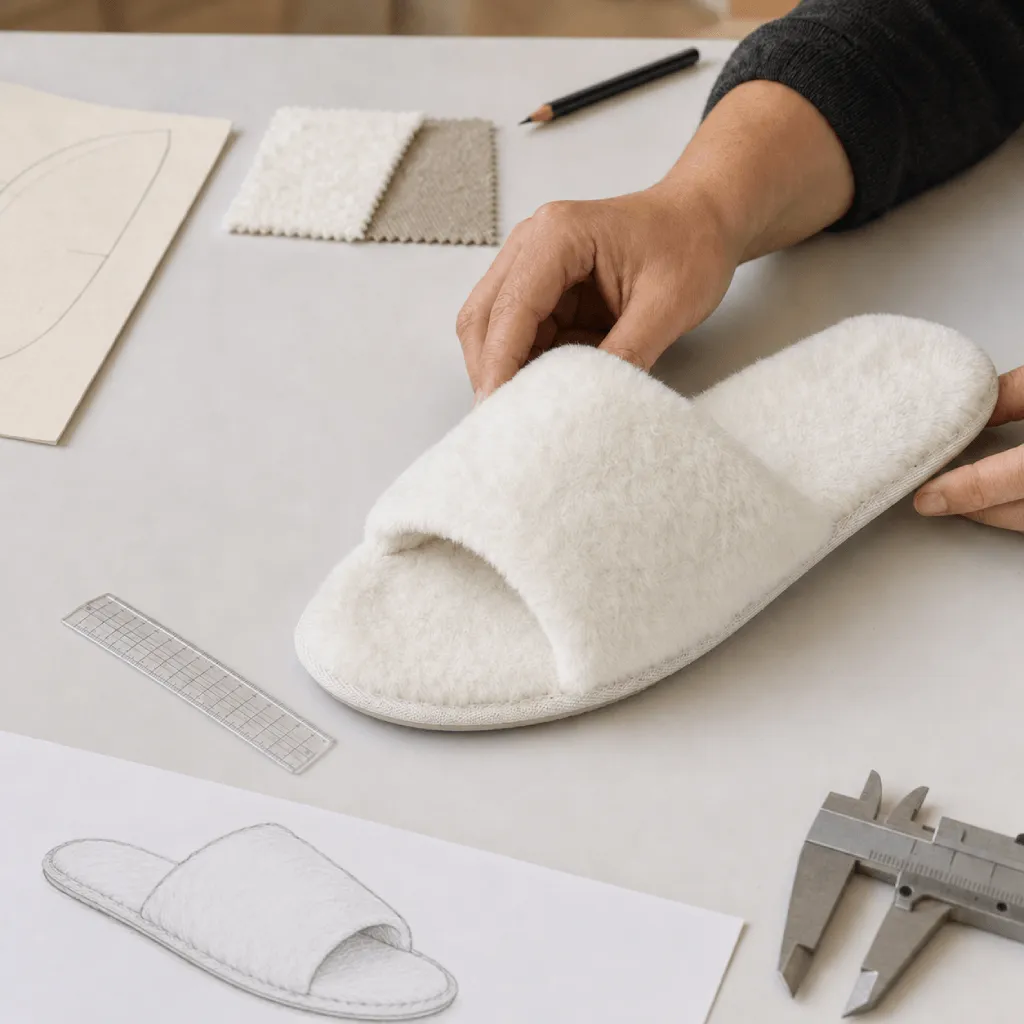
A useful women’s slipper quality control plan reflects the actual style. A plush closed-back slipper, an open-toe slide and a molded indoor-outdoor design should not be inspected as if they were the same product.
Depending on the approved specification, the control list may include:
- upper and lining material, pile direction, hand feel and color consistency;
- size measurements, left-right pairing, toe shape and heel alignment;
- stitch density, seam security, binding width and visible thread ends;
- logo method, placement, orientation and appearance;
- outsole material, flex, surface finish and attachment quality;
- cleanliness, odor, accessories, labels, pair packing and carton information.
Also ask what happens when a check fails. A credible answer names the person who can stop or hold production, the method used to separate affected goods, the rework or replacement decision, and the evidence required before release. UTOP’s guide to common indoor slipper manufacturing defects provides additional examples of issues buyers should discuss before bulk production.
7. Check Capacity Against Your Actual Delivery Calendar
A large headline capacity does not guarantee that your order can ship on time. The more useful question is how much suitable capacity is available during your production window—and which materials or processes sit on the critical path.
Ask a prospective supplier to build the schedule backward from the required shipment date. The discussion should include:
- time for design confirmation, material sourcing and sample revisions;
- the date when colors, size breakdown, artwork and packaging must be frozen;
- lead times for custom fabric, molded outsoles, labels and printed packaging;
- booked factory capacity during your planned production period;
- inspection, rework allowance and the handover date to your forwarder.
Seasonal women’s slippers need particular care because material suppliers, stitching lines and packing teams may all become busy at the same time. A reliable women’s slipper manufacturer should flag those constraints before the purchase order is released, not after a milestone has already slipped.
For a fuller breakdown of the variables behind those dates, read UTOP’s guide to bulk slipper lead-time planning.
8. Confirm Compliance Requirements and Supporting Documents
Compliance is not a single certificate that makes every women’s slipper suitable for every market. Requirements can change with the destination country, materials, claims, intended user and retailer program. Define those conditions before asking a manufacturer what it can provide.
A practical compliance brief identifies:
- the countries or sales channels where the product will be offered;
- the intended wearer, especially whether the range includes children;
- upper, lining, foam, outsole, adhesive, print and accessory materials;
- restricted-substance, labeling, packaging and retailer-specific requirements;
- the test method, responsible laboratory, sample source and required report date.
| Evidence type | What the buyer should confirm |
|---|---|
| Product or material test report | The tested item, color or material, test standard, laboratory, report date and whether it represents the production order |
| Factory social or quality audit | The audited legal entity and site, audit scheme, scope, validity period and any open corrective actions |
| Declaration or traceability record | Who issued it, which materials or production lots it covers and what supporting evidence is available |
For products sold in the United States, buyers can review the U.S. Consumer Product Safety Commission’s official guidance on testing and certification. For products placed on the EU market, the European Commission provides an official overview of the REACH Regulation. These sources help frame the discussion, but the importer or brand should confirm the rules that apply to its exact product and market.
9. Judge Communication by How the Supplier Controls Changes
Fast replies are pleasant, but accurate follow-through matters more. During development, watch how the supplier records decisions, closes open questions and manages revisions. This is one of the clearest early indicators of how the relationship may work once production begins.
A well-controlled project should make the current version easy to identify. At minimum, buyers should be able to trace:
- the latest specification sheet and its revision date;
- which physical or digital sample has been approved;
- approved colors, materials, logo artwork and size breakdown;
- packaging copy, barcode data, label positions and carton marks;
- open questions, responsible people and decision deadlines;
- cost or delivery changes created by each revision.
Use a short written confirmation after every important decision. If the lining changes, for example, the update may affect color, hand feel, cost, testing and the sample schedule. A professional women’s slipper supplier should identify those linked effects rather than treating the request as an isolated note.
Packaging is a frequent source of late changes. UTOP’s footwear packaging guide can help buyers define the fields that need approval before bulk packing starts.
10. Use a Supplier Scorecard—and Keep Deal Breakers Separate
Once the evidence is collected, compare suppliers with the same criteria. A scorecard prevents a low quote, an attractive showroom or one excellent sample from dominating the decision.
| Evaluation area | Suggested weight | Evidence to score |
|---|---|---|
| Product and construction fit | 15 | Relevant styles, materials, outsole methods and technical understanding |
| Factory and production-route evidence | 15 | Legal entity, site, equipment, process ownership and subcontracting disclosure |
| Development and sample performance | 15 | Questions asked, sample accuracy, revision control and problem solving |
| Specification and quotation clarity | 10 | Comparable scope, exclusions, assumptions and commercial terms |
| Quality system | 15 | Approved references, inspection stages, records and corrective action |
| Capacity and delivery planning | 15 | Booked capacity, material lead times, bottlenecks and realistic milestones |
| Compliance documentation | 10 | Market-specific understanding, document scope, dates and traceability |
| Communication and change control | 5 | Clear ownership, version control, escalation and decision records |
| Total | 100 | Adjust the weights to reflect the risks of your program |
Set the scoring method before reviewing proposals, and require a short note beside each score. More importantly, list non-negotiable conditions separately. A missing legal document, an undisclosed production route or an inability to meet a mandatory market requirement should not be averaged away by high scores elsewhere.
This women’s slipper manufacturer checklist is designed for comparison, not for producing a universal pass mark. A retailer with a complex compliance program will weight documentation differently from a small brand launching one private-label indoor slipper. The structure stays the same; the commercial priorities change.
Frequently Asked Questions
What should I ask before choosing a women’s slipper manufacturer?
Ask about relevant product experience, the real production route, sample development, material specifications, quality-control records, available capacity, compliance support and change control. Tie every answer to your actual style, market and delivery calendar.
How can I tell whether a supplier is a manufacturer or a trading company?
Verify the legal entity and production address, then follow the product through its actual manufacturing steps. Ask which processes are performed at that site, which are outsourced and who controls quality at each handoff. The business label matters less than a transparent, verifiable production route.
Is an approved sample enough to place a bulk order?
No. The approved sample should be supported by a written specification, material and color references, size measurements, branding details, packaging requirements and an agreed inspection plan. Otherwise, different people may interpret the sample differently during production.
How should I compare quotes for wholesale women’s slippers?
Normalize the product specification, quantity, size ratio, packaging, testing, incoterm, payment terms and tooling assumptions first. Only compare unit prices after confirming that every supplier is pricing the same scope.
Which compliance documents should a supplier provide?
The answer depends on the destination market, product materials, intended user and customer requirements. Confirm the scope, date, tested sample, issuing organization and legal entity shown on each document. Do not assume that one report or factory audit covers every product or order.
How long does UTOP usually need for samples and bulk production?
Sample development typically takes 7–14 days. Bulk production commonly takes 30–45 days after the sample and order details are approved. Complex designs, custom materials, order size and peak-season loading can change the schedule, so each project needs a confirmed timeline.
Choose with Evidence, Not with Claims
Knowing how to choose a women’s slipper manufacturer comes down to connecting four things: a clear product brief, evidence from the real production route, a controlled approval process and records that continue into bulk production. Price still matters, but it becomes meaningful only after the scope and risks are visible.
If you are developing a private-label or wholesale women’s slipper range, send UTOP your reference images, target market, quantities, material preferences and required delivery date. Our team can review the brief, identify the questions that need to be resolved and propose a practical development route.
Planning a women’s slipper collection?
Discuss Your Project with UTOP