
For OEM/ODM review, send product references or artwork, estimated quantity, size range, colors, materials, branding, packaging, destination market, intended indoor use, and requested delivery schedule.
Summer slipper development should begin with the target climate, retail channel, intended indoor use, price position, upper coverage, lining direction, cushioning, outsole, size range, and packaging requirements. A material name alone does not determine how warm, light, flexible, or comfortable the finished slipper will feel.
| Product direction | Development objective | Details to confirm |
|---|---|---|
| Open-back slippers | Easy entry and a familiar indoor homewear format | Instep coverage, upper stability, lining, footbed feel, and outsole construction |
| Scuff slippers | Simple seasonal retail and wholesale programs | Upper depth, toe room, internal width, cushioning, pair weight, and packing method |
| Reduced-coverage concepts | Less upper coverage for warm-season collections | Pattern stability, edge finishing, foot retention, material support, and approved fit |
| Open-toe concepts | Seasonal designs where the buyer specifically requires an open front | Toe opening, upper position, forefoot fit, edge finishing, and outsole balance |
Buyers can review the broader wholesale men’s slippers category when planning a collection that combines summer products with year-round indoor styles.
Warm-season comfort depends on the complete product structure. Upper coverage, material thickness, backing, lining, foam, footbed construction, seam position, and outsole all influence the finished feel.
Development discussions may include:
If breathability or another measurable performance requirement is important, the buyer should define the test method and acceptance standard. It should not be assumed from a fabric name or an open-back shape alone.
TPR and EVA can both be considered for men’s summer slippers. The final choice depends on the outsole structure, material specification, hardness, thickness, weight, tread, construction method, appearance, order quantity, and intended use.
Grip, abrasion performance, support, and outdoor suitability cannot be determined by the material name alone. If the slipper is intended for more than normal indoor use, confirm the specific construction and required testing before development.
Reduced upper coverage can change how the foot is retained, so fit should be approved on the complete sample. Buyers should review internal length and width, instep position, toe opening where applicable, heel placement, cushioning, outsole dimensions, and left-right consistency.
Check the smallest, middle, and largest requested sizes because upper proportions and openings may require controlled grading. The final order should also state the quantity ratio for each size.
OEM/ODM options may include upper and lining materials, colors, size ranges, cushioning, outsoles, embroidery, woven labels, printed labels, insole branding, hang tags, barcode labels, individual packing, boxes, and carton marks.
Core neutral shades can support repeat programs, while selected seasonal colors or contrast details can create variety. The number of colors should be planned with the expected quantity, material availability, size assortment, and packaging requirements.
The approved sample and written specification should define the production reference. Confirm shape, fit, upper and lining materials, cushioning, outsole, color, stitching, logo placement, size grading, labels, individual packing, and carton information before bulk production.
Bulk reviews can cover materials, dimensions, pair consistency, stitching, outsole attachment, logo application, labels, packaging, carton marks, and final quantities according to the approved sample and confirmed order requirements.
Send product references or artwork, estimated quantity, size range and ratio, colors, materials, intended use, outsole requirements, branding, packaging, destination market, compliance requirements, and requested schedule.
Utop will review the design direction, construction, sampling needs, production feasibility, and quotation information.
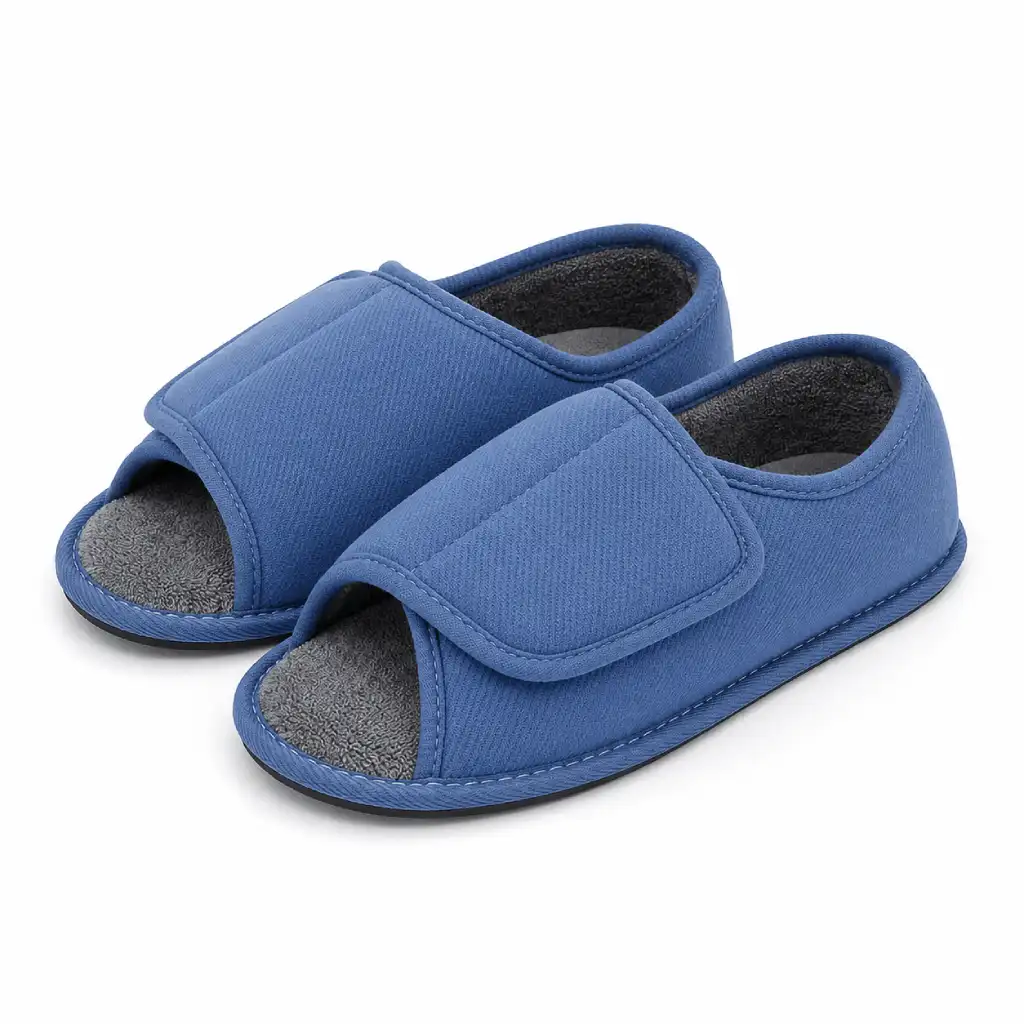
Depending on the design and construction, projects may include open-back slippers, scuffs, reduced-coverage uppers, and open-toe concepts. Final feasibility depends on materials, fit, outsole, quantity, and technical requirements.
Yes. Buyers can discuss materials, colors, sizes, cushioning, outsoles, logos, labels, and packaging according to the selected construction and order plan.
No. The finished result depends on upper coverage, material structure, backing, lining, foam, seams, and the complete construction. Measurable requirements should be defined with an appropriate test method.
Both may be considered. The suitable option depends on the outsole specification, construction, thickness, hardness, weight, tread, intended use, and approved sample.
Provide product references or artwork, quantity, size range and ratio, colors, materials, intended use, outsole requirements, branding, packaging, destination market, and requested schedule.
"Working with Utop has been a game-changer for our footwear brand. Their ability to turn our custom designs into high-quality plush slippers is outstanding. Our customers constantly rave about the comfort and durability. Highly recommend their OEM services!"

"We have been sourcing bulk slippers from Utop for over 3 years. They consistently deliver our large volume orders on time without ever compromising on high quality. Their factory-direct pricing and strict QC process make them our most reliable supplier."

"The level of professionalism at Utop is unmatched. From the initial sample making to final mass production, their foreign trade team communicated flawlessly. The EVA slides we co-developed are now our best-sellers. A truly trustworthy manufacturing partner."
Find answers about customization, quotations, MOQ, sampling, production lead time, private label packaging, quality control, and export coordination for products shown in this category.
Yes. The products shown in this category can be used as reference styles for OEM/ODM and private label projects. Buyers can discuss materials, colors, size ranges, logo methods, packaging, and suitable construction adjustments based on the target market and order requirements.
Please provide the preferred product style or SKU, estimated quantity, size range, colors, material requirements, logo file, packaging plan, destination market, and requested delivery schedule. Clear project information helps us review feasibility and prepare a more accurate quotation.
MOQ depends on the product style, materials, number of colors, logo method, packaging requirement, and customization level. Buyers can share their target product and order plan so our team can review a suitable bulk production solution.
Yes. Samples can be developed to confirm the style, materials, colors, sizing, logo placement, construction details, and packaging before bulk production begins. Any required changes should be confirmed before the final sample is approved.
Sample development usually takes about 7–14 days, depending on the design and customization details. Bulk production usually takes about 30–45 days after sample approval and order confirmation, depending on order quantity, materials, packaging, and the confirmed production schedule.
Yes. Private label options can include embroidery, woven or printed labels, insole branding, hang tags, insert cards, polybags, shoe boxes, display boxes, barcode labels, and custom carton marks. Available options depend on the product and order requirements.
We review materials, construction, stitching, sizing, appearance, logo placement, packing, and order consistency during production and before shipment. The approved sample and confirmed specifications are used as references for bulk order quality checks.
Yes. We support bulk order packing, carton mark confirmation, packing list preparation, and export shipment coordination based on the buyer’s delivery requirements. Shipping terms and destination details should be confirmed before production scheduling.
United States