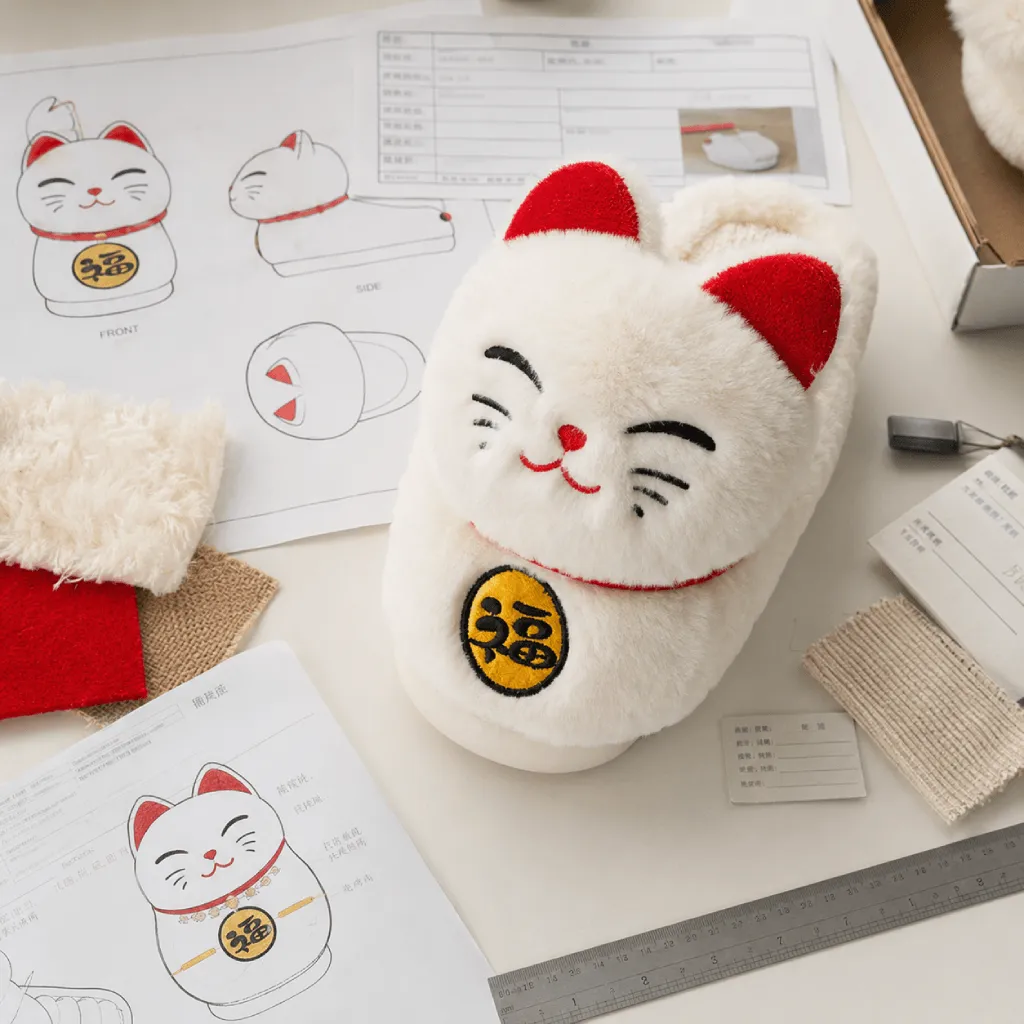
A kids slippers sourcing guide should do more than list soft fabrics and popular colors. For a bulk order, the difficult decisions are usually less visible: which age group the product is for, how the size range will be graded, whether raised decorations are appropriate, what the outsole is expected to do, and which market requirements must be addressed before production.
These details are connected. A thicker lining changes usable internal space. A new character decoration changes the sample and safety review. A different outsole may change flexibility, construction, tooling, weight, and packing. If those decisions are made one at a time, quotations become difficult to compare and late revisions become more likely.
This guide gives brands, importers, wholesalers, retailers, and sourcing teams nine practical checks for planning a kids slippers bulk order. It is written for buyers who need a product that can be specified, sampled, inspected, packed, and repeated across a commercial size range.
Buyer takeaway: begin with the intended child, market, sales channel, and use. Then approve the slipper as one system—fit, materials, decoration, outsole, labels, packaging, testing, and quality controls—not as a collection of separate components.
Scope: this is a B2B sourcing guide, not a consumer product ranking or legal opinion. Requirements vary by destination, intended age, product design, materials, claims, and sales channel. Buyers should identify the rules and retailer standards that apply to their own program.
Buyers who already have a product direction can compare styles in UTOP’s custom kids’ slippers range before preparing a project brief.
1. Define the Product, Wearer, and Sales Program
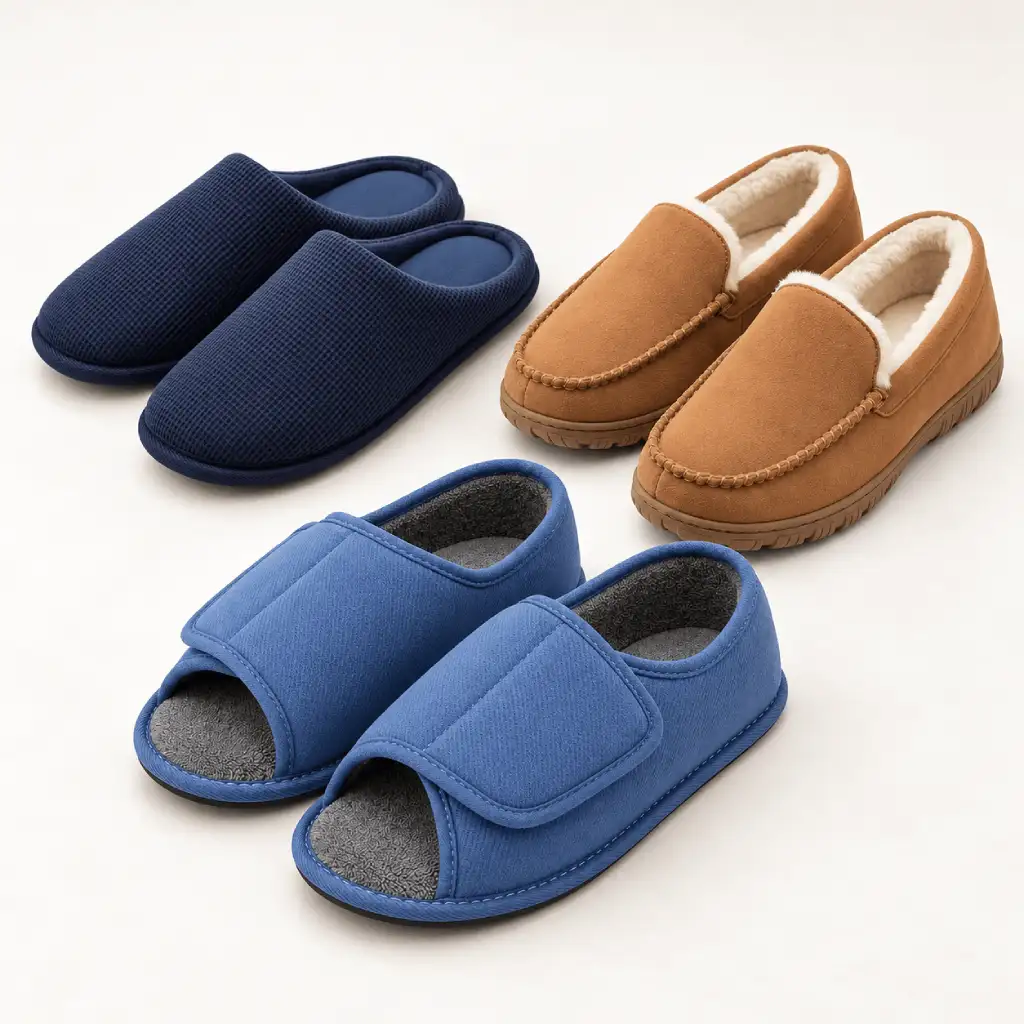
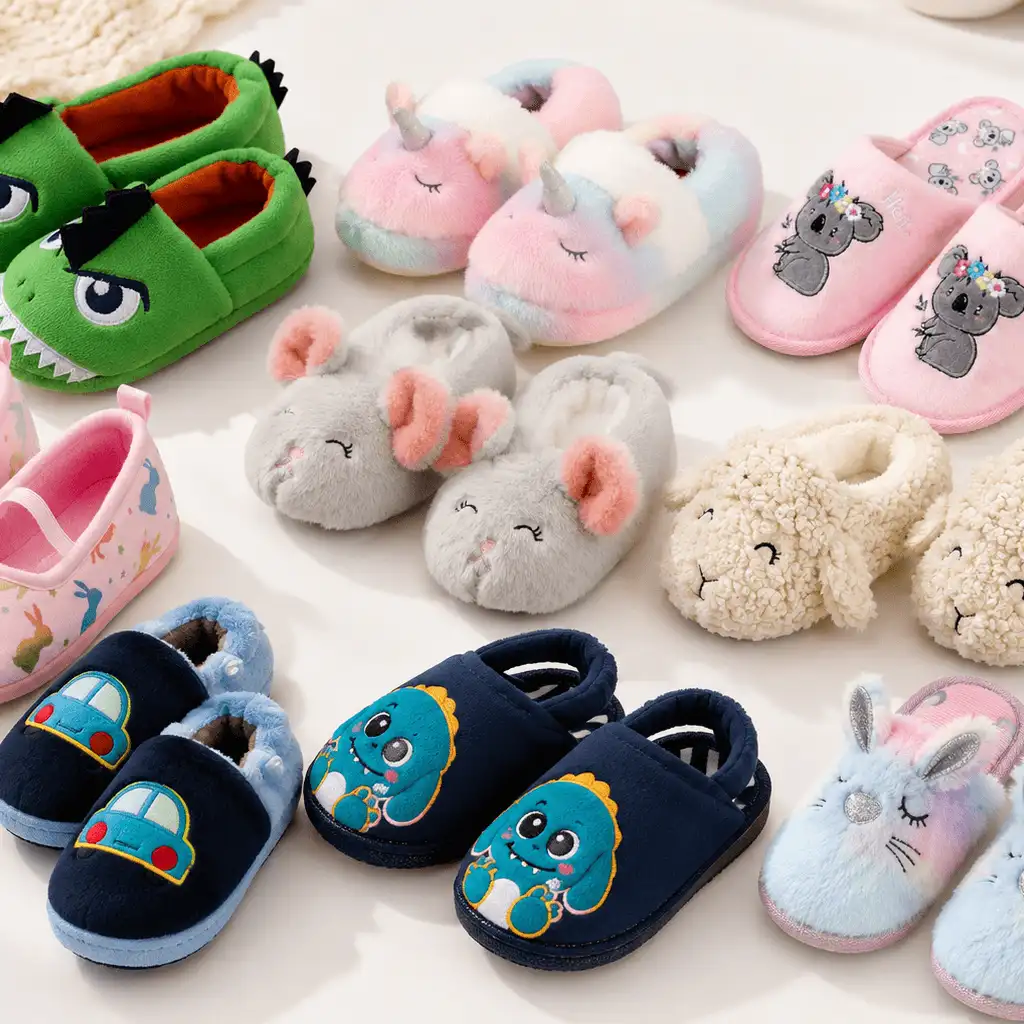
“Kids’ slippers” is too broad for a useful quotation. A toddler bootie, an open-back house slipper for an older child, and a novelty animal style may differ in entry, foot hold, lining volume, decoration, outsole, and packing. The first sourcing decision is therefore not color. It is the product and wearer.
State the intended age range, destination market, season, sales channel, indoor or occasional indoor-outdoor use, and expected retail position. If the product will be offered as sleepwear merchandise, a seasonal gift, a supermarket line, or an online character range, explain that context. It helps the supplier understand which details are commercially important and where extra review may be needed.
| Define first | Why it matters | Evidence to keep |
|---|---|---|
| Age and wearer | Guides fit, access, labeling, safety assessment, and applicable requirements | Written age range and size plan |
| Market and channel | Affects compliance, retail information, barcodes, and packaging | Country list and retailer manual |
| Use and season | Changes coverage, warmth, outsole direction, and material choice | Product brief and reference styles |
| Quantity structure | Colors and sizes affect material planning, grading, packing, and cost | Estimated units by style, color, and size |
Do not use one sample to represent an undefined family of products. In a children’s slipper sourcing project, the age range and size plan should remain attached to the actual construction being quoted.
2. Choose a Construction for the Intended Use
Start with how the child will enter and keep the slipper on. Open-back styles are easy to put on but rely on the upper shape and footbed to control movement. Closed-back house shoes give more heel coverage, while twin-gore or slingback directions can make entry easier for selected designs. Slipper boots add warmth and visual impact, but opening size, shaft recovery, and packing become more important.
No silhouette solves every program. Thick plush can make a closed style feel smaller. A very soft upper may lose its shape when packed. A deep heel or high vamp may improve hold for one wearer and make entry difficult for another. These points have to be judged on the finished sample rather than from a flat drawing.
Connect the upper and bottom construction
Welt-stitched, side-stitched, cold-glued, and injection-molded constructions are not interchangeable labels. They describe different product and production routes. At UTOP, welt-stitched slippers can commonly be developed with TPR or EVA bottoms; side-stitched styles commonly use a molded TPR outsole; and cold-glued styles commonly use cut EVA. TPR can also be cold glued when surface preparation, adhesive, pressing, and process conditions are matched to the design.
Sample question: can the intended wearer put the slipper on, keep it in the intended position during normal walking, and remove it without pulling on a decoration or overstressing a seam?
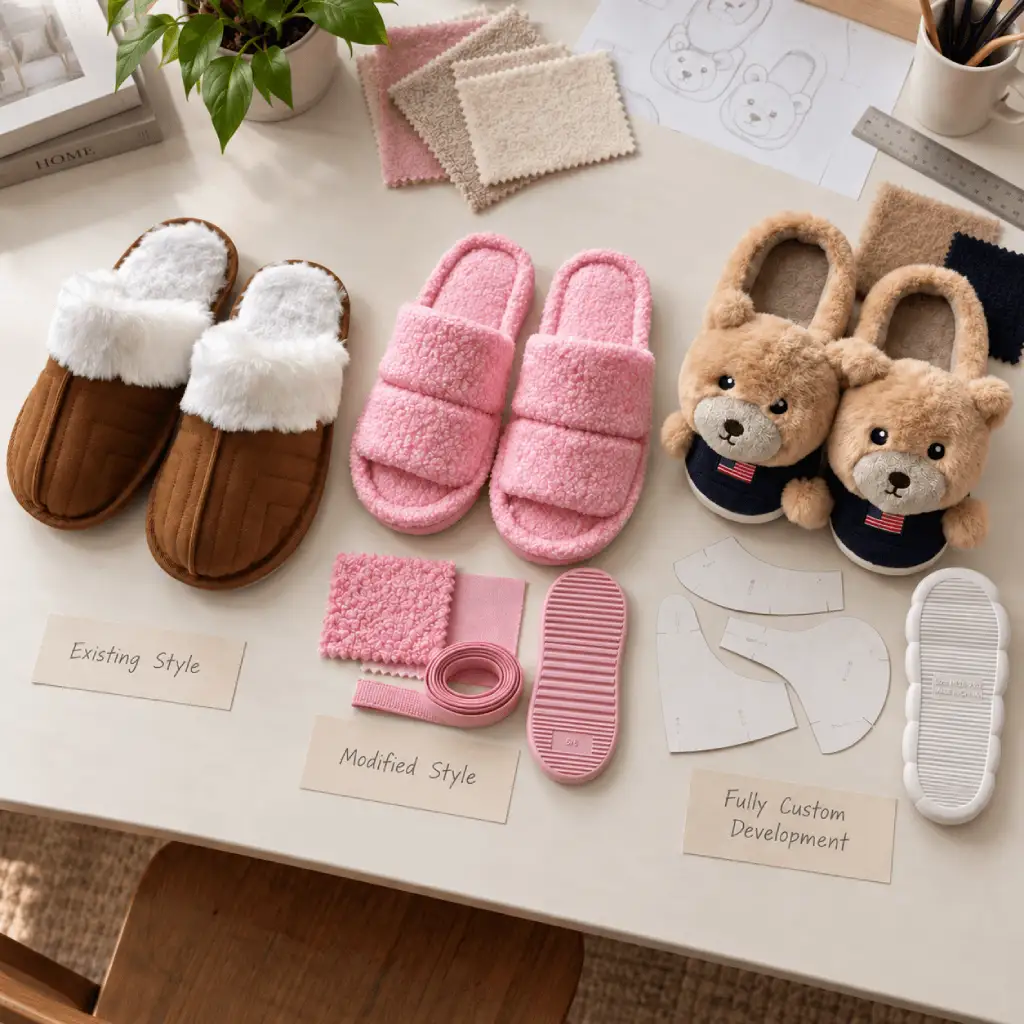
When a new design changes the pattern, outsole, opening, or character details, treat it as product development rather than a simple color change. UTOP’s footwear development process guide explains how these decisions move from brief to approved production reference.
3. Specify Materials as Finished Components
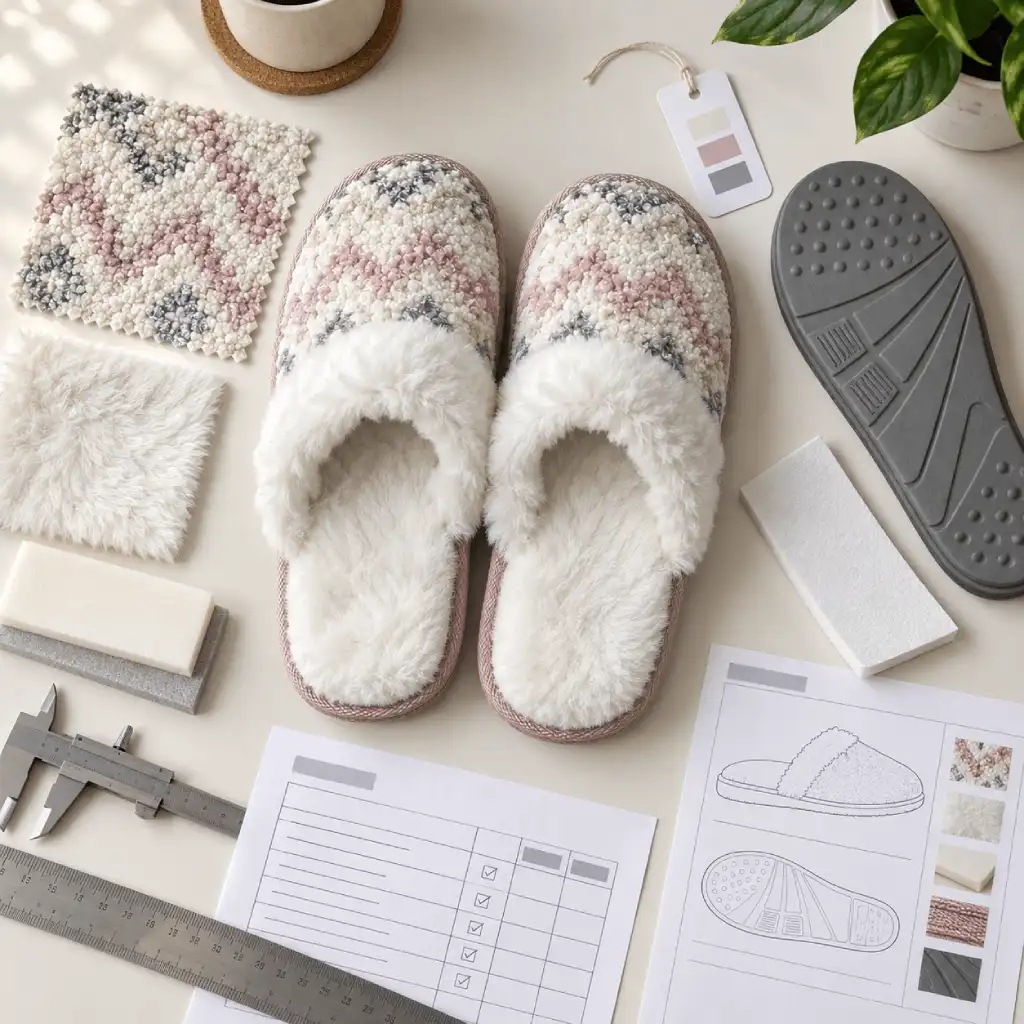
Descriptions such as “soft plush,” “warm lining,” and “memory foam” are useful design directions, but they do not define a repeatable slipper. The specification should identify the upper, lining, binding, cushioning layers, footbed cover, outsole, thread, elastic, labels, printing, embroidery, and raised components that actually appear in the finished product.
Material names also need to be accurate. Jersey knit is not wool felt. Cut-sheet EVA is different from compression-molded or injection-molded EVA. A molded TPR outsole has different preparation and construction implications from a dotted textile bottom. When suppliers quote different interpretations of the same broad description, the prices are not directly comparable.
Review what the material changes elsewhere
- Fit: pile height, lining thickness, foam thickness, binding, and seam allowances can reduce usable space.
- Artwork: embroidery and printing behave differently on high-pile, stretch, textured, or quilted surfaces.
- Construction: upper stability, outsole shape, and attachment method must work together.
- Packing: plush, boot shafts, bows, ears, and padded uppers may compress or shift in a tight pack.
- Compliance: each material, coating, print, adhesive, and trim should be included in the applicable risk and testing review.
Keep approved swatches, artwork files, component references, and the final sample under revision control. If a material changes after testing or approval, ask which fit, appearance, performance, or compliance checks must be repeated.
4. Build and Approve the Kids’ Slipper Size Range
Kids’ slipper sizing is not solved by relabeling a standard conversion chart. The buyer and supplier need to agree on what each number describes: intended foot length, usable inside length, outsole length, a last or pattern dimension, or a retail size label. Those measurements are related, but they are not interchangeable.
Fit also changes with construction. A fleece-lined closed-back slipper and an open-back style can carry the same label while offering different internal volume and heel behavior. Thick cushioning can raise the foot inside the upper. A molded sidewall can affect the available shape. This is why the size specification should remain product-specific.
| Sizing control | What to confirm | Common mistake |
|---|---|---|
| Size system | EU, US, UK, brand sizing, or another agreed system | Treating labels as physical measurements |
| Measurement | Named point, tool, product condition, method, and tolerance | Using “length” without defining it |
| Fit sample | Toe space, width, instep, opening, heel position, and entry | Approving fit from exterior length alone |
| Size set | Representative small, middle, and large sizes or an agreed set | Assuming the base size proves the full grade |
Approve the final materials and cushioning before closing the fit review. A size set made with a thinner substitute lining cannot prove how the production slippers will fit.
Turn the approved grade into an order ratio
A technically correct size range can still become the wrong commercial assortment. Ask the merchandising team for expected demand by size, then reconcile the ratio to the purchase order, SKU list, barcode data, individual labels, inner packs, and master cartons. Do not let the factory infer the ratio from the size range.
During bulk production, check that uppers, footbeds, outsoles, labels, and packaging are paired to the correct size. The risk is not limited to one dimension being outside tolerance; a correctly made size can still be packed under the wrong label or barcode.
Approval rule: keep the size label, defined measurement, fit sample, graded specification, order ratio, barcode, and carton assortment connected to the same SKU.
For measurement definitions, fit checks, and a real kids’ product reference, use UTOP’s slipper size chart and bulk sizing guide.
5. Review Decorations and Detachable-Part Risks
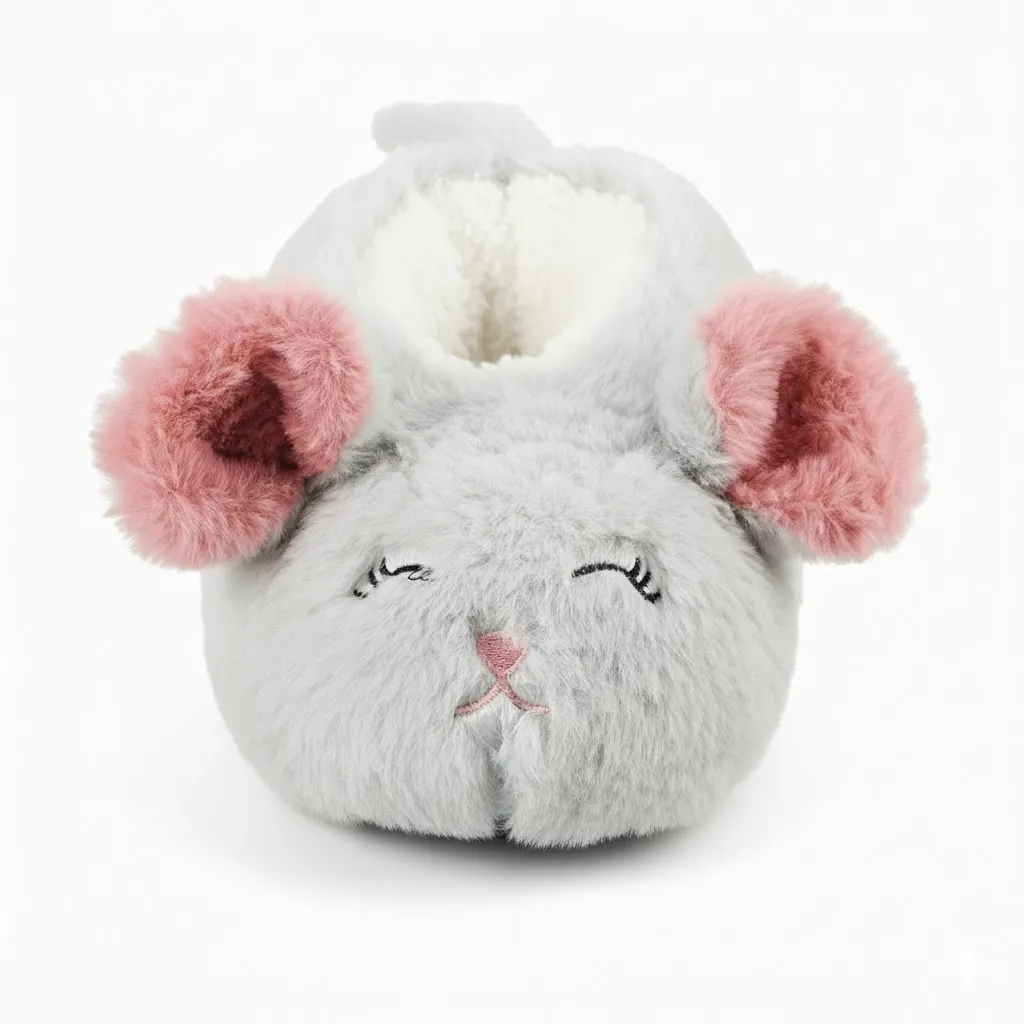
Character artwork sells many children’s slipper ranges, but every raised feature adds a construction question. Ears, horns, tails, bows, pom-poms, appliqués, badges, and other trims should be reviewed for material, dimensions, placement, edge condition, attachment method, and the intended age group.
The practical question is not simply whether a trim feels secure on one sample. Ask how it will be positioned consistently, how the attachment will be controlled during production, how packing pressure may change it, and what acceptance criteria apply if it loosens, twists, or exposes a hard edge.
Use lower-profile artwork when it serves the design
Embroidery, printing, and flat appliqué can create a clear character direction without relying on multiple loose-looking additions. They still require control: fine embroidery may disappear into long plush, print can distort on stretch fabric, and dense stitching can change the hand or shape of a small upper panel.
- Provide original or licensed artwork and identify protected brand elements.
- Approve placement on the sewn and shaped upper, not only on a flat artwork proof.
- Compare left and right slippers for expression, orientation, height, and spacing.
- Define attachment and inspection points for every raised component.
- Include the complete decoration in the applicable safety and testing review.
If a custom character is still being translated into production artwork, UTOP’s character artwork sampling guide shows how shape, color, technique, and placement should be confirmed.
6. Match the Outsole to Use and Construction
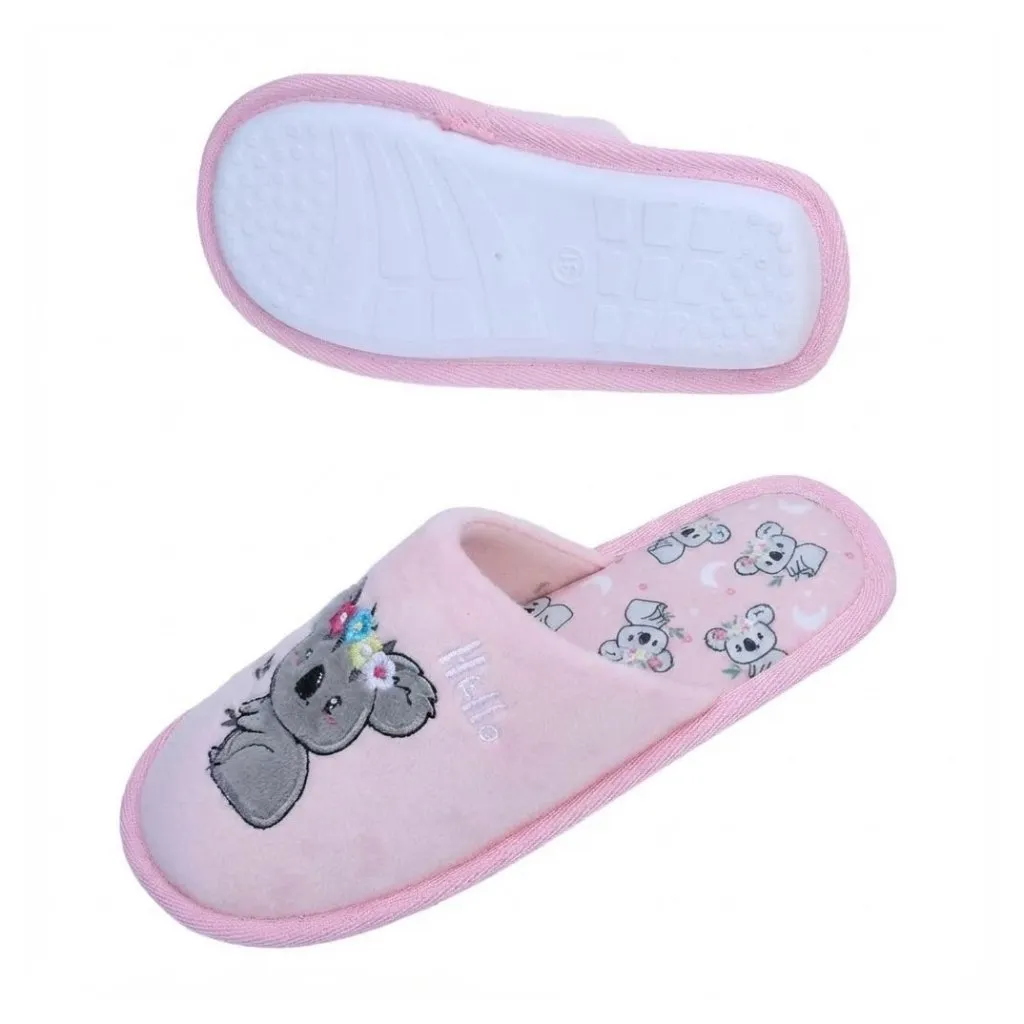
“Non-slip sole” is not a complete specification. The buyer should describe the intended floor and use, then review the outsole material, structure, hardness or density direction, thickness, weight, tread, contact area, flexibility, attachment, and any test requirement. Grip can change with the compound, geometry, floor material, dust, moisture, wear, and test method.
A molded TPR outsole can provide a defined profile, sidewall, and tread direction. Cut-sheet EVA is often selected for lightweight, flexible indoor constructions. Dotted textile bottoms may suit certain soft indoor slippers. None of these names alone proves slip resistance, durability, or suitability for a particular market.
Check the finished system
- Confirm how the upper and outsole sizes are matched.
- Review the natural flex position and whether the slipper sits flat.
- Check sidewall, edge, tread, bonding, or stitching against the approved sample.
- Compare representative sizes; outsole proportion can change across a children’s range.
- Agree on the test surface, condition, method, and acceptance value when measurable grip is required.
Performance boundary: visual inspection and hand flexing can reveal workmanship, pairing, flatness, tread condition, and obvious material differences. They cannot establish a slip-resistance claim without an applicable test and evidence.
UTOP’s slip-resistant outsole guide covers specification, sample review, testing, and bulk QC in more detail.
7. Set Kids’ Slipper Compliance and Testing Requirements
Compliance should be defined before sampling, not requested as a generic certificate after production. Start with the destination countries, intended age, product category, materials, coatings, decorations, claims, packaging, and sales channel. Then ask the responsible compliance team or laboratory to identify the rules, test scope, sample selection, document owner, and approval timing.
For the United States, CPSC guidance explains that children’s products subject to applicable federal children’s product safety rules require third-party testing and a Children’s Product Certificate based on the relevant results. Which rules apply depends on the product. Buyers should not copy a test list from a different slipper, toy, or adult footwear program.
For the European Union, the General Product Safety Regulation requires consumer products placed on the market to be safe and includes design, composition, packaging, labeling, warnings, foreseeable use, and vulnerable consumers such as children in the safety assessment. Chemical obligations may also arise under REACH; the exact substances and limits must be checked against the current product and market requirements.
Buyer question: which legal requirement, retailer standard, test method, revision, sample, and acceptance criterion does each requested report support?
Build the test plan around the production specification
A report is only useful when the tested sample represents the product being ordered. Record the style, material and color variants, component coverage, age grading, applicable rules, laboratory, dates, and report number. If the upper fabric, print, coating, adhesive, trim, or outsole changes, review whether the change affects the existing evidence.
The United States CPSC Children’s Product Certificate guidance explains the certificate’s required information and the relationship between applicable rules, third-party testing, and the responsible domestic manufacturer or importer. For EU chemical restrictions, use the current ECHA REACH restrictions resource rather than an undated supplier checklist.
- Confirm who is legally responsible for certification and technical records.
- Reserve production-representative samples and keep their identity traceable.
- Agree when testing occurs and what happens if a result is nonconforming.
- Do not use “tested,” “safe,” or “compliant” as a general marketing claim without defined scope.
- Review product and online-listing information required for the destination market.
This approach keeps kids slipper safety requirements tied to the actual design. It also prevents a common sourcing mistake: treating a laboratory report for one material or earlier style as automatic approval for a changed bulk order.
8. Approve Samples and Kids’ Slippers Quality Controls
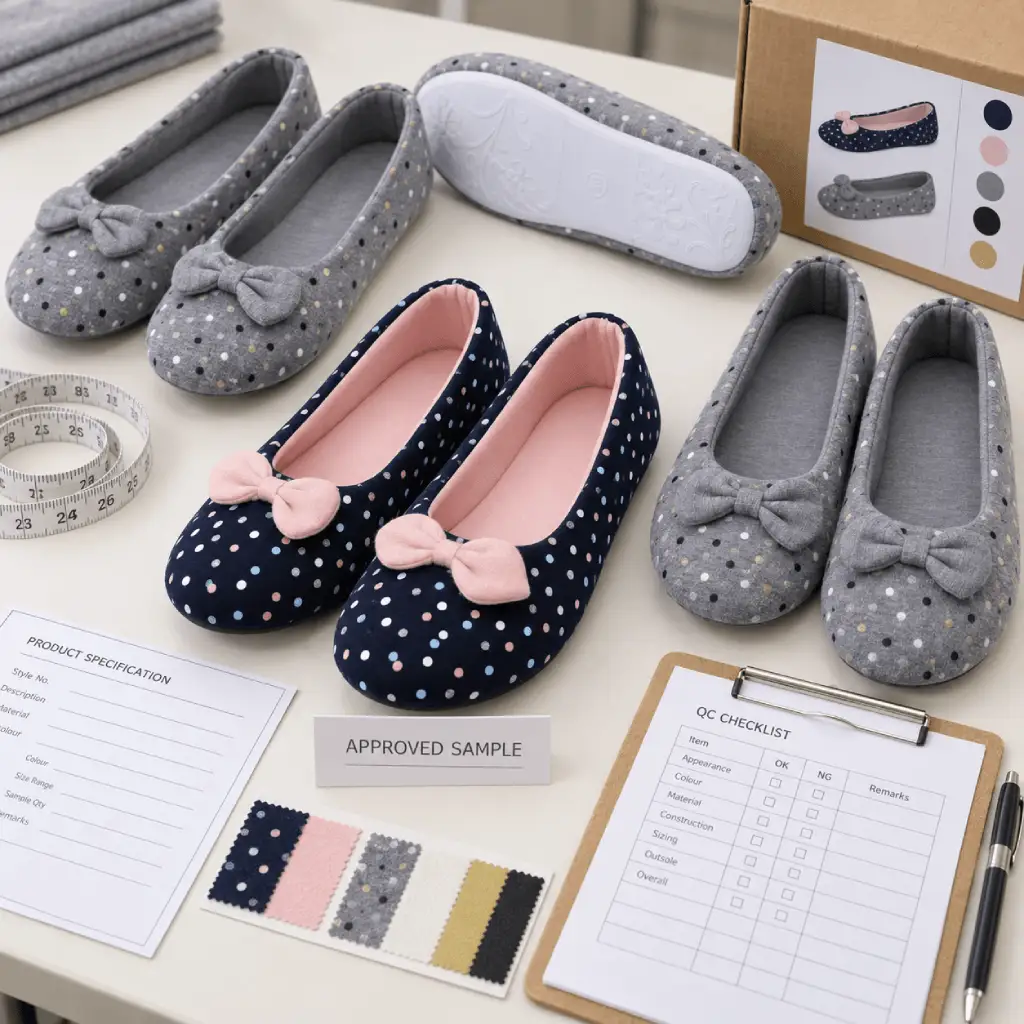
An attractive sample is not yet a production standard. The buyer should approve it together with a current written specification, size information, artwork, color references, labels, packaging, test requirements, and dated comments. If those records disagree, production has no single answer to follow.
For children’s slippers, use the sample review to look beyond the front view. Put the pair on a flat surface. Compare left and right shape, opening, toe profile, heel position, decoration, outsole alignment, and size marks. Handle raised details and inspect the areas hidden by pile, lining, binding, or packing.
| Control stage | Useful checks | Reference |
|---|---|---|
| Incoming components | Material identity, color, surface, dimensions, outsole, trims, and labels | Approved swatches, components, and specification |
| First production and in-process | Cutting, pair matching, stitching, artwork placement, bottom attachment, and early size checks | Approved sample and current work instructions |
| Finished product | Appearance, measurements, fit direction, decoration, outsole, attachment, labels, and cleanliness | Product specification and defect standard |
| Packed order | SKU, size, color, barcode, pack ratio, recovery, carton quantity, and marks | Packing instruction and approved packed sample |
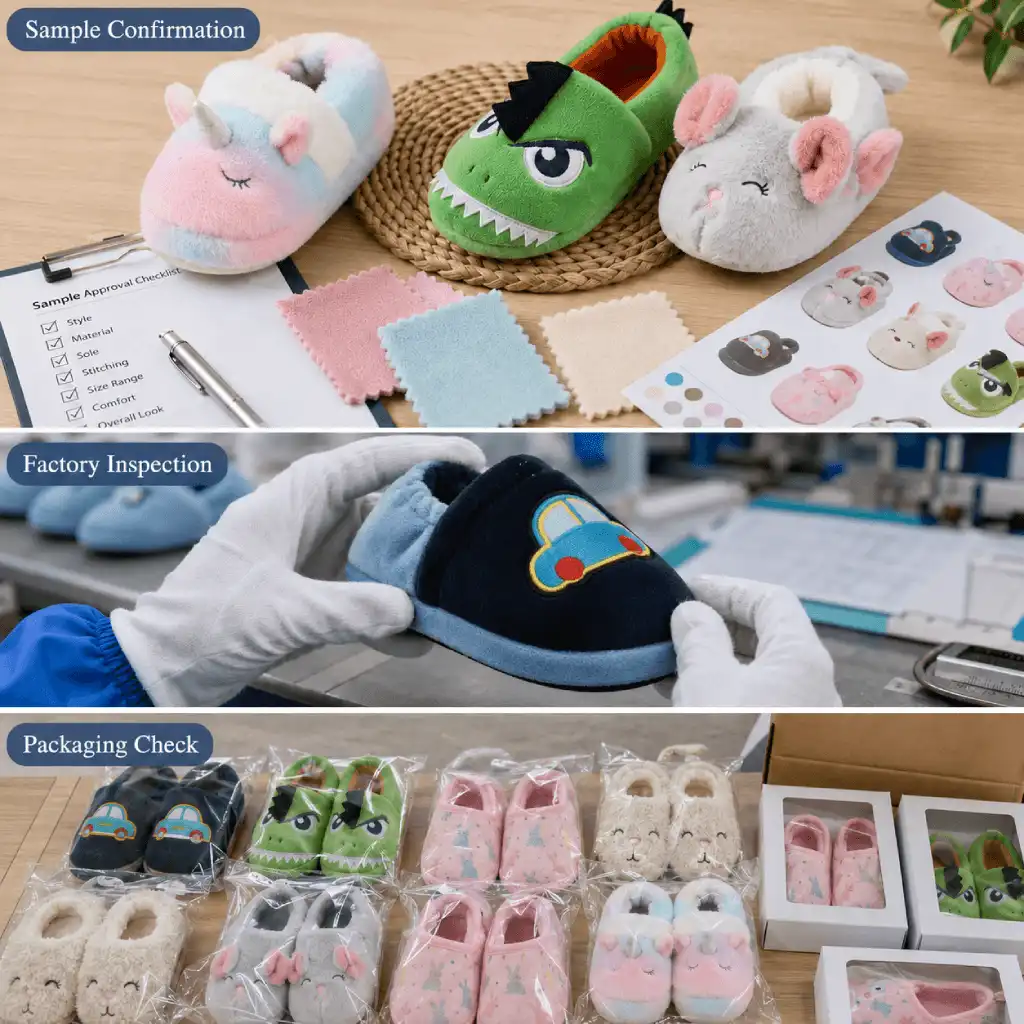
Define the inspection method, sample size, defect categories, acceptance criteria, report format, and release authority before the final inspection. AQL sampling and 100% inspection are different tools; neither removes the need for clear standards or in-process control.
For a wider framework covering materials, construction, sizing, AQL, records, and nonconformity, refer to UTOP’s footwear quality control guide.
9. Confirm Packaging, Assortments, and Timing
Packaging is the last sourcing check in this guide, but it should not be the last decision in the project. A compact open-back slipper, a plush bootie, and a raised animal style recover differently after compression. The individual pack must protect the shape and decoration while presenting the correct size, SKU, barcode, warnings, and other required information.
Approve one packed sample before setting carton quantities. Open it after an agreed compression or storage review and check whether the upper, pile, shaft, bow, ears, tail, and outsole return to an acceptable condition. A package that looks efficient in a spreadsheet can create poor retail presentation if it is too tight for the product.
Reconcile the order before release
- Final quantity by style, color, and size
- Individual labels, barcodes, warnings, inserts, and retail artwork
- Pack ratio, inner pack, carton quantity, carton dimensions, and carton marks
- Approved packing method and product orientation
- Inspection, testing, shipment terms, destination, and required delivery date
For UTOP’s regular custom slipper projects, sampling usually takes 7–14 days. Bulk production usually takes 30–45 days after the sample and other necessary approvals are complete. Actual timing depends on materials, tooling, revisions, testing, quantity, branding, packaging, and the confirmed order plan. Transport to the buyer’s warehouse is a separate period.
Use UTOP’s footwear packaging guide for labels, barcodes, boxes, pack ratios, carton marks, and approval checks.
Kids Slippers Sourcing Guide: Frequently Asked Questions
What should I send for a kids’ slippers quotation?
Send the reference style or drawing, intended age, destination market, sales channel, estimated quantity by color and size, material and outsole direction, artwork, branding, packaging, testing requirements, destination, and required date. Identify which details are confirmed and which still need supplier recommendations.
Should buyers approve every size?
Not necessarily, but one middle size rarely proves the full grade. Agree on a representative size set based on the range and construction. Confirm measurements, fit direction, proportions, decoration scale, outsole matching, and labels before releasing the complete range.
Is a TPR outsole safer than EVA for kids’ slippers?
The material name does not establish safety or grip. TPR and EVA vary by formulation, hardness or density, thickness, tread, construction, and finished-product design. Select the outsole from the intended use and approve any required performance through a defined test method and acceptance criterion.
Can one test report cover several colors or styles?
It depends on the applicable requirement, materials, components, colors, construction, and the laboratory’s sampling rationale. Ask the responsible compliance team or laboratory to document coverage. Do not assume that a report for one material or earlier style automatically covers a changed product.
How long does a custom kids’ slippers order take?
At UTOP, regular custom slipper projects usually require 7–14 days for sampling and 30–45 days for bulk production after the sample and other necessary approvals are complete. Materials, tooling, revisions, testing, quantity, branding, packaging, and order timing can change the estimate. Shipping time is separate.
Conclusion
The most useful kids slippers sourcing guide is a controlled set of decisions. Define the wearer and market, select the construction, specify the materials, approve sizing and decorations, set the outsole and compliance plan, establish quality controls, and finish the order with accurate packaging and assortments. That gives the supplier something repeatable to make and the buyer something objective to approve.
Planning a Kids’ Slippers Bulk Order?
Send UTOP your reference style or design, intended age and market, estimated quantity, size and color plan, material and outsole direction, artwork, labels, packaging, testing requirements, destination, and requested schedule. Our team can review the development route before sampling and quotation.
Discuss Your Kids’ Slipper Project