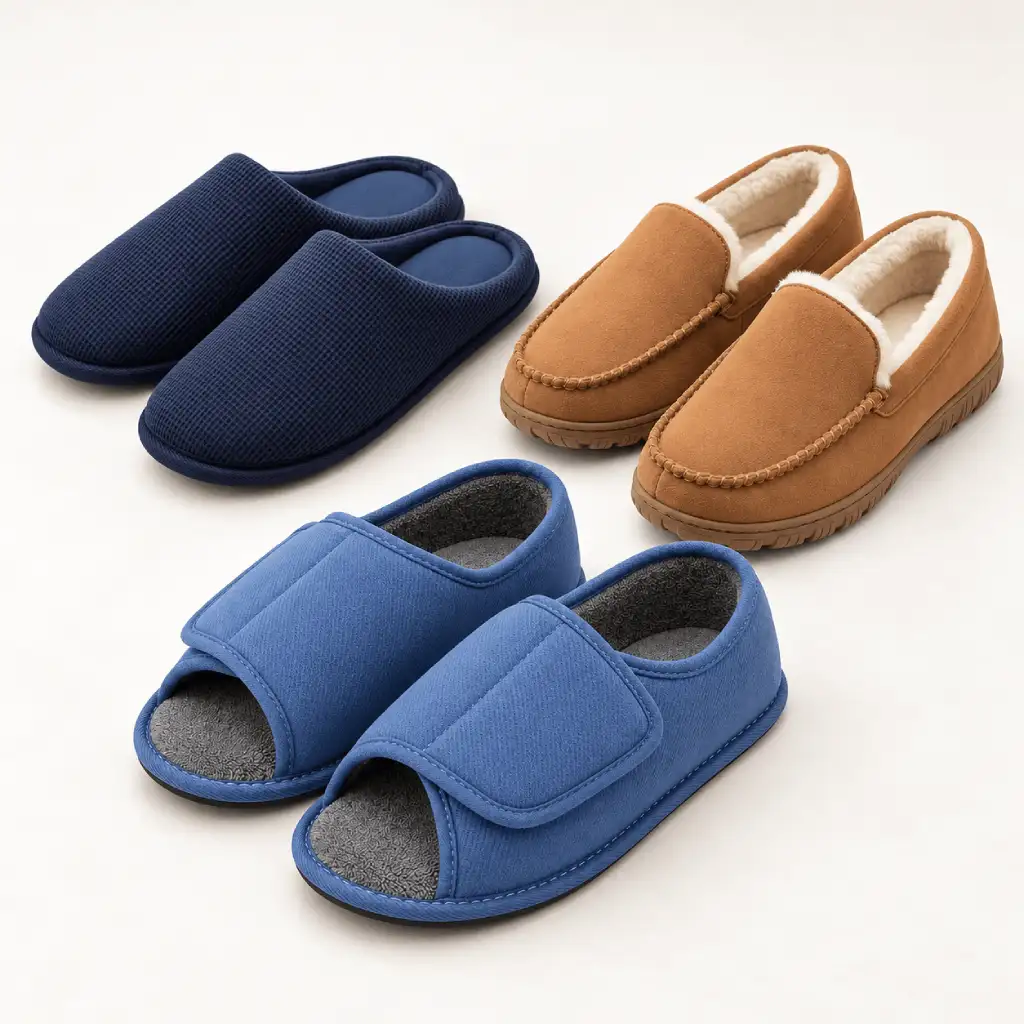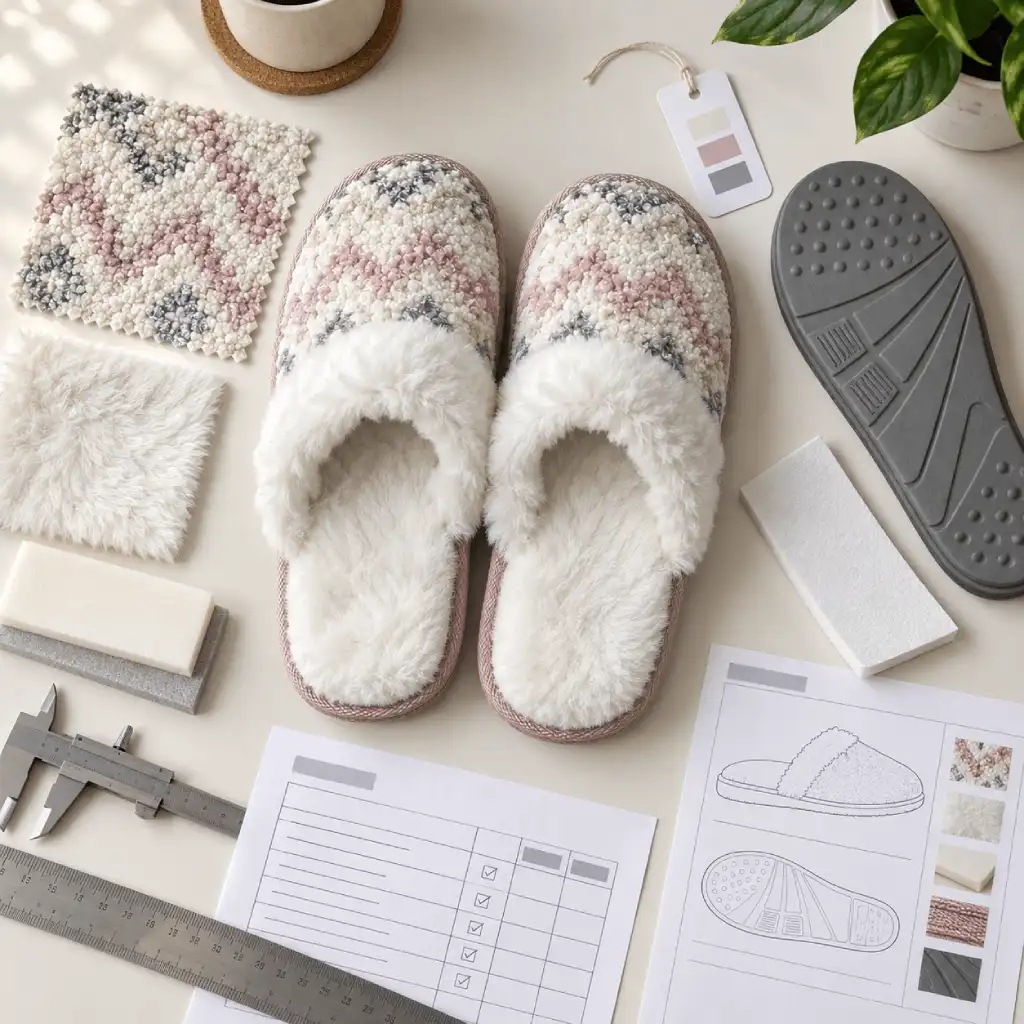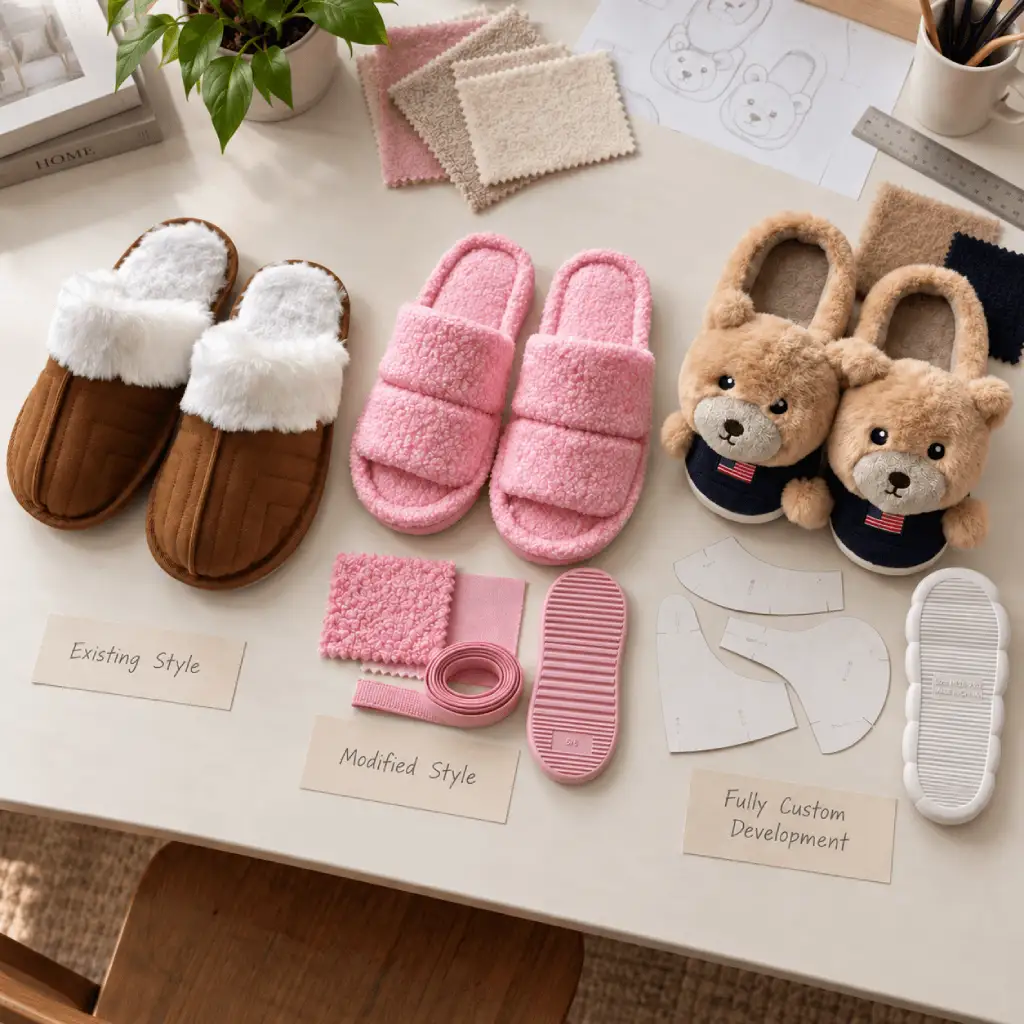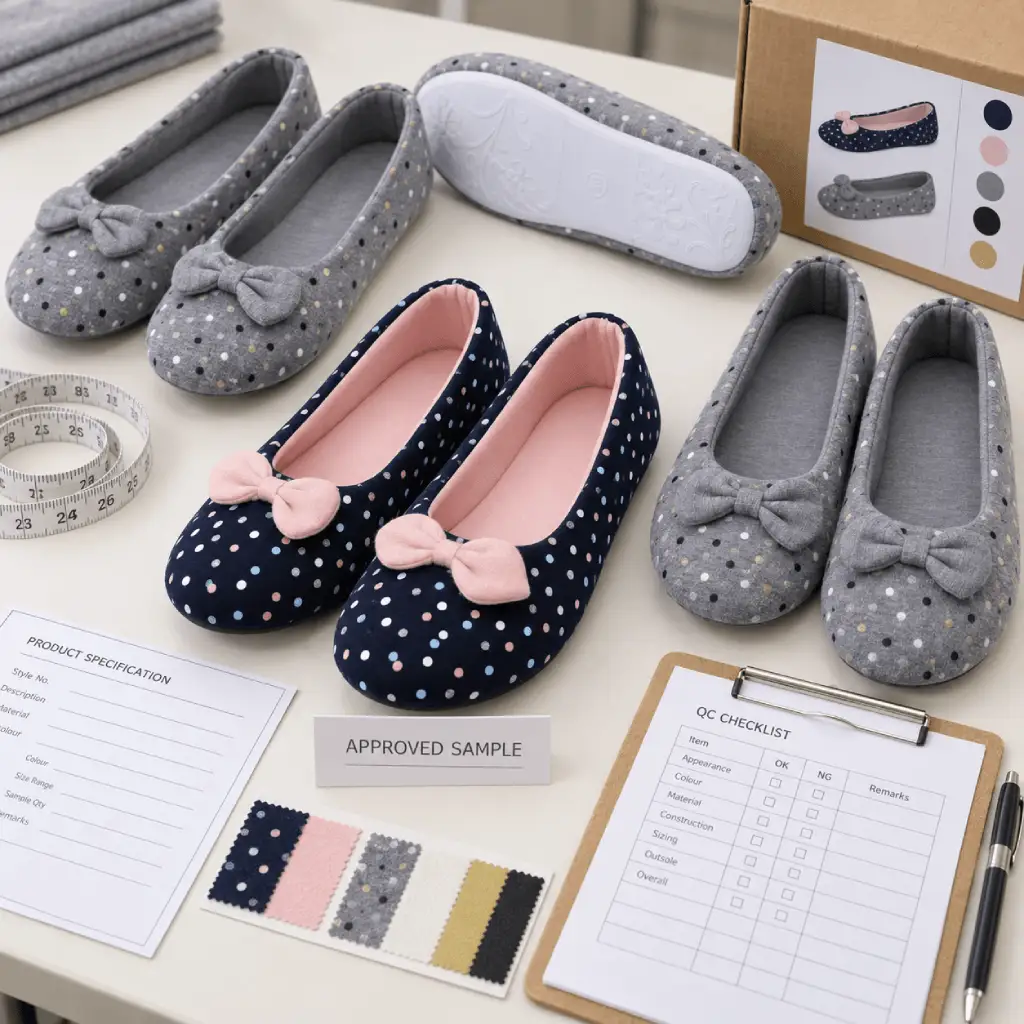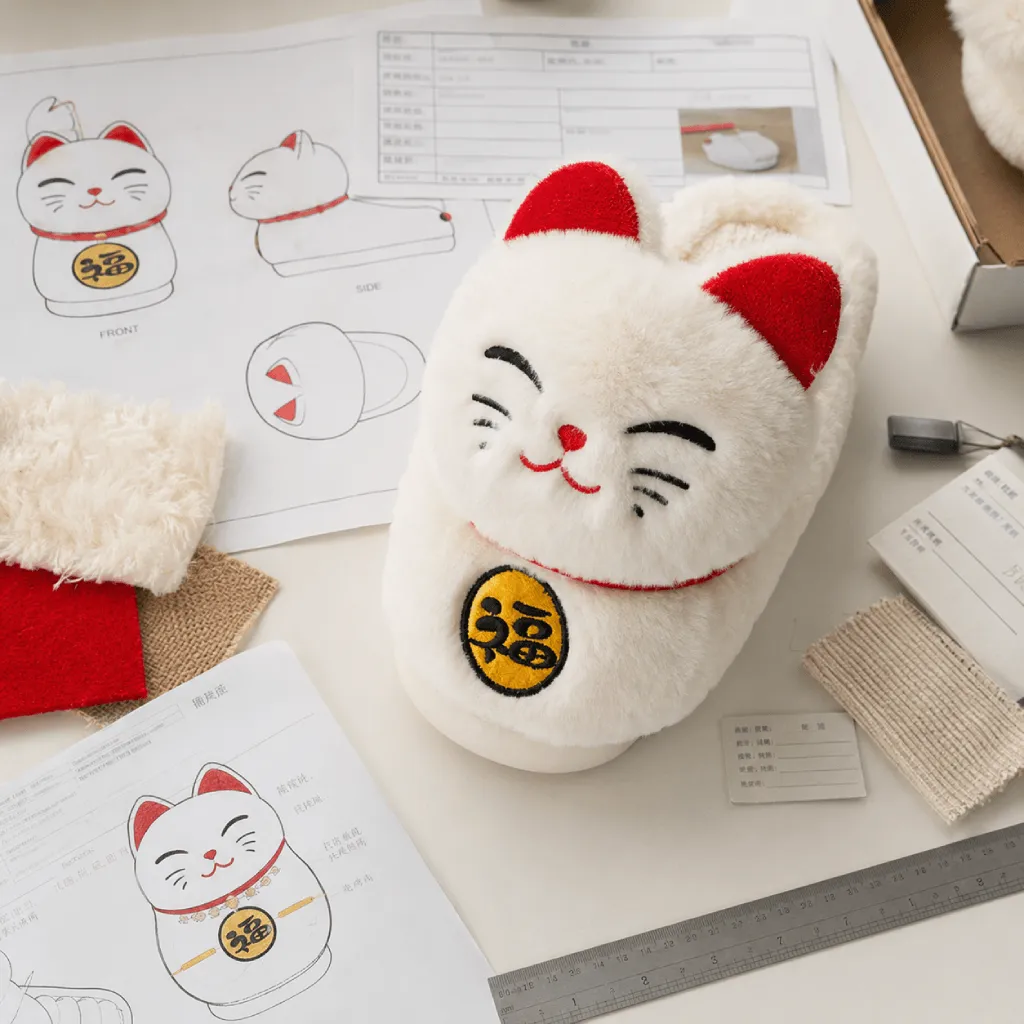
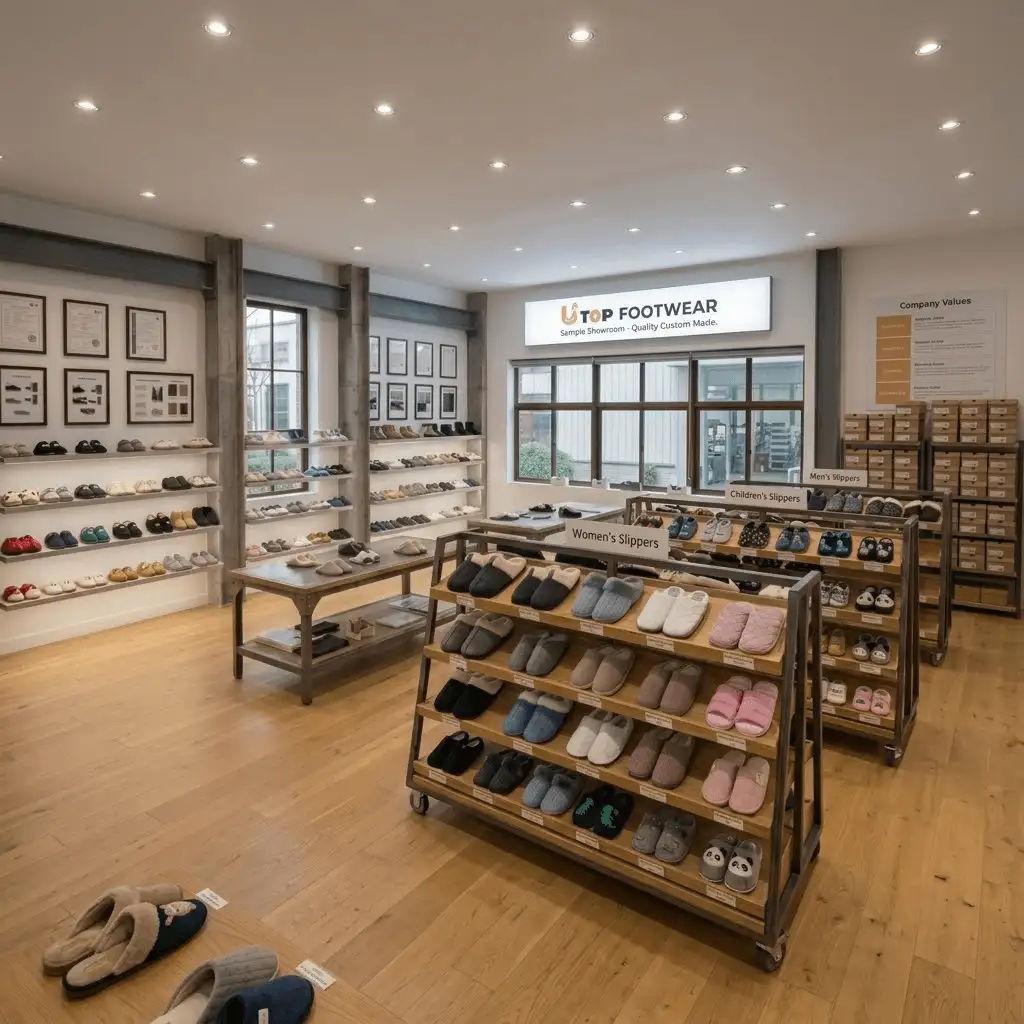
Wholesale slipper production becomes difficult when materials, sizes, colorways, branding, packaging, approvals, and delivery dates no longer move at the same pace. A supplier may be able to make the product, but that does not automatically mean the order is ready for reliable large-scale execution.
For B2B buyers evaluating wholesale slipper manufacturing, capacity should not be judged by one daily-output figure. The more useful question is whether the factory can convert the confirmed order into a workable material plan, production schedule, quality-control process, packing arrangement, and delivery sequence.
This guide explains ten checks for brands, importers, wholesalers, retailers, and sourcing teams planning bulk slipper production. It focuses on the evidence buyers should request before reserving capacity and the decisions that should be controlled from quotation through shipment preparation.
Buyer takeaway: production readiness is the alignment of product specifications, materials, capacity, approvals, quality controls, packaging, and timing. A large theoretical output is not useful if one unresolved component prevents the order from moving.
Scope: this article discusses planning and supplier evaluation for large wholesale slipper orders. Actual capacity, MOQ, cost, sampling time, production time, testing, and delivery depend on the confirmed product and order requirements.
Buyers can review UTOP’s custom indoor slipper product center for initial product directions or use our custom slipper development services when a project begins with a sample, image, sketch, or tech pack.
Written by the UTOP Slippers Sourcing Team, with product-development, production-planning, packaging, and quality-control input from our indoor slipper team.
1. Define Production Readiness Before Comparing Capacity
In wholesale slipper production, capacity is the ability to complete a defined order under an agreed specification and schedule. It is not simply the largest number a factory can quote under ideal conditions.
A realistic review considers the complete order. A simple open-back slipper and a lined slipper boot may require different materials, sewing time, outsole preparation, finishing, inspection, and carton space. Even two visually similar styles can create different constraints when their size ranges, logos, packaging, or delivery windows change.
| Readiness area | What must be confirmed | Useful evidence |
|---|---|---|
| Product | Materials, construction, sizing, colors, branding, and workmanship | Approved sample, specification, BOM, and measurement record |
| Materials | Availability, color approval, component minimums, and tooling | Approved swatches, supplier references, and purchasing milestones |
| Production | Process sequence, bottlenecks, available schedule, and order mix | Style-specific production plan and milestone dates |
| Quality | Checkpoints, tolerances, inspection method, and issue handling | Control plan, approved references, and inspection records |
| Delivery | Packing, carton marks, documentation, release, and shipment handoff | Approved packing sample, carton plan, and release checklist |
Capacity rule: compare suppliers against the same confirmed order. A general factory-capacity figure cannot replace a style-specific production review.
2. Define the Order Before Asking About Capacity
A factory cannot evaluate footwear production capacity accurately when the order is described only as “a large quantity of slippers.” Capacity changes with the number of styles, colors, sizes, constructions, packaging formats, approval stages, and required delivery dates.
Before requesting a production slot, buyers should prepare enough information for the supplier to identify the main constraints. The brief does not need to be perfect, but confirmed requirements and open decisions should be clearly separated.
Minimum information for a large-order capacity review
- product link, style number, sample, drawing, or tech pack;
- total quantity and breakdown by style and color;
- size range and quantity ratio by size;
- upper, lining, cushioning, outsole, and construction direction;
- logo, labels, barcodes, packaging, and carton requirements;
- destination market and buyer-required testing or documentation;
- sample status and remaining approval steps;
- requested delivery window, destination, and shipment arrangement.
A structured slipper or shoe tech pack can keep measurements, materials, branding, packaging, and revisions connected. When the project is less developed, buyers can still label each decision as confirmed, proposed, or awaiting review.
Market requirements should also be identified before production. For example, businesses supplying the EU should review the applicable obligations for their role and product through the European Commission’s general product compliance guidance. The supplier should not be expected to guess the buyer’s destination-market requirements.
Planning risk: adding colors, dividing quantities across more SKUs, changing packaging, or delaying approval may reduce the practical efficiency of a previously discussed production plan.
3. Evaluate Manufacturing Capacity as a Connected System
Slipper manufacturing capacity depends on the slowest important part of the confirmed production flow. Extra capacity in one operation cannot automatically compensate for a delay in materials, sewing, outsole preparation, finishing, inspection, or packing.
The process also varies by construction. A welt-stitched, side-stitched, cold-glued, or other slipper structure should be evaluated according to its actual materials and manufacturing sequence rather than being forced into one generic capacity model.
| Production area | Possible constraint | Buyer review point |
|---|---|---|
| Material preparation | Late color, backing, foam, outsole, trim, or packaging component | Which materials are approved, ordered, received, and checked? |
| Cutting and upper preparation | Pattern complexity, directional fabric, matching, or decoration preparation | What controls cutting direction, pair matching, and component identity? |
| Stitching and assembly | Operation count, bulky materials, seam access, or frequent style changes | Which operation is expected to set the working pace? |
| Upper-to-sole connection | Outsole availability, stitching, bonding preparation, pressing, or curing requirements | Does the construction require a style-specific process or waiting time? |
| Finishing and inspection | Thread cleaning, shaping, pair matching, labeling, or rework | Where are defects detected before packing? |
| Packing | SKU control, inserts, boxes, barcode labels, pack ratios, or carton limits | Can the approved packing method support the required dispatch plan? |
Ask how the capacity estimate was built
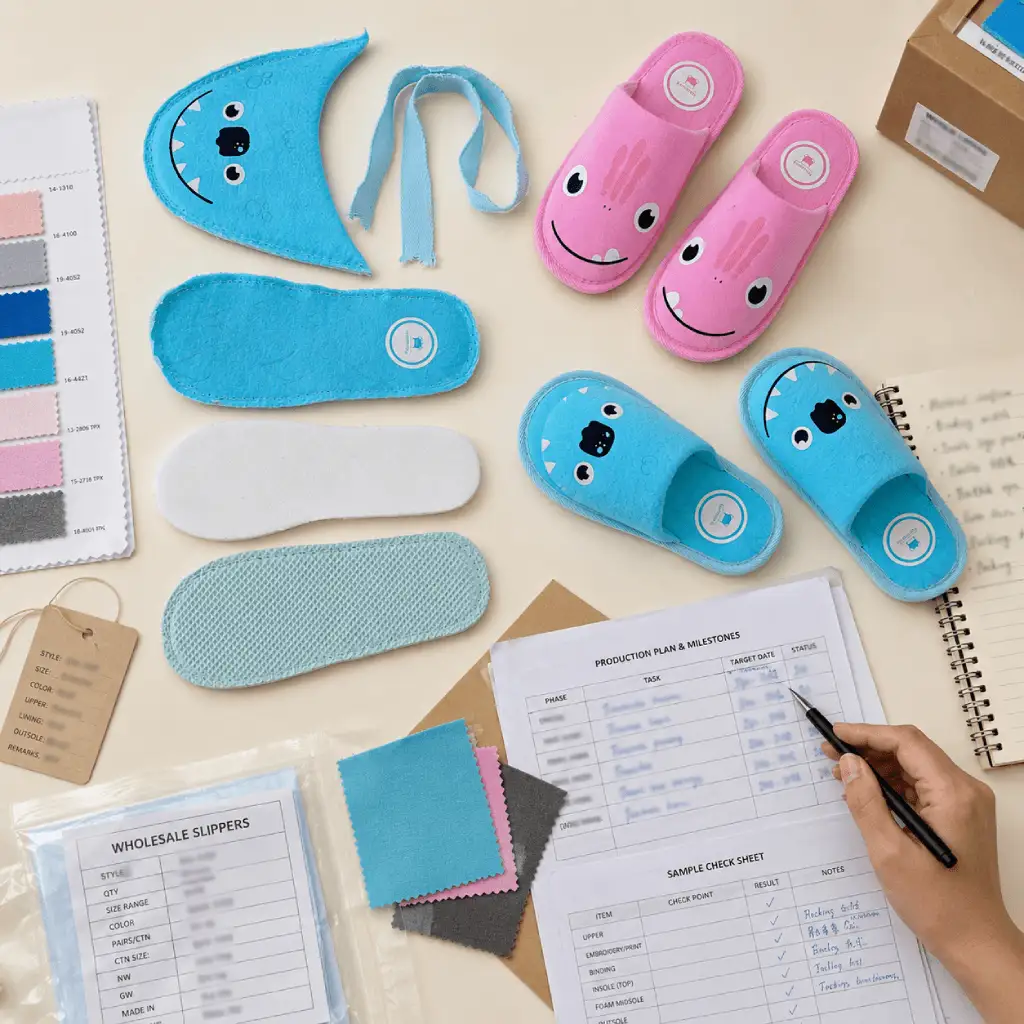
A useful capacity response explains its basis. It should identify the relevant style, quantity, order mix, material status, process sequence, working calendar, approval assumptions, and packing requirement. A number without these conditions is difficult to compare or monitor.
For high-volume slipper manufacturing, buyers should ask the supplier to explain:
- which operation is expected to limit the production pace;
- whether the estimate assumes one style or several simultaneous SKUs;
- which approvals must be completed before materials or production can proceed;
- how the order will be divided into production and packing milestones;
- what change would require the schedule to be recalculated;
- how progress, delays, and buyer decisions will be reported.
Better question: instead of asking “What is your maximum daily capacity?”, ask “What production plan can you support for this confirmed style mix, approval status, packing requirement, and delivery window?”
4. Secure Materials and Components Before Production
Material readiness often determines whether a bulk slipper production schedule is practical. The supplier should know not only what each component is called, but also which reference, specification, color, construction, and approval standard applies.
A material name alone is rarely sufficient. Plush can vary in pile, backing, density, hand feel, and color. Foam can vary in type, thickness, firmness, recovery, and layer structure. TPR and EVA outsoles can vary in formulation, hardness or density, thickness, tread, weight, attachment, and tooling requirements.
| Component | Confirm before ordering | Check after receipt |
|---|---|---|
| Upper and lining | Material reference, color, surface, backing, thickness, stretch, and direction | Shade, feel, surface consistency, usable width, defects, and sample match |
| Cushioning | Layer structure, thickness, firmness direction, recovery, and footbed cover | Thickness, feel, recovery, cutting dimensions, and fit effect |
| Outsole | Material, structure, size, color, tread, hardness or density, and tooling | Dimensions, weight, flatness, appearance, flexibility, and pair consistency |
| Branding and trims | Artwork, method, size, colors, placement, label text, and attachment | Clarity, color, dimensions, placement, adhesion or stitching, and durability requirement |
| Packaging | Dieline, material, artwork, barcode data, pack ratio, and carton marks | Print content, dimensions, scanning, assembly, presentation, and product protection |
Material purchasing should follow confirmed references and an agreed approval route. If a component changes because of availability, price, lead time, or production feasibility, the buyer should understand whether the finished sample, fit, branding, testing, packaging, or schedule must be reviewed again.
For a broader specification framework, see UTOP’s Private Label Indoor Slippers Manufacturing Guide.
Do not assume: TPR or EVA is automatically cheaper, more durable, or more suitable based on the material name alone. The complete outsole specification and product construction determine the result.
5. Freeze the Approved Sample and Written Specification
A good sample does not protect wholesale slipper production unless the supplier can identify exactly what was approved. The physical sample should be used together with written specifications, measurements, artwork, color references, packaging details, and accepted tolerances.
The approval record should identify the current sample version and any accepted exceptions. Comments such as “make it softer,” “use the previous sole,” or “same color as before” are difficult to control unless they point to a measurable or retained reference.
Production-release package
- approved physical sample and dated photographs;
- current BOM and component references;
- measurements, tolerances, size range, and grading direction;
- approved colors, artwork, labels, and placement details;
- outsole and upper-to-sole construction specification;
- packaging, barcode, pack-ratio, and carton-mark instructions;
- buyer-required testing and inspection criteria;
- open issues, accepted deviations, and final approval authority.
Size approval deserves separate attention. Lining volume, foam thickness, upper pattern, outsole dimensions, binding, and construction can all affect usable internal space. UTOP’s Slipper Size Chart and Bulk Sizing Guide explains measurement, fitting, grading, and size-ratio planning in greater detail.
Control every change after approval
A post-approval change should record what changed, why it changed, which styles and sizes are affected, and whether the change influences cost, appearance, fit, quality, packaging, testing, or timing. The production plan should be updated before the revised requirement is released.
Approval rule: production should follow one identifiable sample version and one current written specification. Parallel or conflicting versions create avoidable bulk-order risk.
6. Build a Realistic Production and Approval Schedule
Effective footwear production planning begins before the first bulk pair is assembled. The schedule should connect buyer approvals, material purchasing, production milestones, inspection, packing, documentation, and shipment preparation.
In wholesale slipper manufacturing, the requested delivery date should therefore be translated into several controlled milestones rather than treated as one factory promise.
| Milestone | What must be ready | Common schedule risk |
|---|---|---|
| Quotation confirmation | Order scope, price basis, quantity, packaging, terms, and exclusions | Quotation based on incomplete or outdated requirements |
| Sample approval | Product, fit, materials, colors, branding, and packaging decisions | Late comments or unresolved approval authority |
| Material release | Approved references, quantities, colors, and purchasing instructions | Component changes, material minimums, or late artwork |
| Production start | Materials, production package, capacity slot, and control references | Starting with missing information or mixed sample versions |
| Inspection and packing | Finished goods, quality plan, packing materials, labels, and carton data | Rework, barcode errors, or unapproved packing changes |
| Shipment release | Accepted goods, packing records, documents, and logistics handoff | Confusing production completion with final shipment readiness |
For usual UTOP custom slipper projects, sampling typically takes about 7–14 days. Bulk production usually takes about 30–45 days after the sample and other necessary approvals are complete. Materials, tooling, revisions, testing, quantity, branding, packaging, production loading, and the confirmed schedule can change the actual timing.
Buyers planning large-volume slipper orders should also agree on progress updates and decision deadlines. A schedule is more useful when each milestone has an owner, required input, target date, and method for reporting a change.
Schedule rule: distinguish sample time, approval time, material time, bulk production time, inspection, packing, and transport. They are connected but not interchangeable.
7. Control Quality Across the Production Run
Quality control for bulk slipper production should begin before final inspection. Material, cutting, stitching, assembly, sizing, branding, pair matching, and packaging problems are easier to contain when they are detected close to the operation that created them.
The control plan should reflect the actual slipper construction and buyer requirements. Not every style needs the same checkpoints, tolerances, tests, or inspection method.
| Control stage | Typical review points | Purpose |
|---|---|---|
| Incoming materials | Material identity, color, surface, backing, outsole dimensions, labels, and packaging | Prevent incorrect components from entering production |
| First production output | Construction, measurements, appearance, logo, fit direction, and workmanship | Confirm that production interpretation matches the approved references |
| In-process checks | Stitching, symmetry, attachment, pair consistency, size identity, and recurring defects | Detect variation before more units are affected |
| Finished-product review | Appearance, dimensions, outsole, left-right pairing, branding, labeling, and workmanship | Evaluate finished goods against the agreed standard |
| Packing checks | SKU, size, color, barcode, accessories, pack ratio, carton quantity, and marks | Prevent accepted products from being shipped under incorrect packing data |
UTOP’s Footwear Quality Control Guide for Bulk Slipper Orders provides a more detailed framework for approved standards, in-process checks, final inspection, testing, records, and corrective action.
Define how sampling inspection will be used
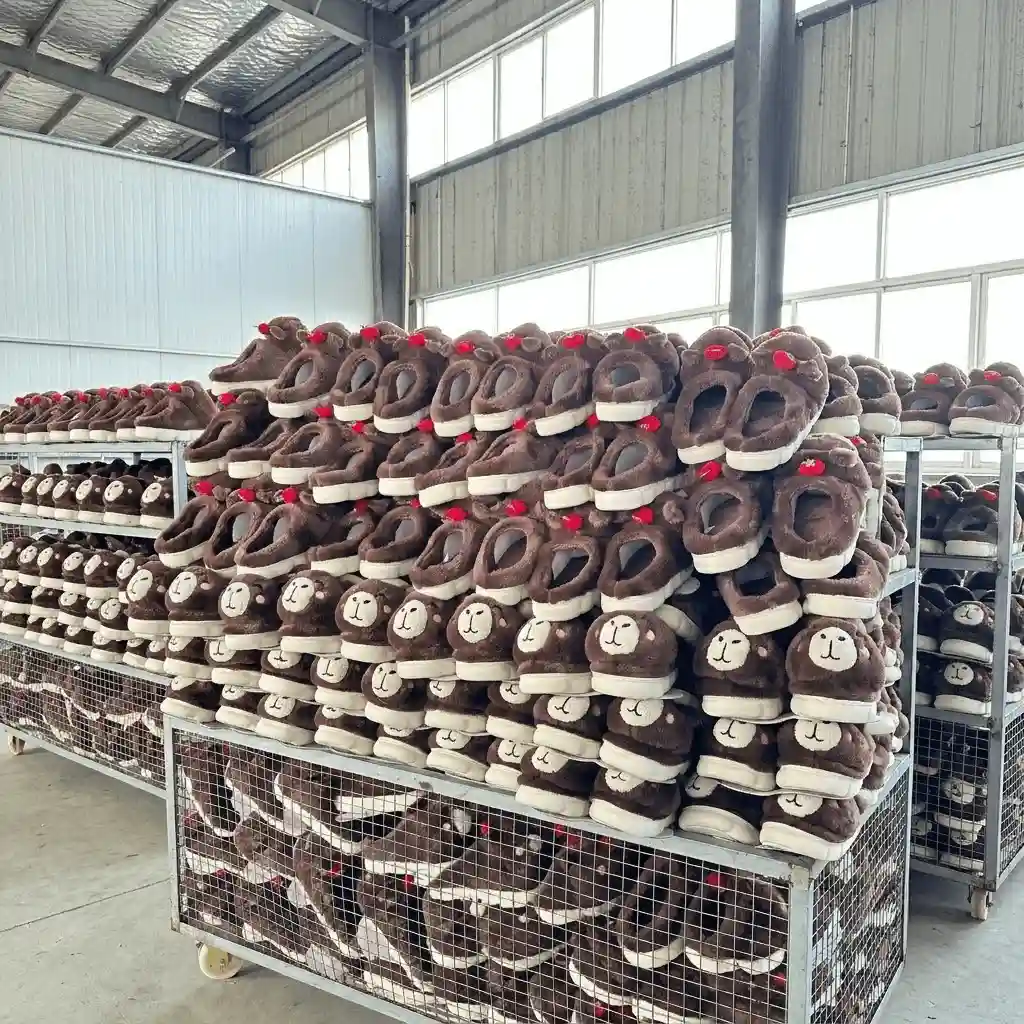
Acceptance sampling and 100% inspection are different tools. If the buyer requires an AQL-based final inspection, the order should define the lot, inspection level, sample plan, defect classifications, acceptance criteria, timing, and responsibility.
ISO 2859-1:2026 provides sampling schemes indexed by acceptance quality limit for lot-by-lot inspection by attributes. Using an AQL plan does not mean that the permitted defect percentage has become a manufacturing target, and it does not guarantee that every unit in the lot is defect-free.
Match checks to the product risk
A high-volume footwear manufacturing program may combine routine process checks, targeted 100% checks for selected critical details, measurement checks, packaging verification, and a final sampling inspection. The correct combination depends on the product, destination, buyer standard, known risks, and agreed acceptance criteria.
Typical slipper-specific control points
- upper and lining material, color, surface, and direction;
- stitch position, seam security, symmetry, and finishing;
- inside length, outsole dimensions, size labels, and grading;
- left-right pairing, appearance, weight, and outsole consistency;
- logo size, clarity, color, placement, and attachment;
- individual packing, barcode, assortment, and carton information.
Quality rule: final inspection should verify a controlled production process, not become the first stage at which the buyer’s requirements are applied.
8. Connect Packaging, Cartons, and Delivery Readiness
Packaging is part of wholesale slipper production, not an administrative detail added after manufacturing. It affects product presentation, protection, SKU control, carton volume, warehouse handling, and the time required to prepare the order for release.
Bulky plush styles, slipper boots, molded outsoles, raised decorations, hangers, boxes, or retail display packaging can create very different packing requirements. The supplier should evaluate the approved product and packaging together.
| Packing decision | Buyer should approve | Risk if left late |
|---|---|---|
| Individual packing | Bag, band, hanger, insert, tissue, box, and presentation | Product compression, deformation, or inconsistent presentation |
| Labels and barcodes | SKU data, barcode file, placement, size, and scanning requirement | Relabeling, warehouse rejection, or mixed inventory |
| Pack ratio | Sizes, colors, pairs per inner pack, and pairs per carton | Incorrect assortment or remaining unmatched quantities |
| Master carton | Dimensions, strength direction, gross weight, sealing, and marks | Unexpected volume, damage risk, or incorrect shipment data |
For detailed label, barcode, retail-packaging, carton, and approval considerations, review UTOP’s Footwear Packaging Guide.
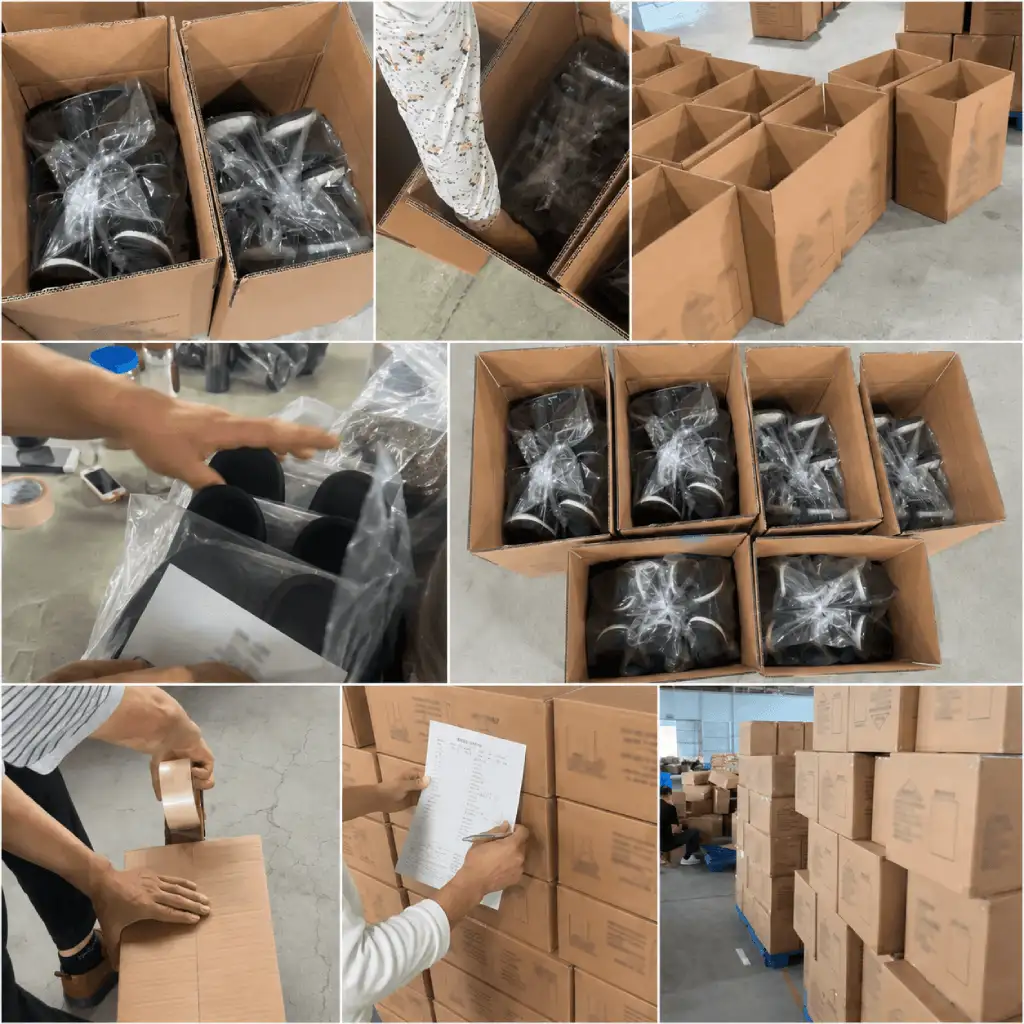
Use a shipment-release checkpoint
Production completion does not automatically mean that an order is ready to ship. Before release, the buyer and supplier should confirm that accepted goods, packaging records, carton information, quantities, and required documents are aligned.
Final delivery-readiness review
- accepted quantity by style, color, and size;
- inspection status and agreed disposition of any issue;
- individual packing, labels, barcodes, and accessories;
- pack ratios, carton quantities, dimensions, weights, and marks;
- packing list and other agreed shipment information;
- handoff date, location, shipping term, and logistics responsibility.
This checkpoint is particularly important for large-volume orders containing several SKUs. A product may be correctly manufactured but still be commercially unusable if sizes, barcodes, carton assortments, or destination labels are wrong.
Delivery rule: control the finished product and its shipment identity together. The correct pair in the wrong pack or carton is still an order problem.
9. Ask for Evidence, Not a Capacity Claim
A buyer comparing a bulk slipper manufacturer should look for evidence that connects the supplier’s capabilities with the actual order. The strongest answer is not always the largest number; it is the clearest explanation of feasibility, constraints, control points, and responsibilities.
| Question to ask | Useful answer or evidence | Weak answer |
|---|---|---|
| What limits this order’s production pace? | Style-specific explanation of materials, operations, approvals, or packing | “Our capacity is very large.” |
| What must be approved before production starts? | Defined sample, specification, material, artwork, packaging, and testing gates | “We can confirm details during production.” |
| How was the production schedule calculated? | Milestones linked to quantity, SKU mix, material status, process, and packing | One completion date without assumptions |
| How will bulk quality be controlled? | Approved references, checkpoints, criteria, records, and issue escalation | “Our quality is always perfect.” |
| How are changes documented? | Version number, change record, affected items, approval, and release method | Comments distributed across informal messages |
| How will progress and risks be reported? | Agreed milestones, update frequency, responsible contacts, and decision deadlines | Updates only after the requested date is missed |
Buyers can also review the supplier’s product scope, development process, quality approach, project coordination, and relevant manufacturing background. See About UTOP Slippers for an overview of UTOP’s indoor slipper experience and project-management approach.
Supplier-review principle: a credible manufacturer should be able to explain what is confirmed, what remains conditional, what could change the schedule, and what evidence will be used to control the order.
10. Wholesale Slipper Production Checklist, FAQ, and Next Step
Final checklist before reserving production
- The product scope, quantities, colors, sizes, and ratios are defined.
- The approved sample and current written specification are identifiable.
- Materials, components, colors, artwork, and tooling have clear approval status.
- The capacity estimate reflects the actual style and SKU mix.
- Buyer approvals and supplier milestones are included in the schedule.
- Quality checkpoints, tolerances, defect classifications, and inspection methods are agreed.
- Individual packing, labels, barcodes, pack ratios, and cartons are approved.
- Progress reporting, change control, issue escalation, and shipment release are assigned.
Frequently Asked Questions
What is wholesale slipper production?
It is the coordinated manufacture of slippers for B2B orders, including material preparation, production, quality control, branding, packaging, and delivery preparation. The requirements depend on the product, customization, quantity, size and color mix, destination, and schedule.
How should buyers verify slipper manufacturing capacity?
Ask for a capacity review based on the confirmed style, quantity, SKU mix, materials, construction, approvals, packaging, and required dates. The supplier should identify key constraints, milestones, assumptions, and reporting arrangements.
What should be approved before bulk production?
Approve the physical sample, materials, colors, measurements, size grading, construction, outsole, branding, labels, packaging, testing requirements, and written specification. Record any accepted exceptions and unresolved conditions.
How long does UTOP sampling and bulk production take?
For usual custom slipper projects, sampling typically takes about 7–14 days. Bulk production usually takes about 30–45 days after the sample and other necessary approvals are complete. The actual schedule depends on materials, tooling, revisions, testing, quantity, branding, packaging, and production loading.
Does AQL inspection mean every pair is checked?
No. AQL-based acceptance sampling evaluates a defined sample from a lot under an agreed plan. Buyers may combine sampling inspection with process checks or selected 100% checks according to product risk and contractual requirements.
What information should be sent for a production review?
Send the product reference, estimated quantity, colors, size range and ratios, materials, construction, logo, packaging, destination market, required tests, approval status, delivery destination, and requested schedule.
Related B2B Sourcing Resources
- Custom Indoor Slipper Product Center
- Wholesale Indoor Slippers B2B Sourcing Guide
- Private Label Indoor Slippers Manufacturing Guide
- Footwear Quality Control Guide
- Footwear Packaging Guide
Planning a Large Wholesale Slipper Order?
Send UTOP your product reference, estimated quantity, size and color breakdown, material and construction requirements, branding, packaging, destination, and requested schedule. Our team can review the product requirements, sampling needs, manufacturing feasibility, production planning, and quotation basis.
Request a Production ReviewFinal takeaway: dependable wholesale slipper production is built on a defined order, approved materials and samples, realistic capacity planning, staged quality control, controlled packaging, and clear communication. Capacity becomes meaningful only when these parts work together.