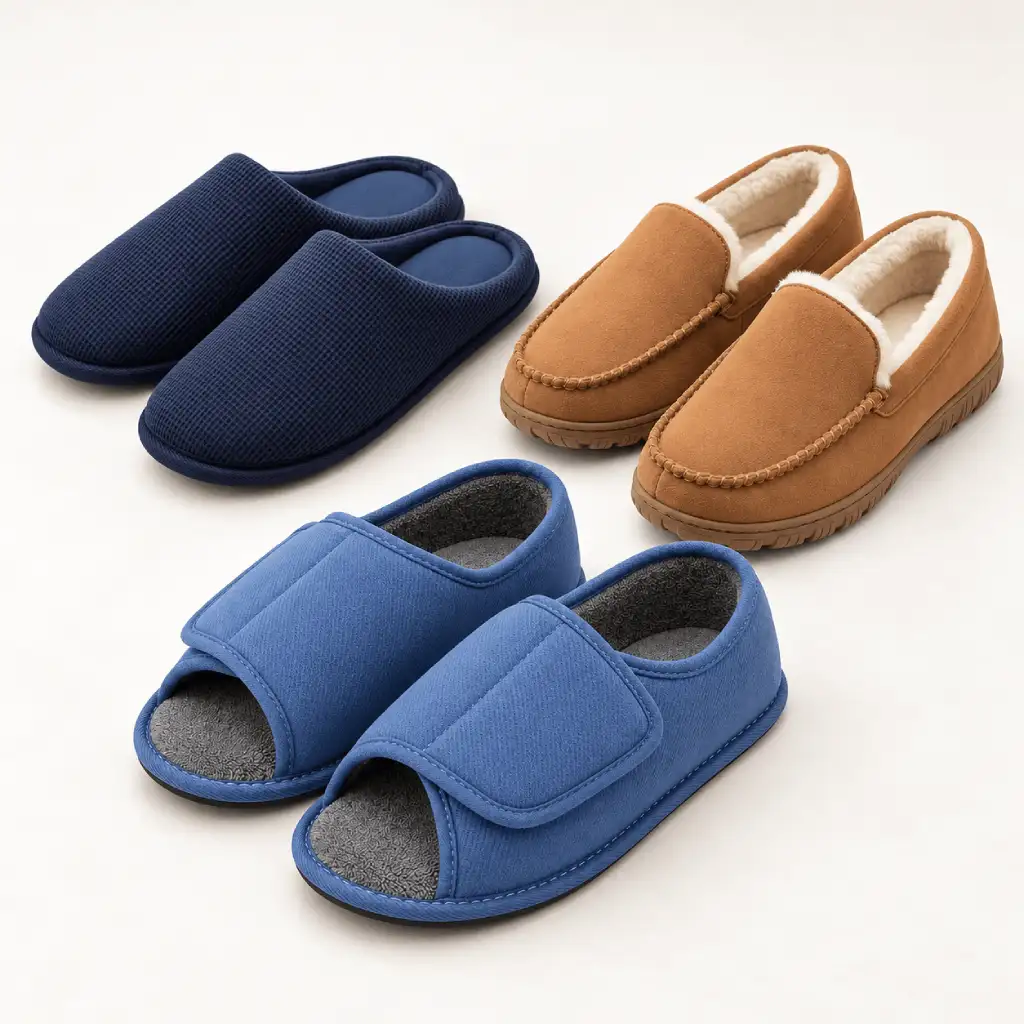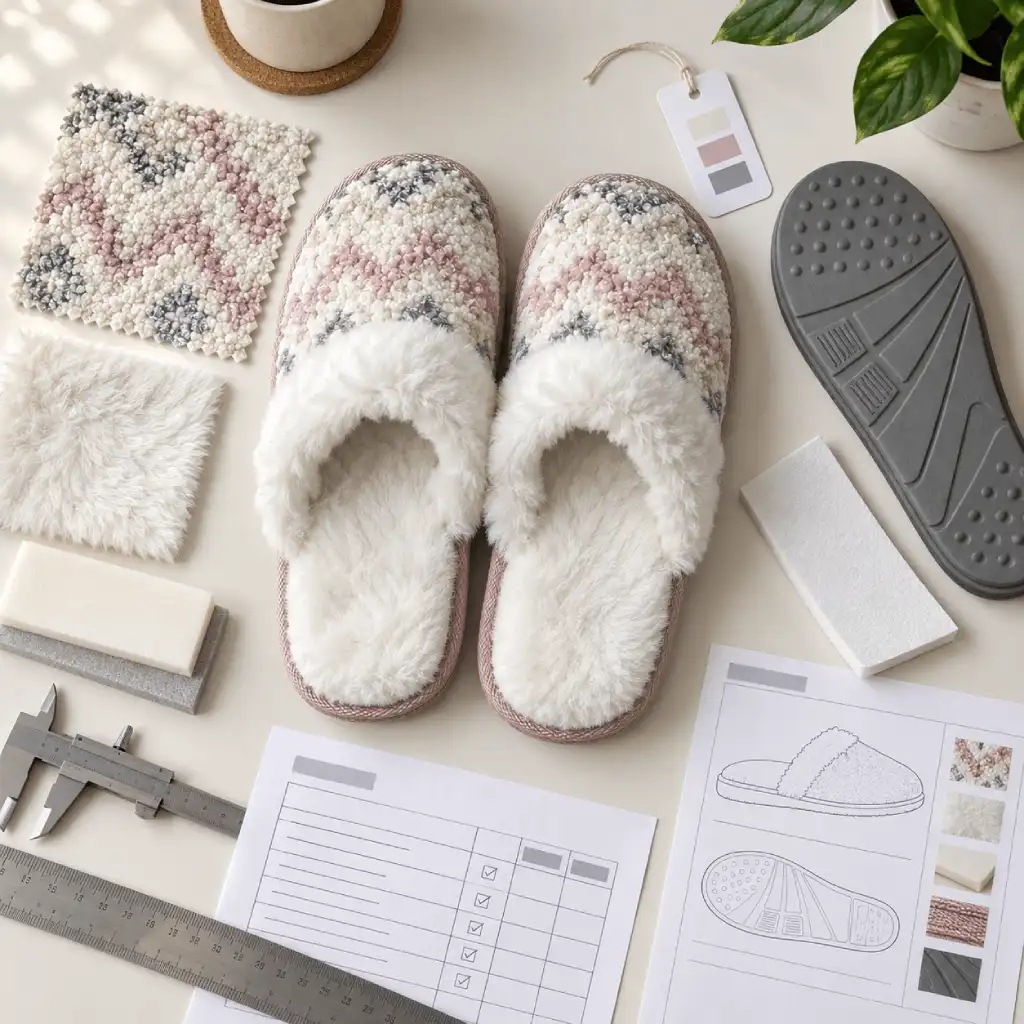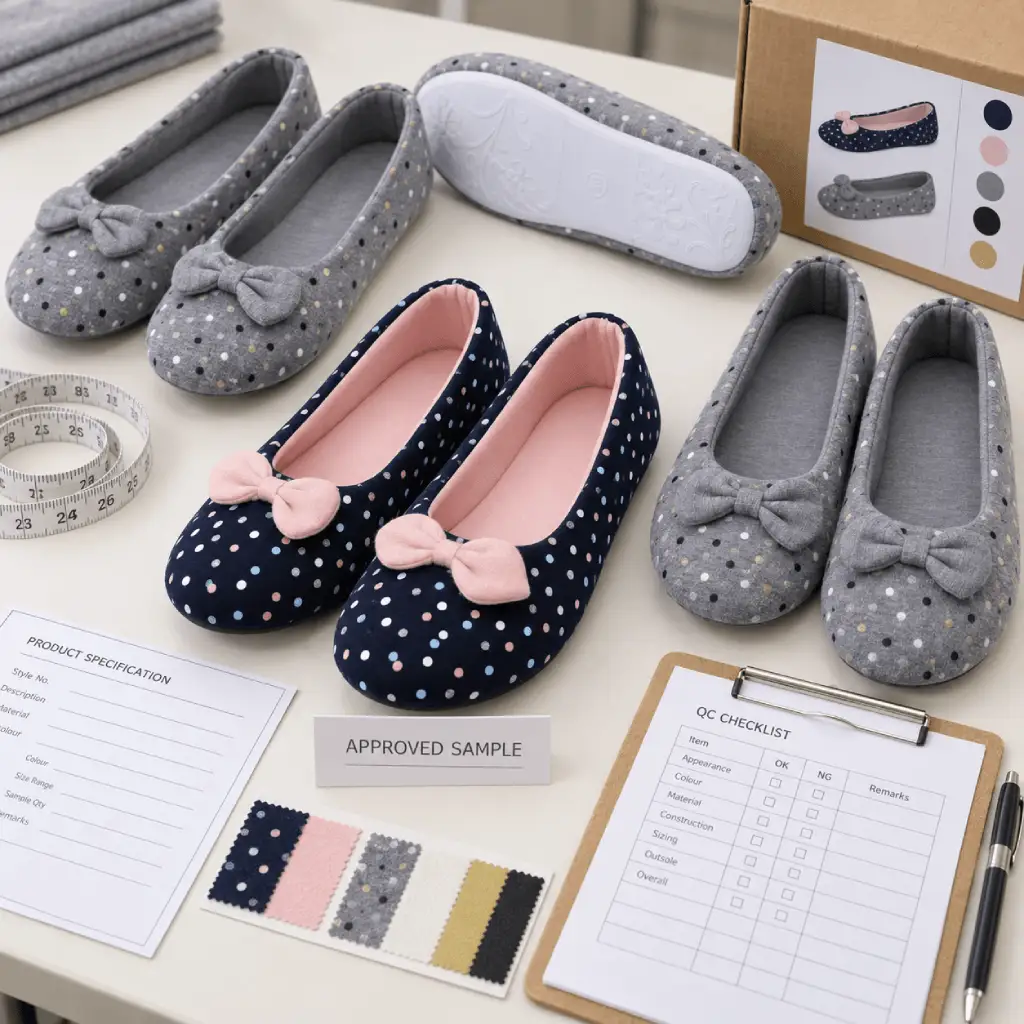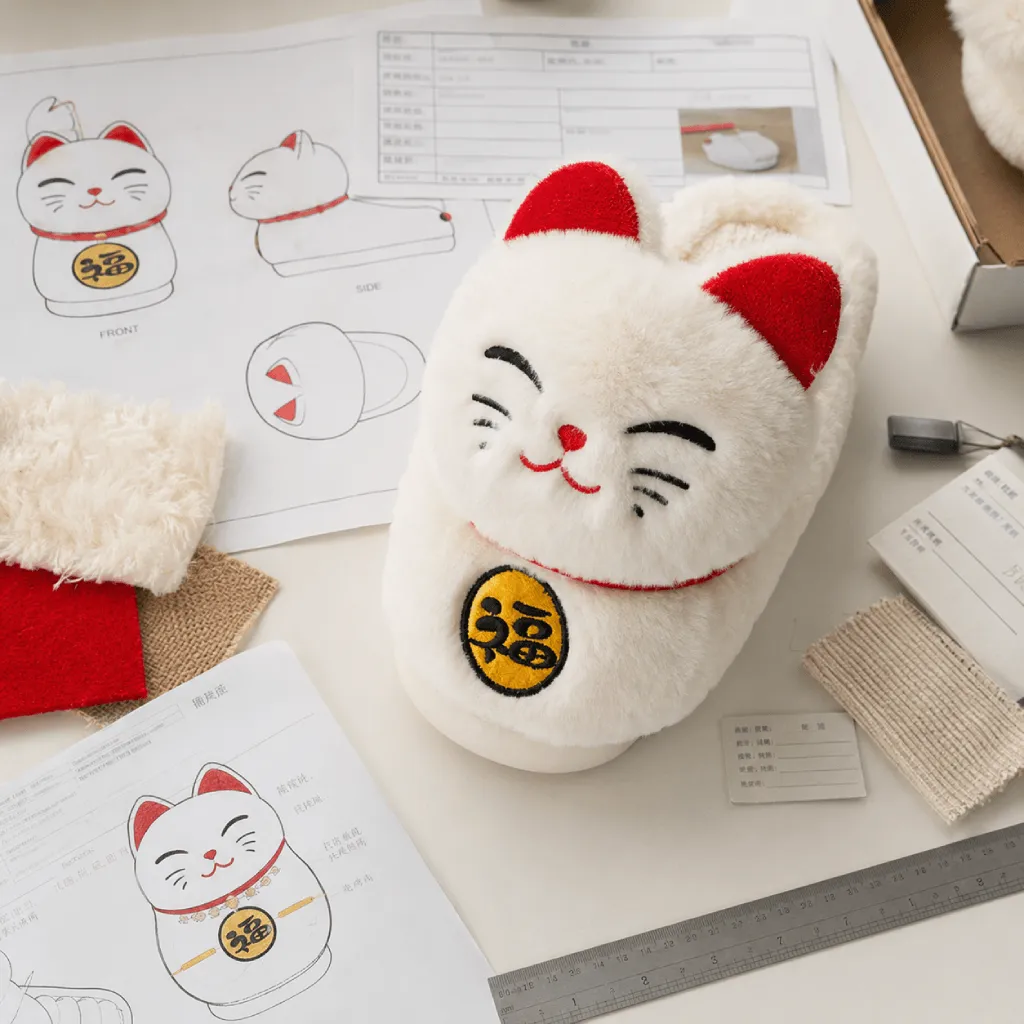
Wholesale indoor slippers are not one fixed product. The category can include open-back house slippers, closed-back styles, open-toe designs, ballerina slippers, slipper booties, novelty products, and selected hospitality footwear. Each direction creates different requirements for materials, fit, outsole construction, branding, packaging, and production planning.
A successful program therefore starts with a commercial brief rather than a generic request for “soft slippers.” Buyers need to define the wearer, season, sales channel, price position, size plan, intended use, customization level, and destination-market requirements before comparing quotations or approving samples.
This B2B guide explains how brands, importers, distributors, retailers, and sourcing teams can plan indoor slippers wholesale, select a practical product range, evaluate an indoor slipper supplier, and move a bulk indoor slippers project from concept to production.
Buyer takeaway: treat the upper, lining, cushioning, outsole, construction, sizing, branding, packaging, approvals, and order plan as one connected specification. Changing one component may affect fit, appearance, cost, packing volume, or production feasibility.
This guide is written for B2B product development and sourcing. Material or construction names alone do not prove a specific comfort, grip, durability, or compliance result; measurable requirements should be supported by agreed specifications and, where necessary, relevant testing.
Written by the UTOP Slippers Sourcing Team, with product-development input from our indoor slipper manufacturing team.
1. Define the Product Scope Before Sourcing
Wholesale indoor slippers is a broad commercial category rather than a single technical specification. Search terms such as indoor slippers, house slippers, house shoes, bedroom slippers, and hotel slippers may overlap, but buyers can mean very different products when they use them.
A soft bedroom slipper with a point-plastic fabric sole is not equivalent to a molded-outsole house shoe. A retail slipper with size labels, barcodes, and display packaging is not quoted on the same basis as a simply packed guest-room slipper. The product name helps identify the category; the written specification defines what will actually be made.
| Buyer term | Typical product direction | What still needs to be confirmed |
|---|---|---|
| Indoor slippers | General homewear category covering multiple silhouettes | Wearer, season, upper coverage, lining, outsole, sizing, and channel |
| House slippers or house shoes | Home-use footwear ranging from soft slippers to more structured styles | Indoor-only use, brief transitional use, outsole structure, fit, and durability target |
| Bedroom slippers | Soft, comfort-led, often lightweight indoor products | Lining volume, sole type, warmth direction, packing, and retail or guest use |
| Hotel or spa slippers | Hospitality footwear planned for a defined guest-use program | Material weight, sole, logo, individual packing, use conditions, and order volume |
Category name versus production specification
A useful sourcing brief states both. Name the intended category, then define the upper, lining, cushioning, outsole, construction, fit, branding, packaging, quantity, destination, and approval requirements. This prevents suppliers from quoting different interpretations of the same phrase.
Buyers who need a detailed pre-production checklist specifically for house-shoe terminology can also use UTOP’s bulk house slippers wholesale checklist. The present guide stays at the broader indoor-slipper category level.
2. Build the Program Around the Sales Channel
The sales channel affects the product long before a supplier calculates the final quotation. A supermarket program may prioritize clear size marking, shelf presentation, barcodes, and repeatable core colors. A private label brand may place more weight on material hand feel, proprietary color, logo execution, and packaging. A hospitality buyer may need compact individual packing and a product designed for a defined guest-use setting.
For buyers planning indoor slippers wholesale, the commercial role of each style should be decided before the range expands. This keeps product development aligned with the customer, selling season, retail position, and realistic order plan.
| Sales channel | Commercial focus | Development priorities |
|---|---|---|
| Retail chains | Shelf presentation, size availability, landed-cost planning, consistent supply | Core assortment, labels, barcodes, retail packaging, carton plan, delivery window |
| Wholesale distribution | Broad customer usability, repeatability, carton efficiency, price architecture | Size and color ratios, shared materials, practical packaging, replenishment planning |
| Private label brands | Brand identity, differentiated product, controlled customer experience | Material references, custom colors, logo, fit standard, packaging, approval records |
| E-commerce and gift | Visual distinction, photography, unboxing, manageable variants | Silhouette, color story, decoration, pair presentation, packing recovery |
| Hospitality and spa | Defined guest use, packing efficiency, presentation, reliable supply | Material weight, sole, logo, individual pack, carton quantity, delivery plan |
Use a core, seasonal, and extension structure
A focused product architecture is usually easier to sample and control than a collection of unrelated designs. A buyer may establish dependable core styles, add seasonal materials or colors, and then introduce selected gift or novelty extensions. Sharing materials, outsoles, color families, branding, or packaging across related styles can simplify approval and production planning.
Range-planning rule: every SKU should have a clear role. If two styles serve the same customer, season, price position, and visual purpose, confirm whether both are commercially necessary before dividing the order.
For hospitality-specific development, review UTOP’s wholesale hotel and spa slippers. For a broader starting point, the custom indoor slipper product center organizes reference styles by buyer category.
3. Plan the Assortment by Wearer and Silhouette
A practical wholesale indoor slippers assortment begins with the wearer and product role. Women’s, men’s, children’s, and hospitality programs differ in size structure, fit review, styling, decoration, packaging, and order ratio. Within each group, the silhouette changes the way the upper retains the foot and how the slipper should be evaluated.
| Program group | Possible range role | Important review points |
|---|---|---|
| Women’s indoor slippers | Core homewear, seasonal, gift, novelty, ballerina, open-toe, and private label ranges | Silhouette, upper coverage, lining, size ratio, color plan, branding, retail presentation |
| Men’s indoor slippers | Open-back, closed-back, moccasin-inspired, casual homewear, and gift programs | Opening, instep coverage, lining volume, width, men’s size range, outsole structure |
| Kids’ indoor slippers | Core homewear, character-inspired, 3D animal, novelty, and seasonal collections | Age and size plan, fit, component attachment, pair symmetry, labels, packaging recovery |
| Hospitality slippers | Hotel, guest-room, spa, travel, and amenity supply programs | Guest-use specification, material weight, sole, logo, individual packing, volume |
UTOP’s women’s slipper category and kids’ slipper category provide focused reference directions. Buyers can also begin from the main product center when a multi-category program is still being planned.
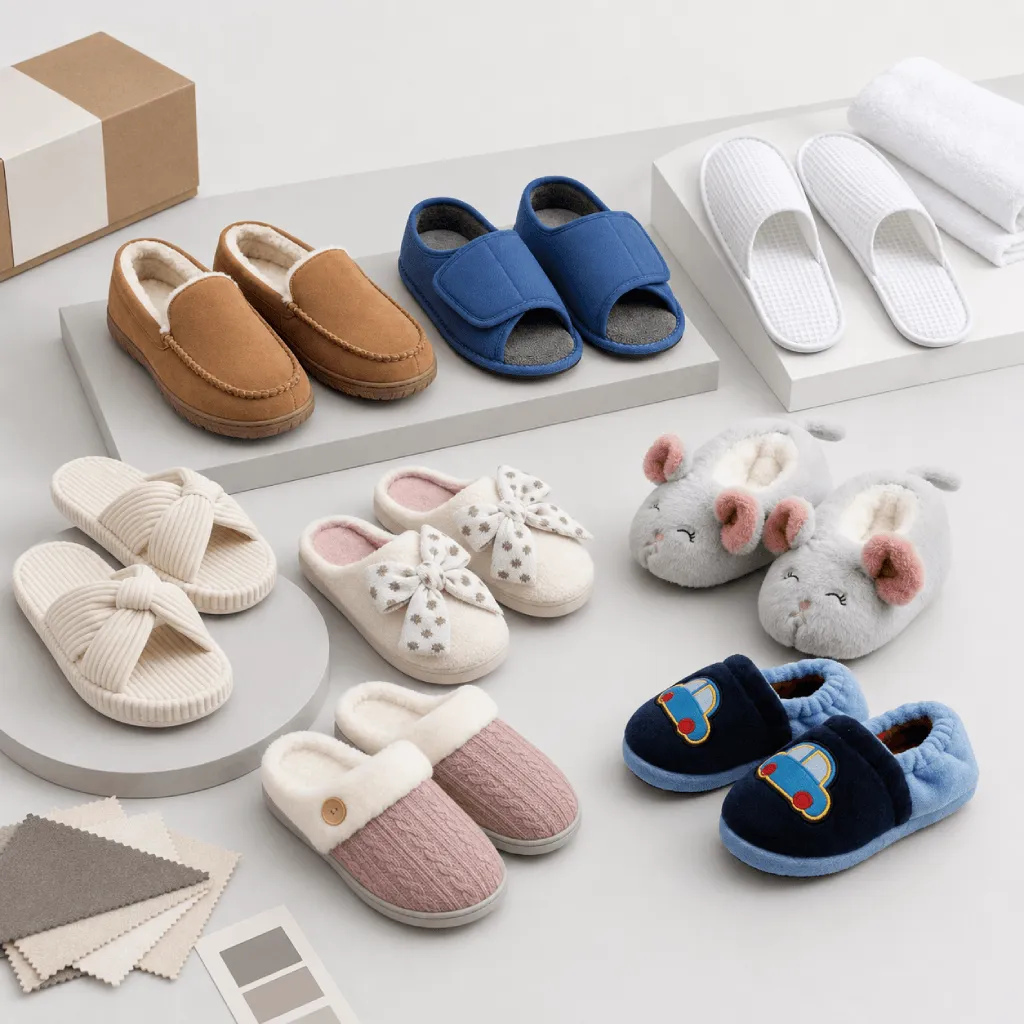
Match the silhouette to the intended product
| Silhouette | Product character | Sample checks |
|---|---|---|
| Open-back | Easy entry with different levels of forefoot and instep coverage | Opening, upper retention, heel position, footbed length, edge pressure, walking stability |
| Closed-back | More heel coverage and a more enclosed house-shoe direction | Entry, heel height, heel hold, seam position, lining volume, size grading |
| Open-toe or cross-band | Exposed forefoot for selected warm-season or spa-inspired ranges | Toe exposure, band position, opening width, upper pressure, foot position, flex |
| Ballerina | Soft, compact silhouette for indoor, gift, or travel-oriented programs | Opening shape, elastic or binding, toe room, heel fit, folding, sole structure |
| Bootie or high-coverage style | Higher upper coverage for selected winter or comfort-led products | Entry opening, shaft height, lining bulk, ankle pressure, shape recovery, carton volume |
| Novelty or 3D style | Visual product for gifting, seasonal, character-inspired, or online ranges | Proportions, embroidery, raised-part attachment, left-right symmetry, packing recovery |
Confirm size systems and grading
Do not approve a full range from one outsole length or a generic conversion chart. Upper shape, toe profile, heel treatment, lining thickness, foam, binding, elastic, and construction all affect usable internal space. Confirm the requested EU, US, UK, or other size system; check representative fitted samples; and document the quantity ratio by size.
ISO 19407:2023 addresses conversion between footwear sizing systems, but a conversion reference does not replace fit approval for the actual slipper construction.
Assortment check: review the smallest, a middle, and the largest requested size where practical. This helps reveal grading issues that a single sample size cannot show.
4. Specify Materials, Lining, and Cushioning
Words such as soft, warm, premium, lightweight, or fluffy describe a buyer’s intention, but they do not define a production material. Suppliers need a reference, composition or material direction, color requirement, surface character, thickness or weight where relevant, backing, stretch behavior, and intended position in the product.
For bulk indoor slippers, record the upper, lining, footbed cover, reinforcement, cushioning, binding, thread, and outsole as one material system. A change to the lining or foam may alter fit even when the outside pattern remains unchanged.
| Material direction | Possible product role | Points to specify and approve |
|---|---|---|
| Plush, fleece, or faux fur | Winter, gift, novelty, and comfort-led ranges | Pile length and direction, backing, shedding expectation, lining volume, color, packing recovery |
| Jersey knit or other knit | Flexible textile uppers and selected lighter product directions | Knit structure, stretch and recovery, weight, backing, edge stability, logo clarity |
| Corduroy, velvet, or woven textile | Textured retail, homewear, or gift collections | Surface direction, cutting alignment, fraying control, shade, seam stability, compression marks |
| Polyester felt | Structured textile directions with a flat, non-knit surface | Composition, thickness, stiffness, edge finish, color, creasing, and construction compatibility |
| Faux suede or similar surface | Refined casual or moccasin-inspired product directions | Surface feel, backing, shade, cutting direction, marking, seam behavior, logo method |
Do not confuse jersey knit with felt
Jersey is a knitted textile with a looped structure and characteristic stretch behavior. Felt is a nonwoven material with different edges, stiffness, recovery, and sewing behavior. Naming the material correctly matters for quotation, sampling, and repeat orders.
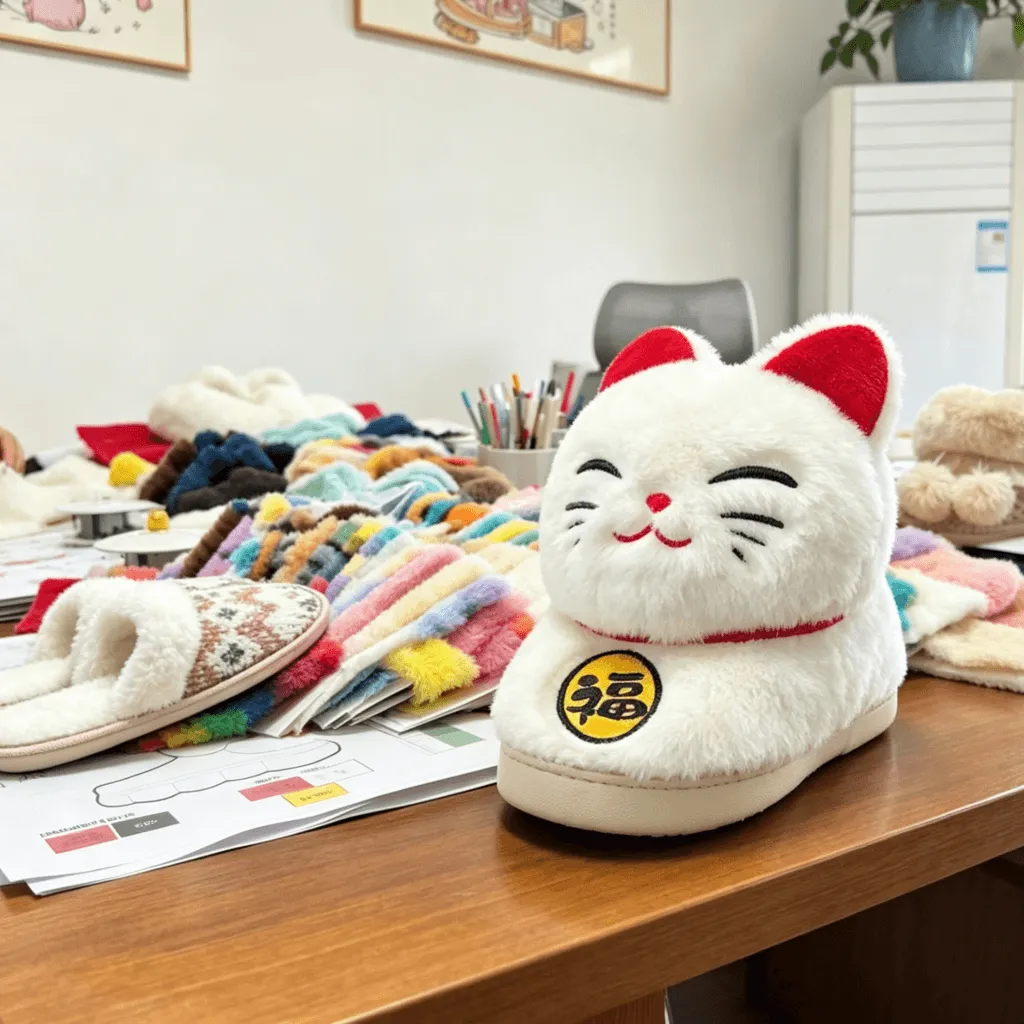
Review lining and cushioning as fit components
Lining is not only a visual or tactile choice. Its thickness and volume affect the opening, toe room, instep pressure, heel position, and usable internal space. Long-pile plush, short fleece, jersey, terry, and other lining directions should be assessed on the actual pattern and size rather than treated as interchangeable.
Cushioning should also be described as a construction. The supplier needs to know the foam combination, thickness direction, recovery expectation, footbed cover, and how the finished footbed should feel across the size range. A thicker foam package does not automatically produce a better product if it changes fit, compresses unevenly, or conflicts with the intended price and construction.
| Component | Why it affects the finished slipper | Approval points |
|---|---|---|
| Upper | Controls coverage, appearance, flexibility, and foot retention | Material, color, backing, stretch, cutting direction, reinforcement, pattern |
| Lining | Changes internal volume, seam feel, entry, and seasonal direction | Type, pile or thickness, color, seam placement, edge bulk, fit effect |
| Cushioning | Influences footbed height, feel, compression, and fit | Layer structure, thickness, recovery, edge transition, size consistency |
| Binding and reinforcement | Affects edge stability, appearance, seam bulk, and repeated production | Material, width, stretch, color, fold, stitch position, hidden support |
Material approval: retain the approved physical sample and written component specification together. A photograph may show color and silhouette, but it cannot fully define pile, backing, thickness, recovery, or hand feel.
5. Choose the Outsole and Upper-to-Sole Construction
An outsole should be selected for the complete product specification, not from a rule that one material is always superior. Weight, flexibility, grip, abrasion, support, appearance, packing volume, attachment, and cost can change with material formulation, hardness or density, thickness, tread, outsole geometry, upper construction, floor surface, and test method.
Common directions for indoor slippers include molded TPR, different forms of EVA, and point-plastic fabric soles. Within EVA, cut-sheet, compression-molded, and injection-molded structures are not the same. The buyer and indoor slipper manufacturer should identify the actual construction rather than using “EVA sole” as a complete specification.
| Outsole direction | Construction character | Buyer review points |
|---|---|---|
| Molded TPR | Molded outsole with a defined profile, sidewall, and tread | Formulation, hardness, thickness, weight, tread, flexibility, color, dimensions, attachment |
| Cut-sheet EVA | EVA sheet cut to shape, often used in lightweight indoor constructions | Density, thickness, compression, edge finish, tread or surface, bonding, flatness |
| Compression- or injection-molded EVA | Molded EVA structure with geometry defined by tooling and process | Mold availability, formulation, density, dimensions, shrinkage control, tread, color |
| Point-plastic fabric sole | Soft textile-based sole with applied grip dots for selected light indoor products | Base cloth, dot pattern, coating consistency, flexibility, edge finish, intended use |
Separate outsole material from attachment method
Welt-stitched, side-stitched, and cold-glued describe ways of connecting or assembling the upper and sole system; they are not performance grades. Welt-stitched styles may use TPR or EVA depending on the confirmed design. Side-stitched indoor slippers commonly use TPR outsoles. Cold-glued styles commonly use cut-sheet EVA, while other material combinations require suitable surface preparation, adhesive, process control, and pressing.
Performance needs a measurable requirement
Do not assume that a material name guarantees slip resistance, abrasion life, flexibility, or outdoor suitability. If a result matters to the order, define the intended conditions, applicable test method, sampling stage, and acceptance criteria before production.
For a more detailed technical comparison, use UTOP’s TPR vs EVA sole guide for slippers.
6. Select the Right Customization Level
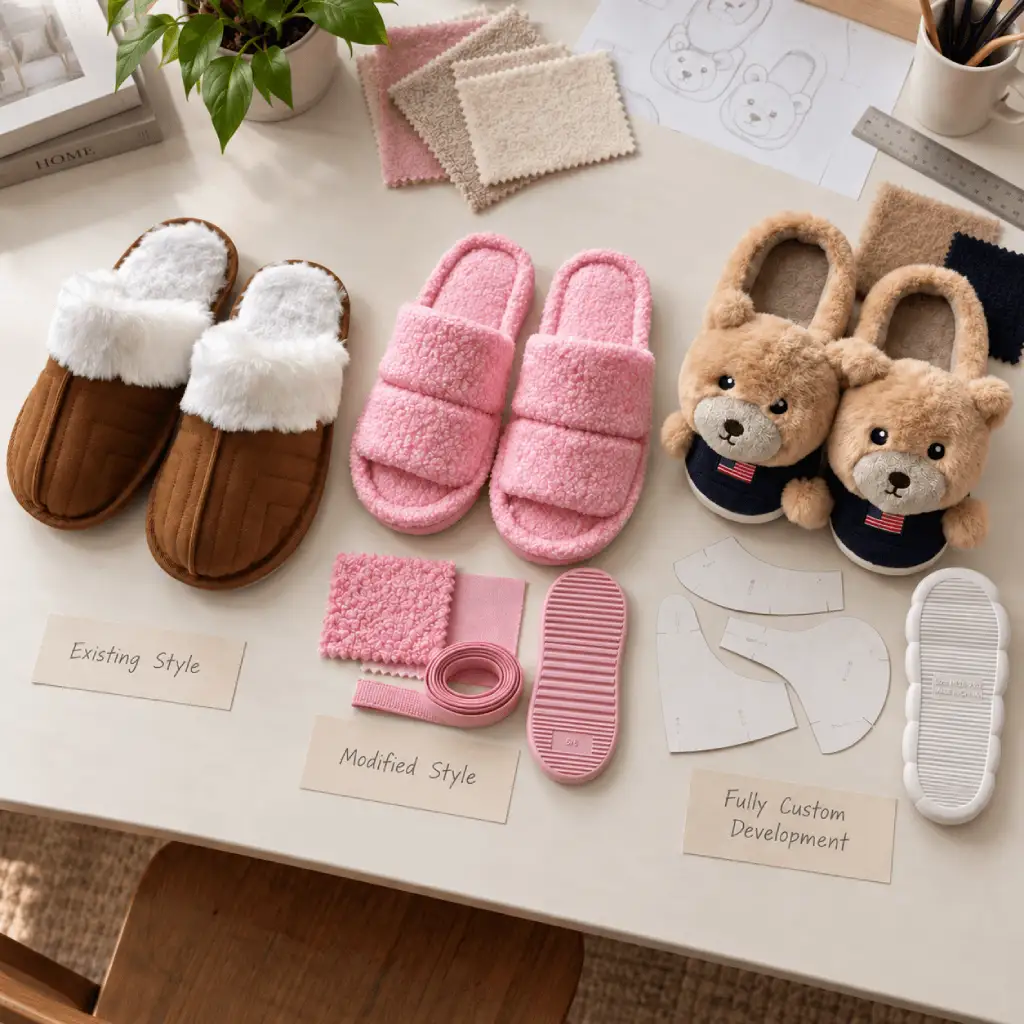
Customization can mean a logo on an established style, a material and color update, a private label collection, or an original OEM/ODM project. These routes require different development work, material commitments, tooling, approvals, timelines, and order planning. A clear starting point helps the supplier review feasibility and quote the correct scope.
| Development route | Suitable starting point | Typical decisions |
|---|---|---|
| Reference-style selection | Buyer wants a product close to an existing silhouette and construction | Size range, available material direction, color, label, packing, order quantities |
| Reference-style modification | Existing product provides the base, but selected components change | Upper or lining, cushioning, outsole, color, size, logo, decoration, packaging |
| Private label program | Brand needs a coordinated product and retail presentation | Brand colors, logo method, labels, artwork, packaging, barcode data, approval standard |
| OEM/ODM development | Buyer has an original design, drawing, sample, or functional brief | Pattern, materials, construction, grading, tooling where needed, prototypes, testing, packaging |
Approve branding on the actual product material
Embroidery, woven or printed labels, patches, insole branding, printing, and other logo methods can produce different results on plush, knit, felt, faux suede, velvet, and smooth textiles. Long pile may obscure fine detail; stretch may distort artwork; dense embroidery may change the hand feel of a soft upper. Logo method, size, color, location, backing, and orientation should be approved on the production-intent material.
Packaging belongs in the same decision. A custom wholesale indoor slippers project may require hang tags, inserts, barcode labels, polybags, pouches, boxes, display packaging, or custom carton marks. The final choice should support product protection, retail presentation, packing efficiency, and recovery after unpacking.
Feasibility first: customization availability and MOQ depend on the style, materials, color count, size assortment, logo or decoration method, packaging, tooling, and total order plan. These details should be reviewed together rather than promised from one number.
For a deeper development sequence, see UTOP’s private label indoor slippers manufacturing guide and footwear packaging guide.
7. Evaluate an Indoor Slipper Supplier
A suitable indoor slipper supplier should do more than send a unit price. The supplier needs to understand the product category, identify missing information, explain construction limits, coordinate samples, control production records, and support the required order volume and delivery plan.
Evaluation should be based on the buyer’s actual program. A supplier that is appropriate for a basic guest slipper may not be the best fit for a multi-size private label retail collection. Likewise, a complex original design requires a different level of product-development support than a color update on an established style.
| Evaluation area | Evidence to request | Why it matters |
|---|---|---|
| Relevant product experience | Comparable silhouettes, materials, outsoles, constructions, and packaging | Reduces interpretation gaps and supports realistic feasibility review |
| Development support | Clear questions, material references, sample comments, revision records | Turns a visual idea into an approvable production specification |
| Production capability | Process overview, order planning, capacity discussion tied to the required schedule | Shows whether the supplier can support the planned scale and construction |
| Quality controls | Approved sample process, written standards, inspection points, records, issue handling | Helps maintain material, fit, appearance, assembly, branding, and packing consistency |
| Communication and traceability | Named contacts, revision control, approval log, status reporting, written confirmations | Prevents superseded artwork or sample comments from entering production |
| Export and delivery coordination | Packing data, carton marks, document coordination, shipment planning | Connects factory completion to the buyer’s destination and delivery requirements |
Compare quotations on the same basis
A low price is not meaningful if quotations use different upper materials, lining weights, foam packages, outsole structures, size ratios, branding, packaging, inspection scope, or trade terms. Normalize the specification first, then compare cost, feasibility, communication, risk, and delivery support.
Useful supplier questions
- Which details are still missing before an accurate quotation?
- Which components are standard, modified, custom-sourced, or tooling-dependent?
- How will sample revisions and final approvals be recorded?
- Which checkpoints will be used during material preparation, production, and packing?
- What order, destination, or schedule factors could change feasibility?
UTOP supports B2B slipper development and bulk production from Hefei and its manufacturing base in Tianchang. Buyers can review the company background on the About UTOP Slippers page before discussing a specific program.
8. Control the Sourcing Workflow
Sourcing indoor slippers in bulk is easier to control when each stage has a clear output. The purpose of the workflow is not to add paperwork; it is to prevent unresolved choices from moving into the next stage.
Define the commercial brief
Confirm the customer, market, channel, season, product role, price position, estimated quantity, size plan, and requested delivery window.
Select a product direction
Provide a product link, SKU, reference sample, image, drawing, or original brief that communicates the intended silhouette and position.
Align the quotation
Confirm material, construction, size ratio, logo, packaging, inspection, testing, trade terms, and exclusions so quotations are comparable.
Develop and review samples
Assess the complete sample for materials, measurements, fit, appearance, cushioning, outsole, logo, labels, packaging, and required revisions.
A sample comment should identify the location, current result, required change, measurement or reference where applicable, and approval status. Consolidated written comments are easier to follow than decisions spread across separate messages.
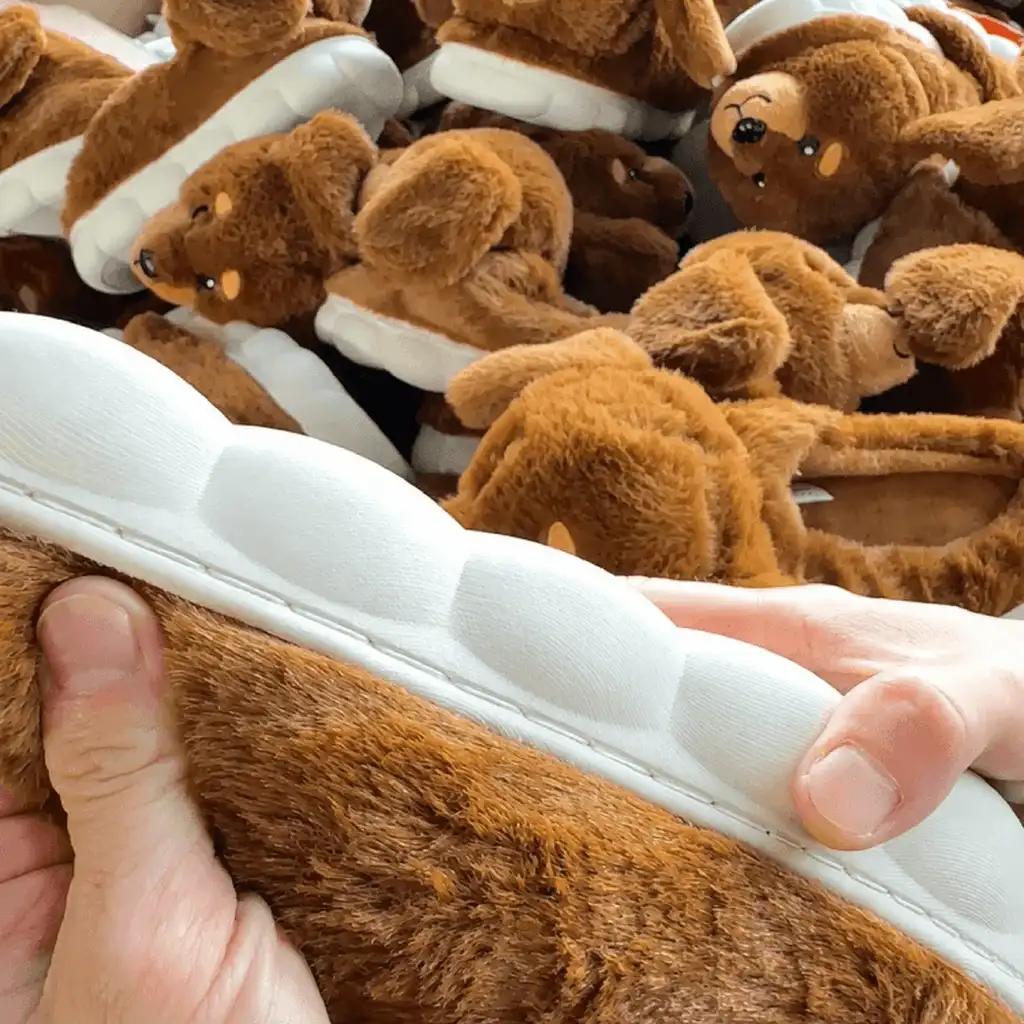
Approve the final standard
Freeze the approved sample, specification, measurements, artwork, color references, labels, packaging, quantities, and revision version.
Prepare and control production
Use the approved sample and written specification for material preparation, cutting, sewing, assembly, branding, pair matching, and packing.
Inspect and resolve issues
Check the order against agreed requirements, document nonconformities, decide corrective action, and verify the result before shipment approval.
Confirm packing and delivery
Finalize size and color quantities, individual packing, retail labels, carton quantities, carton marks, shipping data, and delivery coordination.
Use two linked approval references
The approved physical sample shows the finished product, while the written specification records details that may not be visible: material identification, measurements and tolerances, size grading, artwork version, color standard, outsole details, packing order, testing requirements, and inspection criteria. Neither reference should replace the other.
For detailed inspection planning, review UTOP’s footwear quality control guide for bulk slippers. It covers incoming materials, in-process checks, final inspection, construction-specific risks, sizing, outsoles, branding, packaging, testing records, and issue handling.
Confirm destination-market requirements early
Chemical, labeling, packaging, testing, and documentation requirements depend on the destination market, product, materials, buyer policy, and order. For EU programs, buyers can consult the European Commission’s overview of the REACH Regulation and then identify the requirements applicable to the specific product. Do not use a general compliance statement in place of order-level verification.
Workflow control: do not move an unresolved material, fit, logo, packaging, or test requirement into bulk production. Record the decision, responsible party, approved version, and evidence.
9. Prepare a Complete Project Brief and RFQ
A clear request for quotation helps the supplier identify the correct construction, confirm feasibility, and separate confirmed requirements from open decisions. It also makes quotations easier to compare because each supplier is working from the same commercial and technical basis.
| RFQ section | Information to provide | Why the supplier needs it |
|---|---|---|
| Product reference | Product link or SKU, sample, image, drawing, tech pack, or design brief | Establishes the silhouette, construction, and development starting point |
| Market and channel | Destination, target customer, sales channel, season, intended use, price position | Guides product suitability, packaging, testing, and commercial planning |
| Order plan | Estimated total quantity, SKU count, colors, size range, quantity ratio by size | Supports material planning, MOQ review, capacity, packing, and quotation |
| Product specification | Upper, lining, cushioning, footbed, outsole, construction, measurements, fit direction | Ensures the price refers to the intended product rather than an assumption |
| Colors and branding | Color standards, logo files, artwork version, method, size, placement, labels | Allows technique, clarity, cost, and material compatibility to be reviewed |
| Packaging | Individual pack, inserts, hang tags, barcodes, boxes, carton quantity, carton marks | Affects presentation, protection, packing labor, volume, and landed cost |
| Quality and compliance | Inspection scope, test methods, acceptance criteria, documentation, buyer policies | Allows requirements to be planned, quoted, sampled, and verified correctly |
| Commercial terms | Requested trade term, destination, sampling plan, delivery target, special conditions | Defines the quotation boundary and schedule review |
Mark confirmed, preferred, and open items
Not every project begins with a complete specification. Buyers can identify which points are fixed, which are preferences, and which need a supplier recommendation. This is more useful than presenting an uncertain detail as mandatory and revising the entire project later.
Minimum information for a first review
Send the closest product reference, estimated quantity, target market, wearer, size range, colors, material direction, outsole preference if known, branding needs, packaging direction, destination, and requested schedule. The supplier can then identify the questions required for a meaningful quotation.
Buyers can send these details through the UTOP project inquiry page for a product and feasibility review.
10. Frequently Asked Questions About Wholesale Indoor Slippers
What products are included in wholesale indoor slippers?
The category can include open-back and closed-back house slippers, open-toe styles, ballerina slippers, slipper booties, moccasin-inspired products, novelty or 3D slippers, and selected hospitality footwear. The exact scope depends on the wearer, sales channel, season, use, and specification.
Are wholesale indoor slippers and bulk indoor slippers different?
The phrases often describe the same B2B sourcing intent. “Wholesale” emphasizes resale or supply through a commercial channel, while “bulk” emphasizes order quantity. In both cases, the buyer should define the product, customization, size and color plan, packaging, destination, and delivery requirements.
What is the MOQ for indoor slippers in bulk?
MOQ depends on the silhouette, construction, material purchasing requirements, color count, size assortment, logo or decoration method, packaging, tooling where required, and total order plan. A supplier should review the complete project before confirming a workable quantity.
Which outsole is best for indoor slippers?
There is no universal best material. Molded TPR, cut-sheet EVA, molded EVA, point-plastic fabric, and other suitable structures serve different products. Selection should consider formulation, hardness or density, thickness, tread, weight, flexibility, attachment, intended use, floor conditions, price position, and any required test method.
Can indoor slippers be customized for private label orders?
Yes. Depending on the selected product and order, buyers can discuss materials, colors, size ranges, cushioning, outsoles, logo methods, labels, decorations, retail packaging, and carton marks. All options remain subject to feasibility, sample approval, and confirmed production requirements.
How should buyers compare indoor slipper suppliers?
Compare relevant product experience, sample-development support, production capability, quality controls, communication, traceability, export coordination, and the supplier’s ability to support the required scale. Normalize the specification before comparing prices.
What information is needed for a wholesale quotation?
Provide a product link, SKU, sample, image, drawing, or brief; estimated quantity; market and sales channel; size range and ratio; colors; material and outsole direction; logo files; packaging; quality or testing requirements; destination; trade term; and requested schedule.
Final takeaway: a dependable wholesale indoor slipper program connects commercial positioning with a controlled product specification, suitable supplier capability, complete sample approval, documented production standards, and clear packing and delivery requirements.
Looking for a wholesale indoor slipper manufacturer for a retail, distribution, private label, or OEM/ODM program? Send UTOP the closest product reference and your project requirements for a practical development review.