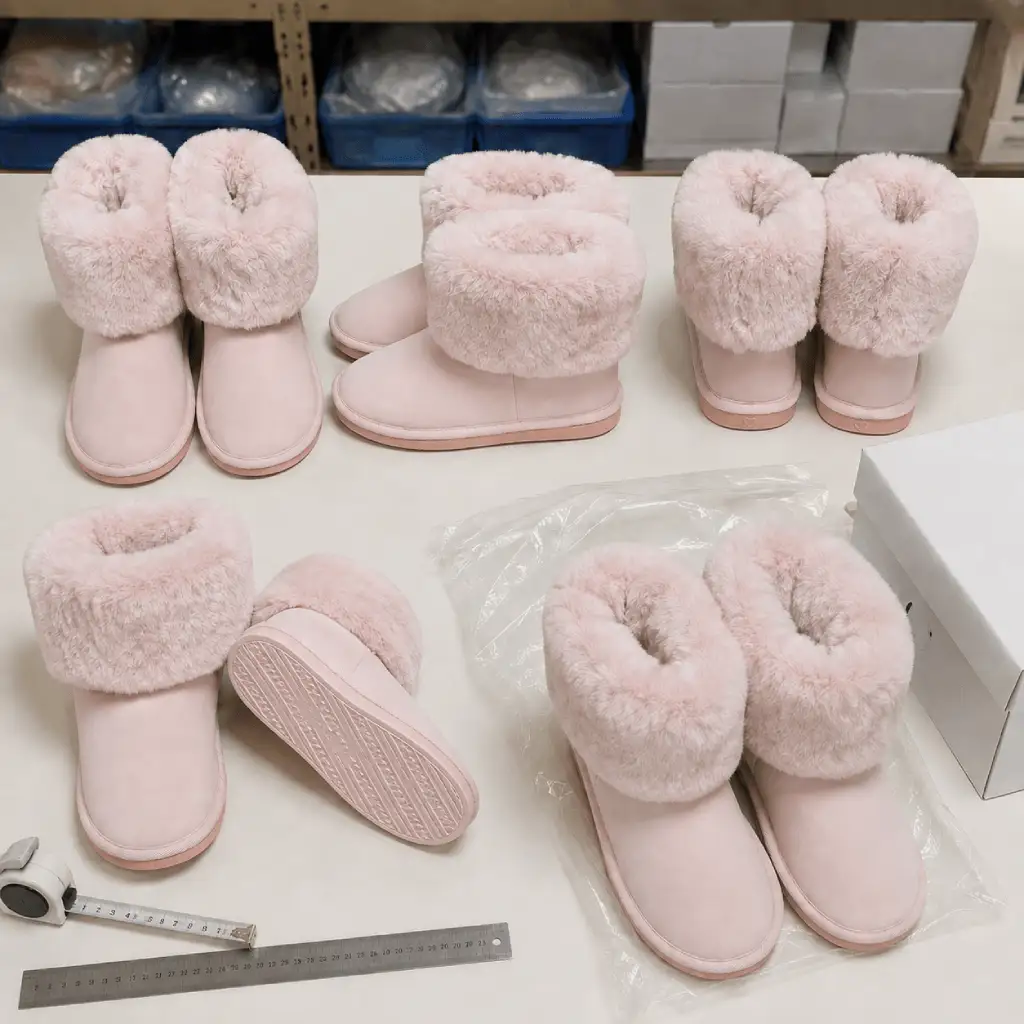
Footwear testing for a custom slipper order should begin before anyone sends a sample to a laboratory. The useful starting point is a short testing plan that connects the destination market, sales channel, intended wearer, product construction, buyer requirements, and claims made about the finished slipper.
Without that plan, a report can be technically valid and still be commercially unhelpful. It may cover the wrong color, an earlier outsole compound, a component instead of the finished pair, or a method that does not match the retailer’s protocol. The result says something about the submitted sample, but not necessarily about the product the buyer intends to sell.
This guide shows brands, importers, retailers, wholesalers, and sourcing teams how to build a practical slipper testing plan for custom orders—what to define, when to test, how to read the report, and what to do when the product changes or fails.
Buyer takeaway: do not ask a supplier to “arrange all necessary tests.” Name the market, product, risk, method, acceptance criterion, sample identity, timing, and decision owner. That turns a broad request into a test plan that can guide development and shipment release.
Scope: this article explains how to plan testing for ordinary consumer indoor slippers. Protective, medical, heated, electronic, or other specially regulated footwear needs a separate review for its market and intended use. For routine production inspection, defect classification, AQL, and shipment release, use UTOP’s Footwear Quality Control Guide.
Written by the UTOP Slippers Sourcing Team, with product-development, production, and quality-control input from our indoor slipper manufacturing team.
1. Start With the Product, Market, and Risk
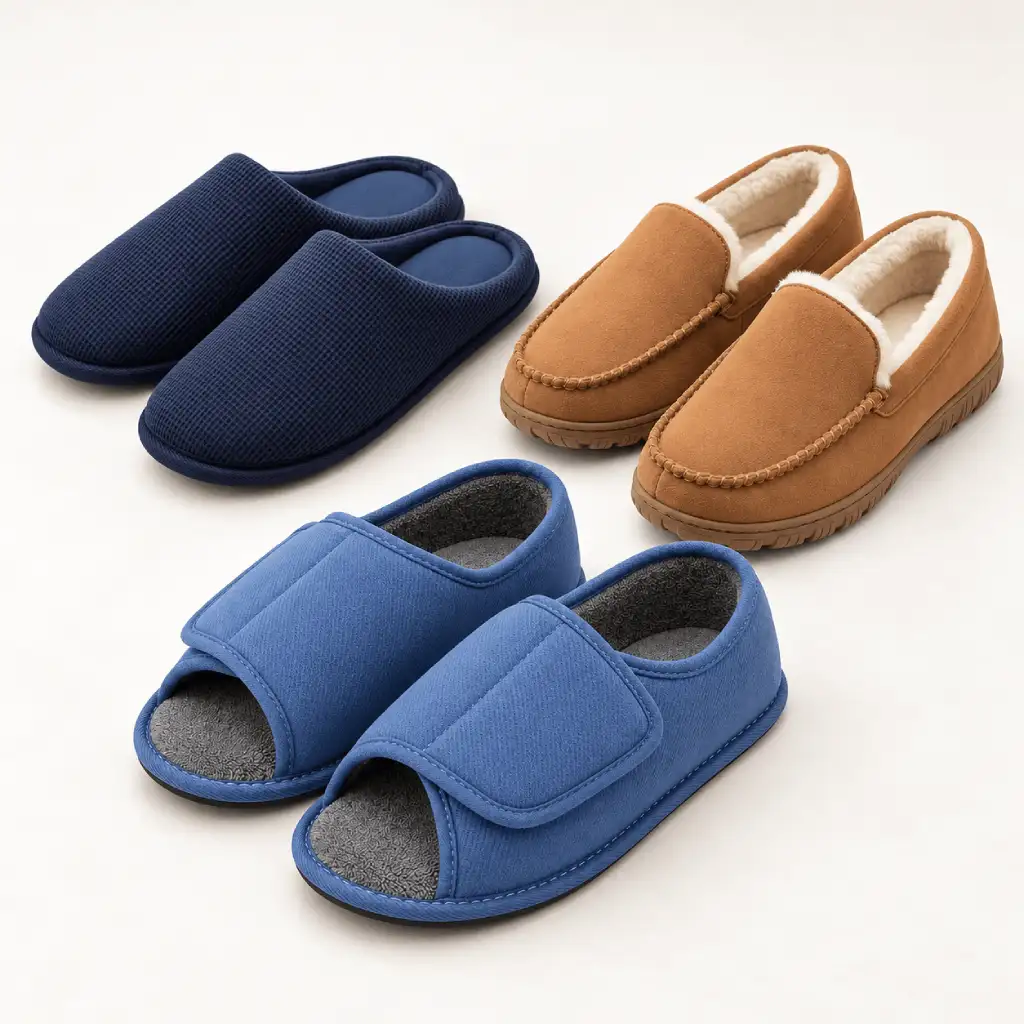
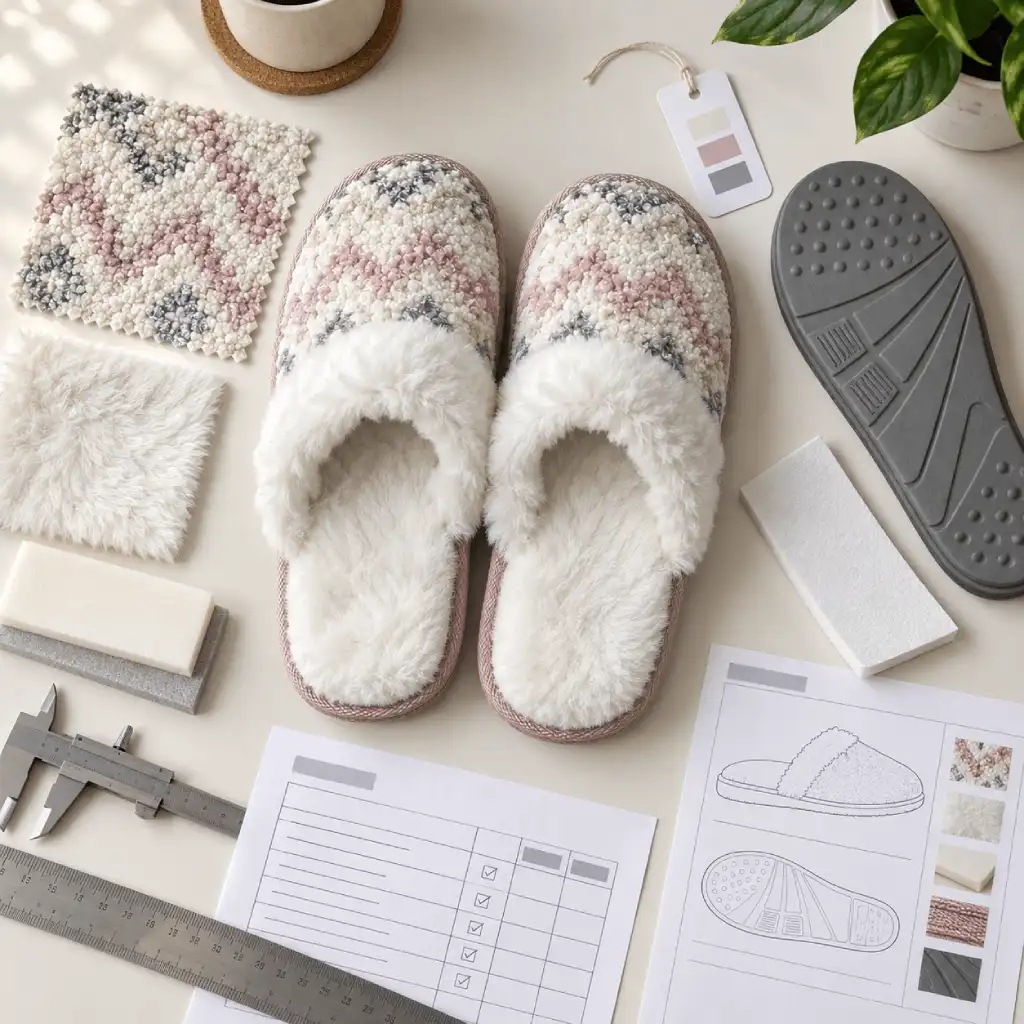
A useful footwear testing plan starts with the commercial brief. “Indoor slipper” is too broad to determine a complete test scope. A soft hotel slipper, a plush children’s bootie, an adult mule sold through a department store, and an indoor-outdoor house shoe can share a product name while presenting different materials, claims, foreseeable use, and buyer requirements.
Before discussing a laboratory quotation, write down the facts that change the testing decision:
| Planning question | What the buyer should confirm | Why it matters |
|---|---|---|
| Where will it be sold? | Country or region, online or physical retail, and named retailer | Determines the legal and customer requirement set |
| Who will wear it? | Adult or child, intended age range, and any specific user group | Can change safety, chemical, labeling, and component concerns |
| How will it be used? | Indoor only, occasional outdoor use, washable, hospitality, gift, or promotional use | Shapes realistic performance risks and claims |
| What is it made from? | Upper, lining, cushioning, insole, outsole, adhesives, trims, prints, and labels | Links each material or component to relevant risks and methods |
| What will be claimed? | For example, washable, slip resistant, indoor-outdoor, or a stated material composition | A claim may need evidence under defined conditions |
This first risk screen keeps slipper testing proportionate. A decorative bow, printed logo, thick plush lining, molded TPR outsole, and cut EVA bottom do not create the same questions. The goal is to identify credible failure points and applicable requirements, then select tests that answer those questions.
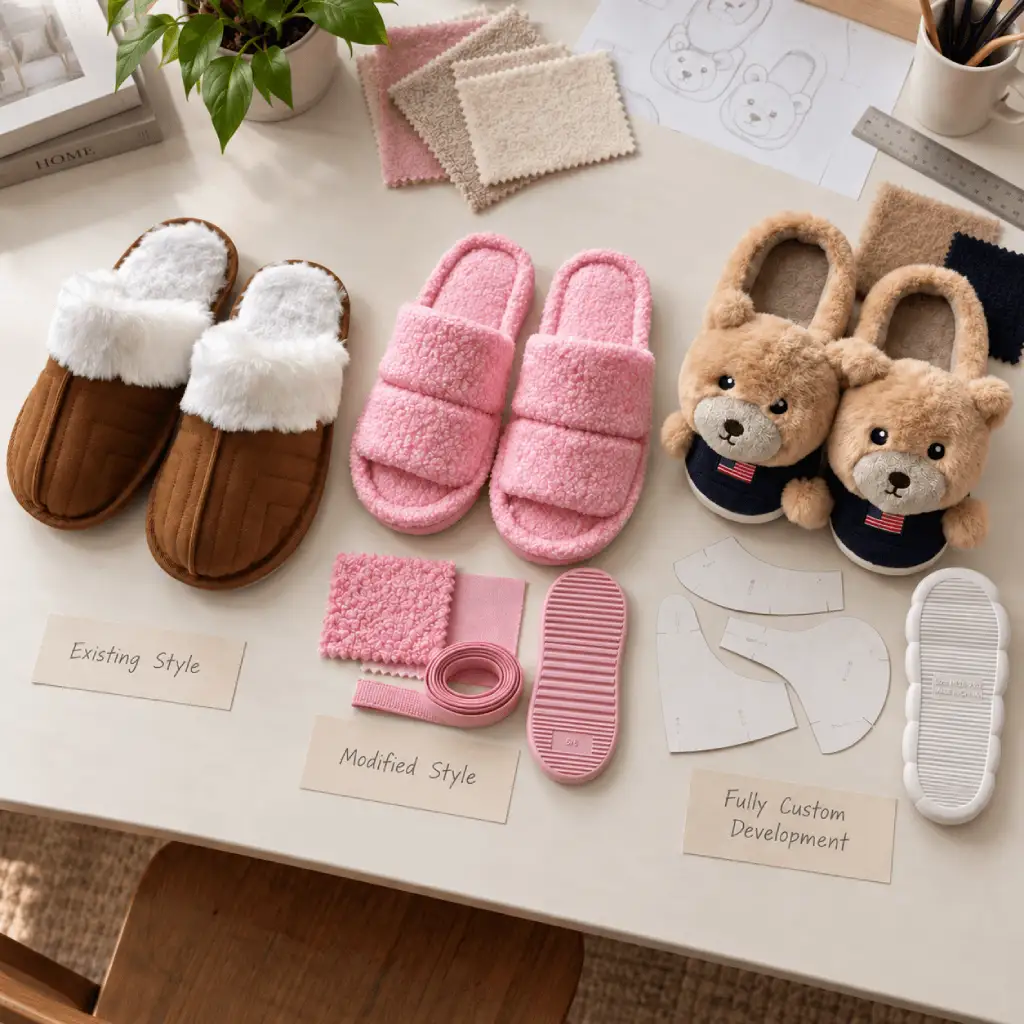
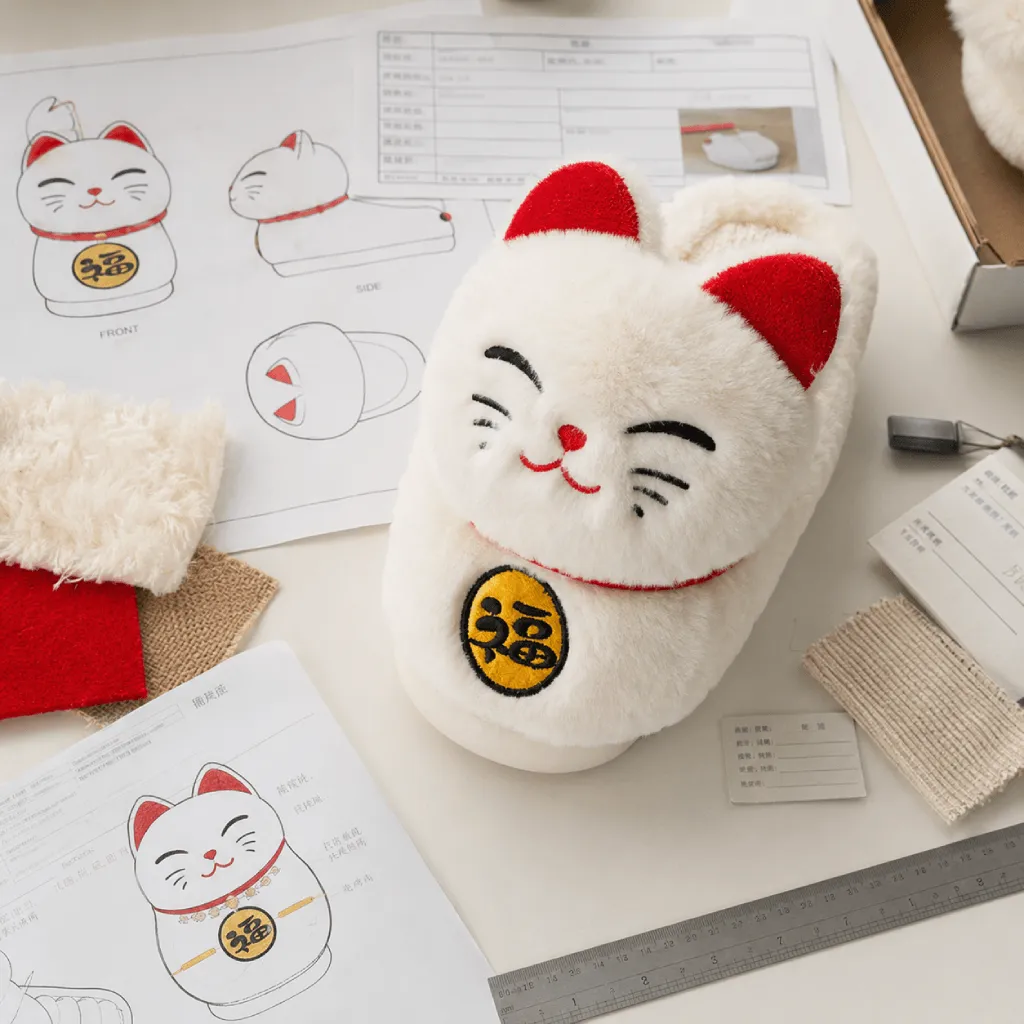
Practical starting point: use the approved product brief and bill of materials as the first testing documents. If the construction is still moving, complete the feasibility and sample work described in UTOP’s Custom Indoor Slipper Development Guide before locking the final test scope.
2. Separate Legal, Customer, and Product Requirements
Footwear compliance is not one universal certificate. A custom order may be affected by product-safety rules, chemical restrictions, labeling duties, importer responsibilities, retailer manuals, and voluntary performance targets. These sources can overlap, but they should remain separate in the plan so the team knows why each requirement exists.
1. Market requirements
Rules that apply because of the destination, product category, intended wearer, materials, or claims. The importer or responsible business should confirm the current scope.
2. Customer requirements
Retailer protocols, brand restricted-substance lists, supplier manuals, internal quality standards, and nominated-laboratory rules.
3. Product targets
Performance chosen for the product brief, expected use, price position, warranty risk, or a marketing claim.
For example, ordinary slippers sold in the EU are covered by footwear material-labeling rules. The EU’s official footwear label guidance explains the required information for the upper, lining and insole, and outer sole. Chemical review is a different line in the plan: ECHA maintains the official information on substances restricted under REACH.
A children’s slipper for the United States needs a product-specific review rather than an adult-footwear assumption. The U.S. CPSC states that children’s products require permanent tracking information on the product and packaging where practicable; its current tracking label guidance also explains what the identifying marks should make ascertainable. Other applicable rules and certification depend on the product and components.
Do not collapse the three layers: passing a retailer’s colorfastness target does not prove compliance with chemical restrictions. A chemical report does not prove a slip-resistance claim. A factory inspection does not replace a laboratory method required by the buyer.
These layers are the source of the order’s footwear testing requirements. Give every line in the plan a clear origin: regulation, retailer manual, brand specification, risk assessment, or voluntary product target. This prevents a useful test from being presented as a legal requirement and helps the buyer update the scope when the market or customer changes.
3. Choose the Test Method Before the Laboratory
Searching for footwear testing standards often produces a long catalogue of methods. That catalogue is a reference library, not a ready-made test package. ISO/TC 216 develops standards for footwear terminology, test methods, and performance requirements; its official footwear standards catalogue includes methods for uppers, linings, insocks, outsoles, components, and whole shoes. The applicable method still depends on the question the buyer needs answered.
Write the requirement before asking laboratories to quote. “Test abrasion” leaves too much open. The plan should identify the material or component, the method and edition required by the customer, sample preparation and conditioning where relevant, the reporting unit, and the acceptance criterion. Two methods with similar names may use different equipment, specimens, surfaces, contaminants, motions, or endpoints, so their results may not be interchangeable.
| Weak request | Information the test request needs | Decision it should support |
|---|---|---|
| “Check the sole” | Finished pair or outsole specimen, property, method version, conditions, and required value | Approve compound, construction, or claim |
| “Do a chemical test” | Market or RSL, material groups, color coverage, limits, and reporting format | Confirm the submitted materials against the named requirement |
| “Test washability” | Finished product, cycle conditions, detergent, drying route, number of cycles, and change criteria | Support care instructions and the washable claim |
If a retailer has a nominated laboratory or its own protocol, provide that information at the quotation stage. If the buyer has only a performance concern, ask a competent laboratory to compare suitable methods and explain the limits of each. The final selection belongs in the approved slipper testing plan, not in an informal email that production cannot trace.
Version control matters: record the full method designation and edition required by the buyer. Do not assume that a report using an older, modified, or different regional method satisfies a current protocol simply because the test title looks similar.
4. Build the Test Matrix Around the Slipper
A slipper testing matrix connects each product feature to a credible risk. It should be built from the actual bill of materials, construction, intended use, claims, and requirement sources. A thick plush upper may raise questions about rubbing, shedding, seam behavior, or composition. A molded outsole may raise different questions about dimensions, flexing, abrasion, attachment, or friction under defined conditions.
| Product area | Questions that may need testing | What changes the scope |
|---|---|---|
| Upper and lining | Composition, colorfastness, rubbing, abrasion, tear, seam behavior, or restricted substances | Fiber or substrate, finish, print, color, skin contact, and customer protocol |
| Cushioning and insole | Thickness, compression or fatigue behavior, dimensional change, and layer stability | Foam type and combination, target feel, wash claim, and product specification |
| Outsole or bottom | Hardness, dimensions, flex resistance, abrasion, coefficient of friction, or material restrictions | Compound, thickness, tread, surface, contaminant, indoor or outdoor direction, and claim |
| Upper-to-bottom connection | Bond, seam, attachment, or repeated-flex behavior | Cold-glued, welt-stitched, side-stitched, or another confirmed construction |
| Trims and branding | Attachment, sharp points or edges where relevant, color transfer, coating, and restricted substances | Wearer age, trim size and location, substrate, application method, and market rules |
| Finished slipper | Fit and dimensions, whole-shoe flexing, washability, attachment, friction, appearance change, or odor investigation | Intended use, care claim, complete construction, size, and buyer acceptance criteria |
The table is a decision prompt, not a mandatory bundle. For example, a washable claim can justify a defined finished-product wash test, while an ordinary non-washable product may not need it. A slip-resistance target needs named test conditions; tread appearance alone cannot demonstrate performance. UTOP’s Slip-Resistant Outsole Guide explains how surface, contaminant, movement, outsole compound, and tread affect that conversation.
Use the same discipline for footwear compliance testing. Different colors, coatings, prints, adhesives, and trims may not have identical chemical or physical risk. Group materials only when the buyer, laboratory, and applicable protocol accept the rationale. The final matrix should show what is covered and what is deliberately outside the scope.
Keep inspection and testing connected: routine factory checks can confirm that the production material, color, outsole, weight, thickness, or construction matches the approved reference. They do not turn a laboratory result for one submitted sample into evidence for an unidentified replacement material.
5. Choose the Right Test Level: Material, Component, or Finished Pair
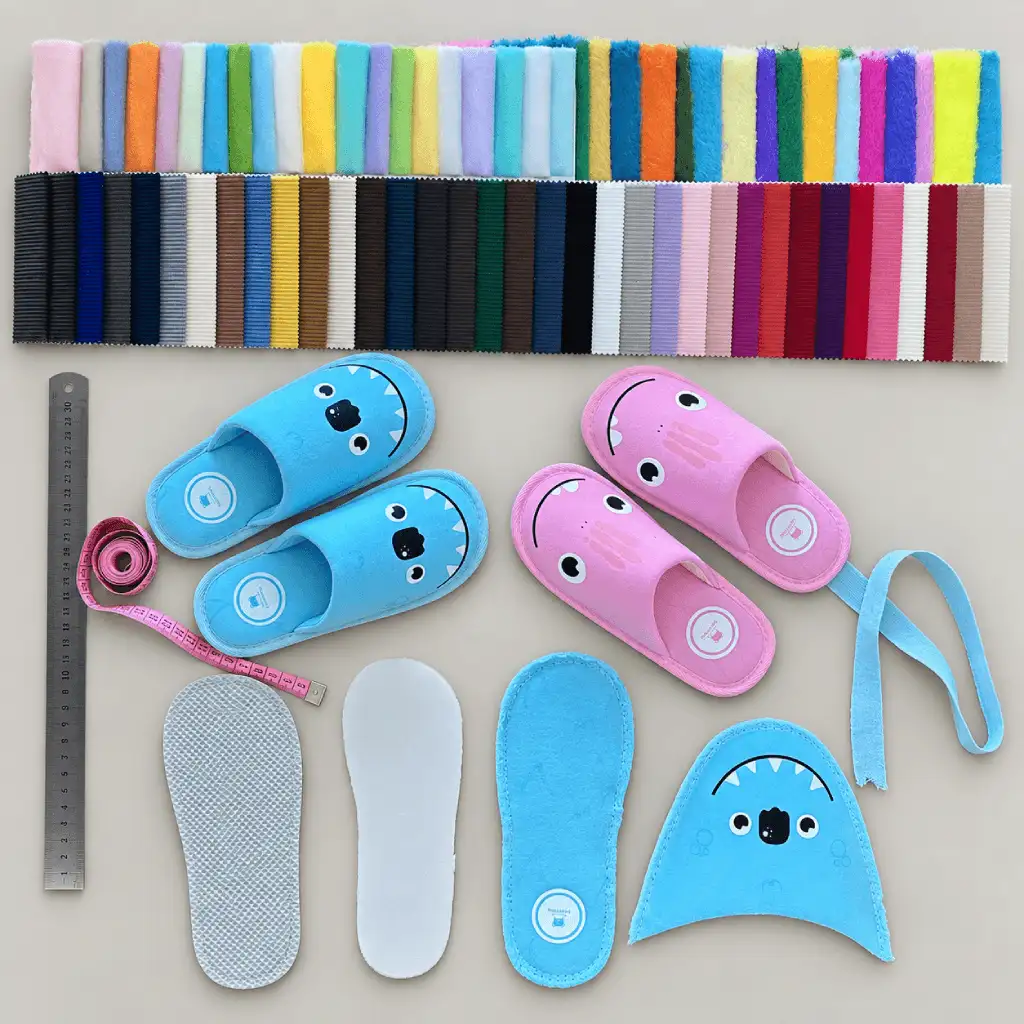
Footwear testing can take place at several levels, and the result usually applies only to the sample that was evaluated. Testing an upper fabric can answer a material question. It cannot automatically predict how a stitched, lined, padded, and lasted upper will behave in the finished slipper. Conversely, a whole-shoe test may show a failure without identifying which layer or process caused it.
Material level
Useful when the property belongs mainly to a fabric, leather, foam, outsole compound, print, coating, adhesive, or other input. It supports early screening and supplier control.
Component level
Useful for an assembled upper, insole package, outsole, decoration, seam, or bonded area when construction affects the result.
Finished-product level
Useful when fit, interaction between layers, attachment, flexing, washing, or the complete outsole-footwear system is central to the decision.
In many custom orders, the strongest plan uses more than one level. A brand might screen a new upper material before sampling, evaluate an attached decoration on a trial component, and then test the production-ready pair for a claim that depends on the entire construction. This sequence can find an expensive problem before the order reaches its final stage.
Also separate laboratory tests from factory controls. Measurements, weight, outsole dimensions, pairing, visual workmanship, flex direction, and attachment appearance can often be checked during development or production against an approved specification. Instrumented slipper testing should be used when the decision requires a defined method, controlled conditions, specialist equipment, or an independent report.
One useful question: if this sample passes, exactly what will the buyer approve? If the answer is unclear, the selected test level or sample identity needs more work.
6. Write the Method, Conditions, and Acceptance Criteria
A laboratory result becomes useful only when the decision rule is clear. The test request should state the applicable footwear testing standard or customer method, specimen, conditioning, test conditions, reporting unit, number of samples where specified, and the acceptance criterion. Writing only “pass” or “meet standard” leaves the most important details unresolved.
| Field | What to record | Common source of confusion |
|---|---|---|
| Method | Full designation, edition, and any buyer modification | Similar test names can describe different procedures |
| Specimen | Material, component, or finished pair; style, size, color, and revision | A report cannot safely cover an unidentified variant |
| Conditions | Preconditioning, surface, contaminant, direction, cycles, temperature, wash, or drying route as applicable | Conditions can materially change the result |
| Result | Measured value, unit, observation, individual results, and calculation rule | A single summary can hide variation between specimens |
| Acceptance | Legal limit, retailer threshold, approved-sample comparison, or buyer target | A method explains how to test; it may not supply the buyer’s target |
Performance claims need particularly careful conditions. “Slip resistant” without a surface, contaminant, footwear position, and method is not a complete specification. “Washable” without a care route, number of cycles, drying method, and acceptable changes is equally incomplete. The same applies to abrasion, flexing, color transfer, and attachment performance.
Do not borrow an acceptance value from an unrelated shoe category simply because the test method is available. The threshold should come from the applicable law, customer protocol, approved product specification, or a documented buyer decision. If none exists, the development team should define the product target before testing—not after seeing the result.
For repeat orders: keep the approved method, conditions, and criteria with the product specification. A numerical result without its test conditions should not become an informal factory standard.
7. Plan Samples and Testing Timing
The right slipper testing time depends on the decision. Early testing is useful when a failure would force a material, outsole, decoration, or construction change. Later verification is useful when the buyer needs evidence from production-intent materials or a defined bulk lot. Waiting until finished goods are packed can turn a manageable development issue into a delivery problem.
| Stage | Useful purpose | Control needed |
|---|---|---|
| Material screening | Compare or reject a material before full sample development | Identify supplier, composition, color, finish, and lot or reference |
| Development sample | Check a construction or claim before final approval | Record sample revision and any non-production materials |
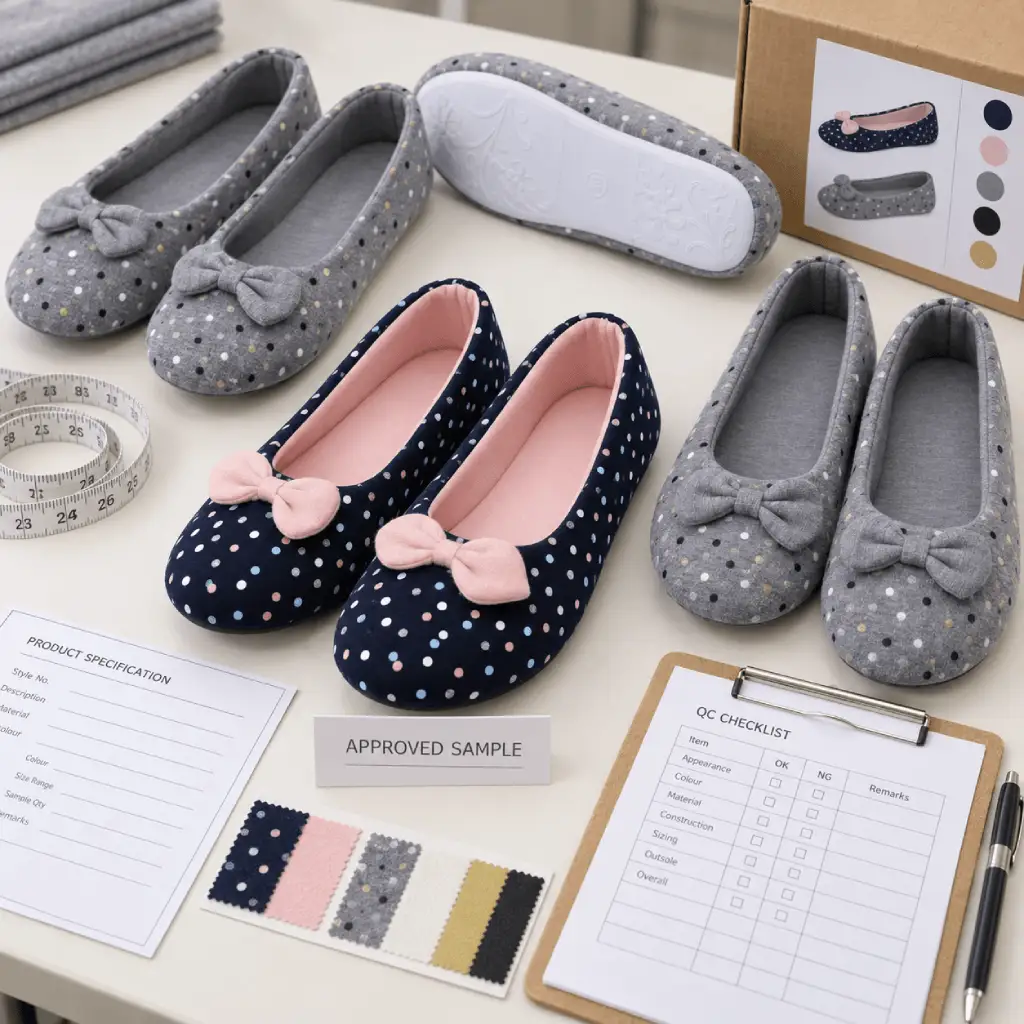
| Production-ready sample | Support approval of the intended materials, components, and construction | Freeze the corresponding BOM, artwork, method, and sample identity |
| Bulk verification | Confirm a lot or production sample when required by the buyer or risk plan | Define lot, sampling route, selection authority, and shipment decision |
Sample count should come from the method, regulation, retailer protocol, laboratory guidance, or agreed risk plan. It also needs to allow for destructive testing, conditioning, color or size coverage, retained samples, and possible retesting. Sending the laboratory one pair before the scope is confirmed can create delay and extra courier cost.
Color coverage deserves an explicit decision. Dyes, prints, coatings, and decorations can change material risk or physical behavior, but it is not always necessary or acceptable to assume that one color represents every color. Record the grouping rationale and who approved it. Do the same for size selection when geometry or construction could influence the result.
Schedule backward from the decision: include laboratory lead time, sample preparation, courier transit, clarification, report review, corrective work, and possible retesting. UTOP’s usual custom slipper sampling window is about 7–14 days, but required testing, tooling, revisions, and material preparation can extend the actual development schedule.
8. Check Whether the Test Report Covers the Order
A “PASS” box is only the start of a footwear test report review. The buyer should be able to connect the submitted sample to the custom order and understand what the laboratory actually did. If the report identifies “black slipper” while the purchase order includes several constructions and colors, the coverage is not clear enough.
Report review checklist
- Applicant, supplier, and laboratory details where relevant
- Style or model number, product description, size, color, material, and sample revision
- Photographs or other identification that match the submitted item
- Date received, test period, report date, and report number
- Full method and edition, including deviations or customer modifications
- Conditioning, test conditions, specimen count, units, and individual results where applicable
- Acceptance criteria and the source of those criteria
- Clear conclusion and any limitations, exclusions, comments, or subcontracted work
Then compare the report with the order documents. Does the style number match? Is the tested upper the approved upper? Is the outsole compound, hardness direction, tread, or supplier reference current? Were the same print, coating, adhesive, trim, and color used? Was the sample a loose material, a component, or a finished pair? These questions decide how far the result can reasonably travel.
Also confirm that the footwear testing standards and criteria match the original request. A laboratory can correctly execute a method while the buyer supplied the wrong protocol. A result can be reported accurately while the team later applies it to a different product. Technical validity and order relevance both need review.
Store the report with the approved sample record, bill of materials, artwork, material references, and revision history. For bulk quality control, the factory can then verify that production follows the tested construction. The detailed inspection sequence belongs in the Bulk Slipper Quality Control Guide; the report should support that control rather than replace it.
Coverage statement: add a short note to the testing file that lists the styles, colors, materials, and order revision the buyer accepts as covered. If coverage is based on grouping or similarity, record the rationale and approval.
9. Control Failures, Changes, and Retesting
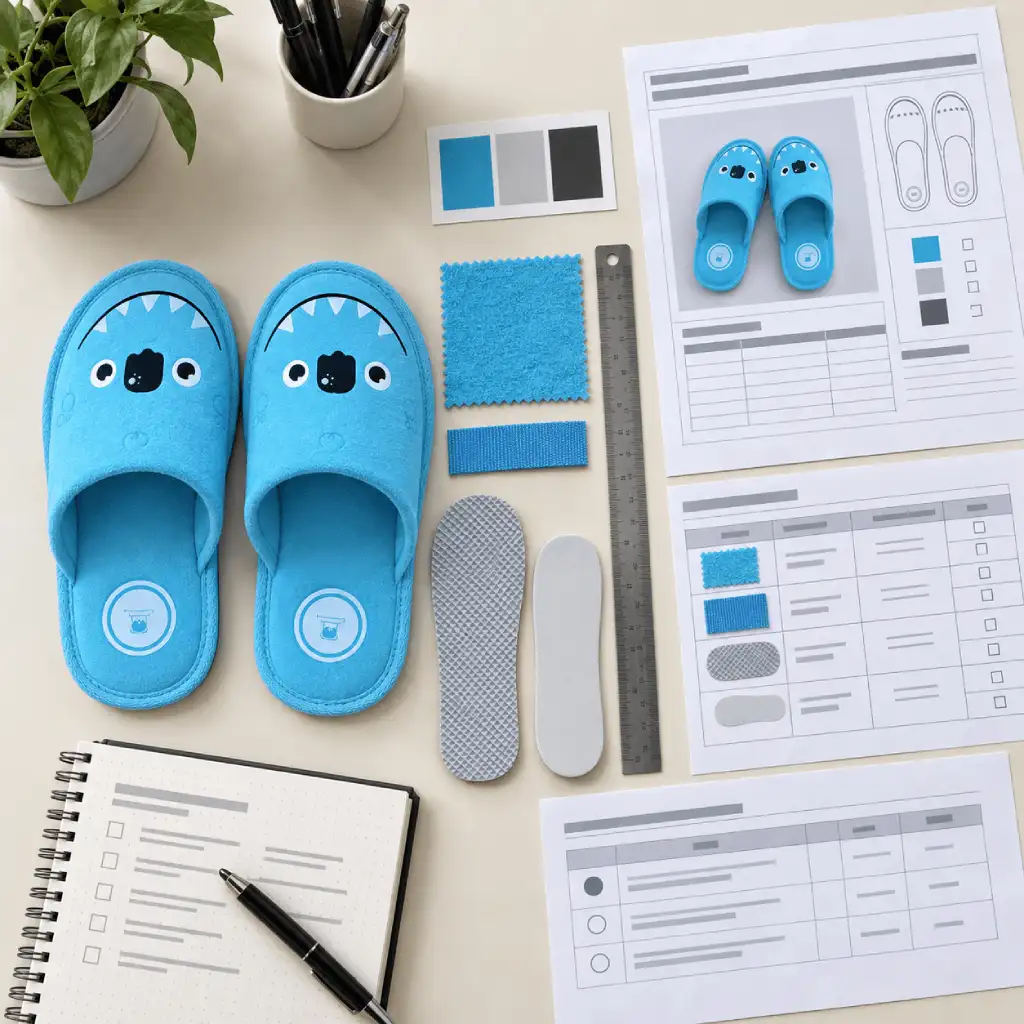
A failed slipper testing result should trigger a defined decision, not a search for a more convenient method. First confirm that the sample, method, conditions, and acceptance criterion were correct. Then identify the failure mechanism and affected scope before changing the product.
| 1 | 2 | 3 | 4 | 5 | 6 |
|---|---|---|---|---|---|
| Hold the decision | Verify scope | Review the result | Find the cause | Approve the correction | Retest as required |
The correction should address the cause. A color-transfer failure may involve a dye, finish, backing, lining, or contact condition. An attachment failure may involve the material surface, preparation, adhesive, curing, pressure, seam, or component geometry. A friction result may change with the outsole compound, tread, hardness, sample preparation, surface, and contaminant. Repeating the same sample without a reason rarely resolves the risk.
Use change control after a passing report
A passing report is not permanent permission to change the product. Review the testing impact when any of the following changes:
- material supplier, composition, formulation, finish, coating, print, or color;
- outsole compound, hardness direction, thickness, tread, tooling, or attachment route;
- foam type, layer combination, adhesive, sewing thread, seam, or process setting;
- decoration, logo method, label, hardware, or packaging that contacts the product;
- style construction, intended wearer, market, retailer, claim, or applicable requirement.
Not every change requires the full footwear testing program again. The buyer, supplier, and laboratory should review which previous results remain relevant, which tests need targeted repetition, and whether new colors or components can be grouped. Record the decision; do not rely on verbal approval.
Retest record: link the failure, root-cause review, corrective sample, revised specification, new report, and approval decision. Production should receive only the current revision.
10. Assign Cost, Responsibility, and Timeline
Many footwear testing delays are coordination problems. The buyer assumes the supplier will define the legal scope; the supplier waits for a retailer manual; the laboratory receives samples without acceptance criteria; or the team agrees on testing but not on who pays for a retest. A one-page responsibility table prevents much of this.
| Party | Typical inputs | Decision to document |
|---|---|---|
| Buyer, brand, or importer | Destination, intended wearer, claims, retailer protocol, RSL, acceptance criteria, nominated lab, and release authority | What is required for market entry and order approval |
| Supplier or manufacturer | BOM, construction, material references, sample revision, production status, and change records | Which sample represents the intended production product |
| Laboratory or technical adviser | Method suitability, specimen requirements, sample quantity, quotation, timing, limitations, and report format | How the requested property will be evaluated |
Agree who selects and seals the samples, who completes the test request, who reviews the draft scope, who receives the report, and who can approve a deviation. For third-party testing, decide whether the buyer, supplier, or laboratory takes the sample and how its identity is preserved. This is especially relevant when the report will be used for retailer approval or shipment release.
Testing cost depends on the method, number of materials and colors, sample preparation, laboratory, turnaround, courier route, reporting needs, and retesting. It should therefore be quoted against an approved scope. A low initial figure based on “standard tests” is not useful if the scope later expands to additional colors, components, or customer protocols.
Build the schedule before the purchase order milestone that depends on it. UTOP can review product information, prepare traceable samples, coordinate agreed tests, and align results with development and production records. The applicable footwear compliance scope and final acceptance remain project-specific and should be confirmed by the buyer or responsible market party.
Quotation rule: put the test list, sample count, colors, report language, laboratory, turnaround, courier, and retest assumptions in writing. This makes quotations comparable and keeps testing from becoming an undefined allowance.
11. Custom Slipper Testing Plan Checklist
The final custom slipper testing plan does not need to be complicated. It needs to be specific enough that the buyer, supplier, and laboratory understand the same product and decision. Use the checklist below before approving the scope.
A. Product and order identity
- Style number, product name, intended wearer, size range, and order revision
- Destination market, sales channel, retailer, and intended use
- Bill of materials, construction, colors, trims, labels, and claims
- Approved sample status and production-intent material references
B. Requirement and test scope
- Source of each requirement: regulation, retailer, brand, or product target
- Property or risk and the material, component, or finished product to be tested
- Full method, edition, conditions, units, acceptance criteria, and sample count
- Color and size coverage, grouping rationale, laboratory, and required report format
C. Execution and decision control
- Who selects, identifies, sends, and retains samples
- Quotation, payment, courier, lead time, report review, and release owner
- Failure investigation, corrective action, deviation approval, and retest rule
- Changes that trigger a coverage review and the location of the final records
Recommended test-plan columns
Create one row for each requirement. A practical worksheet can use these columns:
| Requirement source | Risk / property | Test item | Method / edition | Conditions | Samples / coverage | Acceptance | Timing / owner | Result / decision |
|---|---|---|---|---|---|---|---|---|
| Market, retailer, brand, or product target | Why the line exists | Material, component, or pair | Controlled reference | Relevant variables | Count, colors, sizes, lot | Limit or criterion | Due date and responsibility | Report, pass/fail, action |
This single table is the working center of the footwear testing file. Link it to the current specification, approved sample, reports, and change log. When the order repeats, review each row against the new market, materials, colors, customer manual, and claims rather than copying the previous scope without checking it.
12. Frequently Asked Questions About Footwear Testing
Which tests are required for slippers?
There is no single global list for every slipper. The scope depends on the destination market, intended wearer, materials, construction, claims, retailer or brand requirements, and foreseeable use. Start with those facts, then map each applicable requirement or product risk to a test or factory control.
Is footwear compliance the same as laboratory testing?
No. Testing can provide evidence for a defined property or requirement, while footwear compliance may also involve product classification, labels, technical records, traceability, responsible-party duties, and other market obligations. A laboratory report covers its stated sample and scope.
Can one test report cover every color?
Sometimes a protocol allows justified grouping, but coverage should not be assumed. Dyes, prints, coatings, finishes, and decorations can differ by color. Record the proposed grouping, laboratory or customer rationale, and approval before samples are selected.
Should materials or finished slippers be tested?
It depends on the question. Material testing is useful for input properties and early screening. Component testing can evaluate an assembled area. Finished-pair testing is appropriate when construction, fit, attachment, flexing, washing, or the complete outsole-footwear system affects the result. A plan may use all three levels.
When should slipper testing take place?
Test early when failure could change the material, outsole, decoration, or construction. Use a production-ready sample when the result must represent the intended product. Add bulk verification when required by the buyer, retailer, regulation, or risk plan. Leave enough time for report review and possible retesting.
Does a passing report remain valid after a material change?
Do not assume that it does. Review whether the new supplier, formulation, color, finish, coating, adhesive, outsole, trim, or construction affects the tested property. The buyer, supplier, and laboratory can then decide whether the existing result remains relevant or targeted retesting is needed.
Can UTOP arrange footwear testing for a custom order?
UTOP can review the product information, prepare identified samples, coordinate agreed testing, and connect the reports with the development and production records. The required methods, criteria, laboratory, timing, and coverage should be confirmed for the buyer’s destination market, customer standard, and specific order.
Conclusion: Make the Report Part of the Product Record
A reliable footwear testing plan does more than list laboratory names and test titles. It begins with the product and market, separates requirement sources, selects the right test level and method, identifies the sample, defines acceptance before testing, and connects the report to the exact order revision.
For custom slippers, that discipline keeps development, testing, and bulk quality control aligned. It also makes a failure easier to investigate and a product change easier to review. The result is a usable decision record rather than a disconnected PDF marked “PASS.”
Planning a custom slipper order?
Share your destination market, retailer or brand requirements, intended wearer, product reference, materials, construction, colors, size range, claims, expected quantity, and required delivery window. UTOP can review the development information and discuss a practical sampling and testing route.