
UTOP supports B2B slipper projects from initial development and customization decisions to construction, outsole selection, sampling, and bulk production.
Explore the service path that matches the information you already have and the decisions your team still needs to make.
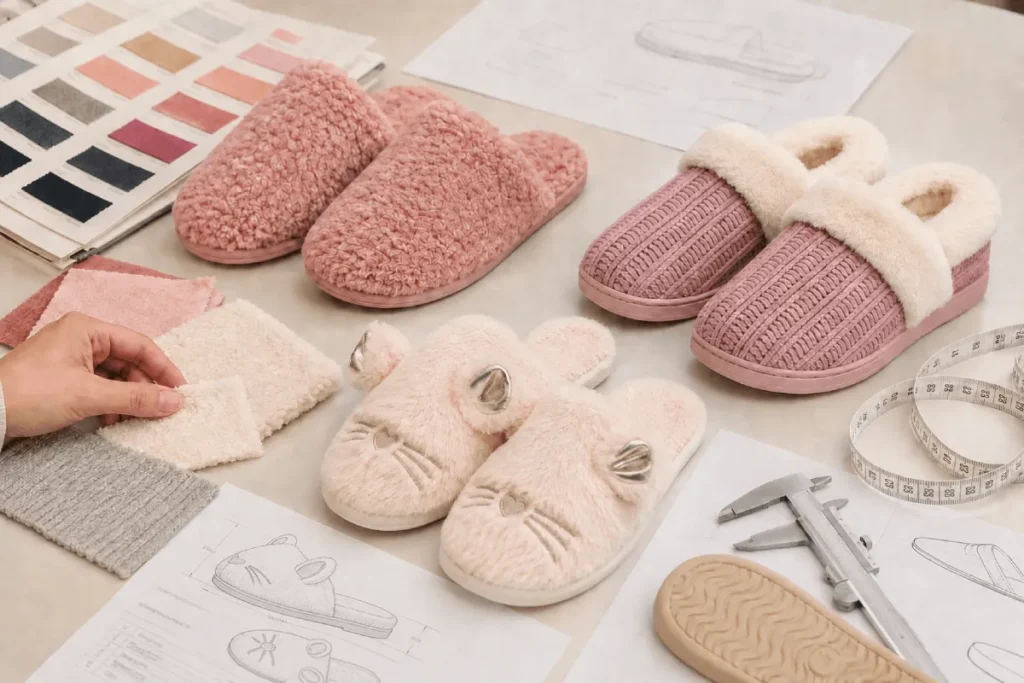
Use these three areas to move from a product idea or existing specification toward a clearly defined slipper project.
Start with an existing UTOP style, a physical sample or reference image, or a complete Tech Pack. We help organize the available information into a practical development route.
Review the design, materials, sizes, colors, branding, packaging, and carton requirements that need to be confirmed for your project.
Explore how UTOP approaches slipper production, construction methods, welt-stitched products, plush and novelty development, and TPR or EVA outsole solutions.
The right starting point depends on how much product information your team already has. UTOP can review a selected style, a reference sample or image, or a buyer-supplied Tech Pack and identify the specifications that still need to be confirmed before sampling.
Use a current UTOP style as the base and define the materials, colors, sizes, branding, packaging, outsole, and construction changes required for your market.
Provide a physical sample, product images, or visual references. We review the visible design, construction, components, and missing specifications before defining the sampling direction.
Submit your drawings, measurements, material specifications, color references, branding instructions, and packaging requirements for a structured project review.
Each project combines product, brand, and packing decisions. The detailed Custom Slipper Development page explains what buyers should confirm in each area.
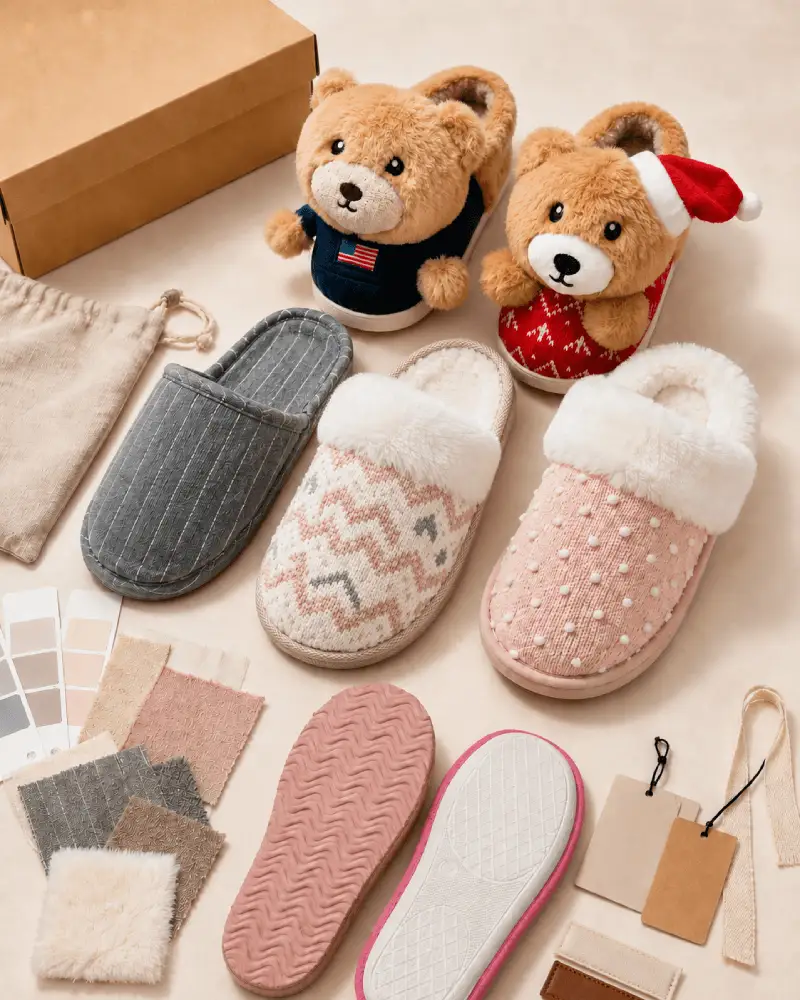
Define the slipper type, upper shape, opening, toe treatment, decorative elements, proportions, and other design details that affect the final appearance and construction.
Review upper materials, linings, padding, trims, outsoles, labels, and other components in relation to the intended design, specifications, target market, and approved sample.
Confirm the required size range, grading information, color references, material colors, and any approval standard that must be followed during development.
Plan the logo method, artwork, dimensions, placement, label content, brand colors, and other private-label details that must be reviewed in the sample.
Define retail packaging, labels, inserts, protective packing, carton quantities, carton markings, and shipment preparation according to the product and sales channel.
Material selection should support the product design, construction, target use, appearance, price position, and approval requirements. UTOP reviews the complete component combination rather than treating the upper, lining, padding, outsole, trims, and packaging as isolated choices.
“Premium” is not a single material category or an automatic performance claim. For higher-specification projects, material decisions should be based on confirmed composition, appearance, hand feel, construction compatibility, product requirements, testing needs, and the approved sample.
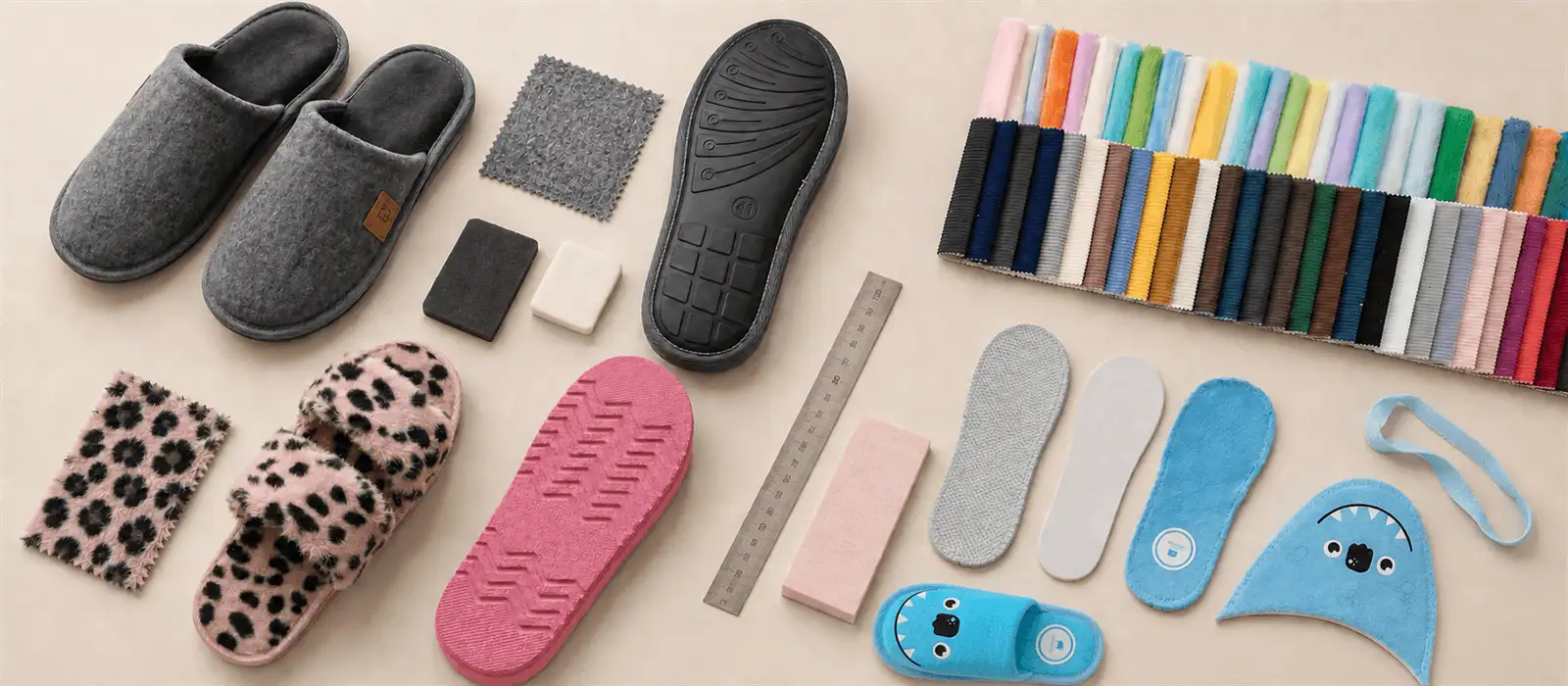
Manufacturing decisions affect how a concept can be sampled, assembled, checked, and prepared for bulk production. Review the process, construction, product-development, and outsole capabilities most relevant to your project.
Understand the main production stages and the points where materials, workmanship, specifications, and approved requirements must be controlled.
Compare welt-stitched, side-stitched, and cold-cemented approaches to understand how the upper and sole are connected and what needs to be confirmed for each project.
FEATURED CAPABILITY
Explore UTOP’s featured welt-stitched structure through a dedicated explanation of the welt, stitching path, product evidence, and project considerations.
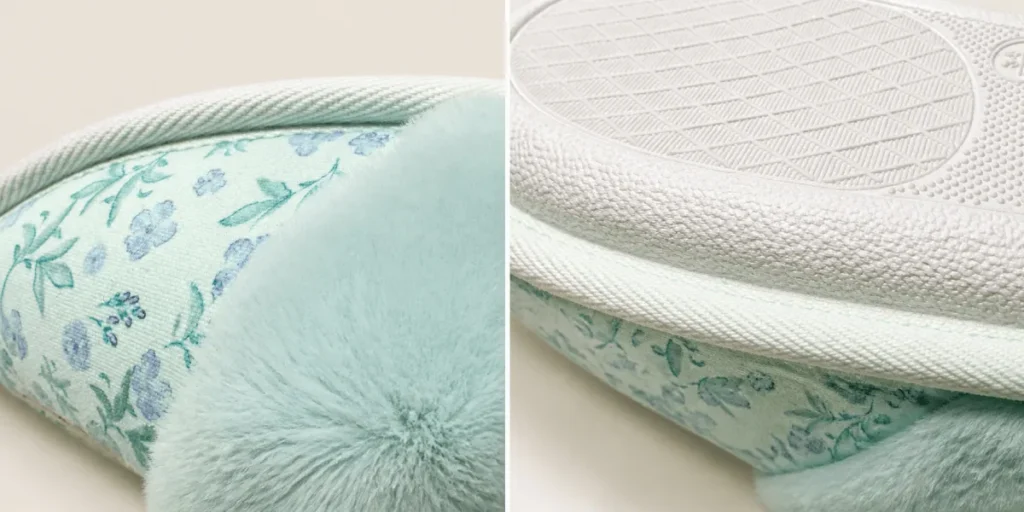
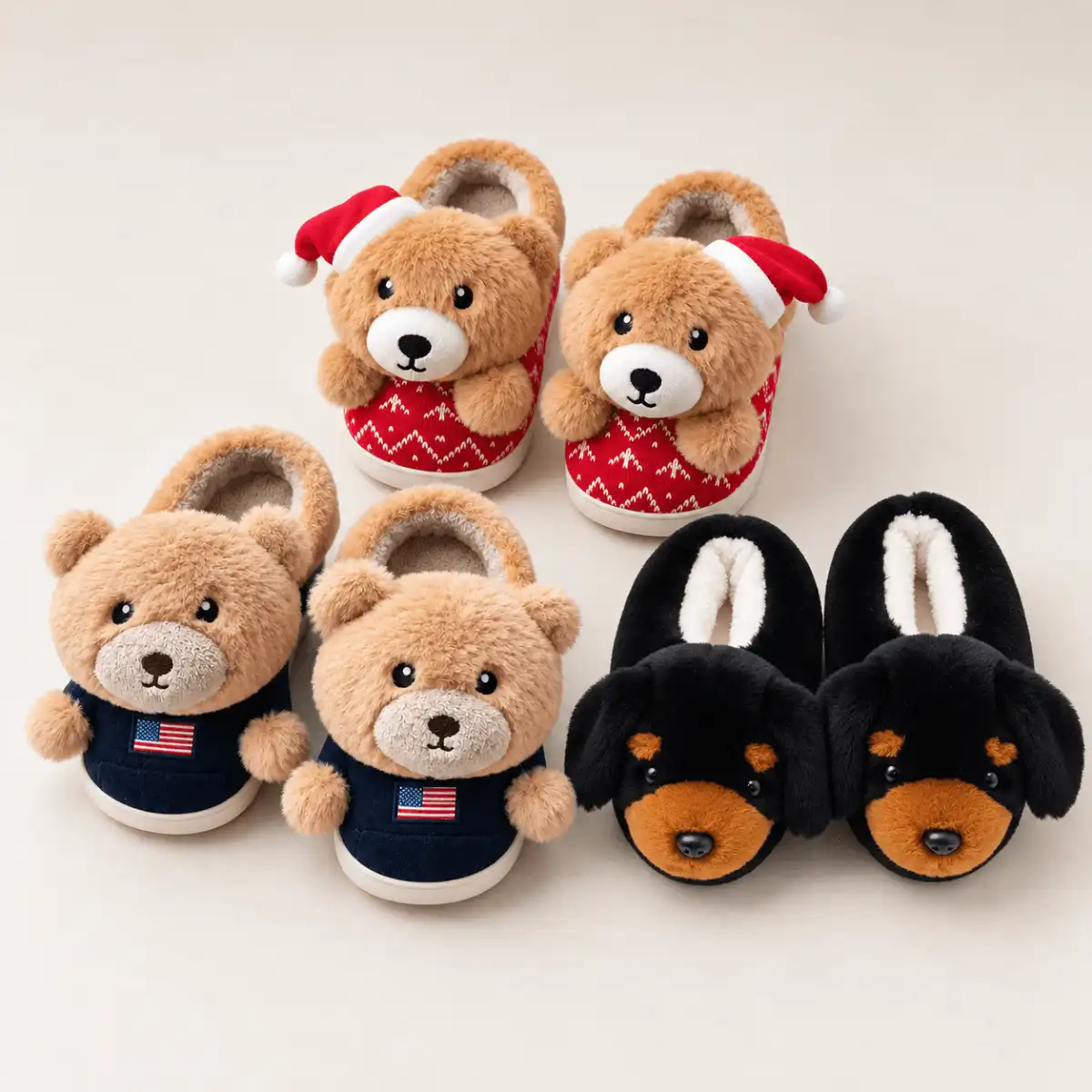
Review development considerations for soft, shaped, character-inspired, and three-dimensional slipper concepts.
Compare outsole directions, specifications, tread, molding requirements, construction compatibility, and sample confirmation points for TPR and EVA solutions.
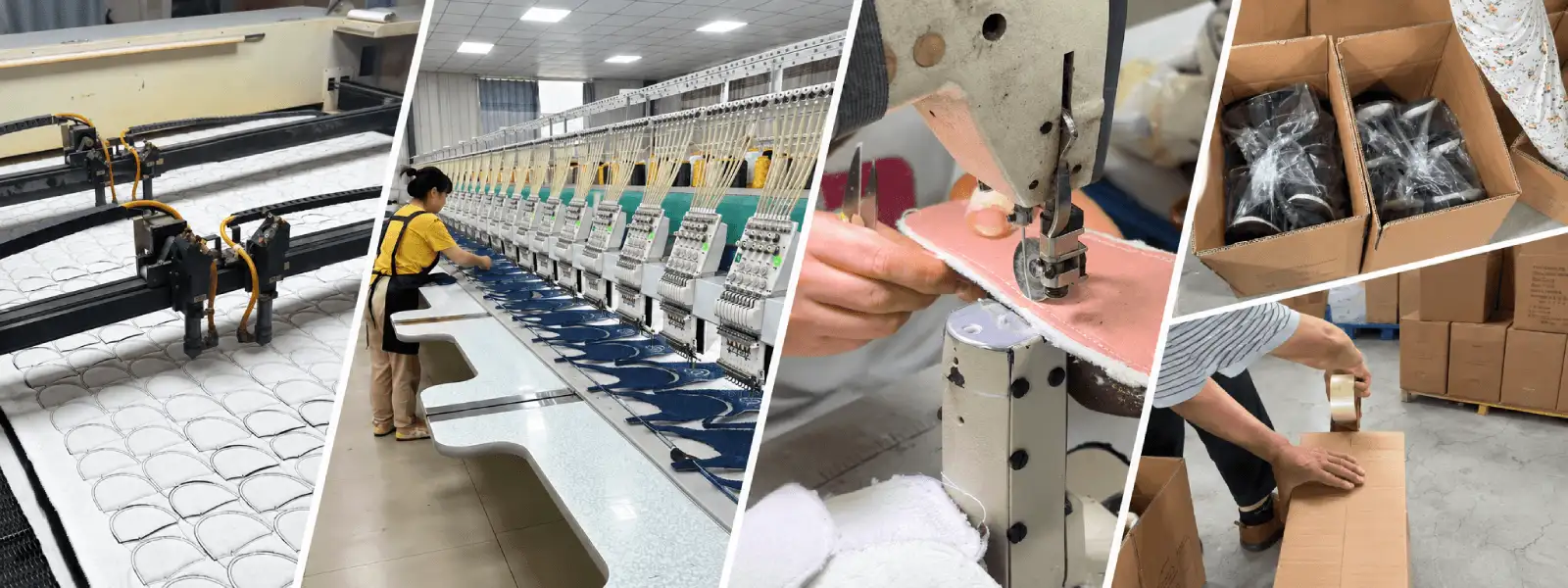
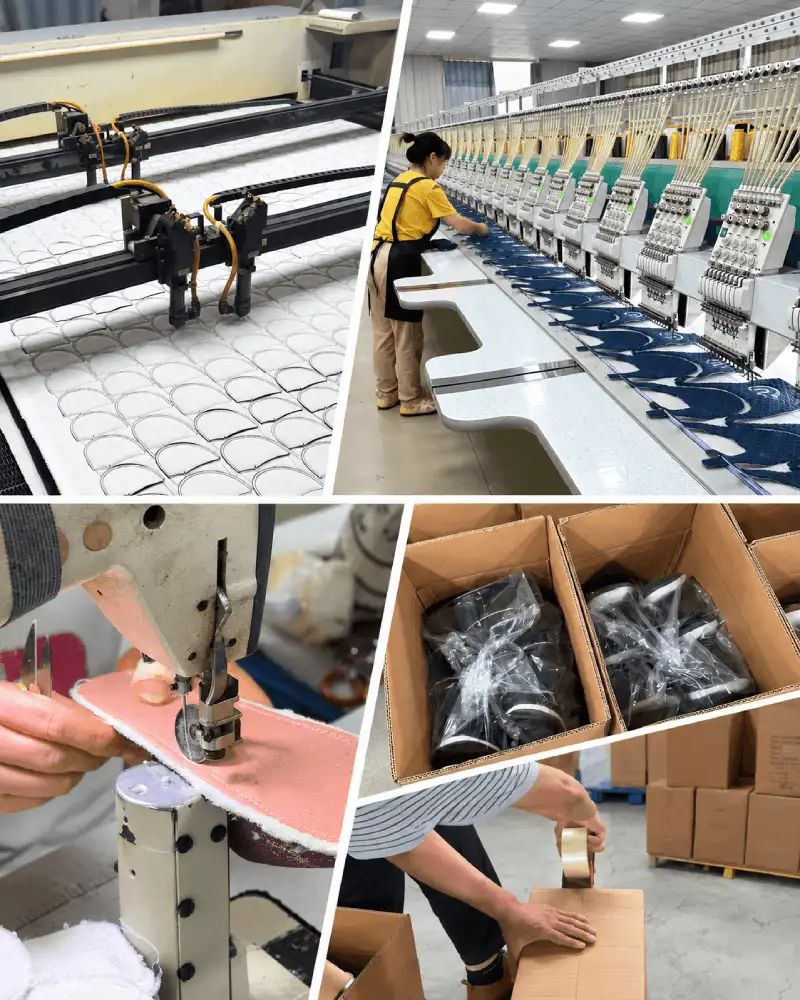
A production plan starts with confirmed product information, not only a design image. The exact sequence depends on the slipper style, materials, branding, construction, outsole, and packing requirements, but a typical project moves through the following stages.
01
Confirm the design direction, size range, materials, branding, outsole, construction, packaging, and approval requirements.
02
Prepare the approved materials, trims, soles, labels, packaging, and other project components.
03
Cut the required parts and prepare the upper components for sewing, decoration, or assembly.
04
Complete the required upper sewing, embroidery, printing, labels, or three-dimensional details according to the approved design.
05
Connect and assemble the upper, sole, and related components using the confirmed construction method.
06
Check the finished slippers against approved requirements before completing the specified packaging and carton preparation.
The connection between the upper and sole affects the manufacturing route, visible construction, material compatibility, and the checks required during sampling. UTOP uses different construction directions according to the product design and confirmed project specifications.
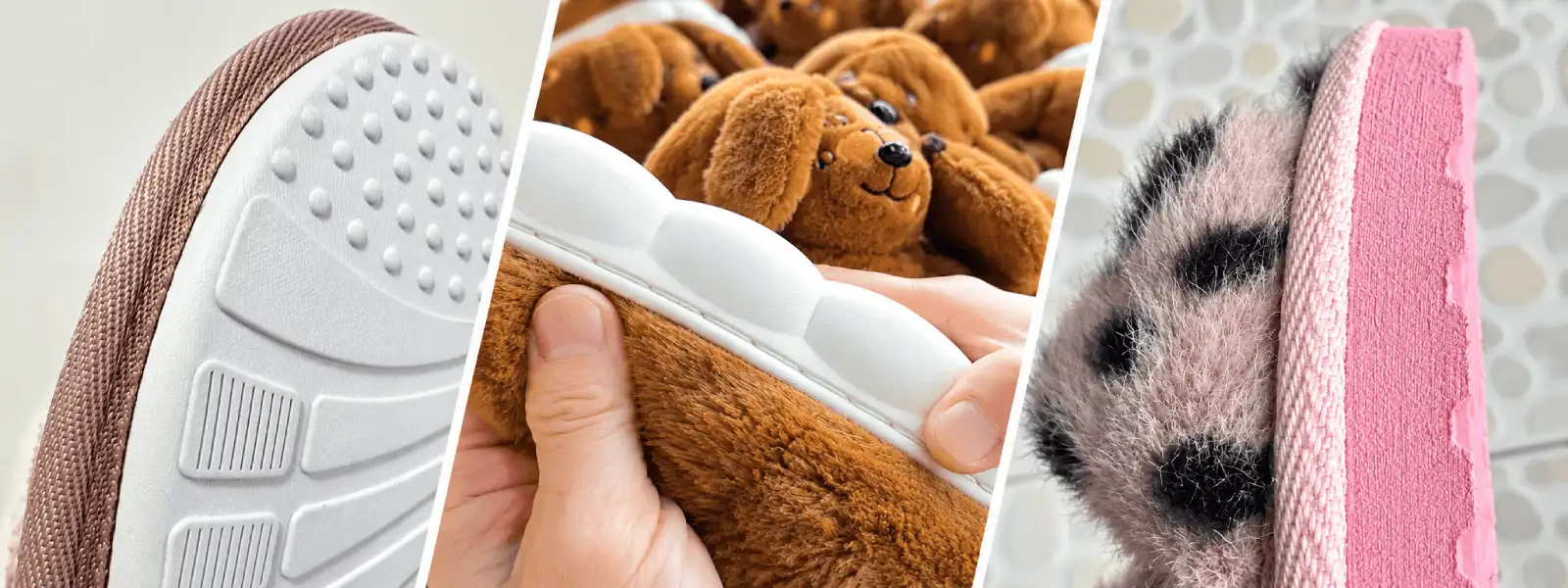
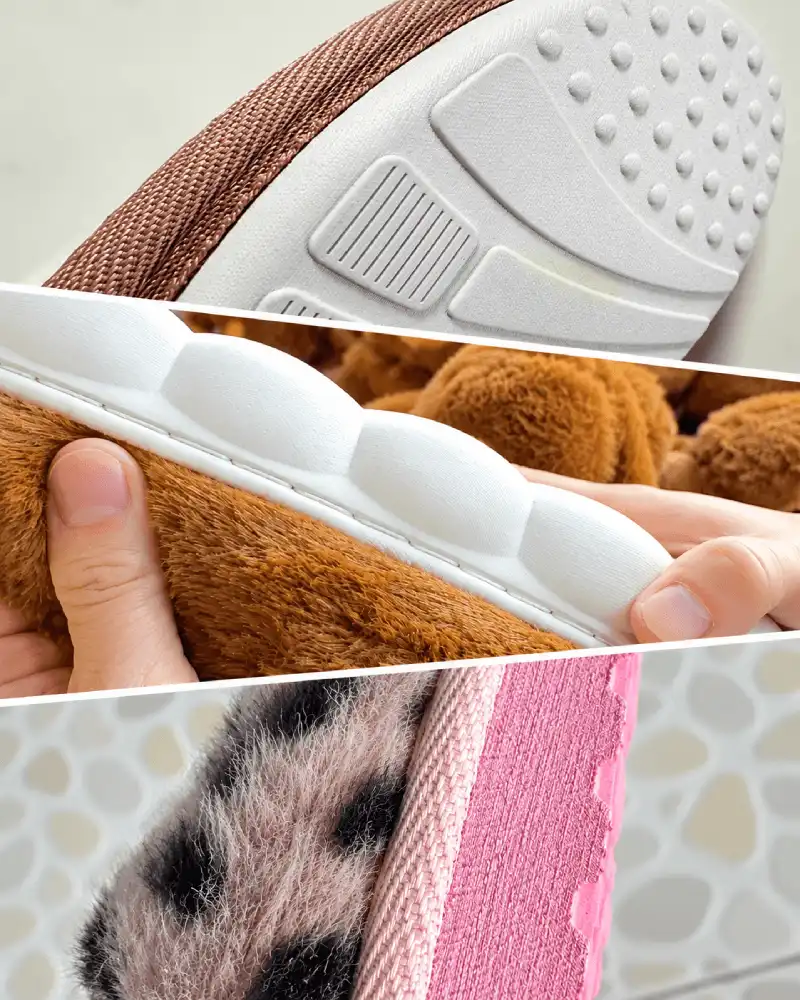
This structure uses an independent welt. One stitching line passes through the welt, the edge of the upper, and the sole. In UTOP projects, welt-stitched construction can be paired with TPR or EVA soles when the product design and material combination are suitable.
Side-stitching connects the upper and sole through a visible stitching route around the side or edge of the product. UTOP commonly uses this direction with TPR soles, but the exact stitch path, materials, and product structure must be confirmed for the selected style.
Cold-cemented construction uses a bonding process suited to the selected upper, sole, and product structure. Surface preparation, adhesive compatibility, and pressing conditions must be matched to the project. UTOP commonly uses this direction with EVA soles; TPR may also be possible with suitable preparation, adhesive, and pressing conditions.
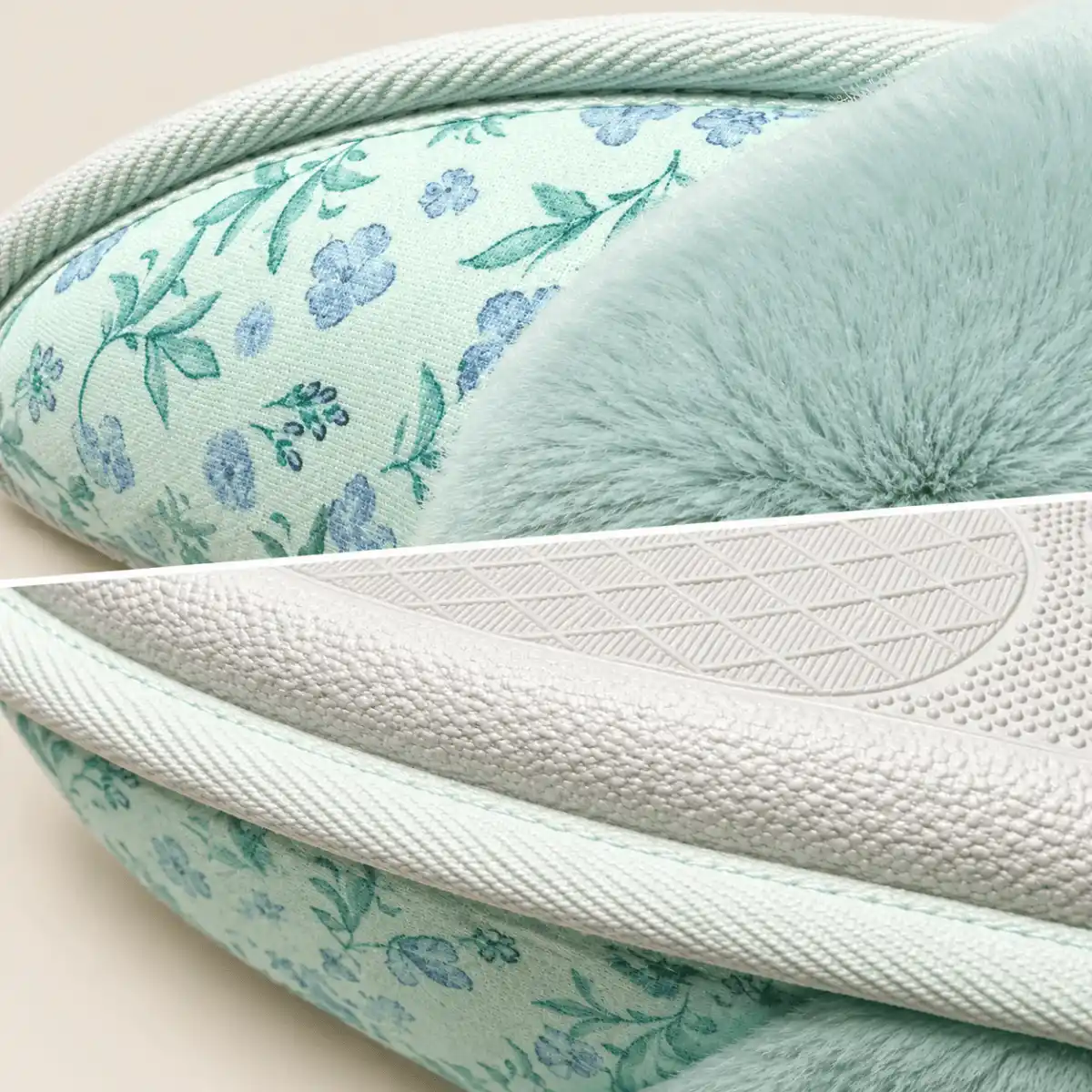
FEATURED CONSTRUCTION CAPABILITY
Welt-stitched products require clear control of the welt, upper edge, sole, stitching line, material compatibility, and finished appearance. The dedicated page explains how UTOP identifies this structure, how it differs from commonly confused footwear terms, and what buyers should confirm during product development.
Soft, shaped, and three-dimensional slipper concepts often require more than a color or material change. Development may involve upper shaping, character proportions, ears or other raised parts, embroidery, printing, trims, padding, outsole compatibility, and packaging that protects the approved appearance.
UTOP reviews the available reference, the intended market, the product structure, and the information still needed before sampling. Buyer-owned artwork, brand assets, and protected designs must be supplied or used with appropriate authorization.
Outsole decisions should be made together with the product structure, intended use, dimensions, weight, appearance, construction method, tread, target market, and any project-specific testing requirements.
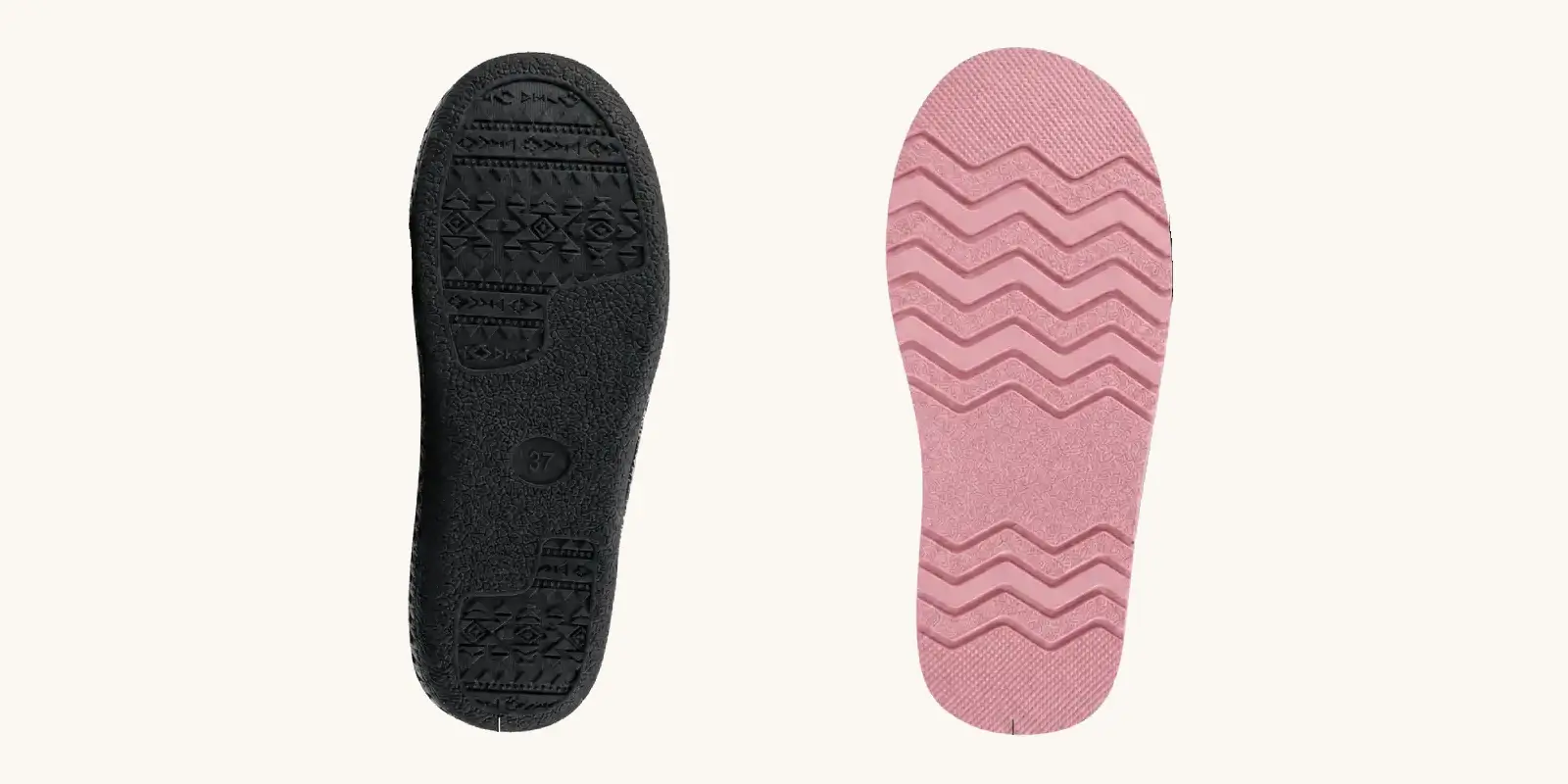
Molded TPR outsoles can provide a defined outsole profile, sidewall, and tread direction for house-shoe projects. Hardness, thickness, color, tread, shape, and other specifications can be discussed for the project. Custom shapes, tread patterns, or branding may require dedicated tooling.
Actual grip, abrasion resistance, flexibility, durability, and use conditions depend on the formulation, specifications, structure, surface, and test conditions.
EVA soles can include cut-sheet, compression-molded, and injection-molded constructions. UTOP commonly uses cut-sheet EVA for lightweight and flexible indoor slipper directions, while the correct EVA type and specification depend on the project.
Cost should not be judged from the material name alone. Material grade, density, thickness, weight, forming method, tooling, order quantity, and supplier quotation all affect the final calculation.
01
We review the design, reference product, Tech Pack, quantity, size range, materials, construction, branding, packaging, market, and timing requirements supplied by the buyer.
02
The missing specifications, material availability, outsole or tooling requirements, branding details, and sample objectives are clarified before development proceeds.
03
For regular custom slipper projects, sampling typically takes 7–14 days. Actual timing depends on material preparation, outsole tooling, revisions, testing, branding, and the complexity of the product.
04
The sample, specifications, packaging, and other necessary requirements should be approved before bulk production.
05
After sample and other necessary approvals, bulk production typically takes 30–45 days. Actual timing depends on materials, tooling, quantity, testing, production requirements, branding, and packaging.
Sampling and bulk-production checks should follow the approved product and the buyer’s inspection requirements. Depending on the project, checks may include outsole material, color, odor, weight, thickness, hardness feel, outsole dimensions, flatness, tread, left-right matching, flexing position, and the quality of the stitched or bonded upper-to-sole connection.
Slip resistance, abrasion, chemical, or other testing can be discussed according to the target market, buyer standard, and order requirements. No test result or certification should be assumed without the relevant project documentation.
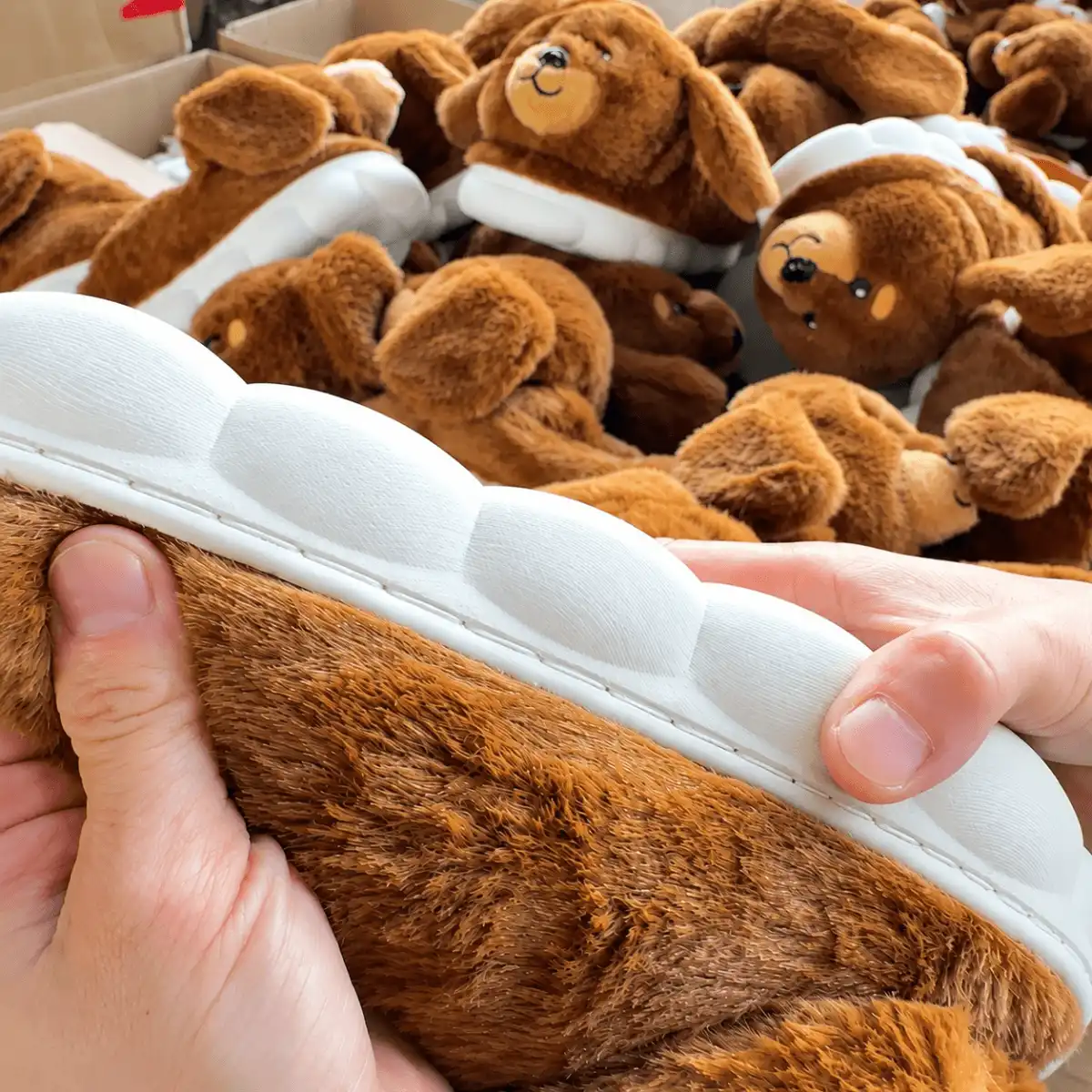
UTOP brings practical experience in indoor footwear manufacturing, product development, export coordination, and B2B project communication.
Our office team in Hefei and manufacturing operation in Tianchang coordinate project information, sampling, production requirements, and shipment preparation.
UTOP works with overseas buyers that need structured product development, specification confirmation, private-label execution, and reliable preparation for repeat or bulk orders.
Materials, construction, outsoles, branding, packaging, timelines, and testing requirements are reviewed according to the selected product and project conditions rather than generic assumptions.
Use our buyer-focused guides to prepare specifications, compare options, and identify the questions that should be resolved before sampling or bulk production.
You do not need to have every detail finalized before contacting UTOP. Send the information already available so we can identify the next decisions.
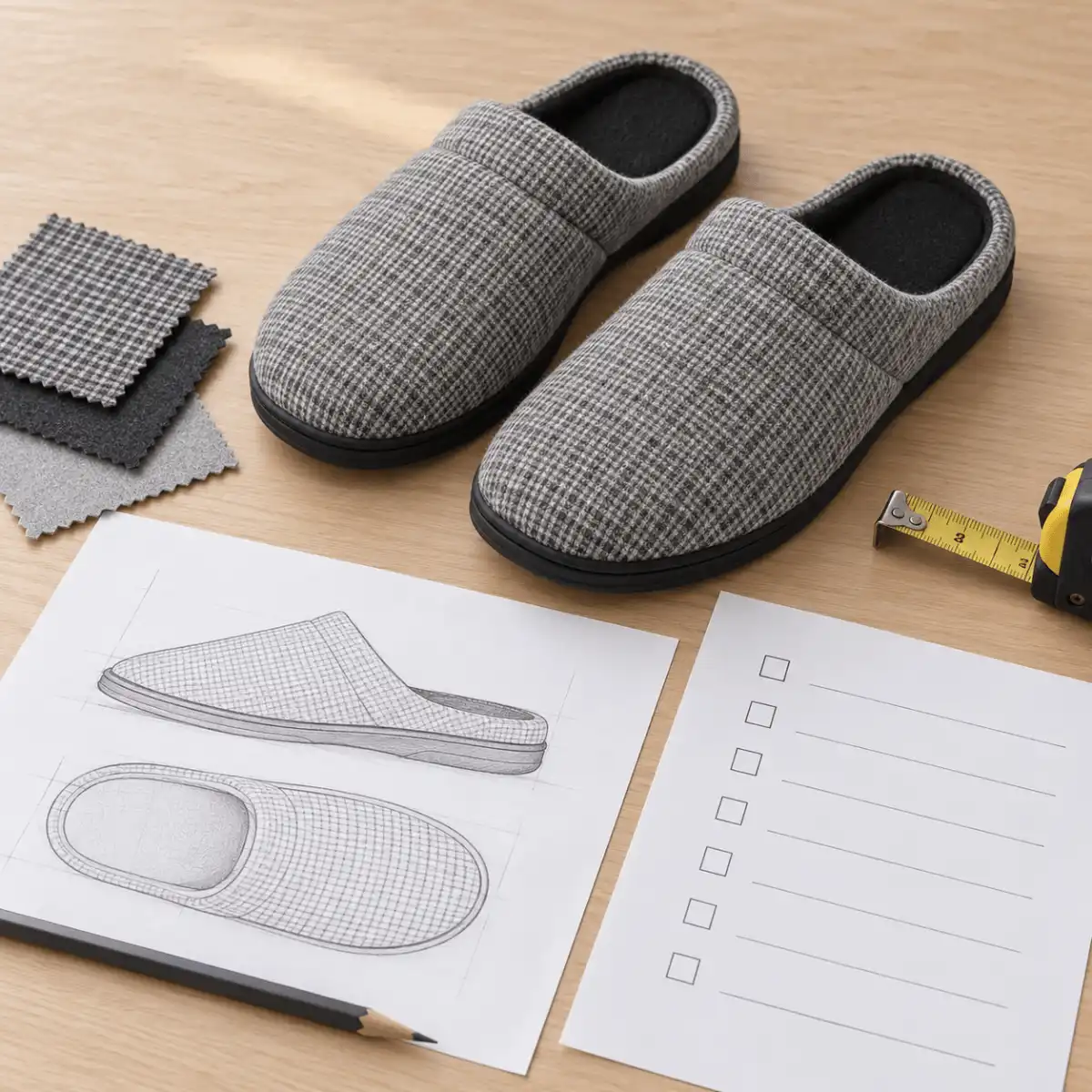
OEM projects generally begin with buyer-owned specifications, designs, samples, or Tech Packs. ODM projects generally begin with a supplier-developed style or product direction that is adapted for the buyer’s market, brand, materials, colors, sizing, packaging, and other requirements. The practical development route depends on the information available for the specific project.
Choose an existing style when you want to modify a proven product direction. Use a sample or image when you have a visual reference but incomplete specifications. Use a Tech Pack when measurements, materials, construction, branding, and packaging requirements are already documented.
Yes. Private-label requirements can include logo application, labels, brand colors, packaging, carton markings, and other buyer-specified details. The artwork, placement, dimensions, materials, and approval requirements should be confirmed during development.
UTOP works with welt-stitched, side-stitched, and cold-cemented construction directions. The appropriate method depends on the upper, sole, product design, materials, desired appearance, and confirmed project specifications.
The decision should be based on the product structure, intended use, weight, flexibility, outsole profile, tread, construction method, specifications, tooling, and project requirements. Material names alone do not determine price or performance.
For regular custom slipper projects, sampling typically takes 7–14 days. After the sample and other necessary approvals, bulk production typically takes 30–45 days. Actual timing depends on materials, tooling, revisions, testing, quantity, branding, packaging, and the complexity of the project.
Send the product information already available, such as a style reference, images, a sample, or a Tech Pack, together with the estimated quantity, size range, preferred materials and outsole, branding, packaging, target market, and timing requirements.
START WITH THE INFORMATION YOU ALREADY HAVE
Share your style reference, sample, Tech Pack, estimated quantity, target market, and project requirements. UTOP will review the available information and identify the specifications and next steps needed for development.