
Turn your concept, sample, or tech pack into production-ready custom slippers through structured development, sampling, material, branding, and packaging support.
For brands, importers, wholesalers, retailers, and sourcing teams, our custom slipper fabrication services connect product specifications with a practical sampling and production workflow.
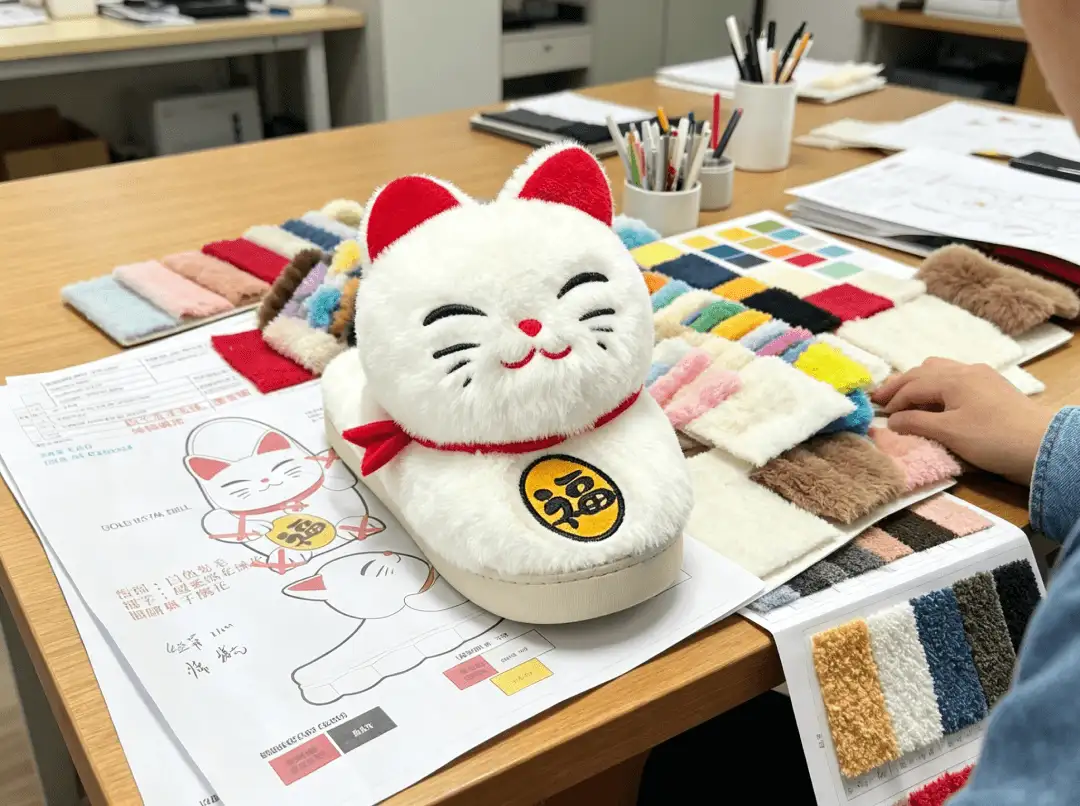
Start with an existing style, a reference sample, or a complete tech pack. We help turn your available information into clear development specifications.
Use an existing slipper style as the starting point, then adjust materials, colors, sizing, logos, labels, outsoles, or packaging for your program.
Send a physical sample, product image, or design reference. We review the construction, materials, and practical options before sample development.
Provide your technical drawing or tech pack for feasibility review, specification confirmation, material selection, sampling, and revision before bulk production.
Not sure which path fits your project? Send the information you already have, together with your estimated quantity and target market.
Each project follows a structured process from feasibility review to sample approval, production coordination, quality checks, and shipment preparation.
We review your product concept, target market, estimated quantity, reference files, price positioning, and delivery expectations.
We confirm the construction, upper materials, lining, padding, outsole, sizing, colors, branding, and packaging requirements.
An initial sample is developed according to the confirmed specifications, selected materials, and agreed branding details.
You review the sample’s appearance, sizing, materials, workmanship, logo placement, and packaging before approving the final version.
Production planning, material preparation, scheduling, and order follow-up are coordinated according to the approved sample and confirmed requirements.
Relevant quality checks, packing details, labels, carton marks, documentation, and shipment preparation are followed before delivery.
Customization is reviewed as one complete product specification rather than a list of isolated options. Before sampling, we confirm how style, materials, sizing, colors, branding, outsoles, packaging, quantity, target market, and approval requirements work together. The approved sample and agreed specifications then become the reference for bulk production.
A project can start from an existing UTOP style, a physical sample, a product image, a sketch, or a complete tech pack. Buyers can discuss the overall slipper shape, open-back or closed-back direction, toe opening, upper panels, heel coverage, trims, decorative details, and other visible design elements.
Design decisions are reviewed together with construction feasibility. The upper pattern, lining and padding thickness, outsole edge, and connection method must work as one product. Where relevant, the project team can review welt-stitched, side-stitched, or cold-cemented directions without treating one method as universally better for every slipper.
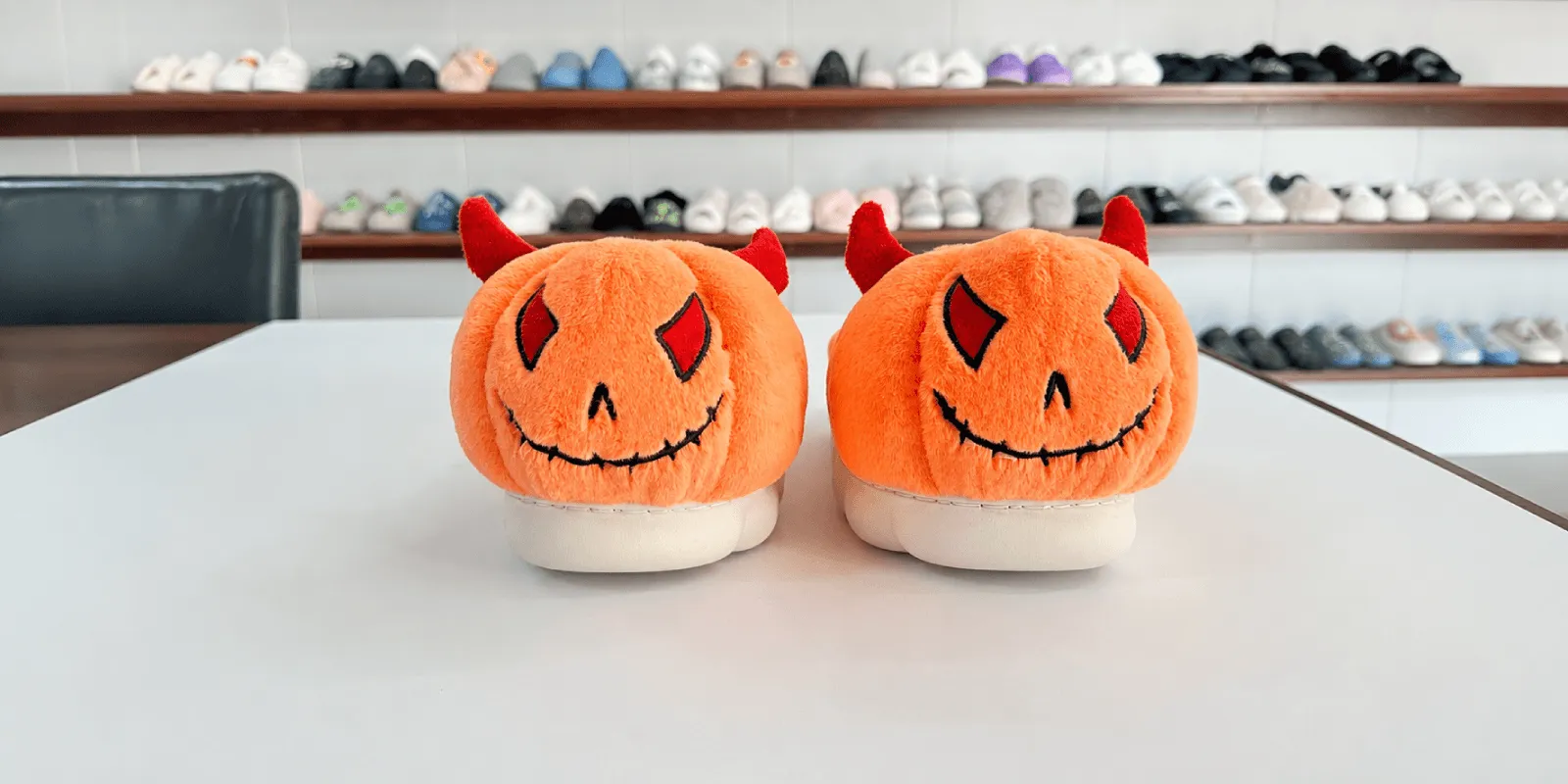
What buyers should provide: A reference product, image, sample, sketch, or tech pack; intended user and target market; preferred shape and opening; required decorative details; and any construction preference that must be reviewed.
Material selection covers more than the visible upper. A complete slipper specification may include the upper material, lining, padding or cushioning layers, binding, trims, labels, insole components, outsole, and other supporting parts. The right combination depends on the intended appearance, hand feel, warmth, structure, product positioning, target market, and confirmed order requirements.
Material names alone are not a finished specification. Pile height, backing, thickness, density, color, surface finish, and compatibility with stitching, printing, embroidery, bonding, or the selected outsole can change the finished result. Final materials and components should be confirmed through available swatches, project specifications, and the approved sample.
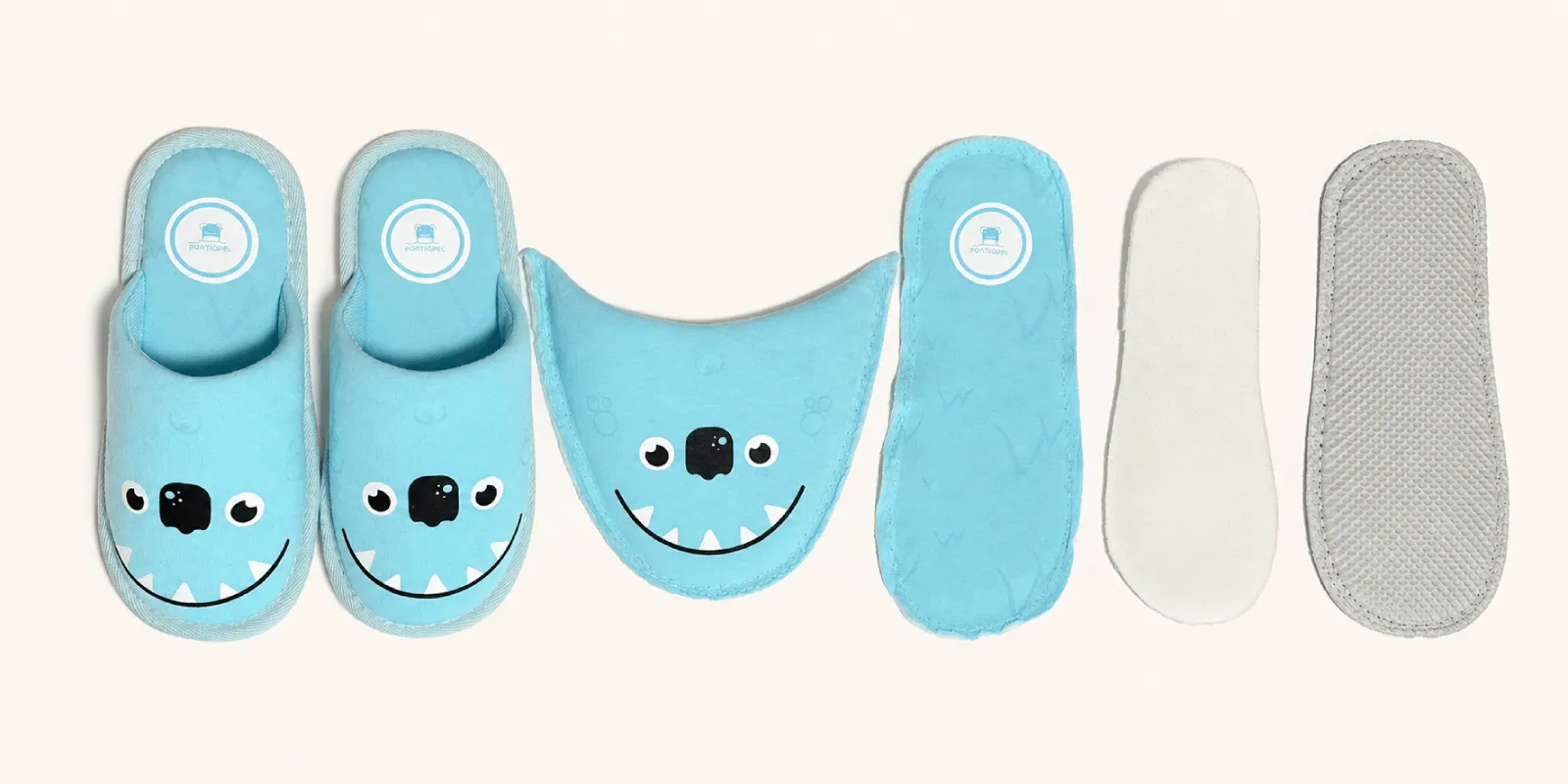
What buyers should provide: Preferred materials or reference swatches; intended feel and season; target price positioning; color requirements; material restrictions or documentation needs; and any component that must match an existing product.
Size ranges should be confirmed for the destination market, intended user, slipper shape, outsole, and lining thickness. A thick plush or fleece lining can reduce usable internal space, while a different outsole or upper pattern can affect the finished fit. For this reason, a generic size chart should not replace project-specific measurement, fitting, grading, and sample approval.
Colors can be reviewed against supplied Pantone references, physical swatches, approved lab dips where applicable, or an agreed reference sample. The achievable result depends on the selected material, dyeing or printing method, surface texture, and production conditions. Final approval should be based on the agreed sample or swatch rather than a screen color alone.
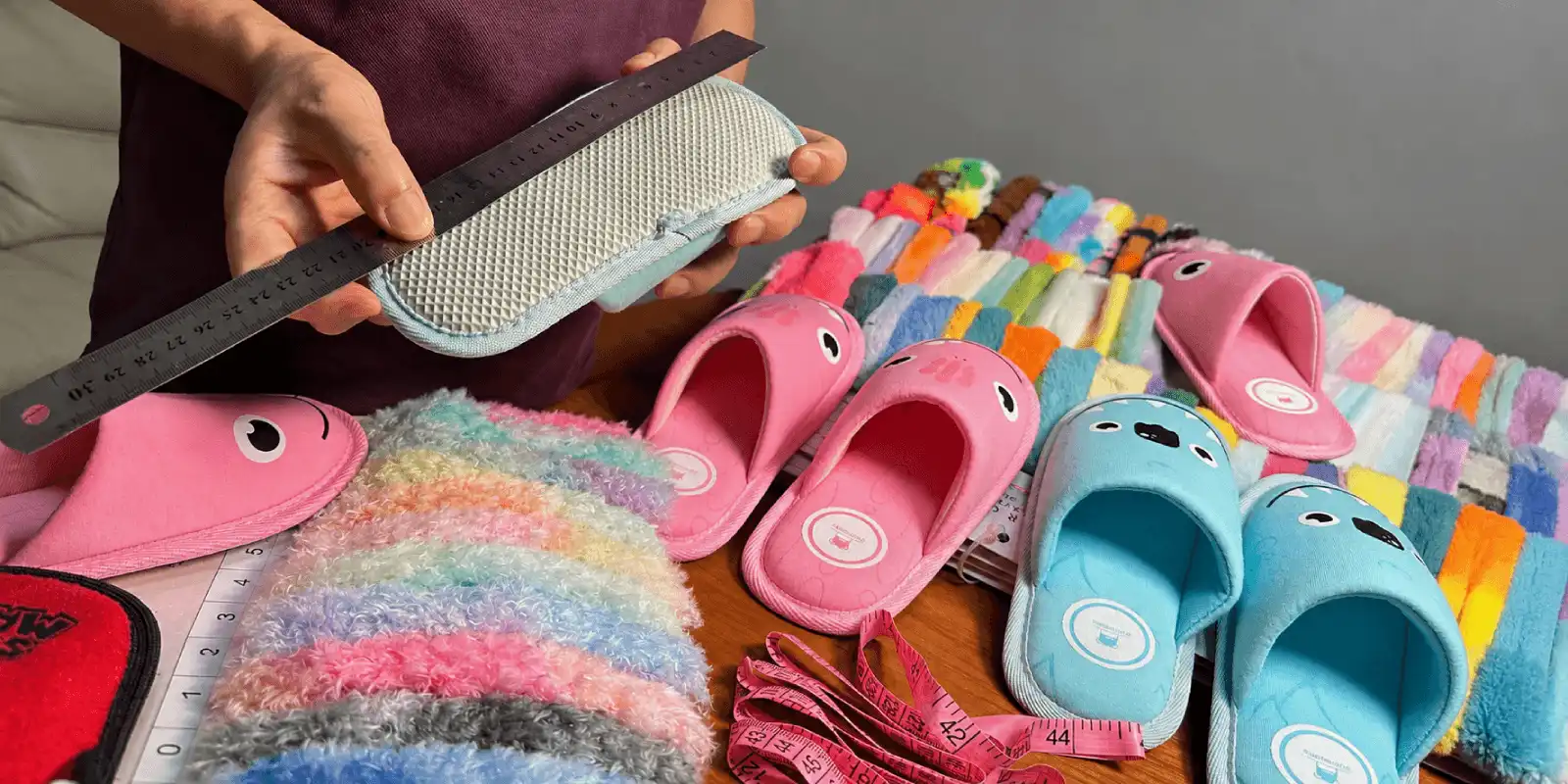
What buyers should provide: Destination market and size system; intended age or user group; required size range and assortment; any fit reference or measurement standard; Pantone numbers or physical color references; and the required color approval method.
Branding can be added through methods such as embroidery, screen printing, heat transfer, woven labels, printed labels, patches, hang tags, or insole branding. The suitable method depends on the logo artwork, required size, placement, number of colors, upper material, surface texture, and the way the branded component is attached to the slipper.
Fine text, thin lines, small color separations, or logos placed on high-pile materials may need adjustment before sampling. Artwork, dimensions, placement, colors, and the approval standard should be confirmed before bulk production. A physical sample is especially important when material texture can affect logo clarity.
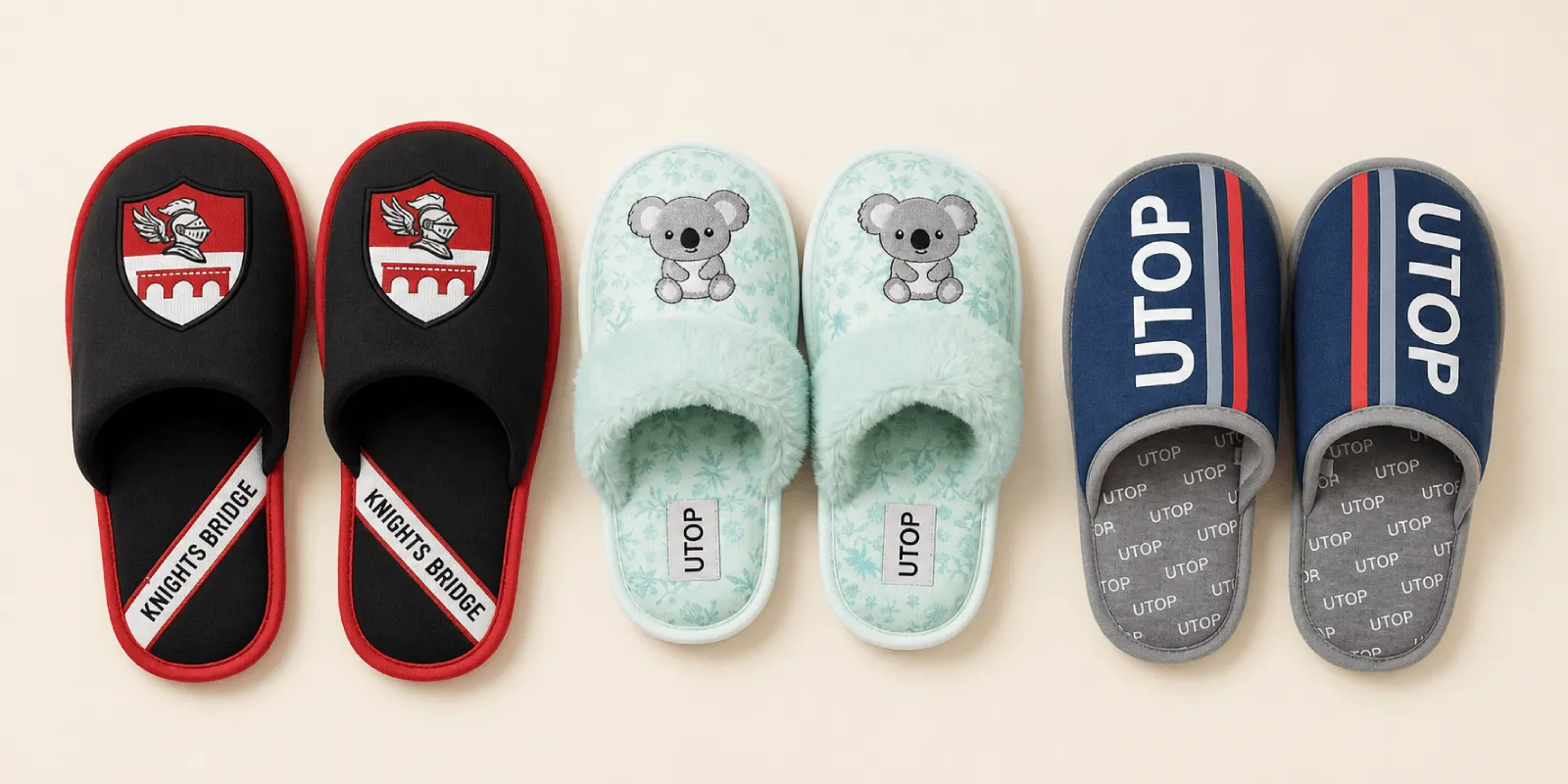
What buyers should provide: Vector artwork or the highest-quality available logo file; finished logo dimensions; placement diagram; Pantone or approved color references; label text and care information; and any brand guideline that must be followed.
Packaging should be reviewed as part of the slipper specification before the final quotation. Options may include individual polybags, paper bands, hang tags, insert cards, hangers, shoe boxes, barcode or SKU labels, inner cartons, master cartons, pack ratios, and customer-specific carton marks.
The correct format depends on the slipper size, upper and lining volume, outsole structure, raised decorations, retail channel, warehouse handling, and the protection required during shipment. Thick plush uppers, pom-poms, bows, ears, or other three-dimensional details may require additional space or a different packing direction to protect the approved appearance.
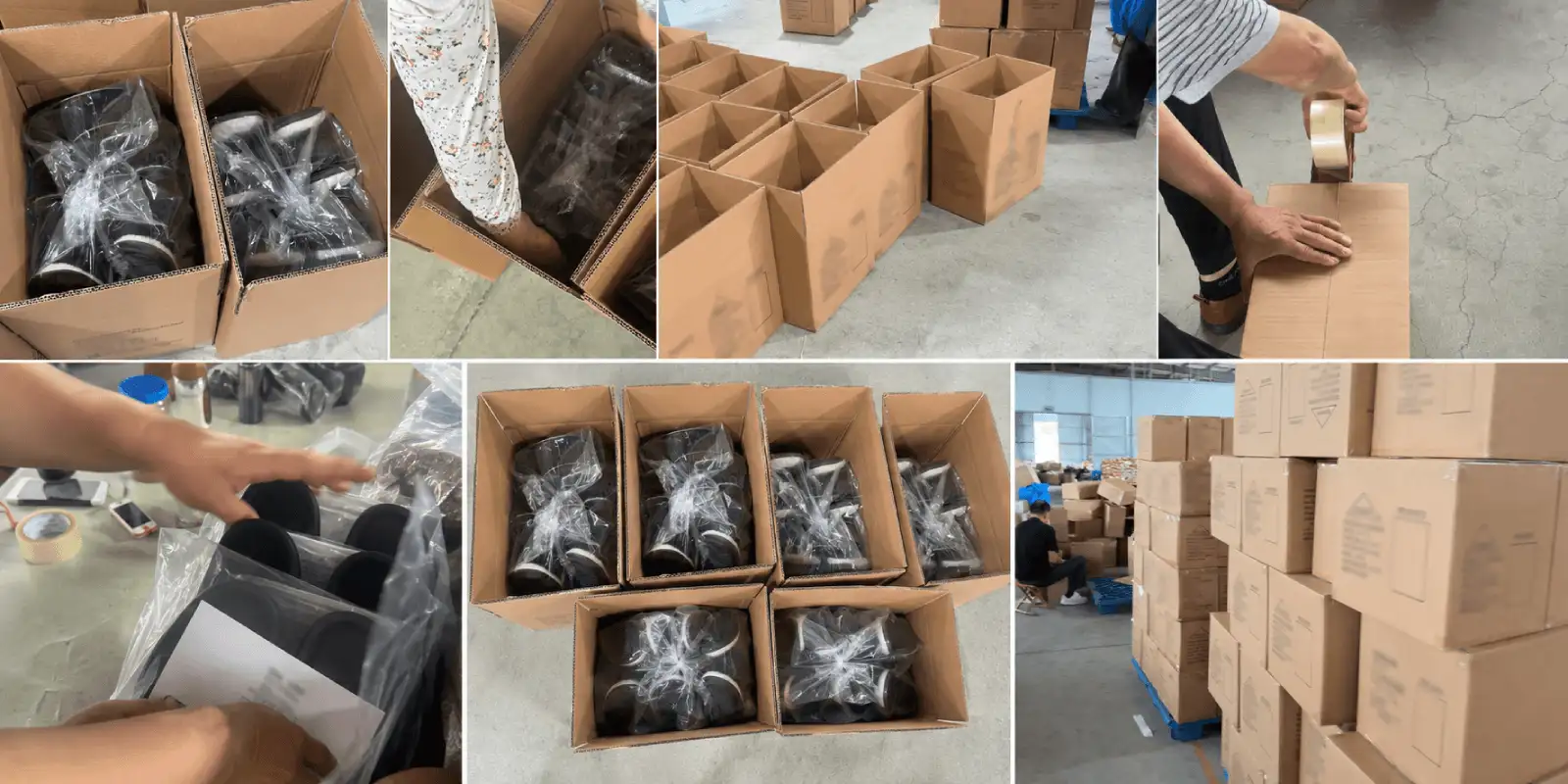
What buyers should provide: Preferred individual packaging; artwork and dielines if already fixed; barcode and SKU data; label sizes and placement; size or color pack ratio; pairs per carton; carton marking instructions; retail display requirements; and any destination-specific packaging requirement.
Providing clear project information helps us review feasibility, define sampling requirements, and prepare a more accurate quotation for your custom slipper development project.
01
Share an existing product link, reference image, physical sample, sketch, design file, or complete tech pack as the starting point.
02
Provide the estimated quantity per style or color and, if available, your target price range or intended market positioning.
03
Tell us the destination market, intended users, required size system, and expected size range for the product.
04
Specify preferred upper materials, lining, padding, outsole, or construction details. If undecided, describe the desired appearance, performance, and price level.
05
Provide your logo file and requirements for embroidery, printing, labels, hang tags, polybags, boxes, barcodes, or carton marks.
06
Share the delivery destination, expected schedule, and any testing, documentation, labeling, or compliance requirements relevant to your market.
We support buyers through product evaluation, specification confirmation, sampling, production coordination, and shipment preparation with a clear project-based workflow.
Each project begins with a review of feasibility, construction, materials, quantity, and sampling requirements before moving toward bulk production.
Materials, colors, sizing, branding, packaging, and approved sample details are organized according to the confirmed project requirements.
Sample feedback and requested changes are reviewed step by step, helping both sides confirm the final version before production.
Production progress, relevant quality checks, packing details, documentation, and shipment preparation are coordinated throughout the order.
Answers to common questions about project review, customization, sampling, production, and shipment preparation.
Please provide a product image, sample, sketch, design file, or tech pack together with your estimated quantity, target market, size range, material preferences, branding requirements, packaging details, delivery destination, and expected schedule.
Yes. We support OEM, ODM, and private label slipper projects based on existing styles, reference samples, product images, or complete tech packs. Available services may include material selection, sample development, logo application, labels, packaging, and production coordination, depending on the confirmed project requirements.
The minimum order quantity depends on the slipper style, materials, color breakdown, size range, branding method, packaging, and whether custom molds or tooling are required. The applicable quantity is confirmed after project review.
The quotation and timeline depend on product complexity, materials, construction, outsole requirements, quantity, size range, branding, packaging, sample revisions, material availability, and delivery requirements.
Yes. A product image, reference sample, sketch, or tech pack can be used as the starting point. We review the available information, construction, materials, and practical development requirements before sampling.
Customization may include the slipper style, construction, upper material, lining, padding, outsole, colors, size range, embroidery, printing, labels, insole branding, packaging, and carton requirements.
After the specifications and materials are confirmed, an initial sample is developed for review. Feedback and requested revisions are evaluated before the final sample is approved as the production reference.
After sample approval and order confirmation, material preparation, production scheduling, production coordination, relevant quality checks, packing details, documentation, and shipment preparation are followed according to the confirmed requirements.
Share your reference image, sample, tech pack, estimated quantity, target market, and delivery requirements for an initial project review.
You can upload images, PDF, DOCX, or ZIP files through the inquiry form.