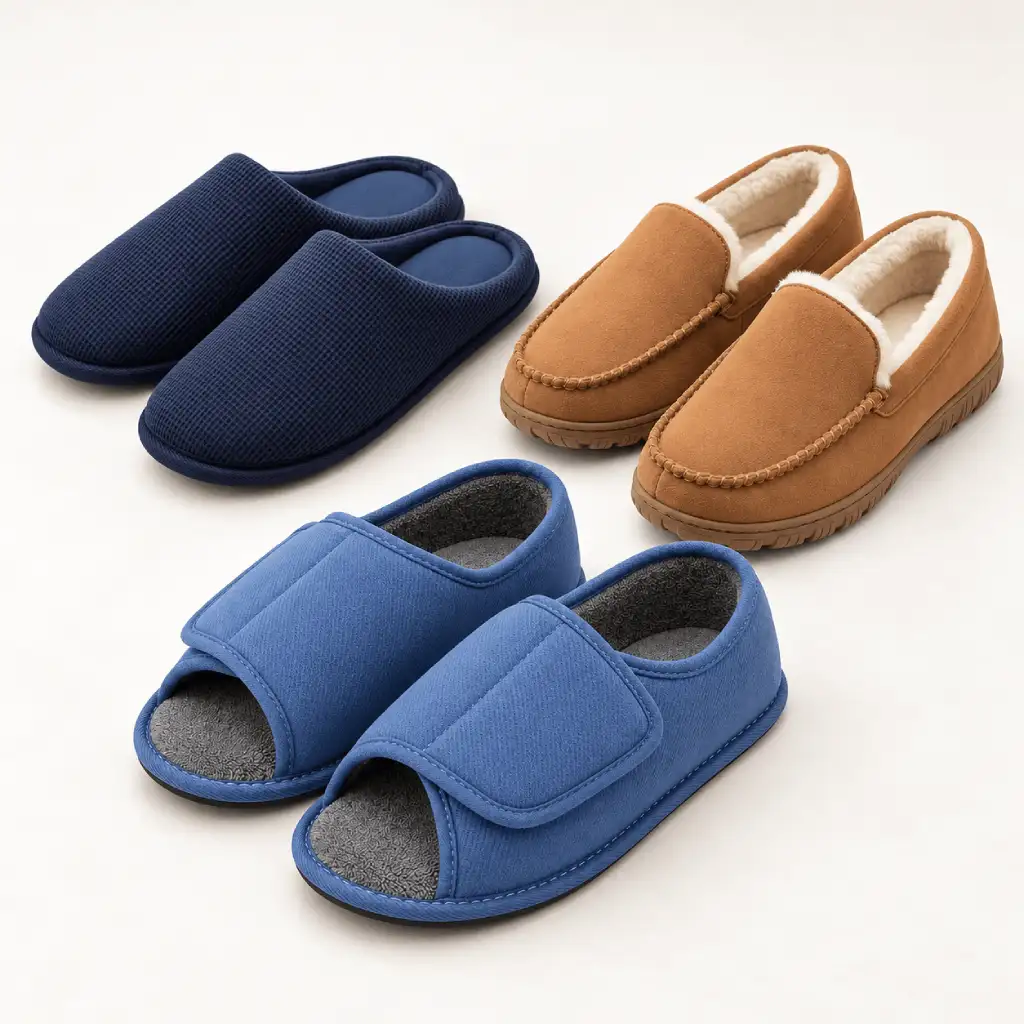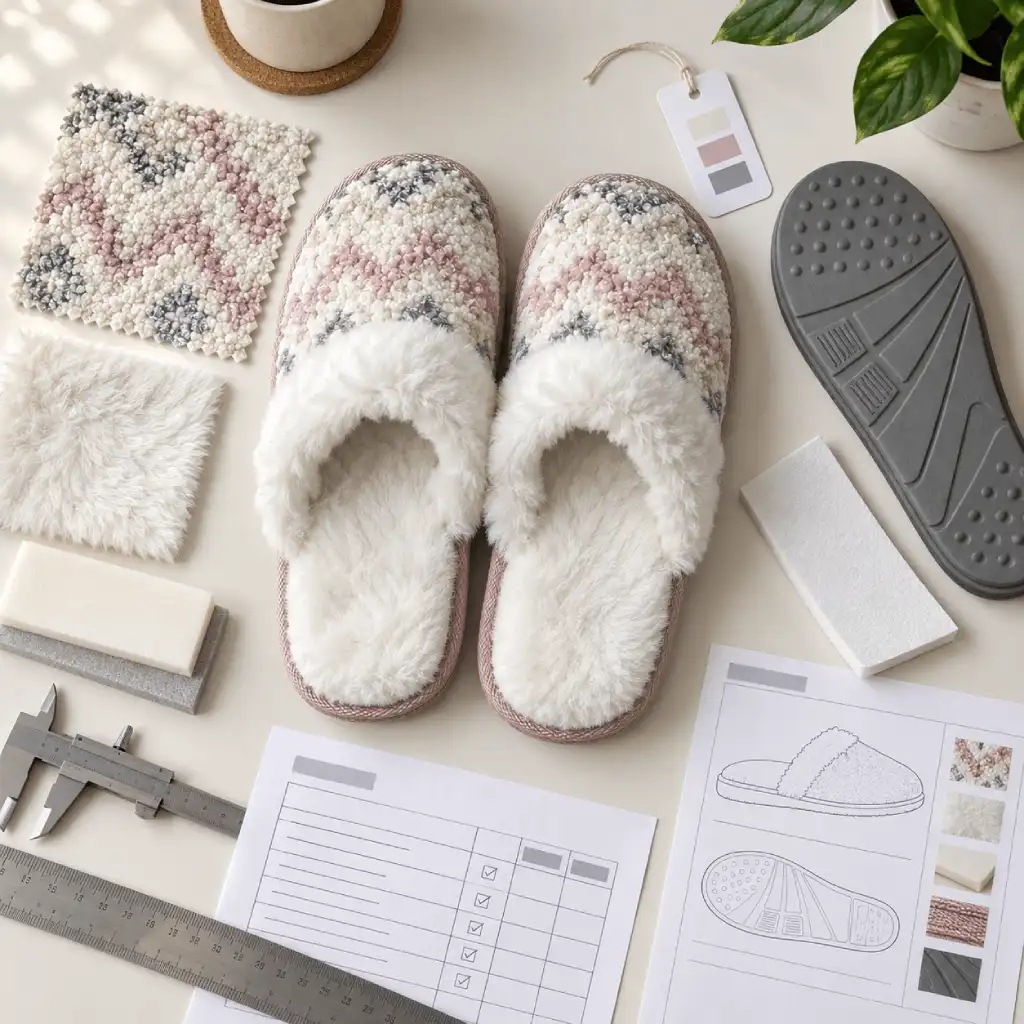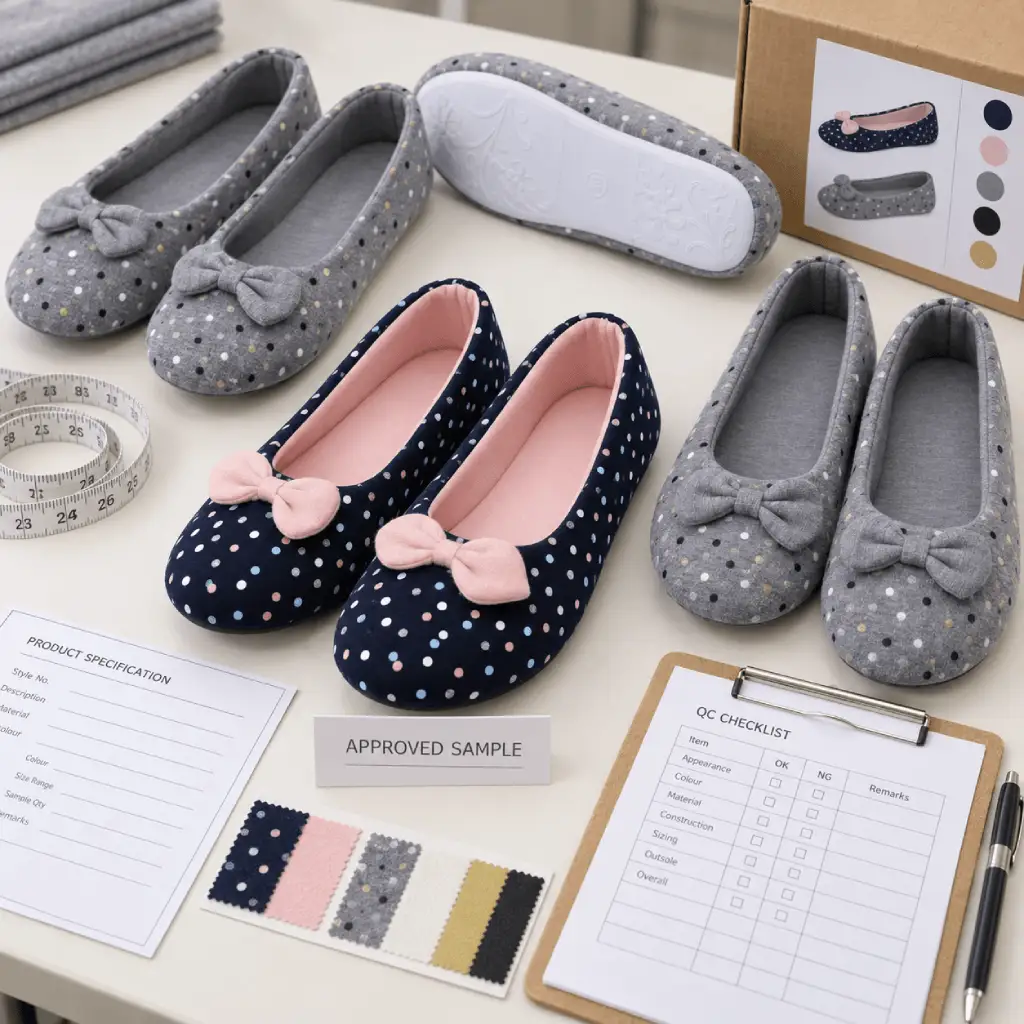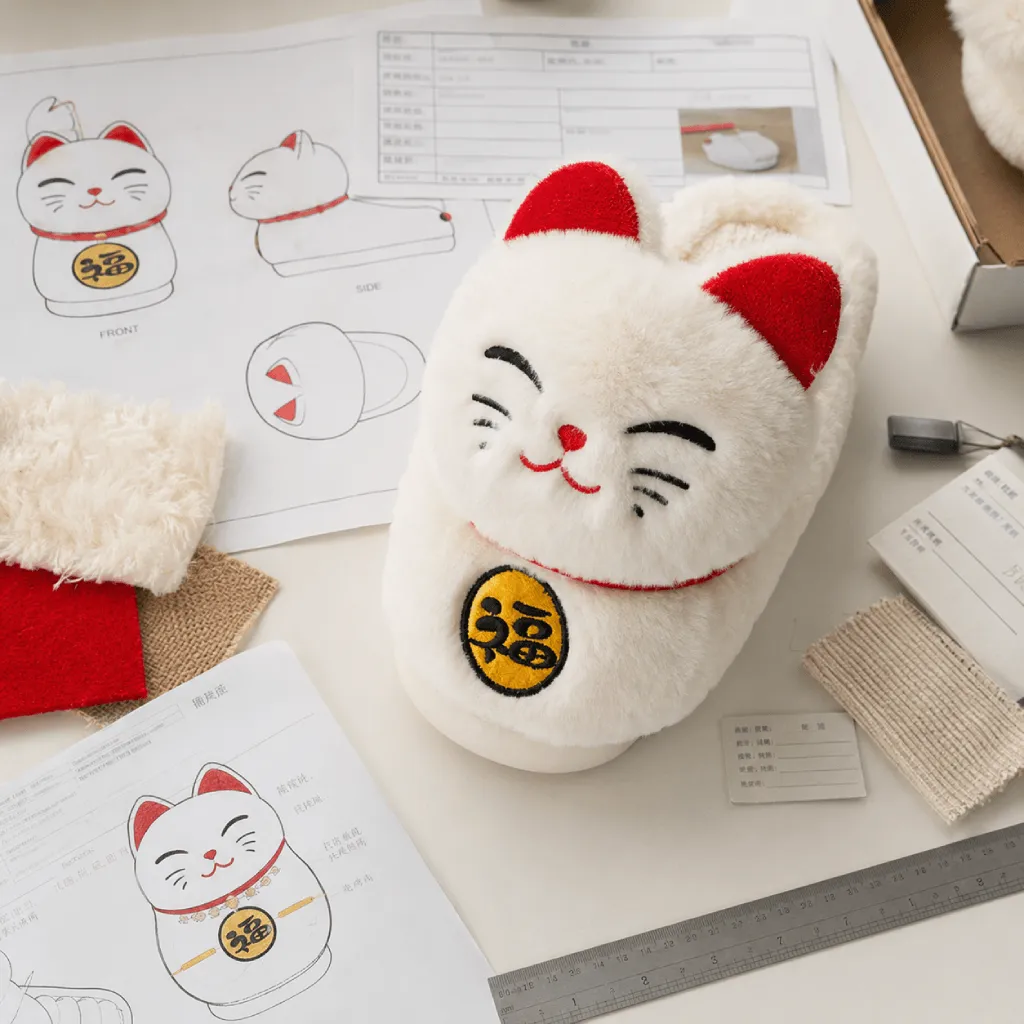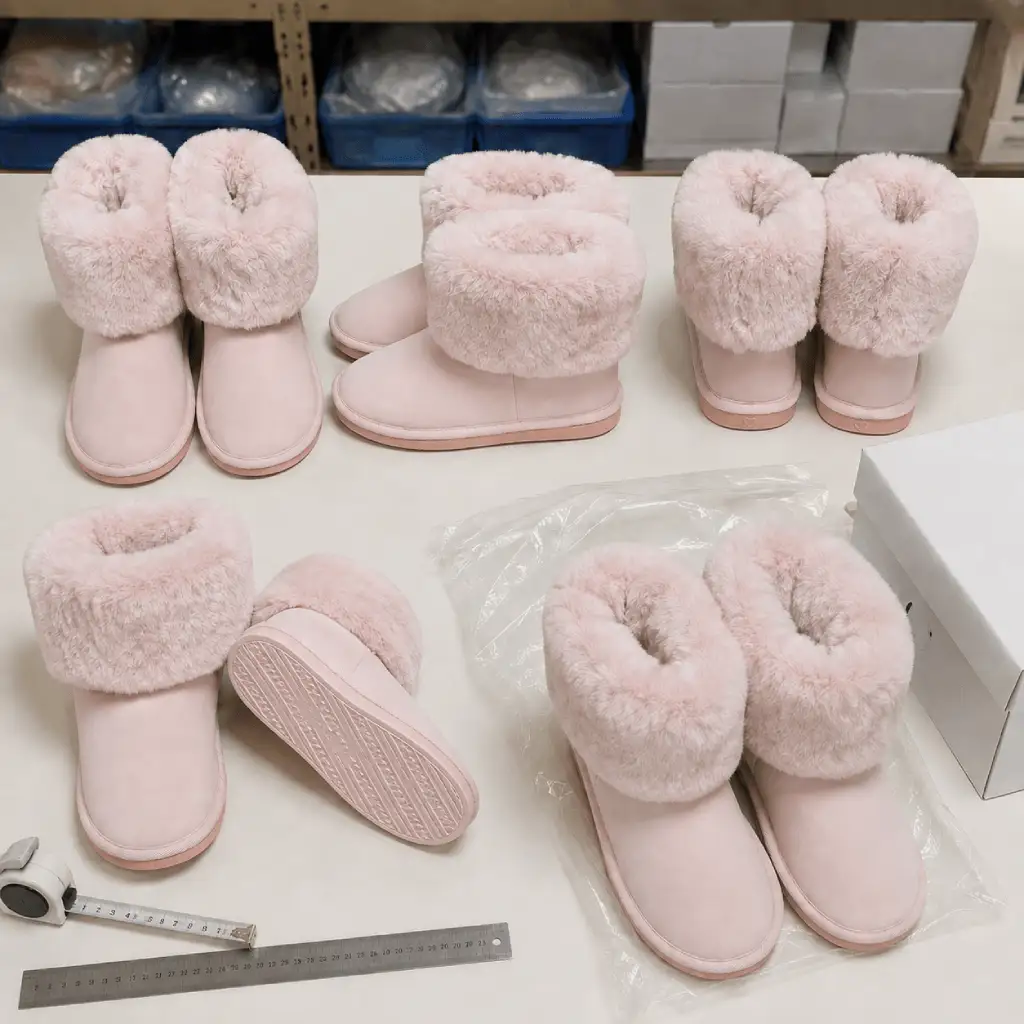
An existing slipper style can be the right starting point for a private label collection, but only when its shape, fit direction, construction, and outsole already suit the brief. If they do not, changing a color or adding a logo will not solve the underlying product problem.
Most B2B slipper projects sit somewhere between two extremes. A buyer may keep a factory-developed style almost unchanged, modify selected components around a proven construction, or commission fully custom slipper development. The practical decision is how much of the product needs to change before it can meet the commercial brief.
This guide helps brands, retailers, importers, wholesalers, and sourcing teams choose among those three routes. It focuses on the decision itself: what each route keeps, what it changes, and when the extra development work is justified.
Quick answer: choose the least complex route that still protects the product’s required silhouette, fit, construction, materials, branding, target cost, and launch timing. Use an existing style when the base product already works, modify it when selected components need to change, and move to fully custom development when the product value depends on a new structure or fit.
This page does not repeat the full sampling workflow. For the stages from product brief to approved sample and production handoff, use UTOP’s footwear development process for custom indoor slippers.
Written by the UTOP Slippers Sourcing Team, with product-development, sampling, production, and quality-control input from our indoor slipper manufacturing team.
1. Define What Must Change Before Choosing a Route
A slipper development route should follow the product requirements. It should not be chosen because “fully custom” sounds more exclusive or because an existing style appears easier to quote.
Start by separating the features the buyer must protect from the features the factory may adapt. A required silhouette, fit direction, outsole shape, fastening method, or signature construction may determine the route. Color, upper fabric, lining, logo application, trims, and packaging may offer more flexibility, provided that each change remains compatible with the product.
Keep fixed
Record the product features that define market fit, brand identity, comfort, construction, delivery requirements, or buyer-approved performance criteria.
Allow to change
Identify materials, components, finishes, branding methods, and packaging details that may be adjusted after feasibility, cost, and sample review.
This distinction makes quotations easier to compare. It also prevents a buyer from paying for original development when a suitable factory-developed platform already exists. If the brief is still incomplete, the manufacturer should state which assumptions are based on an existing slipper style and which require new development.
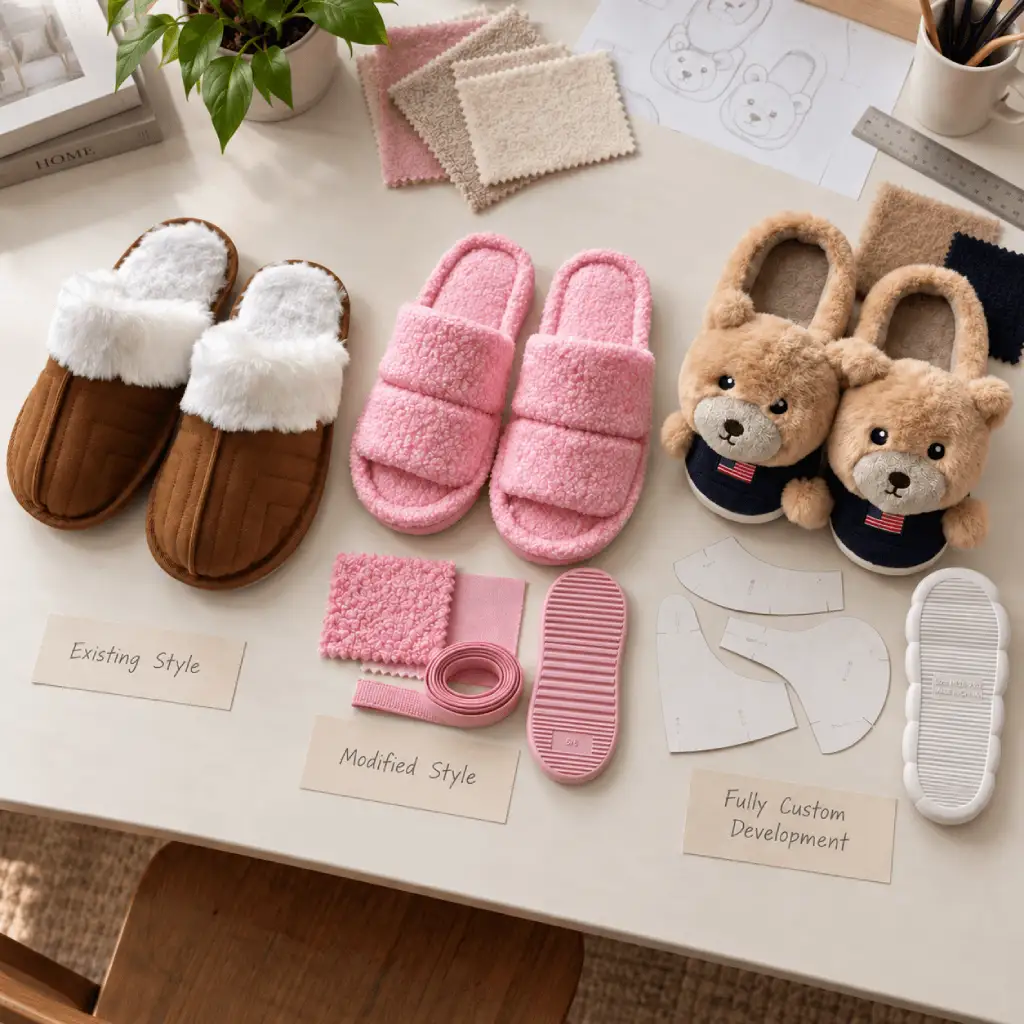
2. Compare the Three Slipper Development Routes
The names used in sourcing conversations are not always consistent. One supplier may call a material change “custom,” while another reserves that word for a new pattern or outsole. Define the route by what stays fixed and what must be developed.
Existing Style
The established pattern, fit direction, outsole, and construction remain substantially unchanged. Customization is concentrated in approved brand-facing details.
Modified Style
A proven product remains the base, but selected materials, cushioning, pattern details, components, sizing, or outsole options are reviewed and changed.
Fully Custom Development
The project depends on a new silhouette, fit, pattern, component system, outsole, construction, or function that cannot be delivered by adapting an available style.
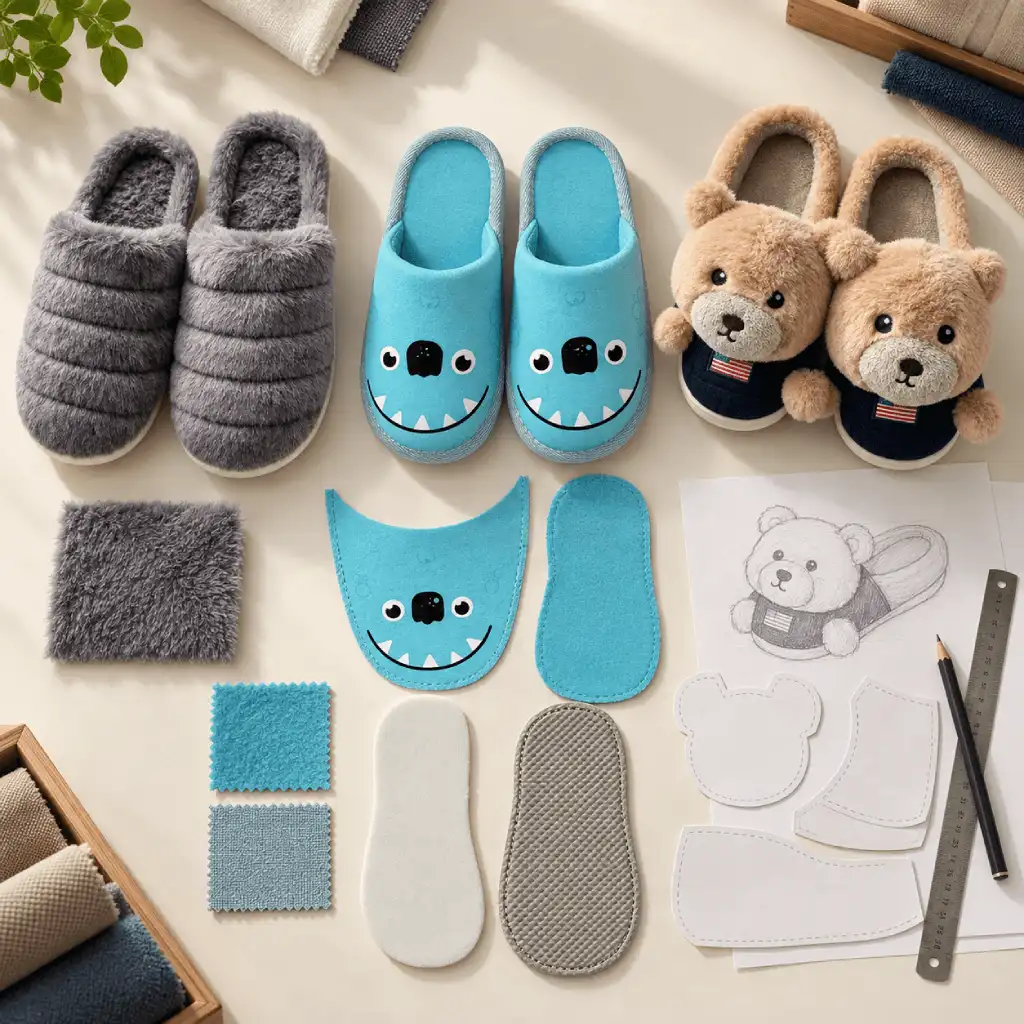
| Decision point | Existing style | Modified style | Fully custom |
|---|---|---|---|
| Starting point | Factory-developed product | Factory-developed product with defined changes | Original brief, drawing, sample, or tech pack |
| Core structure | Retained | Partly retained and rechecked | New or substantially revised |
| Typical reason to choose | The base product already fits the brief | Differentiation is needed without rebuilding the product | The concept depends on original product architecture |
| Main risk | Accepting a base style that does not suit the market | Underestimating how changes affect fit or construction | Committing to tooling or revisions before the brief is stable |
These are working routes rather than rigid labels. A fully custom upper may use an available outsole. A modified slipper style may need a new pattern piece after a lining change. The quotation and sample plan should describe the actual work instead of relying only on OEM, ODM, private label, or custom terminology.
3. When to Choose an Existing Slipper Style
Choose an existing slipper style when the underlying product already meets the important requirements. The silhouette is suitable, the size range is workable, the construction matches the intended use, and the available outsole supports the desired appearance and wearing direction.
This route works well when differentiation will come mainly from color, compatible upper or lining options, logo application, labels, trims, and packaging. It can also give a buyer a tangible product to review before approving brand details.
Good reasons to use the existing platform
- The shape and fit direction already suit the target customer.
- The current construction and outsole are appropriate for the intended slipper.
- The collection needs brand identity rather than a new product architecture.
- The launch plan benefits from limiting structural sample revisions.
An existing style is a product platform, not a promise of finished stock. The order may still be made specifically for the buyer using confirmed materials, colors, branding, sizes, and packaging. Buyers can review UTOP’s custom indoor slipper range to identify possible starting styles.
4. When to Choose a Modified Slipper Style
A modified slipper style is often the practical middle route. The buyer keeps a useful base construction but changes selected components to reach a different look, comfort direction, season, price level, or retail position.
Possible changes include the upper or lining material, cushioning stack, binding, piping, embroidery, labels, color, selected pattern details, packaging, or another compatible outsole direction. The important word is compatible. Components cannot be treated as isolated choices.
Watch the interaction: a thicker lining can reduce internal space; a heavier outsole can change balance; a stretchier upper can alter the opening; and a larger embroidery area can stiffen a soft panel. A change that affects fit, pattern, attachment, or tooling requires more than a cosmetic sample.
The modified route stops being efficient when too many connected parts need to be rebuilt. If the buyer wants a new silhouette, new fit concept, proprietary outsole, different retention system, and unusual component stack, the old product is no longer doing useful work as a base.
When outsole direction is one of the changes, compare the actual specification and construction rather than making a decision from material names alone. UTOP’s TPR vs EVA slipper sole guide explains the variables buyers should review.
5. When Fully Custom Slipper Development Is Justified
Fully custom slipper development is justified when the product would lose its intended value if it were forced onto an existing platform. The reason should be visible in the product requirements, not only in the marketing description.
Typical triggers include a new silhouette, opening, toe profile, heel structure, shaft height, fit concept, outsole geometry, tread, sidewall, molded brand detail, functional insert, fastening method, or complex three-dimensional upper. A distinctive combination of materials may also require original pattern and construction work when it changes stretch, thickness, support, sewing, bonding, or recovery.
Fully custom does not mean that every component must be new. A new upper can sometimes use an available outsole; an original pattern may use familiar materials and production methods. The project becomes fully custom when its core architecture needs deliberate development and approval.
What the buyer should have before committing
- A clear reason the existing and modified routes cannot meet the brief.
- Priorities for fit, appearance, construction, price direction, quantity, and timing.
- Enough flexibility for feasibility feedback and physical sample revisions.
- Agreement on who approves drawings, materials, tooling, samples, artwork, and packaging.
A detailed drawing is useful, but it does not replace a controlled specification. Buyers developing an original product can use UTOP’s shoe tech pack guide to organize product identity, materials, dimensions, construction, branding, and revision information.
6. Compare Cost, MOQ, Sampling, and Lead Time
The development route influences cost and timing, but it does not set them by itself. A simple existing slipper style can become expensive if it uses custom-dyed material, elaborate branding, or retail packaging. A fully custom upper can remain relatively straightforward when it uses an available outsole and familiar materials.
| Factor | Existing style | Modified style | Fully custom |
|---|---|---|---|
| Development work | Usually limited when the base remains unchanged | Depends on the number and interaction of changes | May include pattern, fit, components, grading, or tooling |
| Sampling | Focuses on the confirmed customization | Rechecks affected fit, balance, and construction | May require prototype and revision rounds |
| MOQ drivers | Material, color, branding, packaging, and order split | Existing drivers plus changed components and setup | Materials, tooling, components, size range, and production setup |
| Schedule risk | Usually lower when approvals are simple | Rises when changes affect connected parts | Rises with tooling, tests, special components, and revisions |
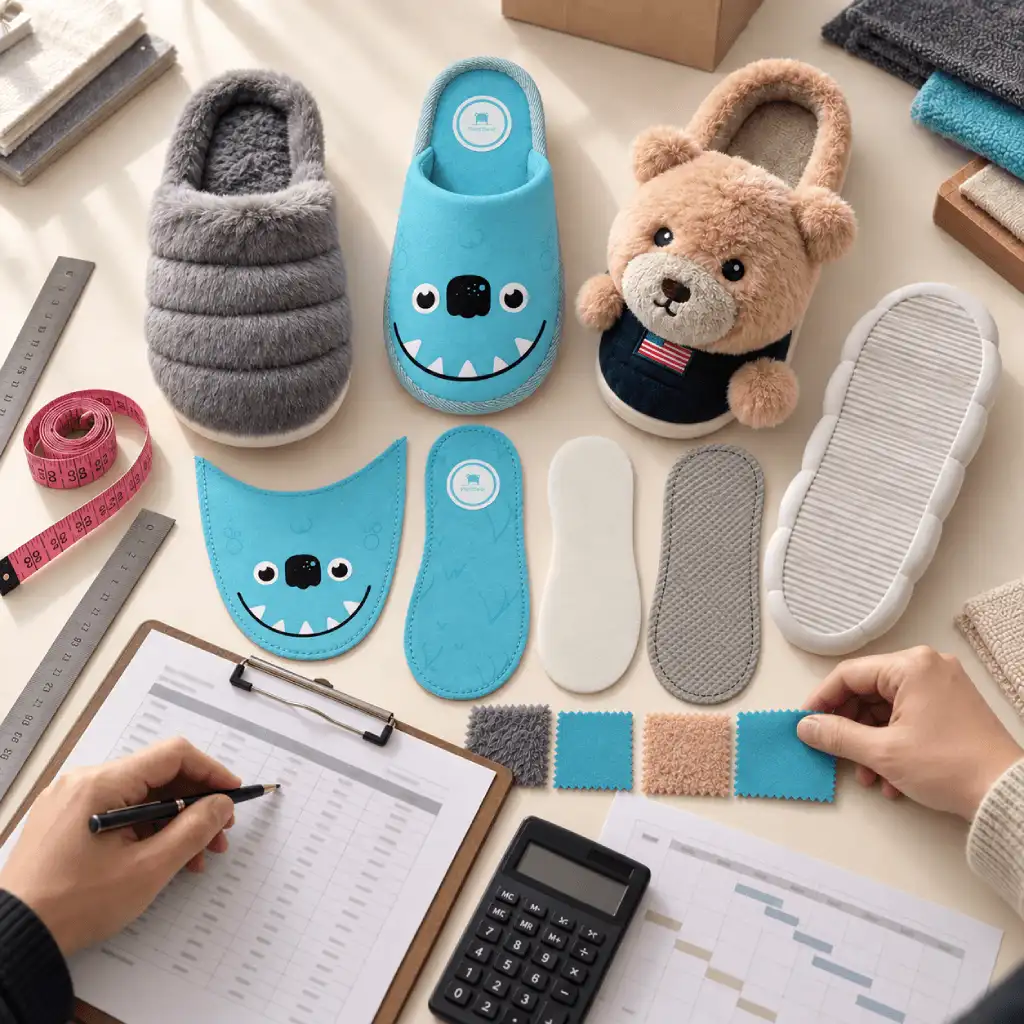
MOQ should be reviewed against the actual bill of materials, color split, size range, outsole, branding, packaging, and production setup. There is no reliable rule that every existing style has a low MOQ or every fully custom slipper requires the same higher quantity.
For normal UTOP custom slipper projects, sample development is typically around 7–14 days once the direction and necessary materials are clear. More complex work can take longer when it involves tooling, special components, repeated revisions, testing, or delayed approvals. Bulk production is generally planned at about 30–45 days after the required sample and order details are approved. The actual schedule must be confirmed for the project.
Quotation rule: compare quotations only after confirming what each supplier has assumed. A price based on an available outsole and standard packing is not comparable with one based on a proprietary mold and buyer-specific retail packaging.
For the wider sequence after the development route is chosen, including branding, packaging, sample approval, bulk production, and quality control, see the private label indoor slippers manufacturing guide.
7. Use a Short Decision Checklist Before Requesting a Quote
Before asking for prices, write down the reasons behind the selected slipper development route. This gives the factory a clearer basis for checking whether an existing style, a modified product, or fully custom development is practical.
| Question | What the answer helps decide |
|---|---|
| Which parts of the reference product must remain? | Whether the factory has a suitable base platform |
| Which differences create the product’s commercial value? | Whether modifications are enough or original development is needed |
| Do the changes affect fit, pattern, outsole, or attachment? | How much technical review and sampling are required |
| What are the quantity, color split, size range, and launch date? | Whether material, tooling, and production minimums are practical |
| Which testing, labeling, and packaging requirements apply? | What must be included before the final approval and quotation |
Send the product reference or concept, target market, sales channel, quantity, colors, size range, materials, outsole direction, branding, packaging, target price, and delivery timing. If the route is still open, ask the manufacturer to explain what can be retained from an existing slipper style before proposing new pattern or tooling work.
Market requirements still apply whichever route is chosen. For example, buyers selling footwear in the EU should review the official EU footwear labeling guidance and confirm the responsibilities and information that apply to the product and destination.
UTOP’s custom slipper development services page explains how buyers can submit a product link, physical sample, images, drawings, artwork, or a technical package for a feasibility review.
8. Frequently Asked Questions
Does an existing slipper style mean the slippers are in stock?
No. It usually means the factory already has a developed pattern, construction, outsole direction, size reference, or previous production experience. The buyer’s order may still be made with confirmed colors, materials, branding, sizes, and packaging.
Can I change the material without moving to fully custom development?
Often, yes. The material must still be checked for thickness, stretch, pile, backing, sewing behavior, fit, shape, and compatibility with branding and construction. If the substitution changes the pattern, internal volume, or attachment method, additional development may be required.
When does a modified slipper become a fully custom slipper?
There is no single industry threshold. In practical terms, the project has moved into fully custom slipper development when the core shape, fit, pattern, outsole, component system, or construction needs original development rather than controlled substitution.
Is an existing style always cheaper and faster?
No. It usually reduces structural development when the base product is retained, but custom materials, colors, branding, packaging, testing, or complicated order splits can still affect cost, MOQ, and timing. Compare the complete specification and assumptions.
When is a new outsole mold likely to be needed?
A suitable mold may be required when the requested outsole shape, sidewall, tread, thickness, size range, or molded brand detail cannot be achieved with an available outsole. Tooling should be reviewed with the complete product, expected quantities, sizes, and approval plan.
Choose the route before adding complexity
An existing slipper style is useful when it already protects the product requirements. A modified style works when selected changes create enough differentiation without rebuilding the whole product. Fully custom development is worthwhile when the value of the concept depends on a new structure, fit, component, or outsole.
UTOP supports OEM, ODM, and private label indoor slipper projects for brands, importers, wholesalers, and retailers. Send us the product reference, required changes, quantity, size range, target market, branding, packaging, price direction, and launch timing. We can review which development route is practical before quotation.