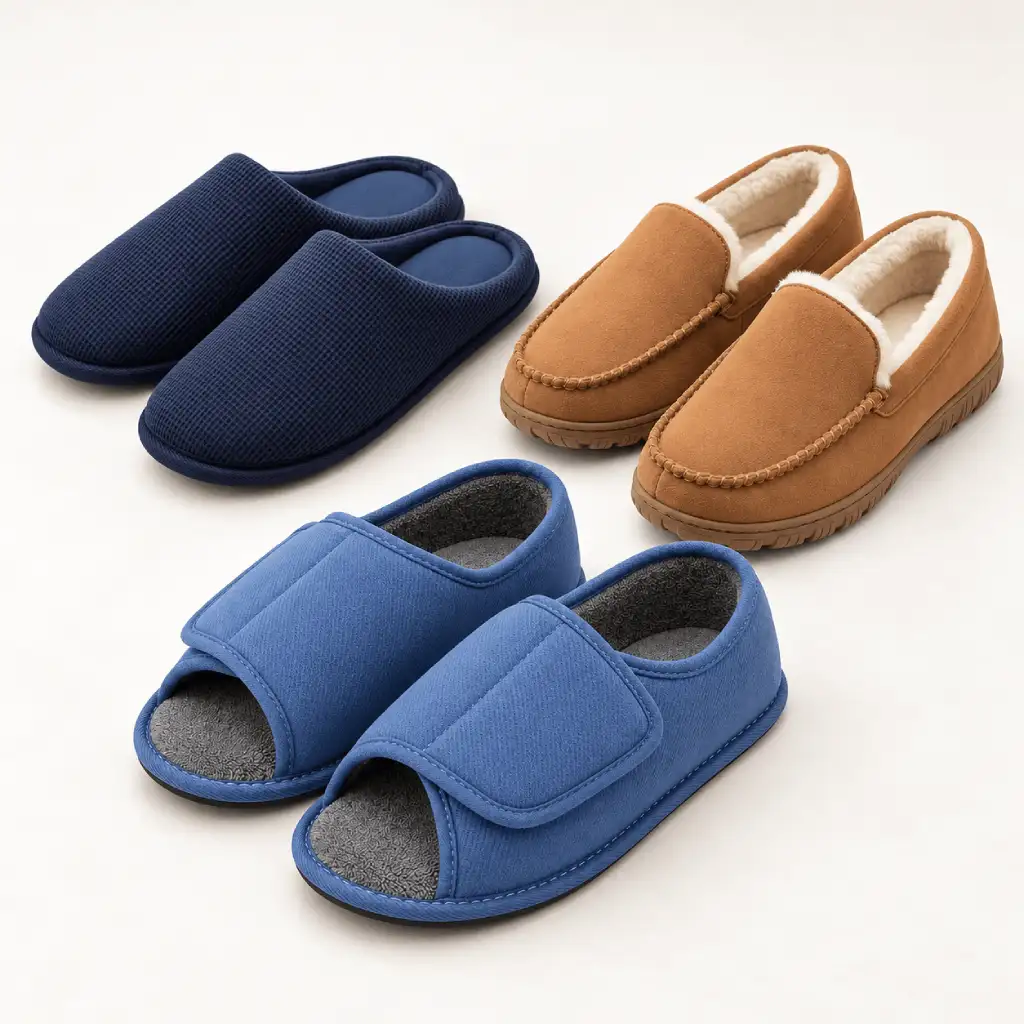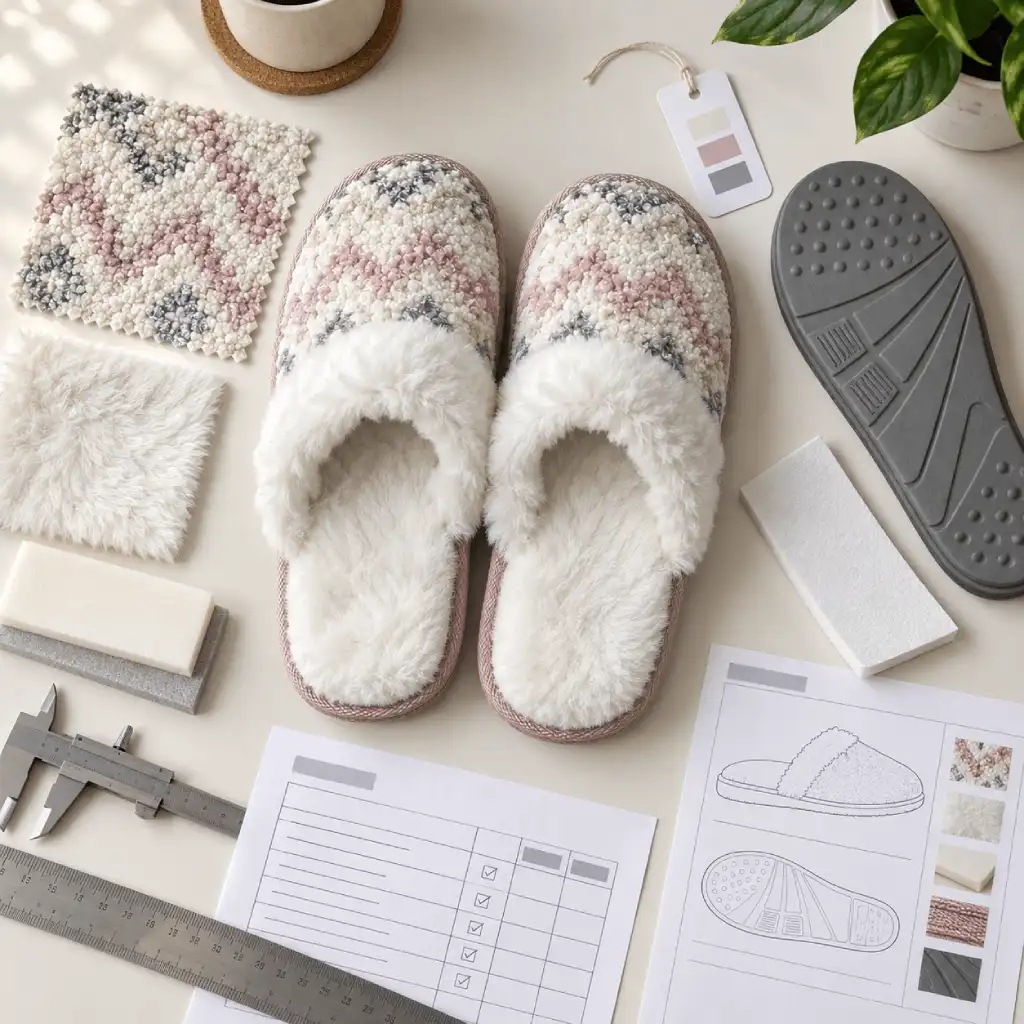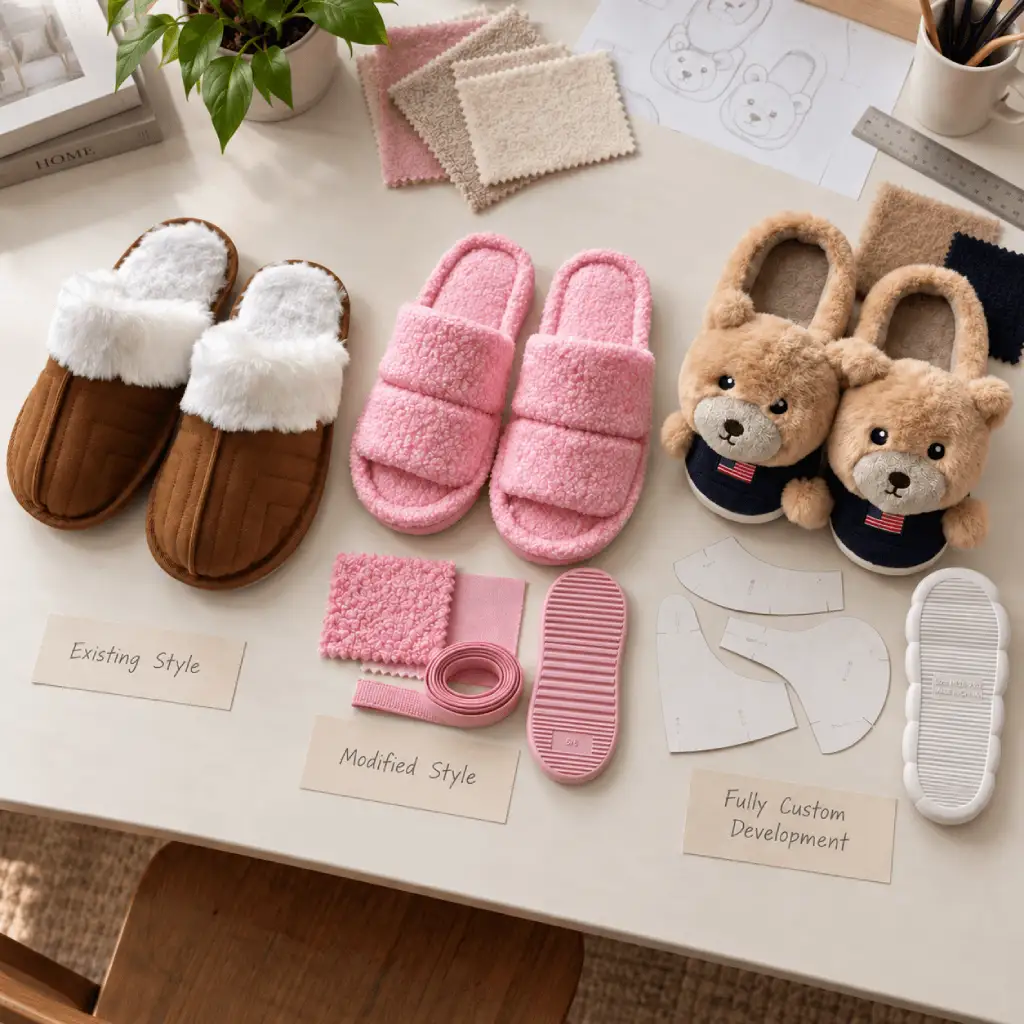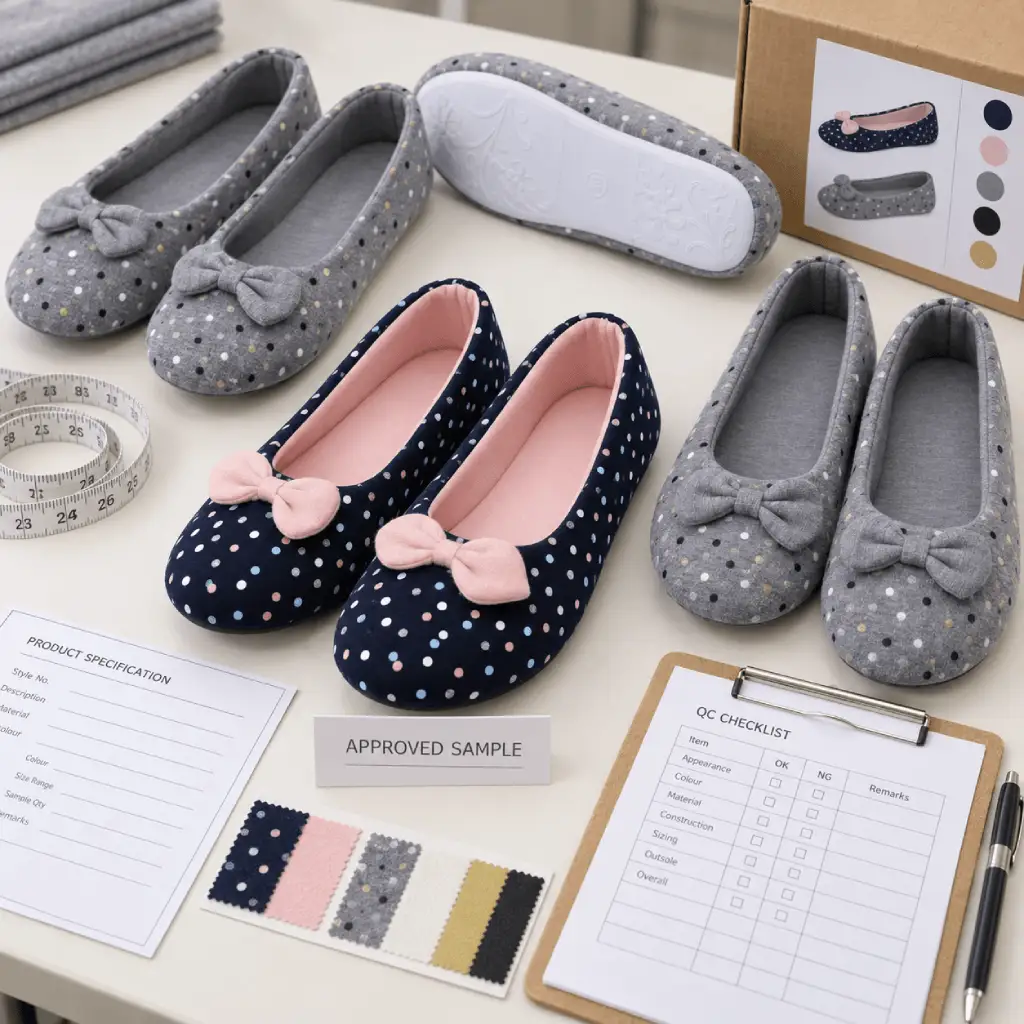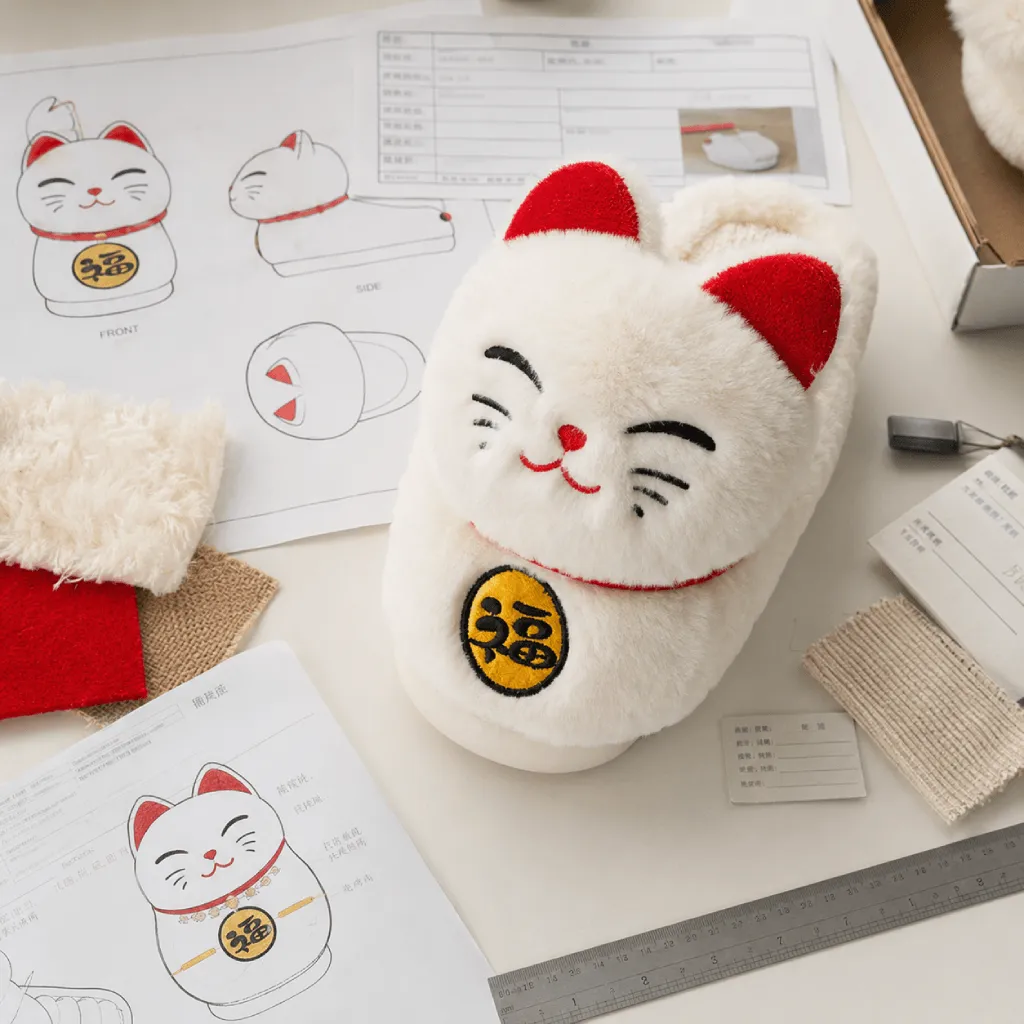
Can you wash slippers? Some pairs can be cleaned safely, but the right method depends on the complete product—not one fabric or sole material. The upper, lining, cushioning, outsole, adhesive, stitching, trims, and care instructions all influence whether slippers should be spot cleaned, hand washed, or placed in a washing machine.
That distinction also matters to brands and wholesale buyers. A product should not be described as machine washable slippers simply because it has a textile upper, TPR outsole, or EVA bottom. A credible care claim needs a defined washing and drying method, a controlled sample, and agreed post-wash acceptance criteria.
This guide explains how to wash slippers with less risk, how common materials respond to water and agitation, and what buyers should validate when developing washable house slippers for retail or private label programs.
Quick answer: Follow the product-specific care label. If machine washing is not clearly permitted, use the least aggressive approved cleaning method and avoid assuming that a similar-looking pair has the same care requirements.
This article is useful for consumers checking how to clean house slippers and for brands, importers, wholesalers, and sourcing teams evaluating washable slipper construction.
Written by the UTOP Slippers Sourcing Team, with material, construction, and quality-control input from our indoor slipper development team.
1. Can You Wash Slippers in a Washing Machine?
You can wash some slippers in a washing machine only when the product-specific care instructions allow it. A machine cycle exposes the complete pair to water, detergent, movement, compression, spinning, and repeated flexing. Drying can add heat or further mechanical action.
The words washable and machine washable are not interchangeable. Washable slippers may tolerate spot cleaning or controlled hand washing while still being unsuitable for a machine cycle. A machine-washable claim should refer to a complete product evaluated under defined conditions.
Machine washing is permitted
Follow the stated machine type, cycle, water temperature, detergent, load protection, and drying method.
Instructions are missing or unclear
Do not guess. Use a lower-moisture cleaning method or ask the brand for product-specific guidance.
Similar-looking house slippers can contain different foams, linings, adhesives, reinforcements, and outsole attachments. Appearance alone is not a reliable care instruction.
2. What Determines Whether Slippers Are Washable?
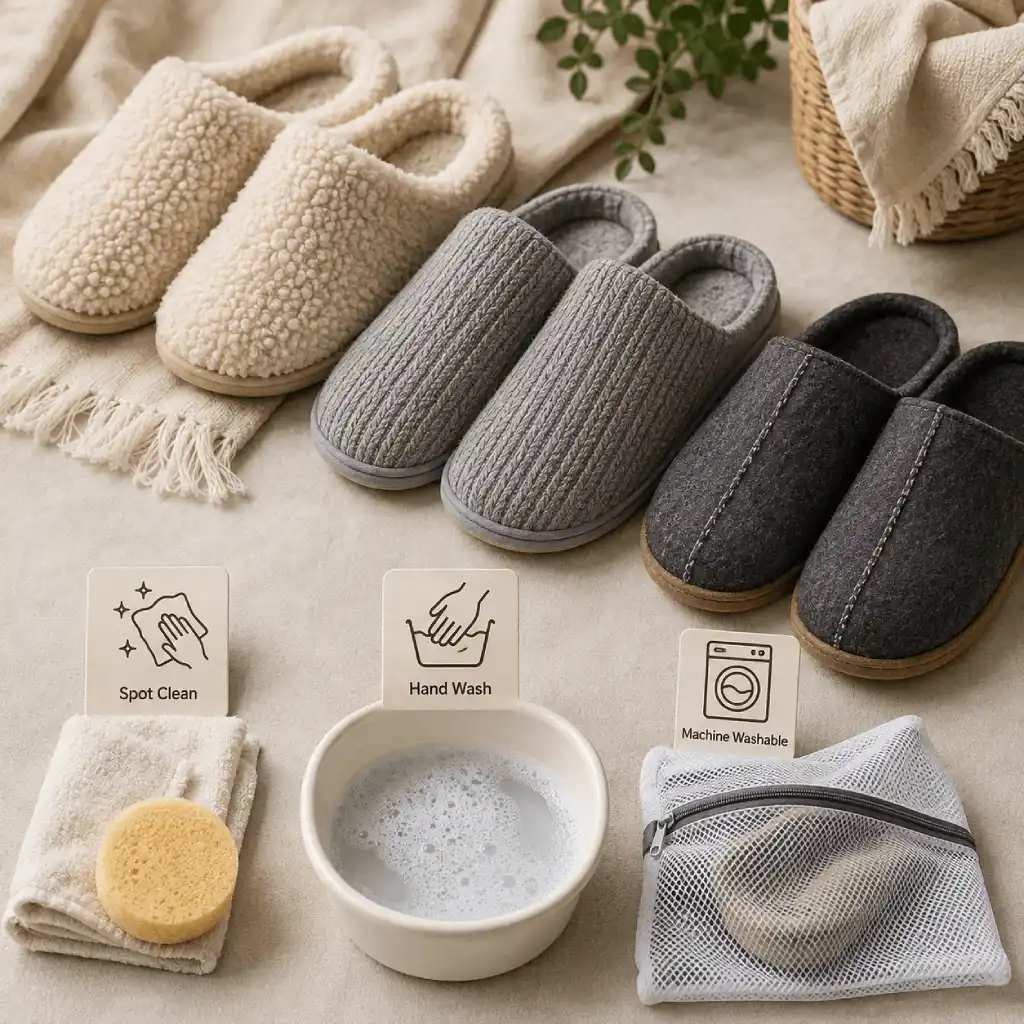
Slipper washability is a system property. Every layer and connection should be reviewed together because water and agitation can affect the interface between components even when the individual materials appear suitable.
| Component | Why it matters | Possible wash-related change |
|---|---|---|
| Upper and lining | Control surface appearance, water absorption, color behavior, and shape | Shrinkage, stretching, matting, color transfer, or slow drying |
| Foam and footbed | Affect cushioning, thickness, recovery, and retained moisture | Compression, distortion, uneven feel, odor, or long drying time |
| TPR or EVA outsole | Adds weight and changes flexing during the wash process | Warping, surface change, or stress at the attachment line |
| Stitching or bonding | Connects components that may move or absorb water differently | Open seams, thread damage, edge lifting, or delamination |
| Labels and trims | May use materials and attachment methods different from the upper | Fraying, lifting, detachment, or unreadable care information |
A TPR sole or EVA sole does not automatically make a pair washable. Both can be used in indoor slippers, but the result depends on the material specification, construction, attachment method, and approved wash-and-dry procedure. Buyers can compare outsole structures in our TPR vs. EVA Sole for Slippers Guide.
Material names are not care claims
Plush, jersey knit, wool felt, memory foam, TPR, and EVA describe materials or material categories. They do not define a safe washing temperature, cycle, detergent, or drying method for the finished slipper.
3. How to Wash Different Types of Slippers
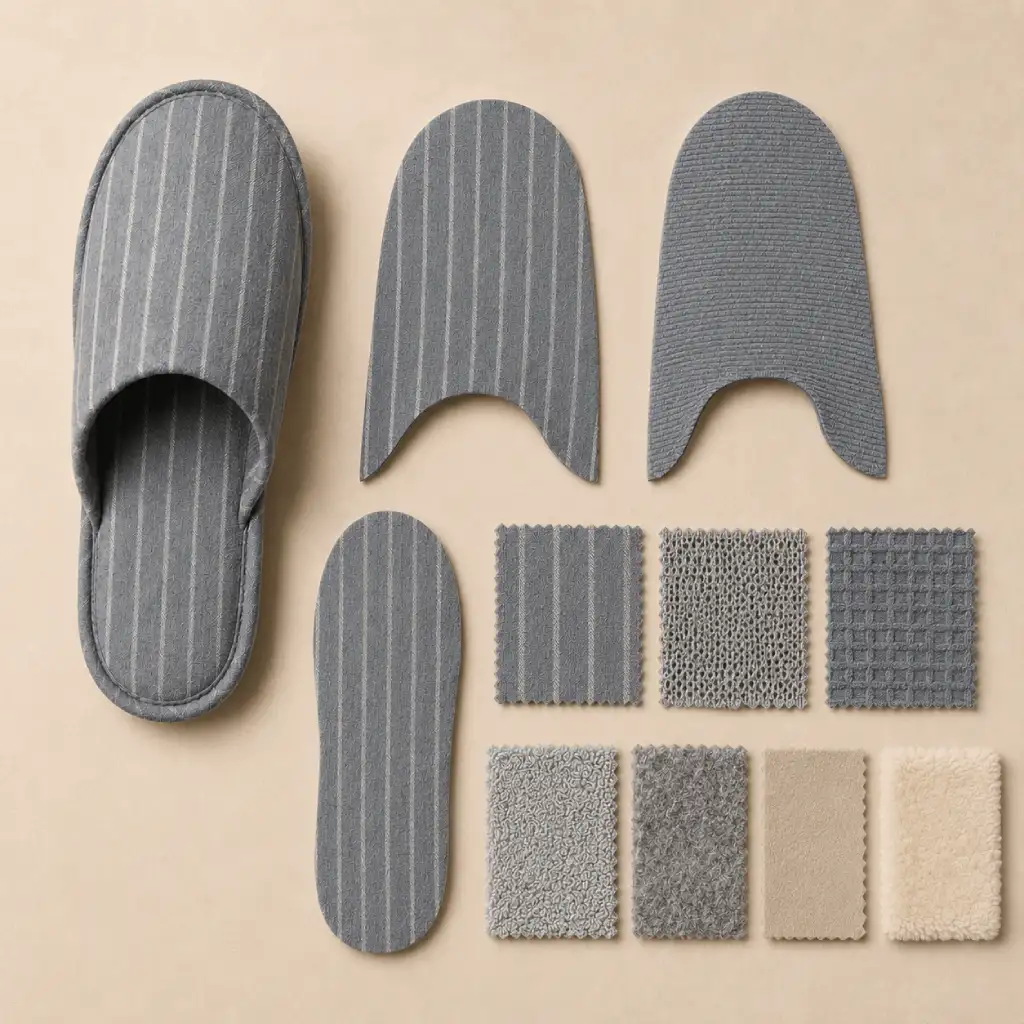
The safest way to wash different types of slippers begins with the care label. The guidance below is a decision framework for common washable house slippers, not a replacement for the method approved for a specific product.
Plush and fleece slippers
Remove loose debris first. Water and agitation may flatten pile, create matting, or change surface direction. Avoid high heat unless the care instructions permit it.
Knit and jersey slippers
Fiber content, knit structure, lining, and binding affect stretching, shrinkage, and twisting. Reshape the opening, toe, and pair alignment during controlled drying.
Felt slippers
Wool felt and synthetic felt should not be treated as identical. Water and movement may change dimensions, thickness, surface appearance, and structure.
Decorated slippers
Embroidery, labels, bows, appliqués, printed areas, and raised trims may react differently from the base fabric. Check attachment and color behavior before full washing.
For every slipper type, use the least aggressive method that can clean the product effectively. Do not upgrade a spot-clean or hand-wash instruction to machine washing for convenience.
4. How to Wash Slippers Without Damaging Them
When the care instructions allow washing, this sequence can reduce unnecessary risk. It should still be adapted to the exact material and approved cleaning method.
- Read the care label. Confirm whether the slippers allow spot cleaning, hand washing, or machine washing.
- Remove dry debris. Use a soft brush, cloth, or low-suction vacuum before adding water.
- Test a hidden area. Check for color transfer, texture change, or an unwanted reaction to the cleaning solution.
- Use only the approved method. Follow the stated detergent, water temperature, cycle, soaking limit, and load instructions.
- Protect the pair. If machine washing is explicitly permitted, reduce uncontrolled movement according to the brand’s directions.
- Reshape after washing. Restore the toe, opening, heel area, and left-right symmetry while the pair dries.
- Avoid unapproved heat. Do not use a tumble dryer, radiator, or direct high heat unless specifically allowed.
- Dry completely. Do not wear, pack, or store slippers while internal layers remain damp.
When in doubt: avoid full immersion. Spot clean the affected area and allow thorough air drying, particularly for thick plush linings, structured felt, memory foam, decorative components, and slippers without clear care instructions.
5. Can You Wash Memory Foam Slippers?
Memory foam is a cushioning material, not a complete care specification. Two pairs may both contain memory foam but respond differently because the foam density, thickness, cover material, lamination, lining, outsole, and construction are different.
As a general precaution, do not machine wash memory foam slippers unless the product-specific instructions permit it. The cushioning can retain water, dry slowly, and change shape or recovery after heavy compression, spinning, twisting, or heat. The upper and outsole may also dry at different rates, leaving internal moisture that is not visible from the surface.
For a washable memory foam slipper project
Validate the complete construction after the selected wash-and-dry process. Review thickness, recovery, shape, comfort, retained moisture, drying time, odor, seams, and outsole attachment—not only whether the pair remains in one piece.
If the care label does not clearly allow washing, controlled surface cleaning and thorough air drying are usually the lower-risk direction.
6. What Makes a Slipper Machine Washable?
A reliable machine-washable slipper is developed around repeatable performance under defined conditions. One sample surviving one informal wash is not enough to support a broad product claim.
| Control area | What should be defined | Why it matters |
|---|---|---|
| Product specification | Upper, lining, foam, outsole, thread, adhesive, trims, and labels | Material changes may alter post-wash behavior |
| Construction | Pattern, seam, binding, stitching, bonding, pressing, and outsole attachment | The interface between components often determines whether edges or seams move |
| Care procedure | Machine type, cycle, temperature, detergent, load, and drying method | A claim cannot be separated from the conditions used |
| Evaluation | Cycle count, pre-wash records, conditioning, measurements, and pass/fail limits | A repeatable result needs documented acceptance criteria |
Stitching provides a mechanical connection, while cold-glued construction depends on suitable surface preparation, adhesive, pressing, and process control. Neither method proves machine washability on its own. Thread, stitch path, seam allowance, material tear resistance, bonding system, and the behavior of the complete product still need validation.
Brands planning a private label washable slipper can use our Private Label Indoor Slippers Manufacturing Guide to coordinate materials, branding, sampling, packaging, and bulk-production requirements.
7. Wash Testing Before Bulk Production
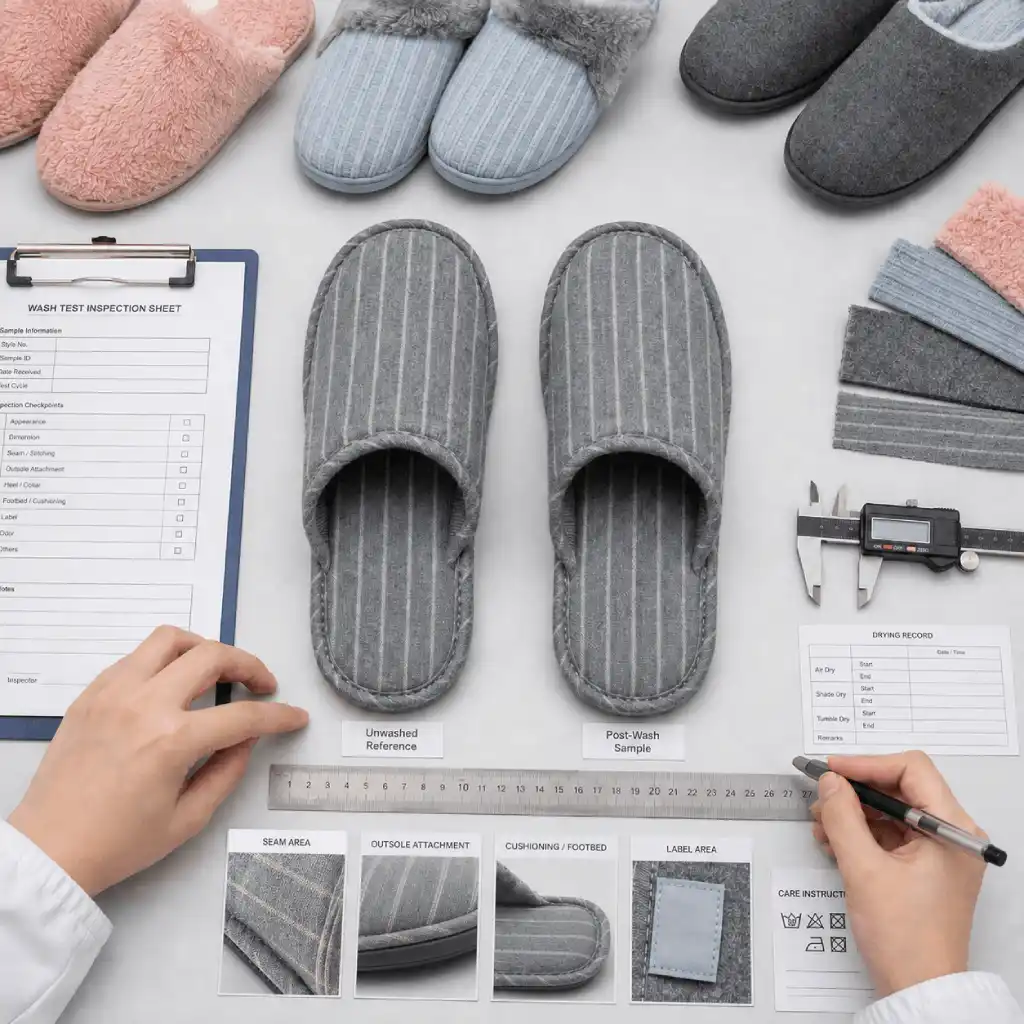
When a brand intends to sell machine-washable slippers, the wash test plan should be agreed before bulk production. The buyer, supplier, and laboratory—when a third party is used—need the same definition of the sample, procedure, cycle count, drying method, conditioning period, and acceptance limits.
- Define the intended claim: spot clean, hand washable, washable, or machine washable.
- Confirm the target market and buyer, retailer, or brand requirements.
- Freeze the tested sample specification, including materials, construction, outsole, cushioning, trims, and care-label wording.
- Record pre-wash dimensions, appearance, weight when relevant, and controlled photographs.
- Run the agreed washing and drying procedure for the required number of cycles.
- Condition and fully dry the sample before assessment.
- Compare the result with the approved reference and document any material or process change before bulk production.
| Post-wash checkpoint | What to review | Why buyers need a limit |
|---|---|---|
| Dimensions and fit | Length, width, opening, critical dimensions, and pair consistency | Small changes can affect fit and size consistency |
| Shape and construction | Toe shape, symmetry, seams, binding, bonding, outsole alignment, and edge condition | A pair can remain intact yet fall below the approved appearance or structural standard |
| Surface and color | Fading, color transfer, pilling, matting, texture, print, embroidery, and labels | Retail presentation and care information must remain acceptable |
| Cushioning and drying | Compression, recovery, retained moisture, drying time, and odor | Internal change may not be obvious from the exterior |
For textile-related evaluation, buyers and laboratories may refer to ISO 6330:2021, which specifies domestic washing and drying procedures for textile testing, or review relevant AATCC test methods. A slipper contains footwear components beyond fabric, so the selected procedure and acceptance criteria must still match the complete product and intended care claim.
8. What Buyers Should Specify for Washable Slippers
A request such as “make this slipper washable” is not enough for accurate product development or quotation. For a private label or washable slippers wholesale project, the inquiry should define the care process and the performance that must remain after cleaning.
| Buyer input | Questions to confirm before sampling |
|---|---|
| Intended claim | Spot clean, hand wash, washable, or machine washable? |
| Target market | Which country, retailer manual, brand standard, and labeling rules apply? |
| Product specification | What upper, lining, foam, insole, outsole, construction, branding, and trims are required? |
| Wash and dry method | What machine, cycle, temperature, detergent, load, drying method, and cycle count apply? |
| Acceptance criteria | What dimensional, visual, structural, color, comfort, and drying changes are acceptable? |
| Responsibility and records | Who approves the care label, selects the laboratory, owns the test result, and controls later changes? |
Any change to the upper, lining, foam, outsole, adhesive, thread, trim, or construction after testing should be reviewed before the same washable claim is applied to production. Our Bulk House Slippers Wholesale Checklist covers the wider product, branding, packaging, sampling, and bulk-control information buyers should confirm.
9. How UTOP Approaches Washable Slipper Requests
UTOP does not apply a universal machine-washable statement across its indoor slipper range. The company has not yet completed an order built around a formal machine-washable requirement, and it does not use one fixed washing temperature, machine program, detergent, cycle count, or post-wash limit for every style.
Current validation boundary
TPR and EVA are common outsole directions in UTOP slipper development, but neither proves that the finished product is washable. Care-label wording is normally supplied or approved by the customer, and any machine-washable claim requires project-specific validation.
For a future custom washable slipper project, the buyer should provide the intended claim, target market, product specification, washing and drying procedure, test responsibility, and acceptance criteria before sampling. UTOP can then review suitable material and construction directions for development without presenting an untested performance claim as confirmed.
Buyers can review UTOP’s custom indoor slipper range for an initial product direction. To discuss a project, send the product brief and validation requirements to the UTOP team.
10. Frequently Asked Questions and Conclusion
Can all slippers be washed?
No. Washability depends on the complete construction and product-specific care instructions. Similar-looking slippers may use different linings, foams, adhesives, trims, and outsole attachments.
Can you put slippers in the washing machine?
Only when the care label or manufacturer’s instructions explicitly permit machine washing. Otherwise, use the approved spot-cleaning or hand-cleaning method.
Can you wash house slippers with TPR or EVA soles?
Possibly, but not because of the sole material alone. The upper, lining, foam, construction, attachment method, and approved wash procedure all affect the answer.
Can memory foam slippers be machine washed?
Do not machine wash them unless product-specific instructions allow it. Water retention, foam distortion, slow drying, and internal moisture are important concerns.
Can slippers go in a tumble dryer?
Not unless the care instructions specifically permit it. Heat and mechanical action may affect foam, bonding, outsole shape, surface texture, and fit.
Does stitching make slippers machine washable?
No. Stitching adds a mechanical connection, but it does not validate the upper, lining, foam, outsole, thread, seam design, or care procedure. The complete pair still needs product-specific testing.
Conclusion
So, can you wash slippers? The answer is product specific. Follow the care label, use the least aggressive approved method, reshape the pair after cleaning, and allow every internal layer to dry completely.
For brands and wholesale buyers, washable performance should be designed into the specification rather than added as a marketing phrase after sampling. Define the product, wash-and-dry procedure, cycle count, acceptance criteria, and test responsibility before bulk production. This creates clearer care instructions, a more controlled sample process, and a stronger reference for quality control.
Planning a washable slipper project?
Share the target market, product reference, materials, size range, branding, intended care claim, wash procedure, acceptance criteria, estimated quantity, and packaging requirements.