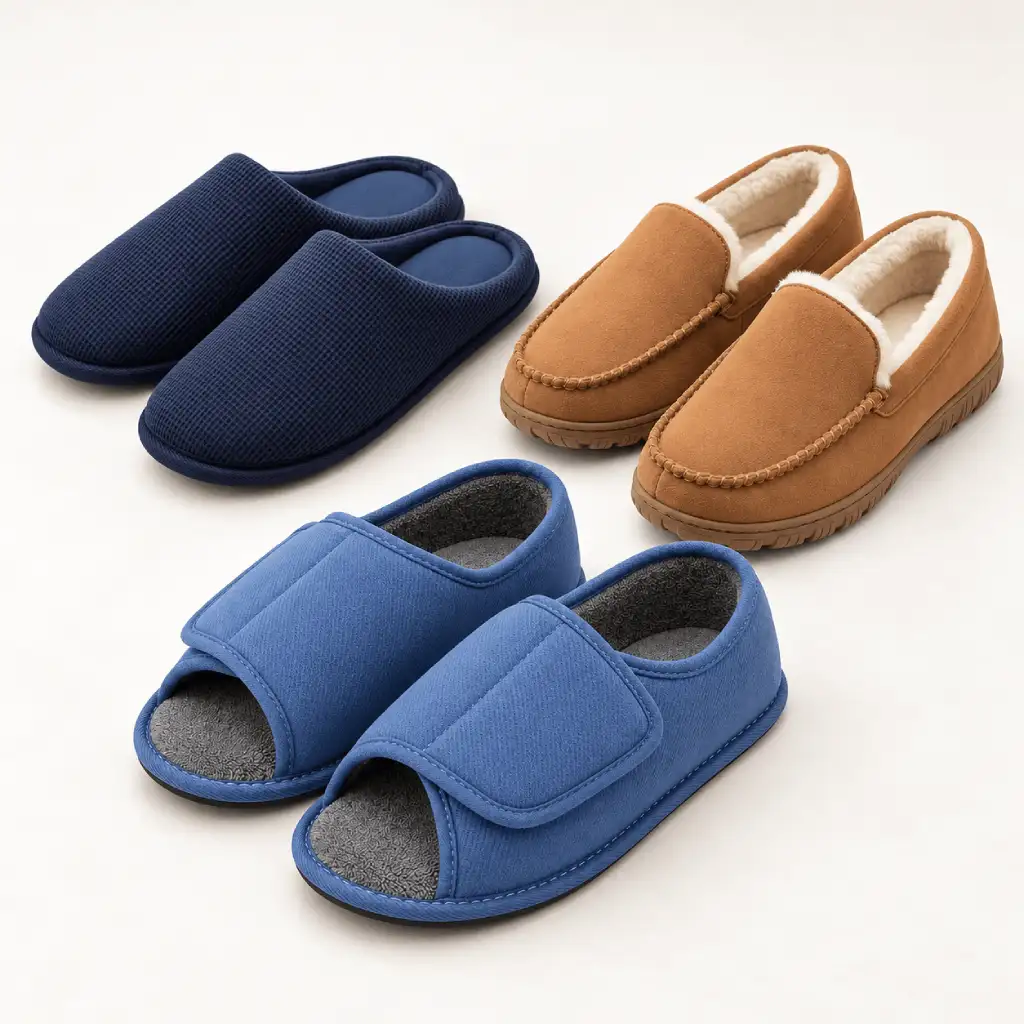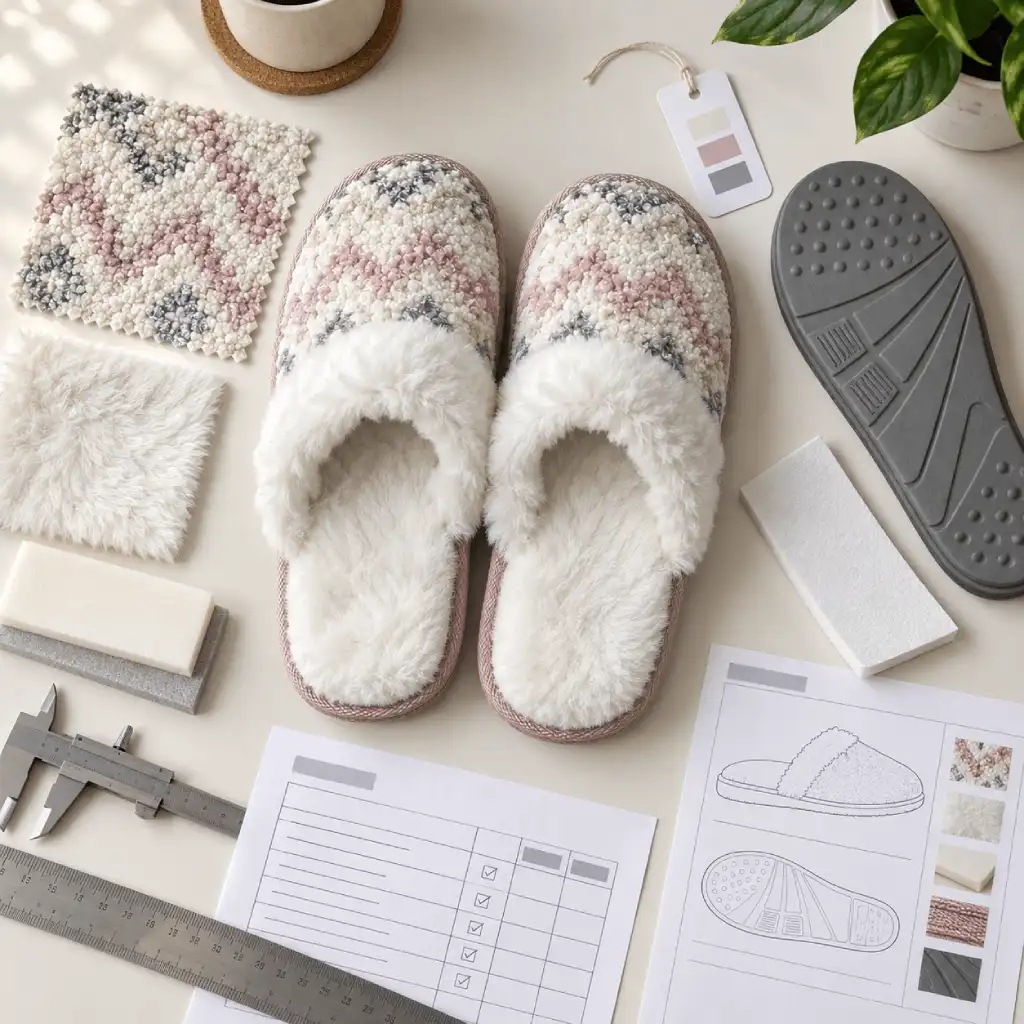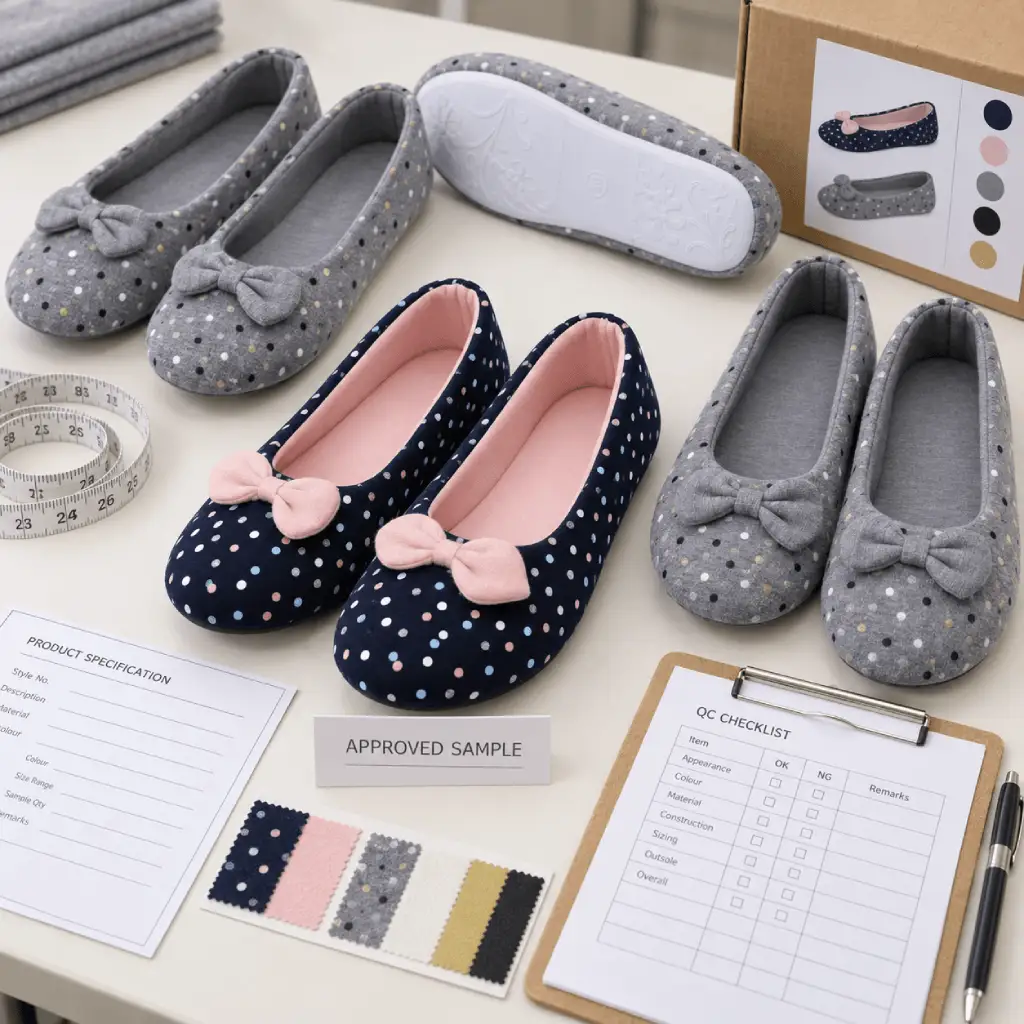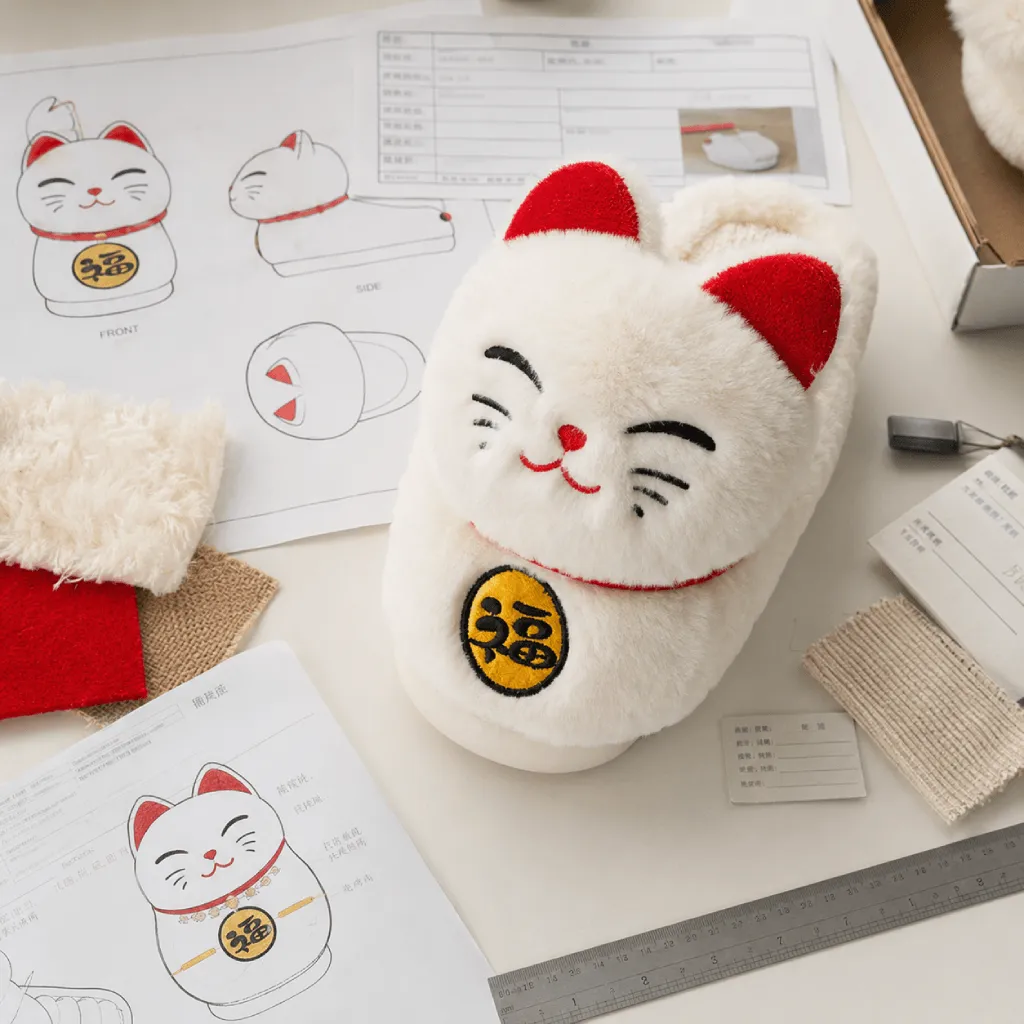
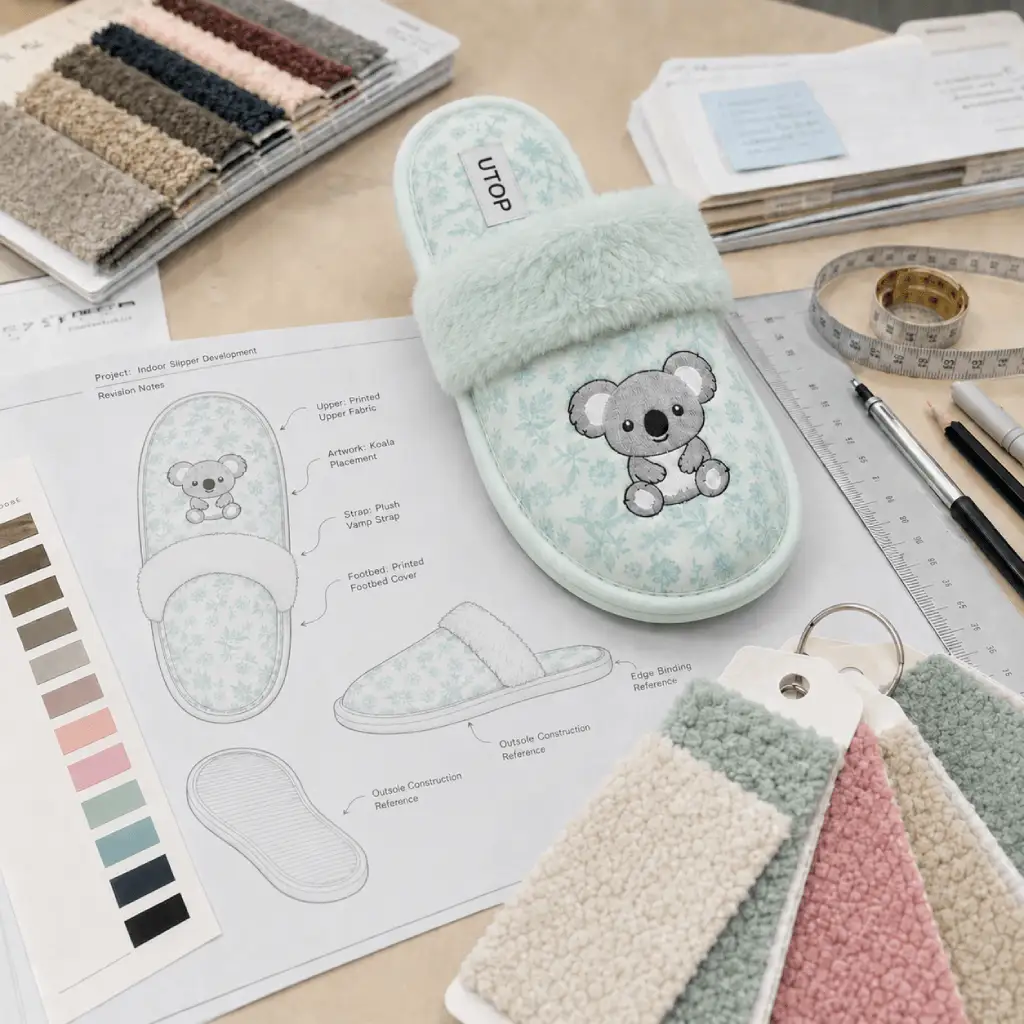
A shoe tech pack turns a footwear concept into organized instructions that designers, sourcing teams, sample rooms, material suppliers, manufacturers, and quality inspectors can review against the same product requirements.
For indoor slippers, the file may need to define the upper and lining, cushioning layers, outsole, construction, measurements, size range, colors, logo application, labels, packaging, sample comments, and approval status. A drawing without these details may communicate the appearance but still leave important manufacturing decisions unresolved.
This guide explains what a practical footwear tech pack should contain, how buyers can prepare each section, and how to control revisions from initial sampling through bulk-production approval.
Buyer takeaway: a useful tech pack does not need to be visually complicated. It needs to identify the product clearly, separate confirmed requirements from open questions, and remain controlled as the sample changes.
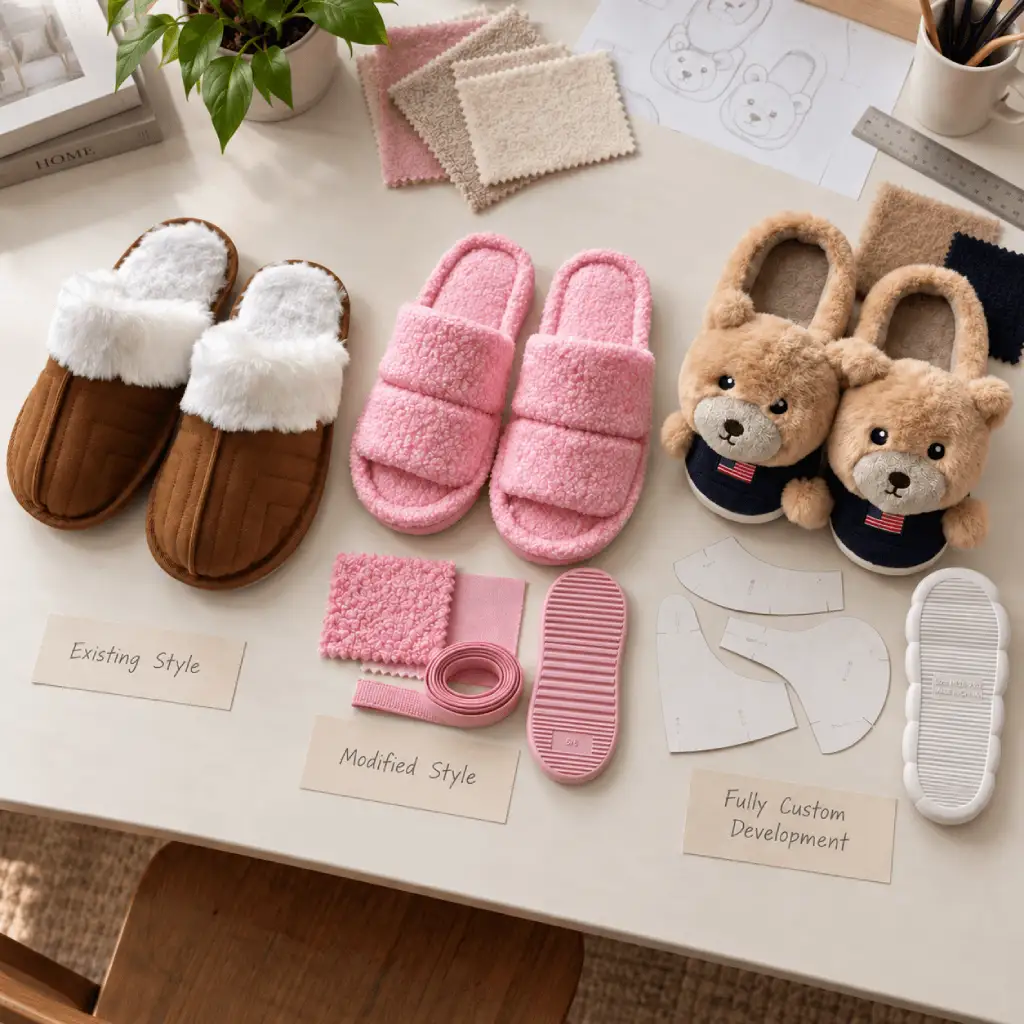
Important: buyers do not always need a complete tech pack before contacting a manufacturer. UTOP can begin a project review from an existing slipper, reference sample, product image, sketch, design file, or partial specification. The missing decisions should then be confirmed before final sample approval and bulk production.
Buyers can review UTOP’s custom slipper development services to compare development from an existing style, reference sample, image, or complete tech pack. For the wider sourcing process, see the Private Label Indoor Slippers Manufacturing Guide.
Written by the UTOP Slippers Sourcing Team, with product-development, sampling, and manufacturing input from our indoor slipper team.
1. What Is a Shoe Tech Pack?
A shoe tech pack is a controlled collection of drawings, specifications, tables, artwork references, and approval records used to communicate how a footwear product should be developed and manufactured.
It is sometimes called a technical package, footwear specification sheet, or product specification file. The exact format varies by company, but its purpose is consistent: it connects the design concept with measurable product requirements and identifiable manufacturing references.
Communication document
The file helps designers, buyers, developers, suppliers, sample makers, and production teams understand the same materials, dimensions, construction, branding, and packaging direction.
Control reference
Once approved, the current specification works together with the approved sample, purchase order, artwork, and quality requirements as a reference for bulk production and inspection.
A tech pack should not be treated as a one-time presentation. Sample development may reveal that a material, pattern, dimension, logo position, outsole, or packaging detail needs adjustment. Those decisions must be added to the current version so that the file reflects the approved product rather than the original concept alone.
The tech pack and sample work together
The specification records objective requirements. The approved physical sample confirms appearance, hand feel, shape, fit direction, and other characteristics that are difficult to communicate with numbers alone. Neither reference should silently replace the other.
During production, these references also support material, measurement, construction, branding, and packaging checks. UTOP’s Footwear Quality Control Guide explains how approved specifications and samples are used during inspection.
2. When Do You Need a Full Footwear Tech Pack?
A complete footwear tech pack is especially useful when a brand has an original design, multiple colorways, a controlled size range, custom components, detailed artwork, retailer-specific packaging, or a product that must be reproduced across different orders or suppliers.
However, a complete file is not the only practical starting point. The information required at the beginning depends on how much of the product has already been defined.
| Starting information | Suitable situation | What still needs confirmation |
|---|---|---|
| Complete tech pack | Original designs with established product, size, branding, and packaging requirements | Manufacturing feasibility, available materials, tooling, sample result, tolerances, and final approvals |
| Partial specification | The buyer has drawings, a material direction, or measurement table but not every component | Missing construction, size, component, packaging, and approval details |
| Reference sample | The buyer wants to retain selected features of an existing product | Which details must match, which may change, and how materials and measurements will be recorded |
| Image or concept brief | Early development where the visual direction is clearer than the manufacturing specification | Materials, construction, outsole, sizing, branding, quantity, price positioning, and packaging |
| Existing supplier style | A private label program based on an available slipper direction | Requested changes, logo, colors, labels, size assortment, packing, and order requirements |
A downloadable shoe tech pack template can provide useful headings, but it cannot decide the correct measurements, construction, materials, tolerances, or tests for a specific slipper. Buyers should adapt the structure to the product rather than filling every template field mechanically.
Starting rule: send the information you already have and identify which details are fixed. Open decisions can then be reviewed during development, but they should not remain ambiguous when the final sample is approved.
UTOP’s development pathways show how a project can begin from an existing product, reference image, physical sample, or private label footwear tech pack.
3. The 12 Core Sections of a Footwear Tech Pack
The following footwear tech pack checklist provides a practical structure for brands and sourcing teams preparing a tech pack for shoes or slippers. Not every project needs the same number of pages, but every applicable decision should have a clear location and current approval status.
| Section | Information to include | Main purpose |
|---|---|---|
| 1. Product identity | Brand, style name, style number, season, owner, date, and revision | Identifies the product and file version |
| 2. Design views | Top, side, bottom, rear, inside, and relevant detail views | Communicates shape and visible construction |
| 3. Construction | Seams, binding, assembly, outsole attachment, and component relationships | Defines how the product is assembled |
| 4. Bill of materials | Upper, lining, foam, insole, outsole, thread, labels, trims, and packaging | Identifies required components |
| 5. Colorways | Color name, code, reference, component mapping, and approval method | Controls color across materials and variants |
| 6. Measurements | Dimensions, measurement points, methods, units, sample size, and tolerances | Creates measurable product references |
| 7. Sizing and grading | Size system, range, mapping, fit direction, grade, and outsole groups | Carries the approved design through the size range |
| 8. Branding artwork | Logo files, method, size, colors, placement, and appearance reference | Controls product and package branding |
| 9. Labels and packaging | Care and size labels, barcodes, individual packing, ratios, and carton marks | Connects the product with SKU and distribution data |
| 10. Testing requirements | Target market, applicable method, test item, acceptance criteria, and responsibility | Defines project-specific verification |
| 11. Sample comments | Sample identity, issue, requested change, owner, status, and evidence | Controls development revisions |
| 12. Approval record | Approved version, sample, color, artwork, packaging, date, and approver | Establishes the production reference |
This structure can be held in one PDF, a workbook with linked files, or a controlled product-management system. The format matters less than whether every team can identify the current information and distinguish it from superseded versions.
Checklist rule: do not add fields simply to make the document look complete. Include the information needed to quote, develop, approve, manufacture, inspect, pack, and identify the actual product.
4. Product Identity, Design Views, and Technical Callouts
Every shoe tech pack should begin with a product identity block. This prevents drawings, measurement tables, colorways, and sample comments from being separated from the style they describe.
Identify the product and document
- Brand or buyer name
- Product name and unique style or SKU number
- Season, collection, or sales program where applicable
- Target market and intended user
- Document owner, creation date, current revision, and revision date
- Sample stage, such as initial prototype, revised sample, size set, or pre-production sample
Show enough views to explain the product
A slipper drawing may require top, medial side, lateral side, rear, bottom, and inside views. Detail enlargements can show binding, seams, embroidery, labels, decorations, outsole tread, or other areas that are too small to read in the main drawing.
| Drawing element | Useful information | Common risk |
|---|---|---|
| Product outline | Opening, toe shape, heel coverage, outsole profile, and visible proportions | Stylized artwork is mistaken for an exact pattern |
| Panel boundaries | Seam lines, binding, overlays, lining edges, and component relationships | A visual line is interpreted as either print or construction |
| Technical callouts | Material code, component name, operation, placement, and linked detail | Arrows identify an area without stating the required action |
| Detail views | Logo edge, stitch direction, label attachment, trim, or outsole detail | Small details cannot be read at normal document scale |
Dimensions should not be estimated from the drawing unless it is explicitly identified as a scaled technical drawing. Put controlled measurements in the measurement table and use drawing callouts to show where those measurements apply.
Buyers who have not finalized a silhouette can review UTOP’s custom slipper product directions as starting references for a new footwear specification.
5. Materials, Footwear Bill of Materials, and Color Standards
The footwear bill of materials, or BOM, identifies the components needed to make and pack the product. Each material should have its own row and a code that connects it with the drawings, colorway table, sample, and supplier reference.
Descriptions such as “soft fleece,” “memory foam,” or “rubber sole” may communicate a general direction, but they do not create a complete manufacturing specification. The selected material may also need composition, structure, thickness, weight, density, hardness, surface, backing, color, supplier reference, or approval method.
| BOM field | What to record | Example of a clearer instruction |
|---|---|---|
| Component code | Unique identifier linked to the drawing | UP-01 for the main vamp material |
| Location | Where the component is used | Vamp outer surface, both left and right feet |
| Material description | Material family and required structure | Jersey knit with approved composition, weight, stretch, backing, and hand feel |
| Technical details | Thickness, density, hardness, pile, finish, or other applicable characteristics | Values and methods confirmed for the selected component |
| Color reference | Color code, physical swatch, lab dip, or approved sample | Named reference plus the required approval method |
| Supplier reference | Supplier, article number, swatch number, or approved alternative | Identifiable swatch attached to the sample record |
| Approval status | Pending, approved, approved with comment, or replaced | Approved against swatch reference and dated sample |
Separate similar-sounding materials
Jersey knit and wool felt are different material structures and should not be treated as interchangeable descriptions. TPR and EVA are material categories rather than complete outsole specifications. Plush, fleece, faux fur, foam, binding, thread, labels, and packaging also require project-specific identification.
Connect colors with physical approval
A digital color code provides a useful communication target, but screen appearance should not be used as the only bulk approval. The final result can change with fiber, pile, surface texture, dyeing, printing, thread, plastic compound, and viewing conditions.
Buyers can use the official Pantone color systems to identify the appropriate reference family, then record whether approval will be based on a physical standard, material swatch, lab dip, printed strike-off, or finished sample.
BOM rule: every visible or functional component should be identifiable. “Same as sample” is useful only when the sample is clearly coded, available, and supported by the current shoe specification sheet.
6. Construction and Outsole Specifications
A footwear tech pack for manufacturing should explain how the materials and components become one finished product. A drawing may show where a seam is located, but the construction section should identify what is joined, how it is joined, and which result needs approval.
| Construction area | Information to specify | Approval points |
|---|---|---|
| Upper assembly | Panel relationships, seams, allowances, binding, thread, reinforcement, and decoration sequence | Shape, seam position, symmetry, puckering, and edge finish |
| Lining and padding | Lining coverage, foam layers, thickness direction, attachment, and opening finish | Internal space, comfort direction, bunching, and layer alignment |
| Footbed | Cover material, cushioning layers, board or supporting components, and edge treatment | Surface appearance, position, compression feel, and consistency |
| Outsole | Material type, manufacturing method, thickness, hardness or density, weight, tread, color, and tooling | Shape, bend point, flatness, tread, edge, and attachment |
| Upper-to-bottom connection | Welt stitching, side stitching, cold cementing, or another agreed construction | Alignment, stitch appearance, bonding edge, separation, and finished profile |
Welt-stitched, side-stitched, and cold-glued slipper constructions should be described separately. Injection molding describes how certain outsole components are formed; it does not by itself explain how the finished outsole is connected to the upper.
Likewise, “TPR outsole” or “EVA outsole” is only a starting description. The tech pack should identify the relevant material form, outsole profile, thickness, hardness or density direction, tread, weight, color, size grouping, tooling requirement, and attachment method.
UTOP’s TPR vs EVA Sole for Slippers Guide explains why these outsole materials should be compared by complete specification rather than material name alone.
Performance boundary: descriptions such as slip-resistant, abrasion-resistant, washable, or durable require an applicable test method, product condition, target market, and acceptance requirement when measurable performance is expected.
7. Measurements, Sizing, Fit, and Grading
A measurement table becomes useful only when the factory knows what each number describes and how it should be reproduced. Every controlled dimension in a shoe specification sheet should identify the measurement point, method, unit, product condition, sample size, and buyer-approved tolerance.
| Measurement field | Required information | Why it matters |
|---|---|---|
| Dimension name | Inside length, outsole length, opening width, vamp height, or another named dimension | Prevents different teams from measuring different features |
| Endpoints | Marked start and end points on a diagram | Makes the method repeatable |
| Tool and condition | Tape, ruler, caliper, relaxed product, compressed or uncompressed lining, and other conditions | Controls differences created by the method |
| Base value | Approved value for the stated sample size | Creates a central development reference |
| Grade | Approved change through the complete size range | Keeps patterns, outsoles, openings, and components aligned |
| Tolerance | Project-specific permitted variation and decision rule | Supports sample and production evaluation |
Do not confuse different kinds of length
Foot length, inside length, outsole length, pattern length, and last length are not interchangeable. A column labeled only “length” can produce a precise-looking table that two teams interpret differently.
Control fit separately from the size label
EU, US, UK, S/M/L, and brand-specific labels identify how the product is sold. They do not prove the internal fit. Lining thickness, toe shape, opening, upper volume, cushioning, outsole, and construction can all change how a slipper fits.
For a new size range, the footwear tech pack should record the intended wearer, size mapping, fit direction, measurement table, grading logic, size-set or fitting-sample coverage, and approved comments for relevant sizes.
Sizing rule: approve the label, measurements, fit, and grade as connected but separate decisions. A correct size label does not correct an unsuitable fit.
See UTOP’s Slipper Size Chart and Bulk Sizing Guide for measurement terminology, size mapping, fitting, grading, and bulk size-ratio planning.
8. Branding, Labels, Packaging, and Market Requirements
A private label footwear tech pack should connect the slipper with every branded, printed, labeled, and packed component used to identify or present it. Product artwork and packaging data should not be managed as unrelated projects.
Branding specifications
- Editable artwork file and a reference PDF or image
- Application method, such as embroidery, printing, heat transfer, label, patch, or insole branding
- Finished artwork dimensions and orientation
- Placement measured from agreed product or pattern reference points
- Thread, ink, material, or approved color reference
- Expected appearance and any project-specific verification requirement
Labels, SKU data, and barcodes
The buyer or brand should supply approved product names, style codes, sizes, colors, SKUs, barcode data, label copy, language, and market-specific instructions. The supplier can prepare and apply these items according to the confirmed artwork and placement, but should not create or change customer product identifiers without authorization.
For programs using GS1 identification, buyers can review the official GS1 barcode standards. Barcode type, dimensions, quiet zones, contrast, placement, scanning environment, and verification requirements should be confirmed for the buyer’s channel.
Packaging specifications
| Packaging level | Information to specify | Approval reference |
|---|---|---|
| Individual pair | Bag, band, hanger, insert, pouch, box, tissue, orientation, and visible labels | Approved physical packed sample |
| SKU identification | Size, color, style number, barcode, label dimensions, and placement | Approved artwork and buyer data |
| Carton assortment | Pairs per carton, solid or mixed sizes, color ratio, and inner packs | Purchase order and packing instruction |
| Master carton | Carton specification, marks, carton number, SKU, quantity, weight fields, and routing labels | Approved carton layout and physical pack result |
The target market, retailer manual, testing plan, documentation requirements, warning text, care information, material statements, and other compliance instructions should be identified early. Requirements differ by product and destination, so they should not be copied automatically from another slipper specification sheet.
UTOP’s Footwear Packaging Guide explains individual packing, labels, barcodes, pack ratios, carton marks, and packed-sample approval in more detail.
9. Sample Comments, Version Control, and Approval
A tech pack for shoes becomes unreliable when comments are scattered across email, messaging apps, annotated photographs, meetings, and separate spreadsheets without being consolidated into one current record.
Every reviewed sample should have an identifiable style, size, colorway, sample stage, date, and version. Each comment should explain the observed issue, required change, affected location, reference, owner, and status.
| Comment field | Weak instruction | More usable instruction |
|---|---|---|
| Sample identity | “Latest sample” | Style, sample stage, size, colorway, date, and revision |
| Issue | “Shape is wrong” | Identify the affected area and compare it with the marked reference |
| Requested change | “Make it better” | State the required dimension, material, position, appearance, or approved direction |
| Evidence | Unmarked photograph | Marked photograph, measurement, swatch, artwork, or approved sample reference |
| Status | No recorded decision | Open, under review, revised, approved, rejected, or superseded |
Maintain one revision history
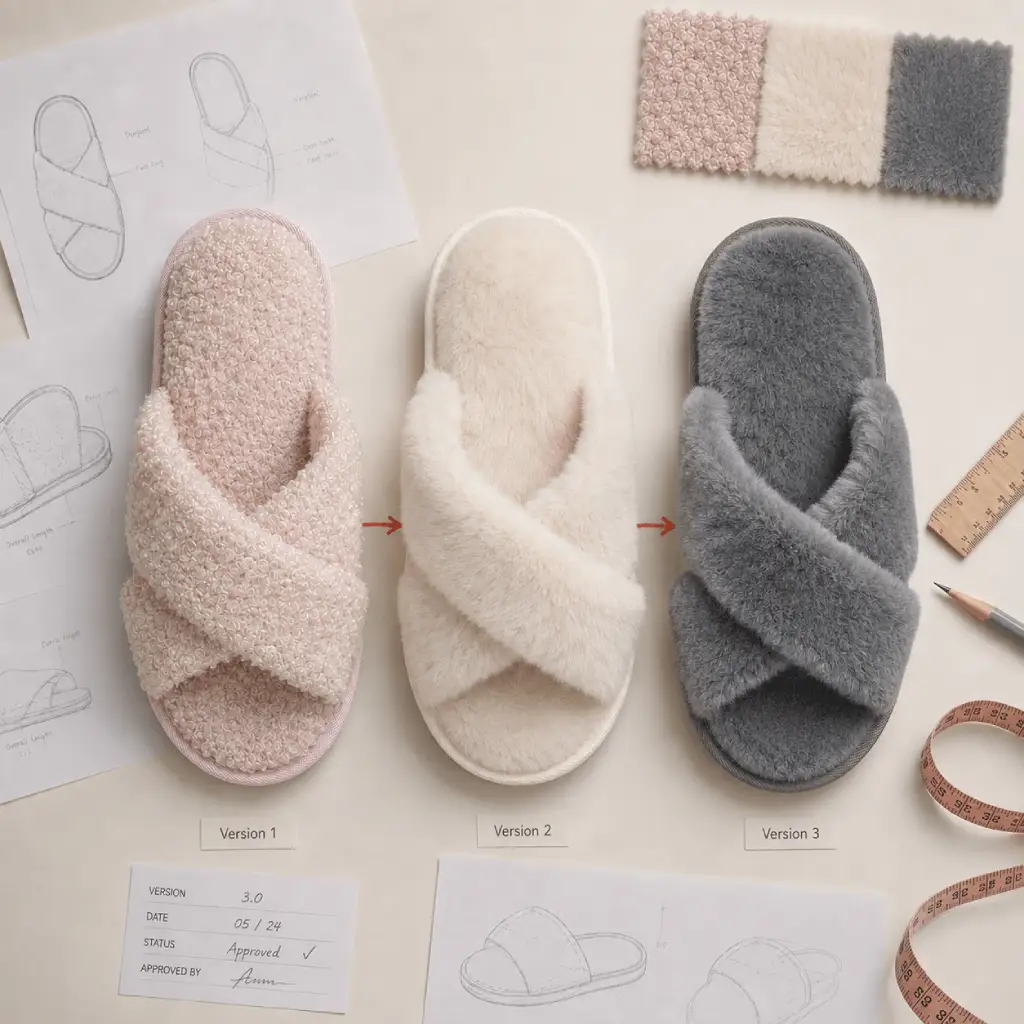
Each issue of the shoe tech pack should show a revision number or date and summarize what changed. When a new version is approved, clearly identify which earlier file it replaces. File names such as “final,” “final-new,” and “final-latest” do not provide reliable version control.
Close the approval loop
Final approval should identify the approved sample, current specification, material and color references, artwork version, size information, packaging, and any accepted deviations. If one of these elements changes later, the buyer and supplier should determine whether revised approval is required.
For UTOP’s usual custom slipper projects, sample development typically takes 7–14 days. Actual timing depends on materials, outsole tooling, artwork, revisions, testing, branding, packaging, and the amount of information that must be confirmed.
Revision rule: a change is not controlled until it appears in the current specification or is formally connected to an identifiable approval record.
10. Slipper Tech Pack Checklist Before Manufacturing
A slipper tech pack should be reviewed as one connected product specification before final quotation, sample approval, and bulk manufacturing. The following checklist helps expose missing decisions that are common in indoor footwear projects.
Product and construction
- The style number, product name, target market, intended user, and current revision are clear.
- Top, side, bottom, rear, inside, and required detail views are included.
- Upper panels, lining, padding, footbed, binding, trims, seams, and outsole connection are identified.
- Welt-stitched, side-stitched, cold-glued, molded, or combined construction details are described accurately.
- Outsole material, structure, thickness, hardness or density direction, tread, color, tooling, and attachment are confirmed where applicable.
Materials, colors, and sizing
- Every material and component has an identifiable BOM row and drawing reference.
- Material descriptions include the applicable structure, composition, thickness, weight, density, hardness, pile, backing, or finish.
- Color references are connected to a physical swatch, lab dip, strike-off, component, or finished sample approval.
- The size system, intended foot-length range, measurement points, methods, tolerances, and grading are defined.
- Required fitting samples, size-set samples, and edge-size checks are identified.
Branding, packaging, and approval
- Logo artwork, application method, dimensions, placement, colors, and appearance reference are approved.
- Product labels, size labels, care information, SKUs, and barcode data match the buyer’s current records.
- Individual packaging, artwork, pair orientation, pack ratio, carton quantity, and carton marks are defined.
- Applicable market, testing, documentation, inspection, and acceptance requirements are recorded.
- Sample comments have been closed or clearly accepted as outstanding decisions.
- The approved slipper specification sheet, sample, artwork, packaging, and approval date are identifiable.
Final review: read one SKU across the drawing, BOM, colorway, measurement table, label artwork, barcode data, purchase order, individual packaging, and carton mark. Every record should describe the same product version.
11. How UTOP Reviews a Tech Pack for Shoes
When buyers ask how to create a footwear tech pack or how to make a shoe tech pack production-ready, the practical answer is to treat the document as part of the development process rather than a file that must be perfect before the first factory conversation.
1. Project review
Review the design, intended user, target market, quantity, price positioning, delivery expectations, and available reference files.
2. Specification review
Identify confirmed requirements, missing information, ambiguous callouts, material questions, size risks, and construction decisions.
3. Sample development
Develop the sample from the confirmed materials, construction, sizing direction, colors, branding, and packaging scope.
4. Comments and revisions
Review the actual sample, consolidate comments, record changes, and update the current specification and approval references.
5. Production and quality preparation
After the sample and required details are approved, the current specification supports material preparation, production scheduling, in-process checks, final inspection, packing, and shipment preparation.
For UTOP’s usual custom slipper projects, sampling typically takes 7–14 days. Bulk production normally takes 30–45 days after sample approval and other required confirmations are complete. Actual timing depends on materials, tooling, revisions, testing, quantity, branding, packaging, and the confirmed production schedule.
A manufacturer review does not transfer the buyer’s responsibility for brand standards, target-market requirements, barcode data, retailer instructions, final fit approval, or commercial acceptance. Responsibilities should be recorded in the project file.
Learn more about the complete workflow on UTOP’s Custom Slipper Development Services page.
12. Shoe Tech Pack FAQs and Next Steps
What is a footwear tech pack?
A footwear tech pack is a controlled collection of product drawings, construction instructions, materials, colors, measurements, sizing, branding, packaging, sample comments, and approvals used during footwear development and manufacturing.
What is the difference between a shoe tech pack and a specification sheet?
The terms are sometimes used interchangeably. In other workflows, a shoe specification sheet is one measurement, material, or product-data section inside the wider tech pack. The important point is to define what the current document contains rather than relying on its name alone.
Do I need a shoe tech pack template?
A template can help organize headings and tables, but it cannot define the correct construction, materials, measurements, tolerances, size grading, packaging, or tests for a specific product. Adapt the format to the slipper and remove fields that do not apply.
Can a manufacturer start without a complete tech pack?
Yes. Development can begin from a reference sample, image, sketch, existing style, or partial brief. The buyer and manufacturer should identify missing decisions and convert the approved results into a controlled specification before bulk production.
How detailed should the footwear bill of materials be?
It should identify every applicable component clearly enough for sourcing, sampling, approval, and production. Depending on the component, that may include composition, structure, thickness, weight, density, hardness, pile, backing, color, finish, supplier reference, and approval status.
Who should provide product barcode data?
The buyer or brand should provide and approve the required product identifiers and barcode data. The supplier can prepare, print, apply, and verify the barcode according to the confirmed artwork and project requirements.
Should the tech pack be updated after sample approval?
Yes. The production version should include the approved materials, dimensions, construction, size information, artwork, packaging, and accepted sample changes. It should not remain as the uncorrected file used for the first prototype.
How long does slipper sample development take?
For UTOP’s usual custom slipper projects, sampling typically takes 7–14 days. Materials, tooling, artwork, revisions, testing, branding, packaging, and project complexity can change the actual schedule.
Final takeaway: the best shoe tech pack is not the longest document. It is the current, product-specific record that allows the buyer and manufacturer to identify what is required, what has changed, what has been approved, and which reference controls bulk production.
Related B2B Development Resources
- Custom Slipper Development Services
- Private Label Indoor Slippers Manufacturing Guide
- Footwear Quality Control Guide for Bulk Slipper Orders
- Footwear Packaging Guide
- Slipper Size Chart and Bulk Sizing Guide
Preparing a custom slipper project?
Share your available tech pack, reference sample, design files, estimated quantity, target market, size range, materials, branding, packaging, and delivery requirements. UTOP can review the information required for quotation and sample development.