Slippers for sweaty feet work best when the whole product is designed to manage heat, moisture, and drying—not when one fabric is given a vague “breathable” label. For most warm indoor settings, an open-toe or open-back construction with a lightweight upper, low-pile lining, moderate cushioning, and a secure but non-restrictive fit is the most practical starting point.
For brands, importers, wholesalers, retailers, and private-label buyers, the sourcing question is therefore not simply “Which material is coolest?” It is how foot coverage, upper structure, lining, footbed, foam, fit, and outsole work together in the finished slipper.
This guide explains how to develop breathable slippers for sweaty feet, compare material and construction options, evaluate samples, control marketing claims, and turn a general comfort request into a usable OEM specification.
Buyer takeaway: reduce unnecessary coverage first, then control material weight, lining pile, cushioning volume, fit, and drying behavior. A breathable upper cannot compensate for every heat-retaining choice elsewhere in the product.
Scope note: this article discusses product comfort and sourcing. Slippers cannot prevent or treat excessive sweating, and the page does not make medical, antimicrobial, anti-odour, or moisture-wicking claims for an untested product.
Written by the UTOP Slippers Sourcing Team, with product-development input from our indoor slipper team.
1. What Are the Best Slippers for Sweaty Feet?
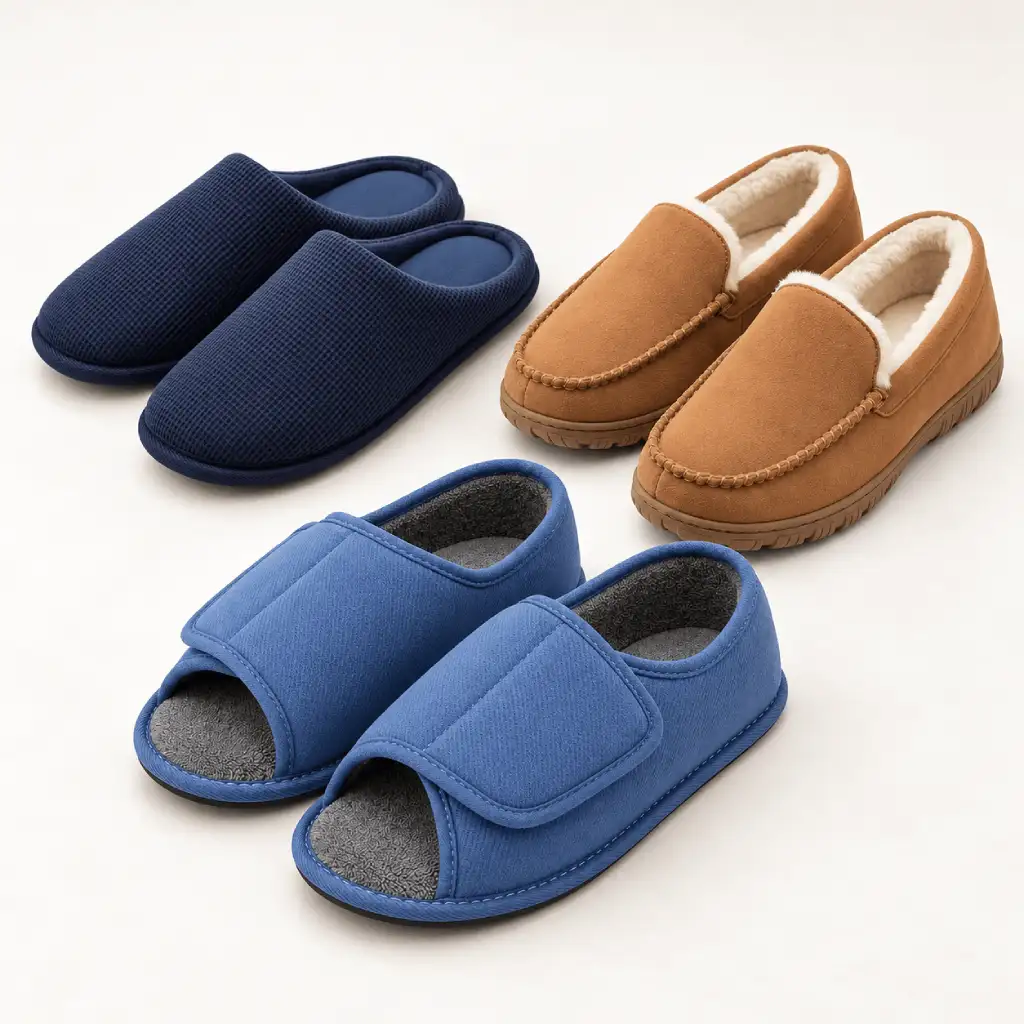
The best slippers for sweaty feet normally use less coverage and less heat-retaining volume than a winter slipper. Open-toe, open-back, scuff, and adjustable open constructions provide direct openings for heat to escape. A lightweight closed-toe style can also work when the upper, lining, foam, and internal volume are carefully controlled.
No single construction is right for every customer. The best choice depends on room climate, wearing duration, whether the slipper is worn barefoot or with socks, the required level of protection, the retail channel, and the intended price and appearance.
| Use case | Practical starting point | Why buyers consider it | What the sample must confirm |
|---|---|---|---|
| Warm rooms or summer indoor use | Open toe + open back | Lowest foot coverage and direct openings | Forefoot retention, toe exposure, instep pressure, and forward sliding |
| Easy entry with moderate coverage | Open-back scuff or mule | Convenient entry with several toe-coverage options | Heel landing, upper depth, opening, and walking stability |
| Variable instep heights | Adjustable open-toe design | Fit can be tuned within an approved range | Usable fastening overlap, edge comfort, and strap alignment |
| Closed-toe retail appearance | Lightweight closed-toe slipper | More coverage without defaulting to a winter build | Toe volume, lining weight, foam thickness, opening, and drying |
Decision rule: choose the lowest practical coverage that still meets the target customer’s fit, protection, appearance, and use requirements. Then evaluate the assembled slipper rather than approving “breathable fabric” on a swatch alone.
Buyers planning house slippers for sweaty feet can review UTOP’s custom indoor slipper product center for open, closed, men’s, women’s, kids’, and seasonal starting points. Product references should guide the development brief; they should not replace a confirmed specification.
2. Why House Slippers Feel Hot and Damp
Sweating is a normal body process, and a slipper cannot stop the wearer’s sweat glands. Product design can influence the environment around the foot: how much heat is trapped, how easily air and moisture vapour can move, how the contact surface handles moisture, and how quickly the slipper dries between wears.
Guidance from the American Academy of Dermatology recommends allowing footwear to dry between wears and choosing materials that permit air circulation when managing sweaty feet. The NHS guidance on smelly feet also emphasizes breathable footwear, keeping feet dry, avoiding tight footwear, and not wearing the same footwear on consecutive days. These care recommendations support a practical product principle: ventilation and drying both matter.
Breathable house slippers should therefore be evaluated as a connected system with five main variables:
- Coverage: a closed toe, high vamp, closed heel, and deep sidewalls retain more of the foot environment than an open construction.
- Upper structure: yarn, knit density, fabric weight, backing, lamination, and reinforcement affect how readily air and moisture vapour can move.
- Lining: fibre, surface texture, pile height, density, and total area in contact with the foot influence the immediate sensation of warmth and dampness.
- Cushioning: thick foam can create a soft step-in feel, but the complete package may feel warmer or less stable when combined with a closed upper and full lining.
- Drying path: absorbed moisture must be able to leave the product. A material that holds moisture but dries slowly may be uncomfortable during repeated wear.
Fit adds another variable. Excessive instep pressure increases contact and can restrict the small air space inside the slipper. Excessive looseness creates a different problem: the foot may slide, the toes may grip, and the slipper may feel unstable. The goal is a secure fit with suitable internal volume—not maximum looseness.
Medical boundary: persistent or unusually heavy sweating may require professional advice. A product page should not present slippers as a treatment for hyperhidrosis, fungal infection, or another health condition.
3. Choose a Breathable Slipper Construction
Construction usually creates a larger comfort difference than a small change in fibre content. For breathable slippers for sweaty feet, buyers should first decide how much of the foot needs to be covered and where heat and moisture can leave the product.
Open-Toe Slippers
An open front provides the most direct ventilation path and can create clear warm-season positioning. It is suitable for summer ranges, spa-inspired collections, warm apartments, and consumers who dislike enclosed toes.
The sample still needs to control vamp position, opening shape, forefoot retention, and forward movement. A very low or loose upper can allow the foot to slide beyond the footbed, while an overly tight band can create pressure across the instep.
Open-Back and Scuff Slippers
Open-back slippers reduce heel coverage and are easy to enter. A shallow scuff with a moderate vamp can balance convenience, reduced coverage, and a secure feel. A deeper mule may provide more upper control but also covers more of the foot.
For slippers for men with sweaty feet, open-back mule and scuff constructions can provide a familiar retail silhouette without requiring “anti-sweat” language. Buyers should check heel landing, upper depth, toe volume, opening width, and outsole balance across representative sizes.
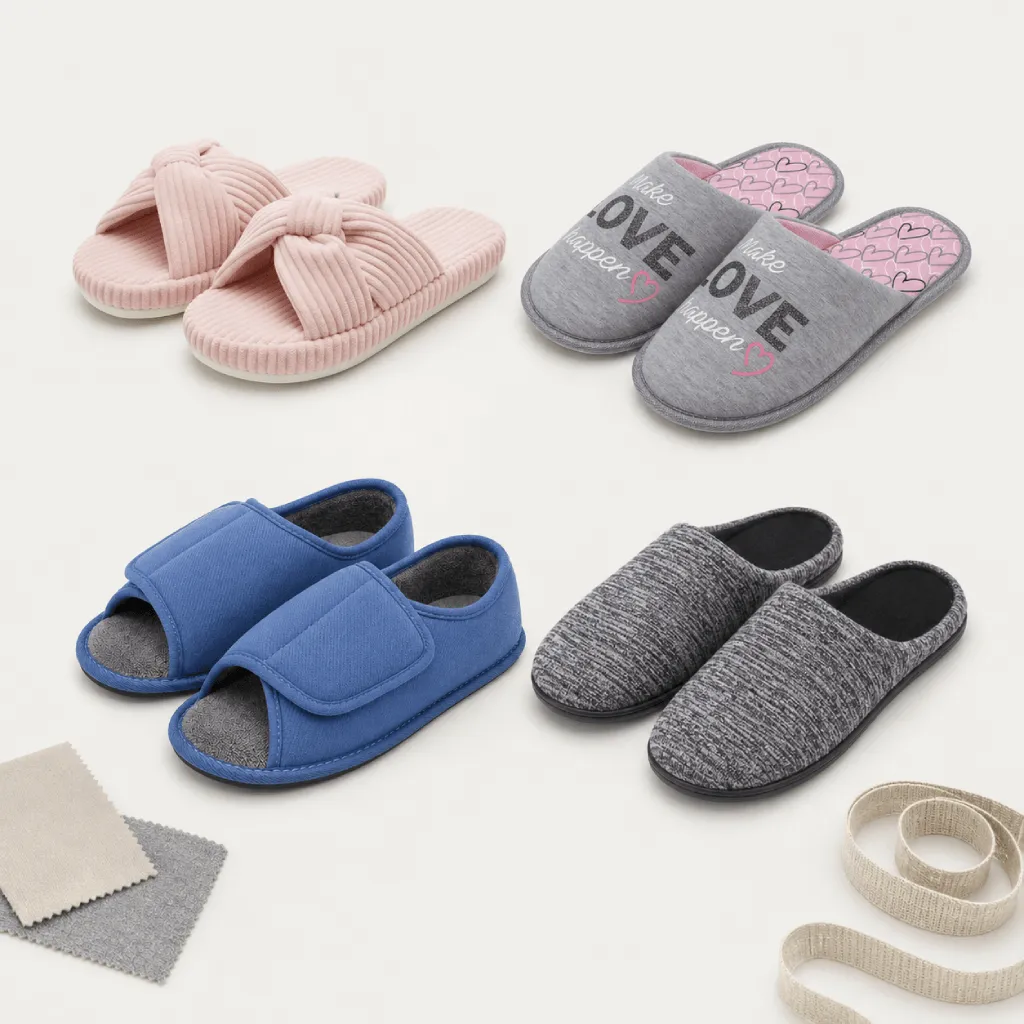
Adjustable Open Constructions
An adjustable strap can help a breathable slipper serve a wider range of instep heights while keeping the toe or sides open. The design is useful only when the fastening area remains functional in the smallest and largest requested sizes.
During sampling, confirm the usable overlap, strap angle, edge softness, symmetry, attachment strength, and appearance at different adjustment positions. “Adjustable” should describe a verified fit range, not merely the presence of hook-and-loop material.
Lightweight Closed-Toe Slippers
A closed toe can still be developed for warmer indoor use. The product normally needs a lighter upper, lower-pile contact materials, moderate foam, a less restrictive opening, and enough internal volume for the selected lining. A closed-toe slipper should not inherit a dense winter lining by default.
Construction rule: opening size alone does not prove breathability. Review coverage, material structure, backing, lining, cushioning, and fit as one finished system.
UTOP can develop open-toe, open-back, adjustable, and lightweight closed-toe combinations for private-label programs. Buyers comparing warm-season directions can also review the current men’s summer slipper category before preparing a sample brief.
4. Compare Upper and Lining Materials
No fabric is automatically cool or hot in every slipper. Fibre composition matters, but so do fabric structure, weight, density, pile height, backing, lamination, lining, foam, and foot coverage. Buyers should compare actual specifications and finished samples rather than approving a broad label such as “mesh,” “cotton,” “knit,” or “wool.”
| Material or structure | Potential benefit | Main limitation | Practical sourcing use |
|---|---|---|---|
| Light jersey knit | Smooth, flexible, and suitable for lightweight uppers or linings | Dense construction, backing, or lamination can still restrict air movement | Summer scuffs, adjustable open styles, and light closed-toe slippers |
| Open knit | Loop structure can create visible texture and potential air paths | Result changes with yarn, gauge, density, backing, and reinforcement | Breathable slippers, men’s open-back ranges, and casual indoor styles |
| Waffle fabric | Textured surface reduces full flat contact and gives a clean spa look | Heavy waffle fabric can become warm and hold moisture | Spa-inspired slippers and lightweight indoor programs |
| Low-pile terry | Familiar hand feel and capacity to absorb surface moisture | Dense terry may retain moisture and require more drying time | Open-toe slippers, footbed covers, and hospitality-inspired ranges |
| Cotton-rich woven or knit | Familiar natural-fibre positioning and comfortable hand feel | Absorption is not the same as fast drying | Warm-weather products when weight, shrinkage, and drying are controlled |
| Lightweight wool or wool blend | Can manage moisture vapour and support premium natural-fibre positioning | Dense felt, heavy wool, and full coverage may feel too warm | Premium open-back or moderate-coverage ranges with controlled thickness |
| Micro-suede-style textile | Clean appearance, stable cutting, and a soft surface | Usually less open than knit; backing and lining become critical | Open-back transitional styles and lightweight closed-toe products |
| Dense plush, sherpa, or fleece | Strong warmth, soft touch, and clear winter positioning | High heat retention and slower drying in heavy constructions | Cold-weather collections rather than the primary sweaty-feet concept |
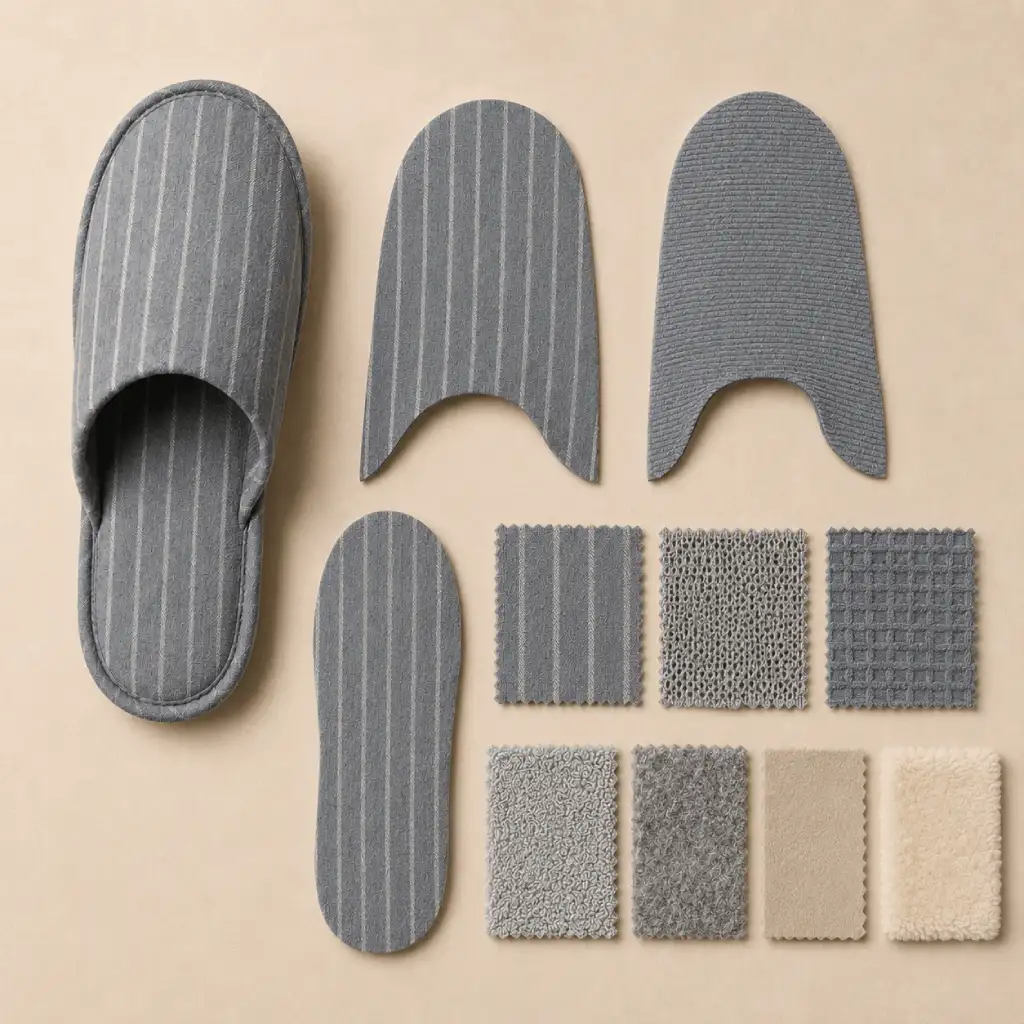
For a reliable breathable slipper specification, request the material details that influence the assembled product. Depending on the component, these may include:
- fibre composition and fabric construction;
- fabric weight or thickness;
- knit openness, yarn size, or surface texture;
- pile height and density;
- backing, lamination, reinforcement, or adhesive layer;
- lining and footbed-cover specification;
- applicable finishes and the evidence required for any performance claim.
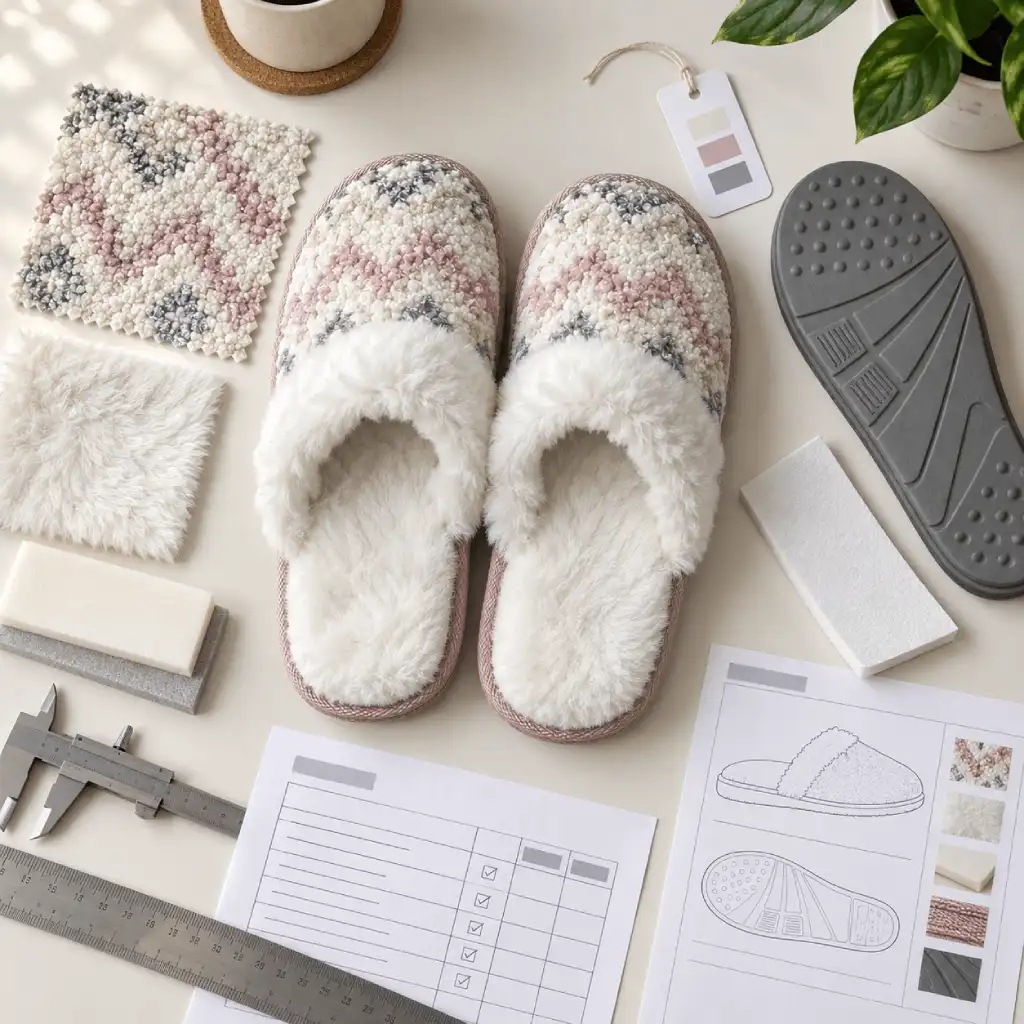
UTOP can combine jersey knit, other knit structures, terry, and additional suitable materials with open-toe, open-back, adjustable, or lightweight closed-toe constructions. The final material package should be selected against the target climate, wearing routine, price, appearance, care requirement, and sample result.
Claims control: do not use “moisture-wicking,” “antimicrobial,” “odour-control,” “quick-drying,” or “machine washable” merely because a supplier uses one of these words for a fabric. Confirm the selected material, finished product, test method, target market, and supporting documentation.
A buyer sourcing breathable house slippers should approve both material swatches and finished prototypes. The foot experiences the complete upper, lining, foam, footbed, and outsole—not the fabric name in isolation.
5. Are Wool Slippers Good for Sweaty Feet?
Wool slippers for sweaty feet can be suitable, but the answer depends on material weight, fabric structure, felting level, lining, coverage, foam, fit, and outsole—not on fibre name alone.
Wool fibres can absorb and release moisture vapour. The Woolmark overview of wool fibre properties describes this moisture-vapour response as part of wool’s breathability. That fibre-level property does not mean every wool slipper will feel cool in a warm room.
| Wool direction | Likely product character | Buyer review points |
|---|---|---|
| Light wool or wool-blend upper with open back | Moderate coverage with premium natural-fibre positioning | Composition, fabric weight, backing, lining, opening, and drying |
| Light wool upper with open toe | Lower coverage and visible seasonal differentiation | Forefoot retention, edge comfort, material stability, and care instructions |
| Dense wool felt clog or fully lined house shoe | More structure, insulation, and cold-season character | Total thickness, full-foot coverage, lining pile, foam, heat buildup, and drying time |
Wool felt and jersey knit are different material structures and should not be treated as interchangeable. A dense felted upper normally behaves differently from a lightweight knitted wool blend, even if both specification sheets contain the word “wool.”
Buyer rule: select wool for a defined natural-fibre and moisture-comfort direction, then control warmth through material weight, coverage, lining, foam, and the approved sample. Do not assume “natural” automatically means “cool.”
6. Review the Footbed, Cushioning, and Outsole
Most ventilation enters and leaves around the opening and upper, but the underfoot package still changes how breathable slippers feel during extended wear. Buyers should review the footbed cover, foam, structural layers, and outsole separately before approving the complete sample.
Footbed Cover
A light jersey knit, low-pile terry, or suitable open textile may feel less insulating than dense sherpa or plush. The chosen surface must also withstand repeated contact and friction. Absorbency, drying, surface pilling, colourfastness, and care instructions may require separate evaluation.
Foam Thickness and Density
More foam is not automatically better. A thick memory-foam package can create a soft first impression but may add warmth, bulk, compression variation, and instability in a lightweight concept. Buyers should approve target feel, approximate thickness, rebound, compression, edge shape, and finished-slipper balance rather than requesting “extra memory foam” without limits.
Perforations and Channels
Where the construction permits, footbed perforations or channels can be considered as a design variable. They should not be described as proven ventilation features until the assembled slipper has been evaluated, and they must not weaken the footbed, create print-through, or reduce surface consistency.
TPR and EVA Outsoles
A solid TPR or EVA outsole is not the main ventilation path. Its influence comes through weight, thickness, flexibility, insulation, tread, sidewall structure, and the overall bulk of the product.
| Outsole direction | Common product-development reason | What must still be confirmed |
|---|---|---|
| Moulded TPR | More defined outsole profile, sidewall, and tread direction for structured house shoes | Formulation, hardness, thickness, weight, tread, attachment, floor conditions, and required tests |
| Cut-sheet EVA | Lightweight and flexible direction for simple indoor slippers | Density, thickness, compression, edge finish, attachment, tread layer, and intended use |
Neither material should be selected by name alone, and neither has a universal cost advantage. Review UTOP’s TPR vs EVA sole guide for slippers for a specification-based comparison covering structure, tread, construction, intended use, and project-specific testing.
System check: the lightest outsole is not automatically the best choice, and the most substantial outsole is not automatically the most durable in every design. Balance the outsole with the upper, footbed, intended environment, packing method, and complete product specification.
7. Build a B2B Breathable-Slipper Specification
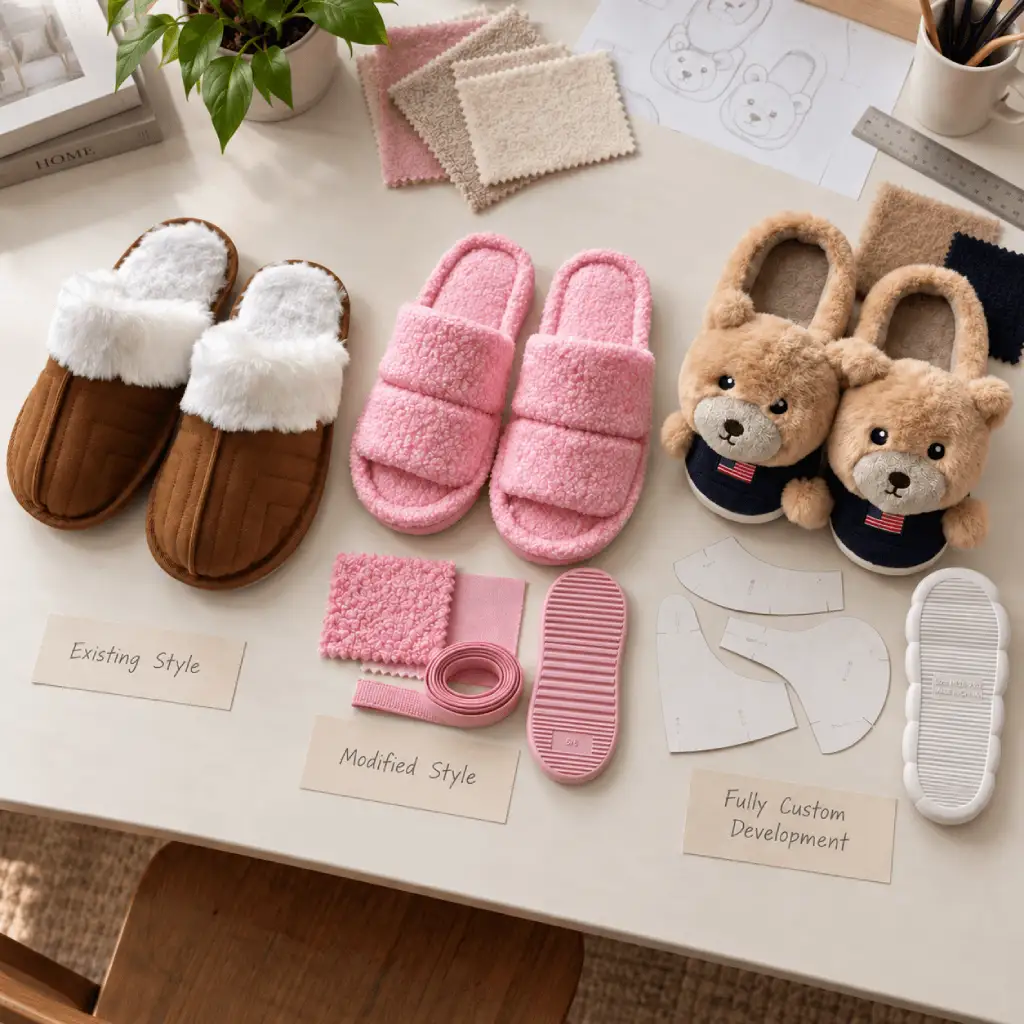
A request for “breathable fabric” leaves too many decisions open. Buyers developing custom breathable slippers should define the user, climate, construction, materials, fit, claims, and approval references before requesting a quotation or sample.
- Define the market and wearing routine. State the sales region, season, expected room climate, wearing duration, and whether the slipper is intended for bare feet, socks, or both.
- Choose the coverage level. Select open toe, open back, scuff, adjustable open, or lightweight closed toe. Include reference images and explain the intended fit and retail appearance.
- Specify the upper. Confirm composition, fabric construction, weight or thickness, knit openness, pile height, backing, reinforcement, colour, and required appearance.
- Specify the lining and footbed cover separately. Do not allow a dense winter lining to remain in a warm-season design by default.
- Control the cushioning package. Define the target feel, approximate thickness, density direction, rebound, stability, and acceptable compression after sample evaluation.
- Select the outsole for the actual environment. Confirm indoor or indoor-outdoor use, structure, thickness, weight, hardness or density, tread, flexibility, attachment method, and test needs.
- Define claims conservatively. Do not print “anti-sweat,” “odour-free,” “antibacterial,” “moisture-wicking,” “quick-drying,” or “machine washable” without suitable product evidence.
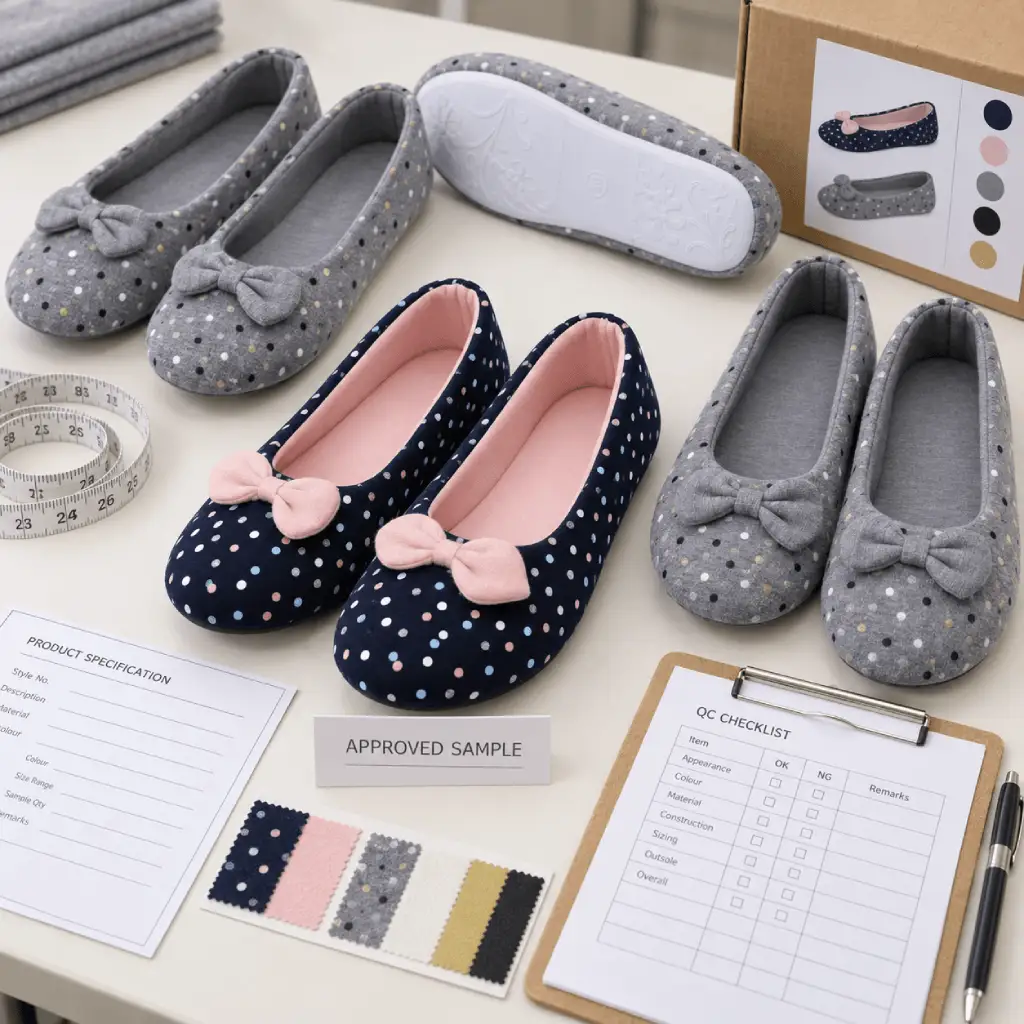
- Create the production reference set. The approved sample, written specification, colour standard, logo placement, size chart, packaging, labels, and agreed inspection requirements should remain linked through bulk production.
Project-planning note: for regular UTOP custom slipper projects, sample development commonly takes 7–14 days. After the sample and other required approvals are complete, bulk production commonly takes 30–45 days.
Actual timing depends on material preparation, outsole mould development, sample revisions, testing, order quantity, branding processes, and packaging requirements. Confirm the schedule for the specific project.
For a wider process covering specifications, sampling, branding, packaging, and production control, use UTOP’s Private Label Indoor Slippers Manufacturing Guide. A structured brief helps the factory interpret “breathable” as a product system rather than a cosmetic material substitution.
8. Validate Samples and Control Bulk Production
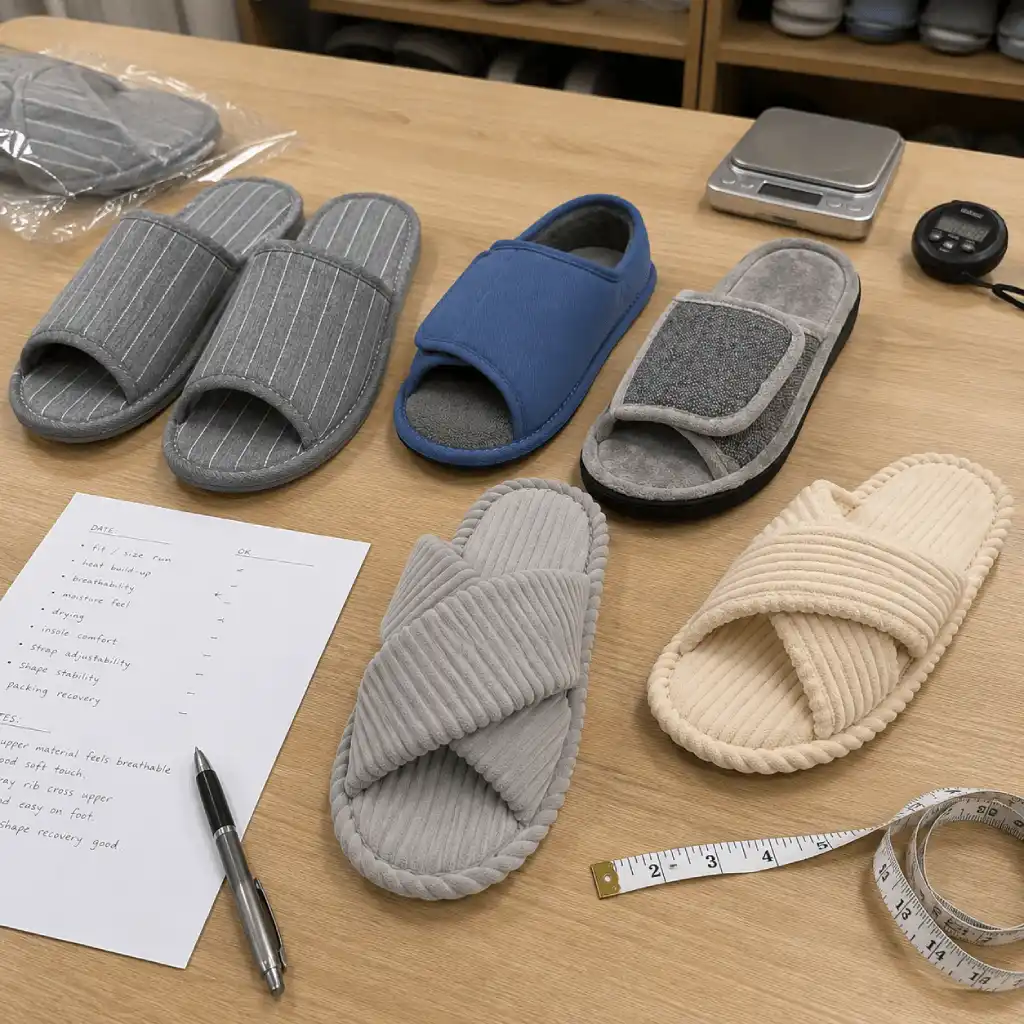
Breathability is experienced in the assembled product, so a structured wear comparison is more useful than a visual judgment. The evaluation does not need to imitate a medical or laboratory test. It should create consistent conditions for comparing sample options.
Use the same room, similar wearing duration, and the same socks-or-barefoot condition for each prototype. Compare at a fixed time point and record observations instead of relying on memory. A breathable slipper sample should be assessed for both immediate comfort and recovery between wears.
| Check item | What to observe | Why it matters |
|---|---|---|
| Initial fit | Instep pressure, toe space, heel landing, entry, and walking stability | Tightness can increase contact; excessive looseness reduces control |
| Heat buildup | Whether the foot feels noticeably warmer after continued wear | Shows the combined effect of coverage, lining, and cushioning |
| Moisture feel | Dry, slightly humid, damp, or clingy sensation at the footbed and upper | Allows finished constructions to be compared without inventing test data |
| Drying between wears | Condition after a defined rest period in the same environment | Important for repeat daily wear and product-care instructions |
| Shape stability | Vamp shape, footbed compression, outsole curling, and pair consistency | A lighter construction still needs acceptable structure |
| Surface and seam comfort | Rubbing, rough seams, labels, bindings, and opening pressure | Local irritation can be mistaken for heat or moisture discomfort |
| Packaging recovery | Whether the slipper regains shape after packing and transport simulation | Light structures may deform without suitable packing support |
Carry the Approved Sample Into Bulk Quality Control
Bulk production should be compared with the approved reference set. Depending on the product, the inspection scope can include:
- upper and lining material, colour, surface, weight or thickness reference;
- coverage, opening, vamp height, strap position, and left-right symmetry;
- lining consistency, footbed surface, foam feel, compression, and shape;
- outsole material direction, thickness, hardness or density reference, tread, edge finish, and attachment;
- size marking, logo, labels, pair matching, and assortment ratio;
- packing method, carton marks, packed shape, and recovery after unpacking.
If a buyer wants formal breathability, moisture-management, antimicrobial, washing, slip-resistance, abrasion, flexing, or chemical claims, agree on the product, test method, laboratory, acceptance criteria, and target market before production. A subjective wear comparison can guide development, but it should not be presented as a certified laboratory result.
Use UTOP’s Footwear Quality Control Guide for Bulk Slipper Orders to plan incoming-material checks, in-process controls, final inspection, measurement records, packaging review, and nonconformity handling.
Approval rule: keep comfort observations, product specifications, claims evidence, and bulk inspection records separate. Each answers a different question and should not be used as a substitute for the others.
9. Final Sourcing Checklist for Slippers for Sweaty Feet
Most problems begin when “breathable” is treated as a complete specification. Before approving slippers for sweaty feet, check that the construction, materials, fit, evidence, and production references support the intended use.
Common Development Mistakes
- Keeping a winter lining in a summer design: an open upper cannot fully compensate for dense plush under the foot and around the remaining coverage.
- Adding too much foam: extra cushioning can increase warmth, packing volume, compression variation, and instability.
- Choosing by fibre name: cotton, wool, polyester, and nylon can behave differently when fabric structure, weight, backing, and lining change.
- Selecting a heavy outsole without a use case: indoor-outdoor protection may conflict with a lightweight indoor concept.
- Making unverified claims: marketing language should follow the selected specification and suitable evidence.
- Skipping repeat-wear evaluation: a slipper may feel acceptable for a few minutes but remain damp or lose shape during repeated use.
Buyer Approval Checklist
- ☐ Target country, climate, season, sales channel, and wearing routine are defined.
- ☐ Open-toe, open-back, scuff, adjustable, or lightweight closed-toe construction is selected.
- ☐ Upper composition, structure, weight or thickness, backing, and colour are confirmed.
- ☐ Lining and footbed cover are specified separately from the upper.
- ☐ Pile height and total insulation match the intended season.
- ☐ Foam thickness, feel, rebound, compression, and stability are approved on the sample.
- ☐ TPR or EVA outsole details match the intended indoor or indoor-outdoor use.
- ☐ Fit is checked for instep pressure, toe space, heel landing, and walking stability.
- ☐ The wear comparison records heat buildup, moisture feel, drying, and shape recovery.
- ☐ Breathable, moisture-wicking, antimicrobial, odour-control, and washable claims are evidence-based.
- ☐ Approved sample, colour standard, branding, packaging, and specification form one production reference set.
- ☐ Bulk quality control checks construction consistency, not appearance alone.
Final check: if the sample cannot explain how coverage, materials, lining, cushioning, fit, drying, and outsole support the product concept, the phrase “breathable slippers” is still too broad for bulk approval.
10. Frequently Asked Questions About Slippers for Sweaty Feet
What type of slippers are best for sweaty feet?
Open-toe or open-back slippers with lightweight uppers, low-pile linings, moderate cushioning, and a secure but non-restrictive fit are usually the most practical starting point. The finished construction matters more than one material name.
Are wool slippers good for sweaty feet?
Lightweight wool or wool-blend slippers can manage moisture vapour, but dense felted wool, thick linings, and fully enclosed winter constructions may feel too warm. Evaluate material weight, coverage, lining, foam, and drying together.
Are breathable slippers the same as moisture-wicking slippers?
No. Breathability broadly concerns heat, air, and moisture-vapour movement through the product system. Moisture-wicking is a more specific material-performance claim and should be supported by the selected textile specification or suitable testing.
Do open-toe slippers help with sweaty feet?
They reduce foot coverage and provide a direct opening for heat to escape, so they are a strong option for warm rooms and summer ranges. Fit, forefoot retention, lining, cushioning, and drying still need to be evaluated.
Are memory-foam slippers suitable for sweaty feet?
They can be, but a thick foam package combined with a closed upper and dense lining may feel warm. Buyers should control foam thickness, density direction, rebound, compression, and stability and compare it with lighter cushioning options.
Can TPR or EVA outsoles make a slipper breathable?
A solid outsole is not the main ventilation path. TPR and EVA influence weight, thickness, flexibility, insulation, tread, structure, and overall product balance. Breathability depends more heavily on coverage, upper, lining, footbed, cushioning, fit, and drying.
Can slippers prevent a person from sweating?
No. Slippers should not be marketed as stopping sweat or treating excessive sweating. Safer product language describes the verified construction, reduced coverage, lightweight materials, ventilation direction, or drying result without making a medical promise.
Should breathable slippers be machine washable?
Not automatically. Washability is a separate requirement involving upper and lining materials, colourfastness, foam, adhesives, stitching, outsole construction, shape retention, drying, and care instructions. Confirm the finished product under an agreed procedure before using the claim.
Final takeaway: the best slippers for sweaty feet are created by balancing coverage, upper structure, lining, cushioning, fit, drying behavior, and outsole for a clearly defined user and climate. A controlled sample comparison is more reliable than selecting a product by one fibre or marketing word.
UTOP supports OEM and private-label development of open-toe, open-back, adjustable, and lightweight closed-toe indoor slippers using jersey knit, other knit structures, terry, and additional project-appropriate materials, with TPR or EVA outsole options. Learn more about UTOP Slippers or send your target market, construction reference, material direction, size range, logo, and packaging requirements for sample-development review.