Men’s open-back slippers look simple from the outside: the heel is uncovered, the upper is easy to enter, and the product often uses a familiar mule or scuff silhouette. For wholesale buyers, however, that simplicity can hide decisions that affect heel landing, walking stability, internal volume, outsole balance, size grading, packaging, and bulk consistency.
A middle-size sample may look balanced while a larger size feels short at the heel. A thick sherpa lining can reduce usable internal space. A heavy outsole can make an easy-entry slipper feel less secure when the upper does not retain the foot effectively. Even the opening height and instep coverage can change how the same outsole feels during walking.
This guide explains how brands, importers, retailers, distributors, and sourcing teams can develop open-back slippers for men from the initial product brief through sample approval and bulk quality control.
Buyer takeaway: A useful quotation for men’s open-back slippers should be based on the construction, fit reference, materials, outsole, size range, branding, packaging, and inspection expectations—not on a product photo and target quantity alone.
This wholesale buyer’s guide focuses on sourcing and production decisions rather than consumer-style “best slipper” recommendations.
Written by the UTOP Slippers Sourcing Team, with product-development input from our indoor slipper team.
1. What Buyers Mean by Men’s Open-Back Slippers
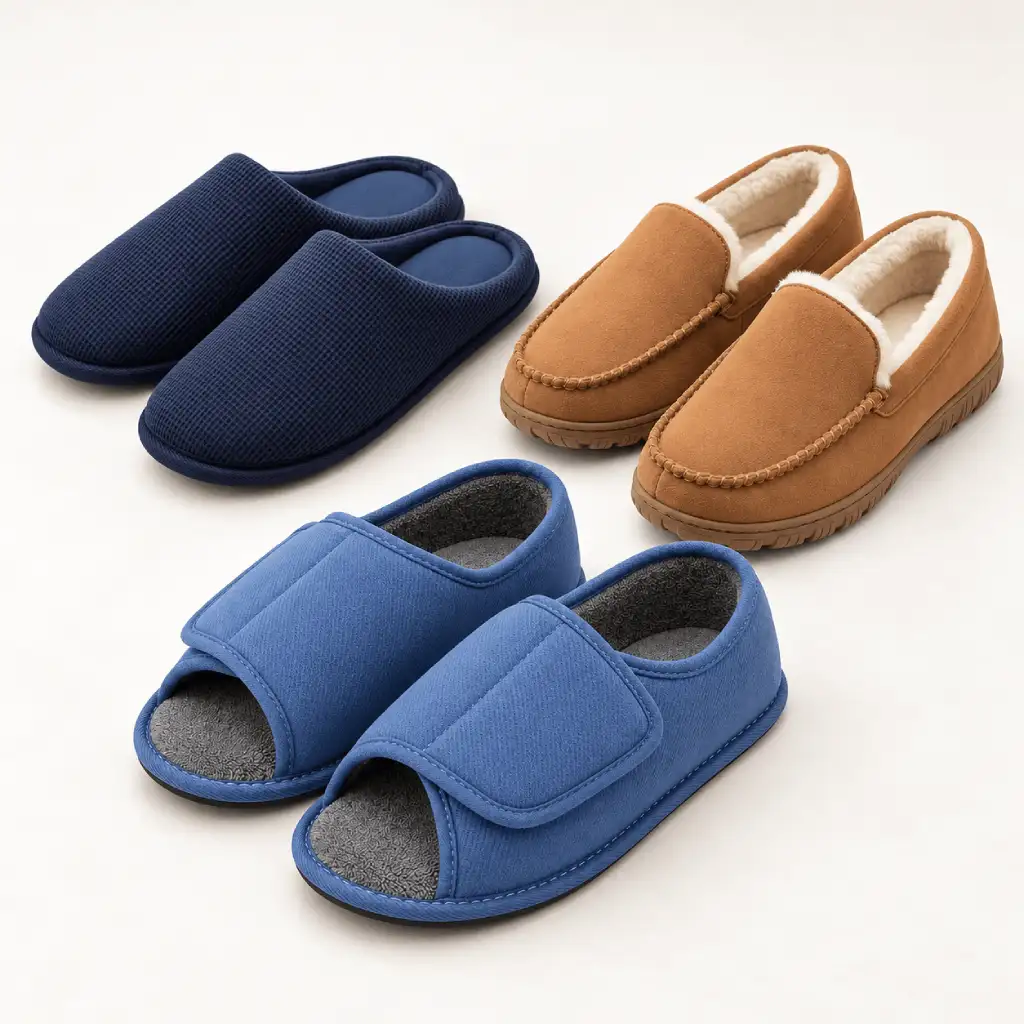
In sourcing conversations, men’s open-back slippers are slippers without full heel coverage. The term describes the rear construction; it does not automatically mean that the toe is open. A closed-toe mule, a shallow scuff, an open-toe summer slipper, and some clog-inspired house shoes can all use an open-back design.
The amount of upper coverage also varies. One style may have a deep closed toe and broad instep panel, while another may use a shallower upper for quick indoor wear. Those differences affect entry, foot retention, warmth, fit tolerance, material use, and the way the pair should be packed.
| Product direction | Typical structure | Buyer review points |
|---|---|---|
| Closed-toe mule | Covered toe with an uncovered heel | Toe volume, upper depth, heel landing, and retention |
| Scuff slipper | Relatively shallow upper and easy-entry opening | Opening width, instep coverage, and outsole weight |
| Open-toe style | Open front and open heel, often with one or more bands | Band position, toe exposure, forward movement, and seasonal use |
| Adjustable or cross-band style | Overlapping, crossed, or adjustable upper panels | Adjustment range, seam comfort, symmetry, and fit tolerance |
| Clog-inspired house shoe | Deeper upper with a more defined outsole profile | Internal volume, sole balance, structure, and packaging space |
Specification rule: define the product by toe coverage, upper depth, opening, lining, outsole, and intended use. The phrase “open back slippers for men” is a useful category name, but it is not a complete manufacturing specification.
Buyers can compare current directions in UTOP’s custom men’s slipper range before selecting a reference style for development.
2. Match the Construction to the Sales Channel
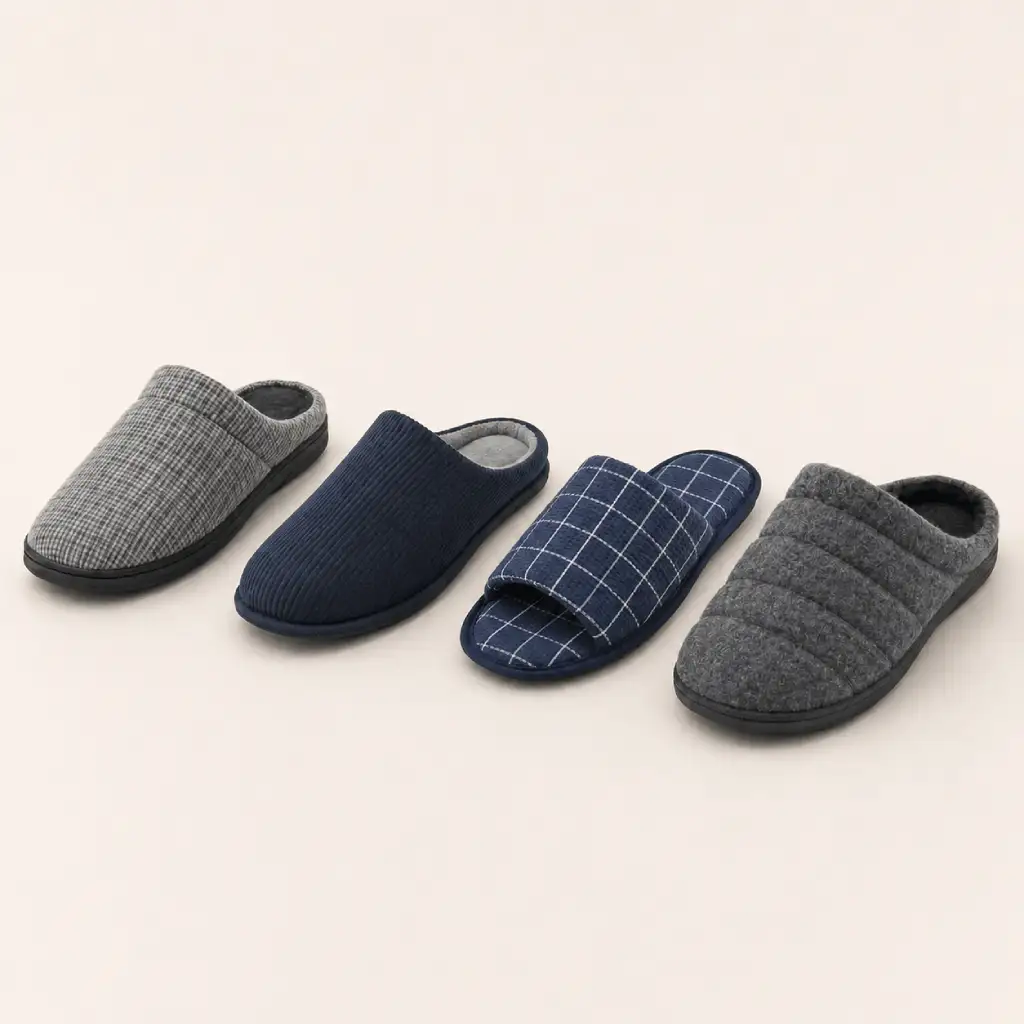
The first decision is not the fabric or color. It is whether the open-back construction fits the intended customer, season, price position, and sales channel. The same basic silhouette can support different wholesale men’s slippers programs, but the material, outsole, cushioning, branding, and packaging may need to change.
| Buyer program | Possible product direction | Details to prioritize |
|---|---|---|
| Supermarket or value retail | Simple upper and efficient individual packing | Clear sizing, stable construction, carton utilization, and repeatable bulk appearance |
| Department store or lifestyle brand | More defined upper, tactile material, and branded presentation | Material consistency, stitching, logo execution, cushioning, and retail packaging |
| Ecommerce | Clear visual features and a well-explained fit reference | Size communication, product photography, package protection, and SKU accuracy |
| Seasonal gift program | Warm lining, coordinated colors, or gift-oriented packing | Seasonal timing, pile recovery, presentation, and assortment control |
| Wholesale distribution | Core men’s house shoes with broad channel compatibility | Size ratio, replenishment logic, packaging efficiency, and stable repeat orders |
Before sampling, buyers should confirm the target market, customer age group, season, indoor wearing environment, price position, size range, color count, packaging format, and destination requirements. This makes supplier quotations more comparable because each factory is working from the same intended product.
Open-back or closed-back?
Open-back and men’s closed-back slippers can serve different roles in one collection. Open-back styles provide fast entry, but heel landing, instep coverage, upper depth, and outsole weight have a stronger influence on retention. Closed-back styles provide more rear-foot coverage, while adding requirements for heel shape, rear opening, and back construction.
| Review point | Open-back | Closed-back |
|---|---|---|
| Entry and coverage | Fast slip-on entry with an uncovered heel | More heel coverage with closer opening control |
| Fit control | Heel landing, instep coverage, and upper depth | Heel shape, rear opening, internal width, and back height |
| Walking feel | Upper retention and outsole balance are especially noticeable | Heel coverage can improve retention when the fit is correct |
| Packaging | Often compact, depending on upper and outsole volume | May need more space or support to protect the heel structure |
Build the brief around the wearing situation
A warm winter mule, a lightweight summer scuff, and a structured retail house shoe should not share one generic material and outsole specification simply because all three have an open heel.
Do not copy the same pattern allowance, last reference, or size grading from a closed-back style to an open-back style without review. Each construction needs its own approved fit reference.
For a broader category comparison, review UTOP’s men’s indoor slippers and men’s summer slippers. Buyers planning a mixed collection can also use the Private Label Indoor Slippers Manufacturing Guide to coordinate specifications across different constructions.
3. Review Heel Length, Opening Width, and Instep Space
Fit is the most important technical issue in men’s open-back house slippers. External outsole length alone does not show whether the foot lands correctly on the usable footbed. Decorative edges, raised sidewalls, binding, heel cushioning, and upper shape can all reduce the space available to the wearer.
A slipper may look long enough on a specification sheet but still leave the heel too close to the rear edge. If the upper is shallow or loose, the foot may slide forward and lift excessively during walking. If the opening is too tight, the slipper becomes difficult to enter and may feel smaller than the marked size.
Physical measurements
- Usable heel-to-toe footbed length
- Internal forefoot width
- Upper opening width
- Instep height and coverage
- Toe room and toe-box height
- Left-right symmetry
Wear-test observations
- Heel landing relative to the rear edge
- Ease of entry without forcing the foot
- Forward slide during normal walking
- Foot lift and upper retention
- Pressure at the instep or toe
- Balance between upper and outsole
Record both measurements and wear comments. A note such as “increase instep allowance by 3 mm at the marked point” is more useful than a general comment that the slipper feels tight. The revised sample should then be checked with the intended lining, foam, and outsole rather than as an unfinished shell.
Do not approve fit from one person alone
Use the buyer-approved foot-length reference and a planned fit-evaluation method. Individual feet vary in width, instep, and shape, so one wearer’s reaction should not become an undocumented universal standard.
4. Account for Lining Thickness and Cushioning
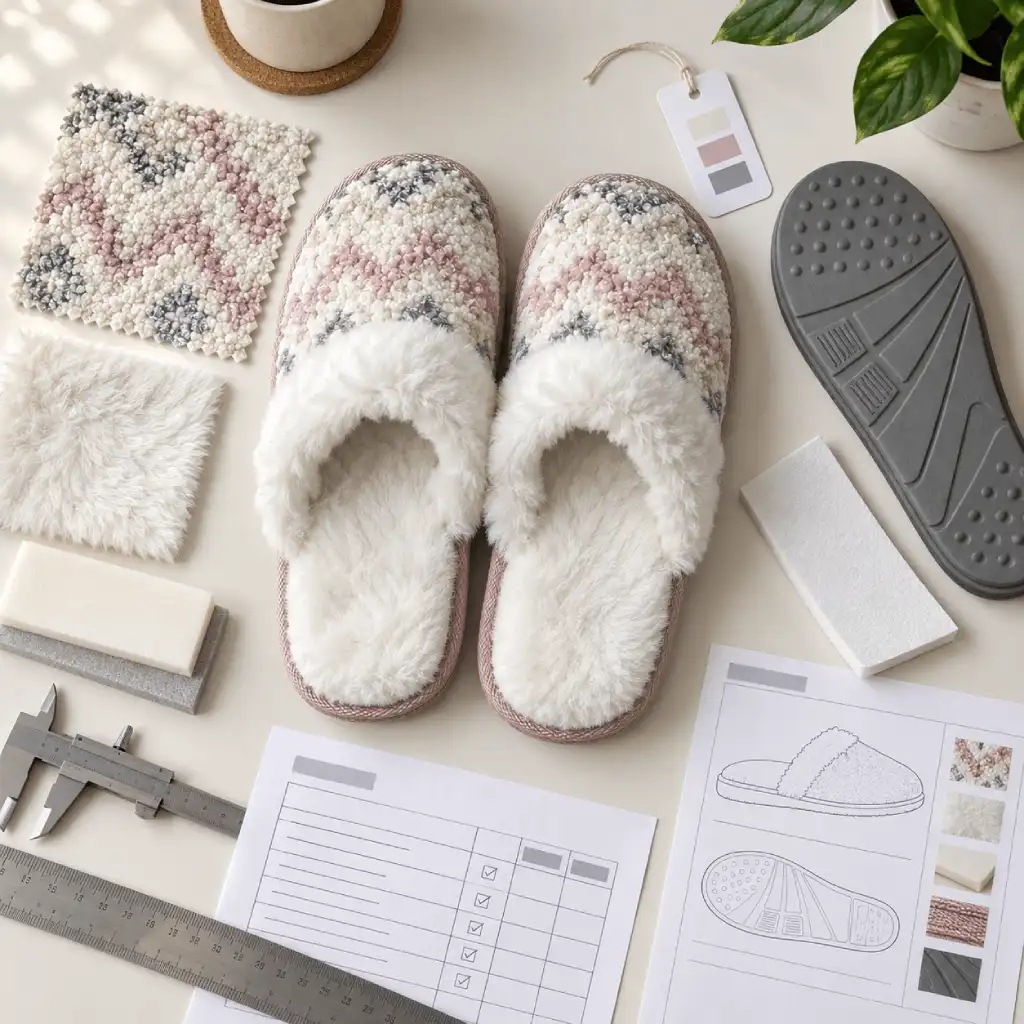
Lining and cushioning change the internal fit even when the outsole and upper pattern remain the same. Sherpa, faux wool, plush, terry, jersey, and other linings differ in thickness, density, compression, and recovery. A warm lining can reduce usable length, width, and instep space, while a thick foam package can raise the foot and make the upper feel tighter.
| Component | Possible effect | What to confirm |
|---|---|---|
| Upper lining | Changes instep space, opening feel, and warmth | Material, thickness, density, seam position, and approved hand feel |
| Toe lining | Changes toe room and usable internal length | Coverage, pile direction, thickness, and bulk consistency |
| Footbed cover | Affects surface feel, friction, and presentation | Material, seam location, bonding, color, and recovery after packing |
| Foam package | Raises the foot and changes cushioning and upper contact | Layer structure, thickness, firmness direction, compression, and sample reference |
A common development mistake is approving an early shell before the final lining and foam are installed. The fit sample should use the intended bulk materials so the buyer can judge the real internal volume, opening, heel landing, and walking feel.
Size-grading check: when one lining thickness is used across a broad range, smaller sizes can lose proportionally more internal space. Review at least a small, middle, and large size when lining volume may affect the fit.
UTOP’s UT-MS1005 knit open-back slipper provides one reference direction for discussing a warm lined men’s style. The actual lining, foam, fit allowance, and performance requirements should still be confirmed for each buyer project.
5. Match Materials to Season and Retail Positioning
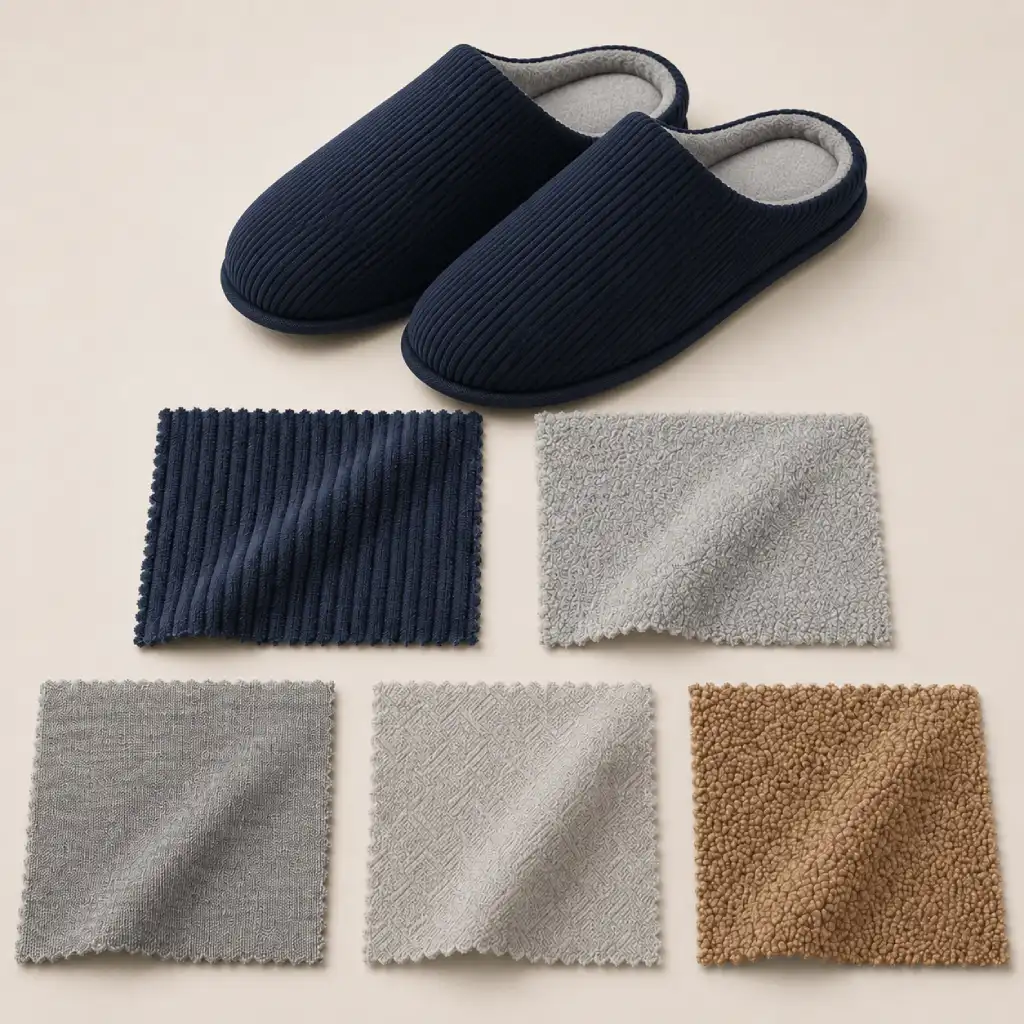
Material choice should support the complete product direction rather than be selected by name alone. For custom men’s slippers, the upper needs enough stability for the chosen pattern while matching the intended season, price position, appearance, logo method, and packaging.
| Material direction | Possible positioning | Points to confirm |
|---|---|---|
| Corduroy | Textured casual or autumn homewear | Rib alignment, backing, upper support, color consistency, and edge finishing |
| Knit fabric | Comfort-led and cold-season collections | Stretch, pilling expectation, backing stability, lining density, and seam control |
| Jersey | Lightweight and straightforward indoor programs | Fabric weight, stretch, reinforcement, color, and shape retention |
| Micro-suede-style textile | Clean and more structured men’s styling | Surface consistency, backing, seam marks, rubbing, and shade variation |
| Faux wool or sherpa | Warm-lined seasonal products | Density, internal volume, shedding expectation, pile direction, and packing recovery |
| Velvet | Gift or elevated visual programs | Pile direction, shade variation, surface marks, and logo suitability |
The upper, lining, foam, and outsole should be reviewed as one system. A soft knit upper with a heavy lining may need additional support to keep the opening from collapsing. A more stable upper can produce a cleaner silhouette, but may require closer seam and surface inspection.
Cutting direction matters for materials with visible ribs, nap, or pile. If left and right uppers are cut in inconsistent directions, they can appear to have different shades even when they come from the same approved color lot.
Approve the complete material package
Record the face material, backing, lining, reinforcement, foam, binding, thread, and outsole references. A material name alone does not define thickness, stability, surface quality, or bulk consistency.
For a product example using this material direction, see UTOP’s UT-MS1001 men’s corduroy slippers.
6. Select the Outsole by Weight and Intended Use
Outsole choice affects more than grip and durability. In an open-back construction, sole weight changes how the slipper feels during walking because there is no closed heel to assist retention. A relatively heavy outsole combined with a shallow upper may create a dragging or lifting sensation, while a very light bottom may not provide the structure expected in a more defined house shoe.
TPR and EVA can both be considered for men’s open-back slippers. For UTOP’s common structures, a molded TPR outsole can form a clearer outsole profile, sidewall, and tread pattern. Cut-sheet EVA is usually lightweight and flexible. Neither material name alone proves slip resistance, abrasion resistance, support, outdoor suitability, or cost.
| Outsole direction | Why buyers may review it | Specification points |
|---|---|---|
| Molded TPR | Defined profile, sidewall, or molded tread direction | Compound, hardness, thickness, weight, tread, color, mold, and attachment |
| Cut-sheet EVA | Lightweight and flexible indoor construction | Density, thickness, weight, surface texture, cutting, edge finish, and bonding |
| Point-plastic cloth | Soft indoor-only direction with compact packing | Base fabric, dot coverage, sewing, floor condition, intended use, and buyer test requirements |
Buyers should specify intended use, thickness, hardness or density direction, target weight, tread, color, branding, and the connection method. Welt-stitched and side-stitched describe upper-to-sole connection methods; they do not by themselves prove that the outsole provides greater structural support. Cold-glued constructions also require the correct surface treatment, adhesive, pressing process, and workmanship control for the selected materials.
Sample check: review the finished slipper during entry, standing, and normal indoor walking. The outsole should be evaluated together with upper depth, lining, foam, and size—not as a separate component on a table.
For a fuller specification-based comparison, read UTOP’s TPR vs EVA Sole for Slippers guide.
7. Plan the Size Range and Wholesale Assortment
Size planning for bulk men’s slippers involves two separate decisions: the measurements and fit reference used to define each size, and the quantity ratio used to build the commercial order. A generic conversion chart or factory-default ratio should not replace the buyer’s market data and approved fit standard.
ISO 19407:2023 provides footwear size-conversion tables based on foot length. It can support size-system communication, but the marked slipper sizes should still be confirmed against the finished construction because lining, upper shape, footbed allowance, and intended fit affect the actual product.
Define each size
- Approved foot-length reference
- Usable internal length and width
- Opening and instep allowance
- Upper and outsole grading
- Marked EU, UK, US, or buyer-specific size
- Small, middle, and large size-set approval
Build the order ratio
- Historical sales by size and channel
- Core sizes and edge sizes
- Color-specific demand
- Single-size or combined-size labels
- Carton quantity and pack ratio
- Replenishment and SKU planning
UTOP’s current UT-MS1001 and UT-MS1005 reference products are shown in EU 40–46, but that range should not be treated as a universal rule for every men’s slipper program. The final range must reflect the destination market, construction, target customer, and approved grading.
Assortment rule: there is no universal men’s slipper size ratio. Use actual sales data where available. If reliable demand data is limited, a focused opening assortment is safer than presenting a generic ratio as an industry standard.
The size label, barcode, SKU, individual package, carton ratio, carton mark, and packing list should all use the same approved size logic.
8. Set Bulk QC Standards Across Sizes and Colors
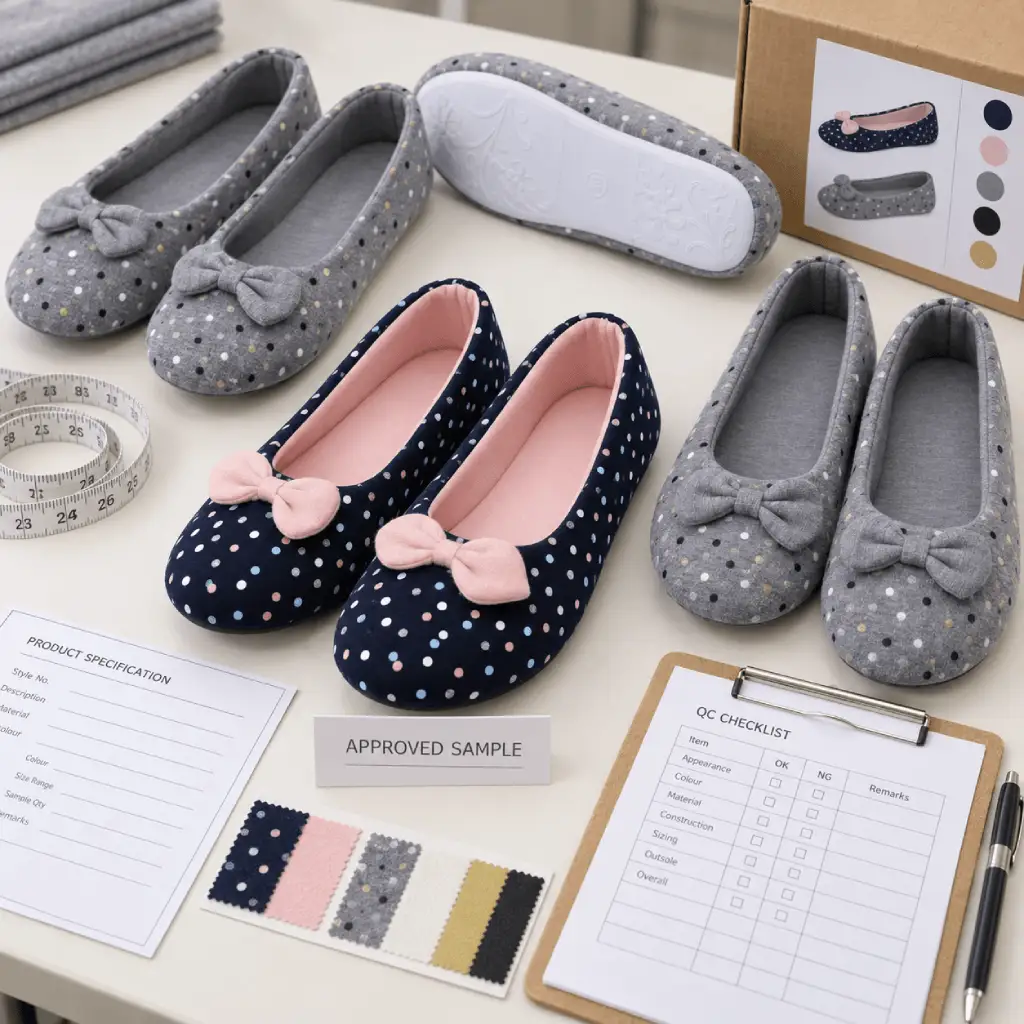
The approved sample should become a controlled production reference, but bulk quality control also needs to verify consistency across sizes, colors, material lots, and packing configurations. Open-back slippers have visible risk points because small changes in upper depth, heel allowance, lining density, or outsole position can alter both appearance and walking feel.
| QC point | Possible bulk issue | What to review |
|---|---|---|
| Heel landing and footbed length | Heel sits too close to the edge or varies by size | Usable internal length, rear allowance, size grading, and pair consistency |
| Opening and instep | Entry feels too tight, too loose, or different between pairs | Opening width, upper height, instep allowance, and symmetry |
| Lining and cushioning | Internal fit changes because thickness or density varies | Material lot, foam layers, compression, seams, and internal volume |
| Upper appearance | Pairs look uneven or openings collapse differently | Pattern shape, panel alignment, rib or pile direction, stitching, and edge finish |
| Outsole alignment | Sole sits off-center or changes the visual balance | Position, bonding or stitching, edge profile, flex position, and left-right matching |
| Color consistency | Material lots or cutting direction create visible shade differences | Approved color reference, lot comparison, direction, and consistent lighting |
| Branding and packing | Logo, label, size, barcode, pair orientation, or carton mix is wrong | Approved artwork, placement, SKU data, individual packing, ratio, and carton marks |
Quality control should begin with incoming materials and continue during cutting, sewing, assembly, outsole attachment, finishing, and packing. Final inspection verifies the finished order against the approved references, but it should not be the first time the key fit and construction points are checked.
Control-reference rule: keep the approved sample, current specification, artwork, label data, packaging instructions, and inspection criteria under revision control. Conflicting versions can create errors even when individual departments follow the file they received.
For additional workmanship risks, review UTOP’s guide to common indoor slipper manufacturing defects.
9. Prepare a Custom Men’s Open-Back Slipper Project Brief
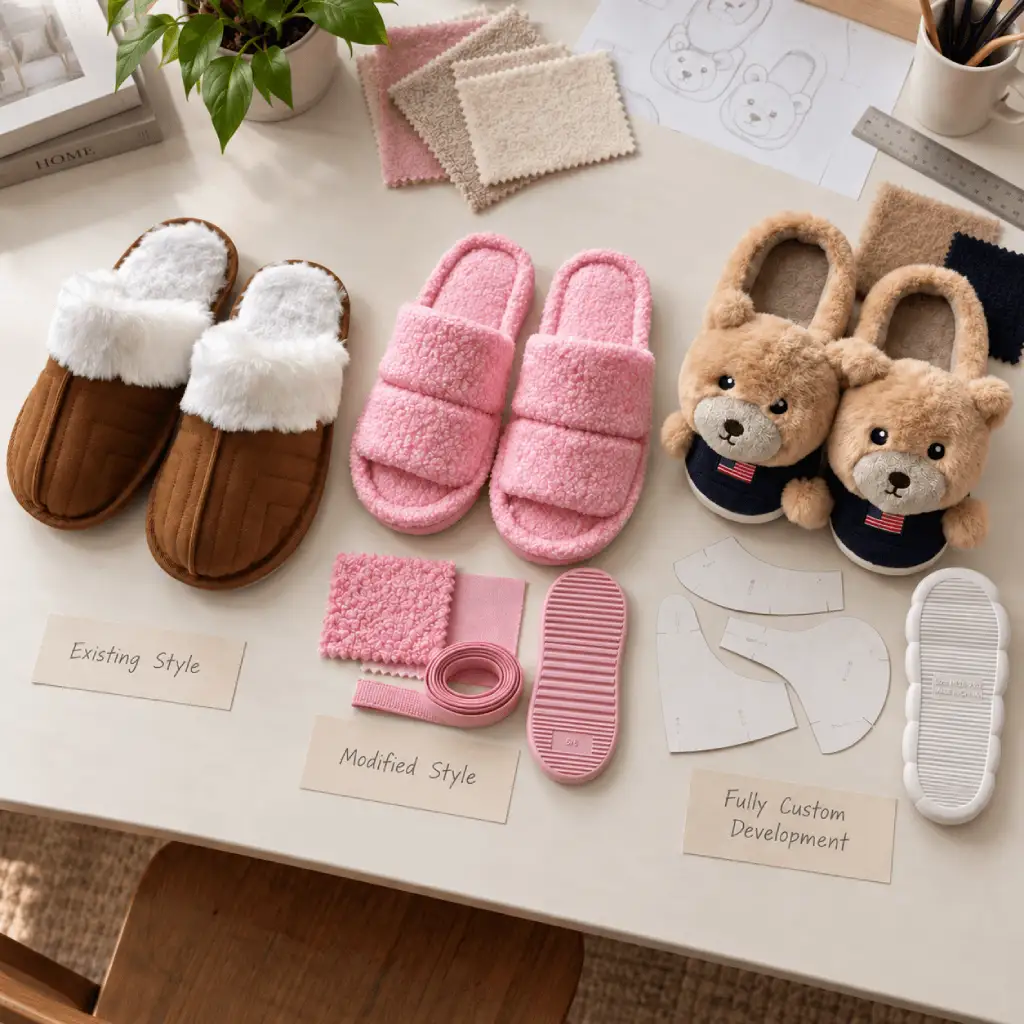
A custom project can begin with an existing UTOP product, a buyer’s physical sample, an original design, or a reference image. The fastest route to a useful review is not a general request for the lowest price; it is a structured brief that separates confirmed requirements from open questions.
| Brief section | Information to provide | Why it matters |
|---|---|---|
| Product direction | Reference link, sample, drawing, toe coverage, upper depth, and construction | Defines the starting shape and technical review |
| Commercial plan | Target market, channel, season, quantity estimate, price position, and schedule | Guides material, process, assortment, and quotation assumptions |
| Materials and fit | Upper, lining, foam, fit reference, size range, colors, and approved standards | Controls internal volume, appearance, comfort direction, and grading |
| Outsole | Material direction, thickness, weight, tread, color, attachment, and intended use | Affects balance, construction, tooling, walking feel, and QC |
| Branding | Logo file, size, position, colors, application method, labels, and approvals | Allows the factory to test clarity, placement, material compatibility, and repeatability |
| Packaging and data | Individual format, inserts, size labels, SKU matrix, barcode files, ratios, and carton marks | Defines presentation, packing labor, carton use, and data control |
| Testing and inspection | Destination, retailer manual, required tests, inspection plan, and report needs | Allows market and buyer requirements to be reviewed before approval |
Approve the product as a complete system
The final fit sample should use the intended upper, lining, foam, outsole, and construction. Size-set approval should include the sizes most likely to reveal grading problems. Branding and packaging should then be checked on the actual material and packed product rather than from artwork alone.
For retail identifiers, the buyer or brand should provide approved barcode data. The supplier can print and apply it according to the confirmed file and placement specification. Buyers can review official GS1 barcode and GTIN guidance; the factory should not invent or change customer barcode data without authorization.
Destination requirements also vary. EU buyers can consult the European Commission’s REACH Regulation overview, while businesses selling into California can review OEHHA’s Proposition 65 business guidance. These links provide regulatory context; the applicable test, documentation, labeling, or warning decision should be confirmed for the actual product and market by the buyer’s qualified advisers.
Packaging should be confirmed with the complete pair. UTOP’s Footwear Packaging Guide explains individual packing, labels, barcodes, ratios, cartons, and approval records in more detail.
Quotation tip: ask each supplier to list its assumptions for materials, lining, outsole, branding, packaging, size range, inspection, and timing. A total price is not comparable when the underlying specifications are different.
Explore UTOP’s custom indoor slipper product directions, learn more about UTOP Slippers, or send your men’s slipper project brief for review.
10. Frequently Asked Questions About Men’s Open-Back Slippers
What are men’s open-back slippers?
They are slippers without full heel coverage. The toe may be open or closed. Common directions include closed-toe mules, scuffs, open-toe summer slippers, cross-band styles, and some clog-inspired house shoes.
Are open-back slippers easier to fit than closed-back slippers?
They can be easier to enter, but they are not automatically easier to fit. Buyers still need to check heel landing, usable footbed length, opening width, instep space, upper depth, lining thickness, and outsole balance. Closed-back styles add further requirements around heel shape and the rear opening.
What materials can be used for open-back slippers for men?
Possible upper directions include corduroy, knit, jersey, micro-suede-style textiles, faux wool, sherpa, velvet, and other suitable materials. The right choice depends on season, upper stability, lining, price position, logo method, packaging, and the approved product specification.
Which outsole is suitable for men’s open-back house slippers?
TPR, EVA, point-plastic cloth, and other constructions may be considered. The suitable option depends on the required weight, thickness, hardness or density, tread, intended use, attachment method, upper depth, and approved sample. Material name alone does not prove grip, durability, support, outdoor suitability, or cost.
Should buyers approve more than one sample size?
Yes, especially when the order covers a broad range, uses thick lining, or has a structured upper. Reviewing a small, middle, and large size helps confirm that heel landing, opening, toe room, and overall proportions remain consistent.
Can men’s open-back slippers be customized with a logo?
Yes. Depending on the selected material and construction, branding may include embroidery, woven or printed labels, insole branding, patches, or approved packaging elements. The actual logo should be tested and approved on the intended material at the confirmed size and position.
What information is needed for a wholesale quotation?
Provide the preferred product link, SKU, physical sample, or reference image together with the target market, estimated quantity, size range and ratio, colors, upper and lining materials, outsole requirements, logo file, packaging plan, destination, inspection or testing requirements, and requested schedule.
Final takeaway: a reliable men’s open-back slipper program depends on the fit reference, upper retention, lining volume, outsole balance, size grading, controlled approvals, and bulk consistency—not on the open-heel silhouette alone.
Planning a wholesale men’s slipper program? Send UTOP your product reference and project requirements for a practical development review.