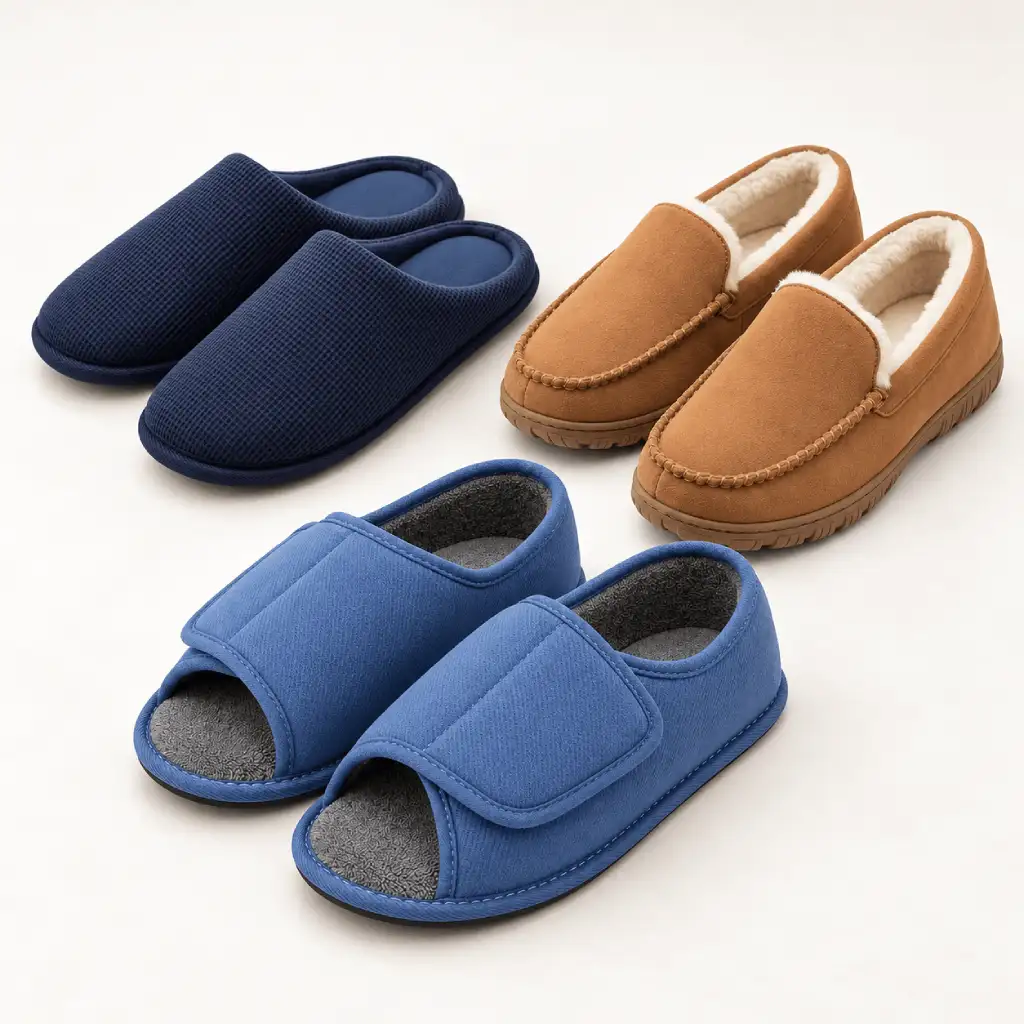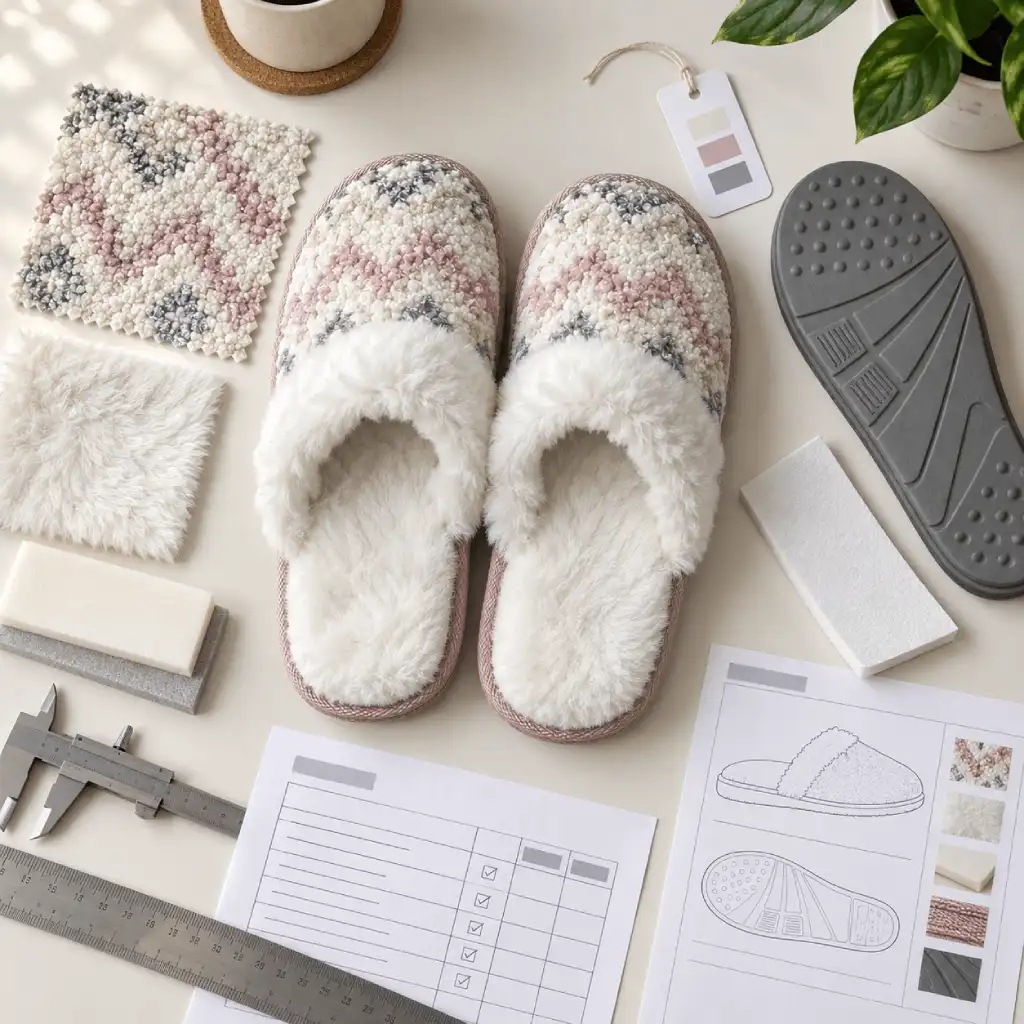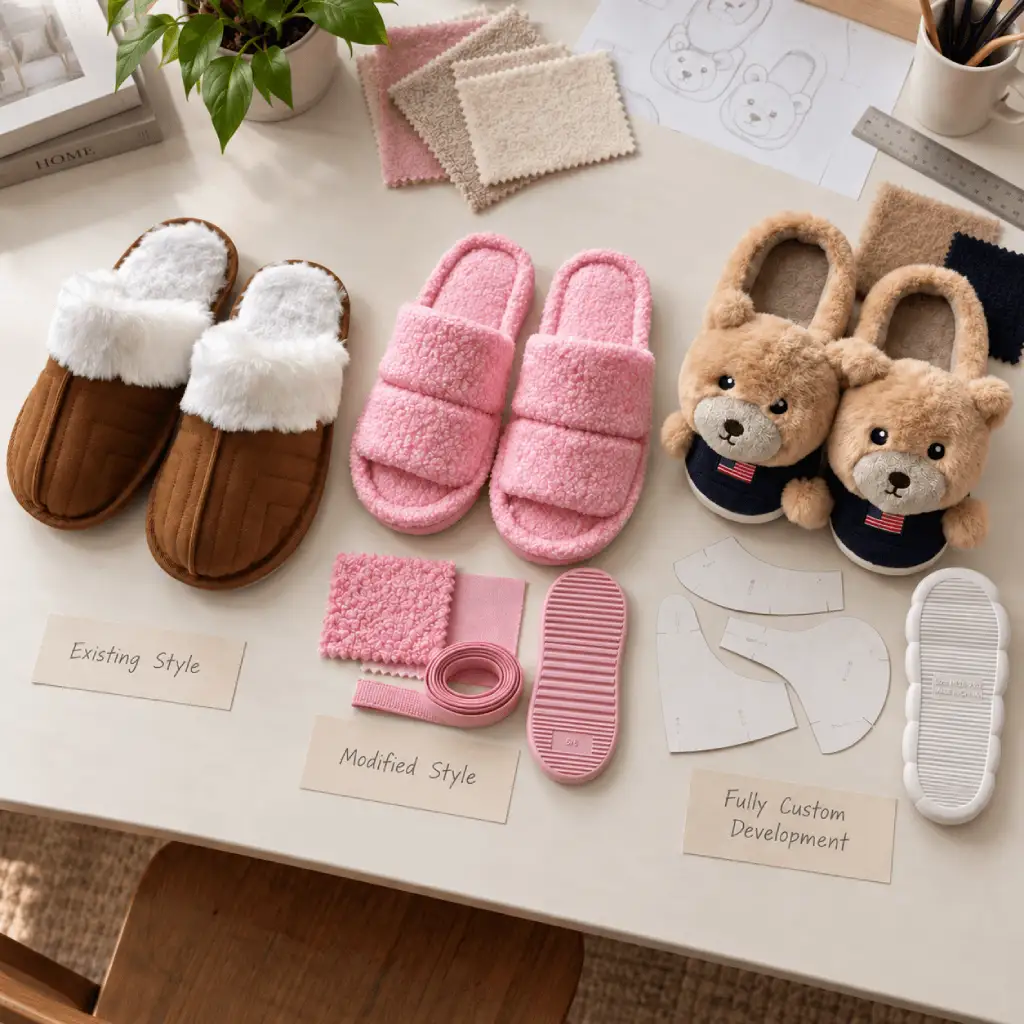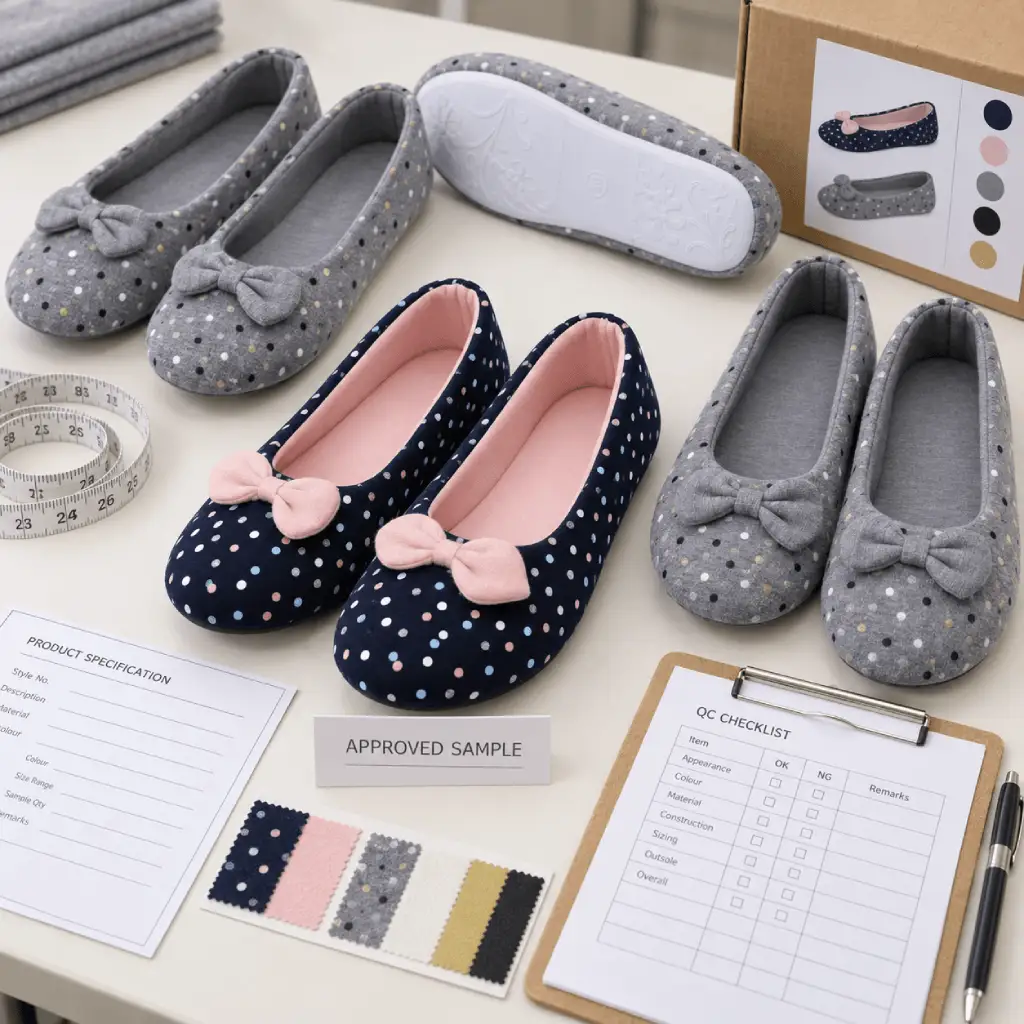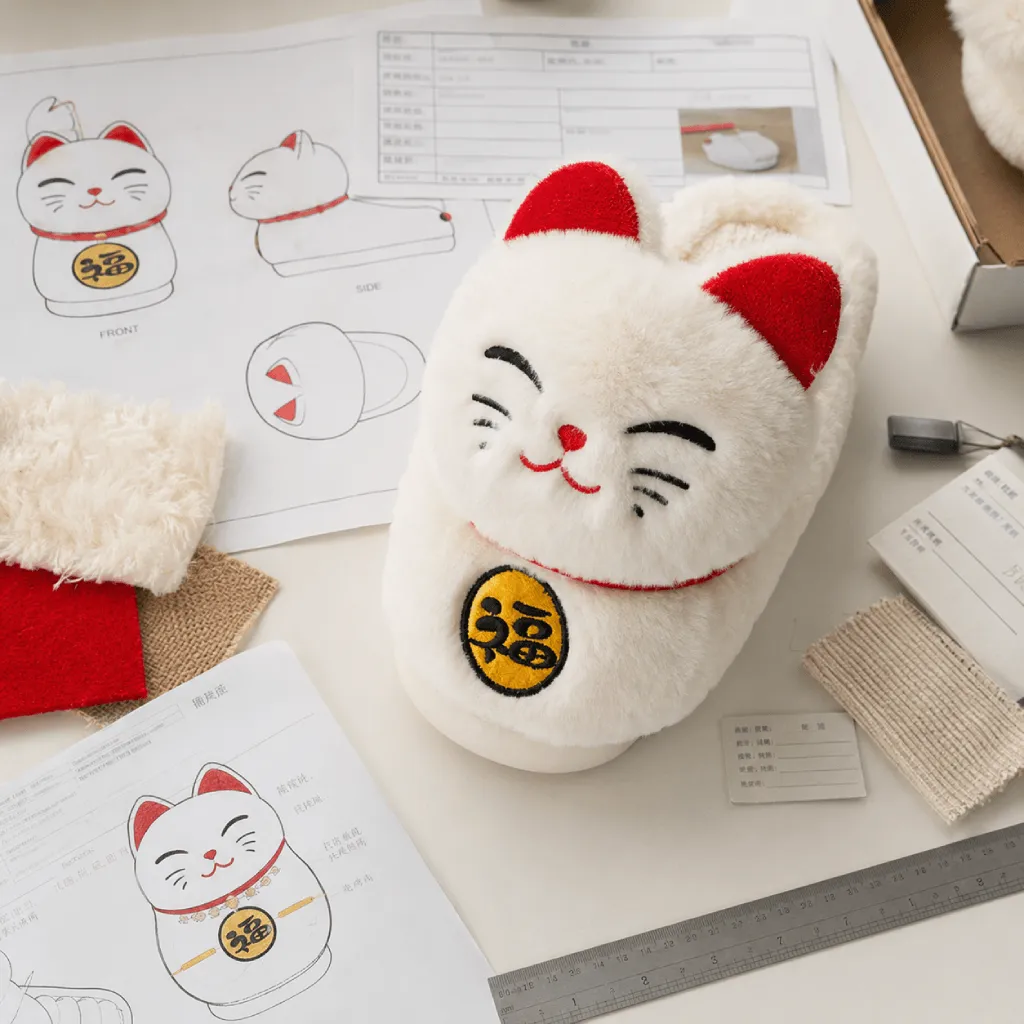
Slipper boots can look simple on a product board: a warm lining, a higher upper, and a comfortable sole. In development, however, the extra height changes much more than the silhouette. The foot has to pass through the opening, the lining takes up internal space, the shaft must recover after packing, and the proportions have to work from the smallest size to the largest.
That is where many bootie slippers succeed or fail. A middle-size sample may look balanced on a table but feel tight at the instep, open too widely around the ankle, or lose its shape after several days in a carton. These are pattern, material, grading, and packing decisions—not details to leave until final inspection.
This guide is written for brands, importers, wholesalers, retailers, and sourcing teams planning indoor slipper boots, private-label ranges, or custom seasonal programs. It explains what to define before quotation, what to check during sampling, and what should remain controlled in bulk production.
Buyer takeaway: approve the boot as one system—shaft, opening, lining, footbed, outsole, fit, size grade, branding, and packing. If one of these changes, the finished fit or shape may need to be reviewed again.
Scope: this article covers slipper boots and slipper booties intended mainly for indoor use. A high upper or molded outsole does not by itself make a product waterproof, weatherproof, slip-proof, or suitable for every outdoor surface.
Buyers who are still comparing silhouettes can start with UTOP’s custom indoor slipper product center before preparing a more detailed brief.
Written by the UTOP Slippers Sourcing Team, with product-development, sampling, and quality-control input from our indoor slipper team.
1. Define Slipper Boots and Bootie Slippers
A slipper boot is an indoor slipper with an upper that extends above the heel and covers the ankle or part of the lower leg. Bootie slippers usually describe the same general family, especially softer, cozy styles with an ankle-height shape. In retail catalogs, the two names often overlap.
The name is useful for finding the category, but it is not a production specification. Two products sold as slipper boots may use different openings, shaft heights, heel structures, linings, footbeds, outsoles, and entry methods. A supplier cannot quote or grade them accurately from the name alone.
| Term in the brief | What it suggests | What still needs to be defined |
|---|---|---|
| Slipper boots | A higher indoor-slipper upper | Shaft height, opening, heel, lining, outsole, fit, and intended use |
| Bootie slippers | A soft ankle-covering slipper direction | Whether the shaft stands, folds, stretches, or uses reinforcement |
| House slipper boots | Indoor use and a homewear position | Floor-contact material, structure, care claim, and performance requirements |
| Indoor slipper boots | Primary use inside the home | Whether occasional outdoor transition is expected and how it will be tested |
Slipper boots are also closed-toe products, but “closed toe” only describes the front of the foot. The boot-style shaft, ankle opening, heel retention, and entry are separate decisions. Extending a low house-shoe pattern upward does not automatically create a well-fitting bootie.
Specification rule: describe the physical product—shaft height, opening, heel, lining, footbed, outsole, and entry—instead of asking a manufacturer to interpret “warm slipper boot” from a reference image.
2. Set the Shaft, Opening, Heel, and Cuff
The higher upper is the feature that gives slipper boots their visual identity. It is also where the product gains several new failure points. A shaft can lean, wrinkle, twist, or collapse; an opening can look neat but be hard to enter; and a thick cuff can reduce the usable space around the ankle.
Start with the entry, not the standing photo
A narrow opening may photograph well while making the slipper difficult to put on. A wider opening improves entry but can reduce heel and ankle retention. The correct balance depends on the pattern, lining thickness, instep volume, shaft material, and whether the product is intended for bare feet, thin socks, or heavier seasonal socks.
Measurements are useful only when the method is clear. “Opening: 24 cm” could mean a flat width, a full circumference, a relaxed knit, or a stretched knit. The specification should identify the location, product condition, sample size, unit, and comparison or tolerance method.
Useful boot-specific measurements
- finished shaft height from an agreed heel or sole reference;
- top opening circumference or relaxed flat width;
- instep height or vamp volume where required;
- heel-wall height and reinforcement area;
- cuff depth and fold position;
- usable inside length, outsole length, and outsole width.
Decide what the cuff is meant to do
A fold-over faux-fur cuff may be mainly decorative, while a rib-knit cuff may stretch to help entry. A straight woven shaft may rely on its opening shape, elastic, or a split construction. Buyers should state whether the cuff stays folded, can be worn upright, or must recover to a defined appearance after packing.
Pull loops and side elastic can be useful, but they should not be added as late styling details. Their dimensions, reinforcement, stretch, recovery, seam position, and left-right placement can affect both use and bulk consistency.
Development rule: approve the way the wearer enters the boot as carefully as the way the boot stands on a table.
3. Choose Upper, Lining, and Cushioning Materials as a System
Warmth and softness are common goals for slipper boots, but neither is a complete material specification. The upper and lining also affect stretch, entry, internal volume, seam behavior, logo application, packing recovery, and the way the shaft holds its shape.
For wholesale slipper boots, the same silhouette can behave very differently when made in cable knit, plush, faux suede, fleece, or quilted fabric. Material choice should follow the intended construction rather than being selected from a swatch card in isolation.
| Upper direction | Typical visual character | Buyer review points |
|---|---|---|
| Jersey or cable knit | Soft seasonal homewear | Stretch, recovery, snagging, backing, seam support, and logo method |
| Plush, teddy, or faux fur | Full, warm, gift-led appearance | Pile height, density, backing, shedding expectations, seam visibility, and recovery |
| Faux suede or microsuede | Cleaner and more structured surface | Hand feel, backing, color consistency, seam marks, and shaft support |
| Sherpa-style or fleece fabric | Cozy texture with varied bulk | Thickness, stretch, backing, surface consistency, edge finishing, and internal volume |
| Quilted or padded textile | More defined winter styling | Fill distribution, stitch spacing, panel symmetry, compression, and recovery |
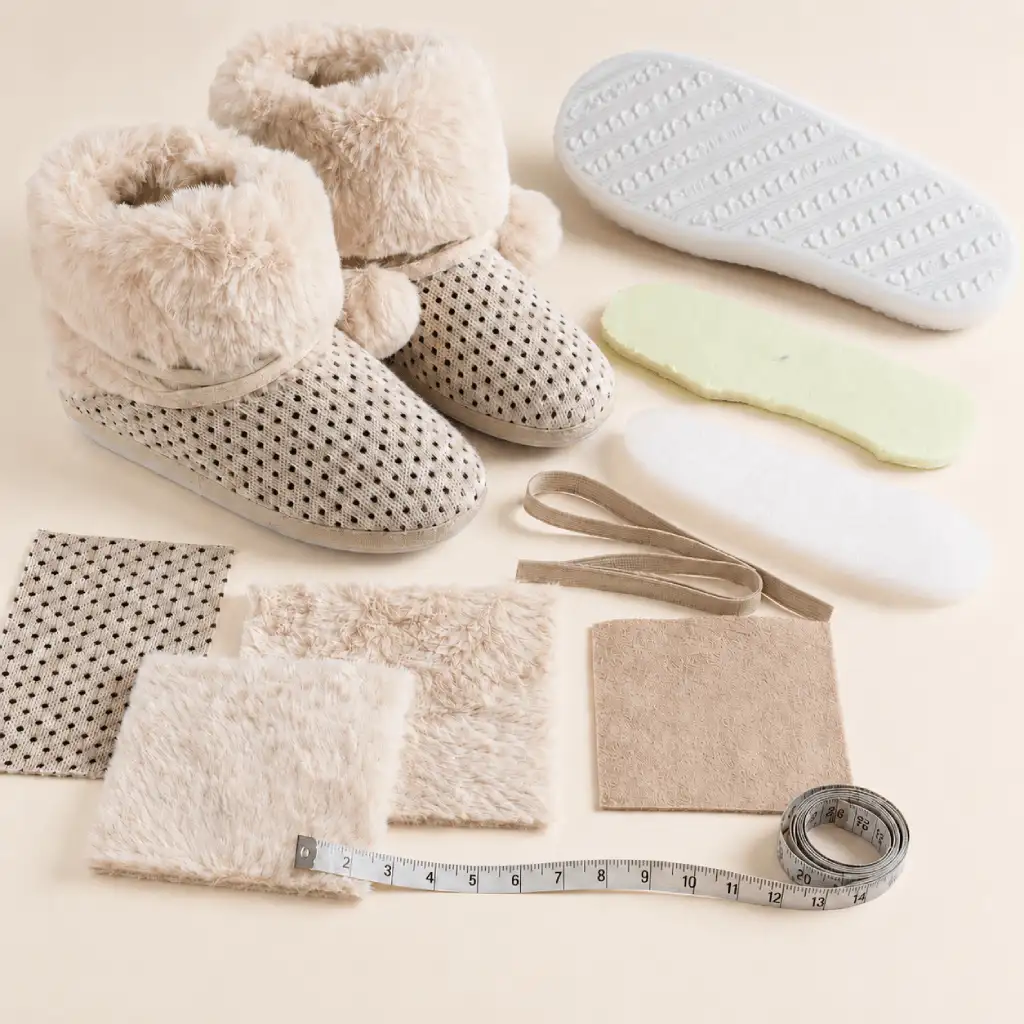
The lining changes the fit before anyone wears the boot
A thick plush or sherpa-style lining takes space from the foot, instep, heel, and opening. It can also make the shaft heavier and increase packing volume. This is why an unlined trial upper is not a reliable fit sample for a heavily lined bootie slipper.
The intended lining should be present when the pattern, opening, and size are approved. If it changes later, recheck entry, inside length, instep pressure, heel position, and ankle comfort. UTOP’s Plush Slippers Wholesale Guide provides more detail on pile, backing, surface control, and packing recovery.
Cushioning also consumes internal volume
A thicker footbed can raise the foot and reduce instep room. Memory foam may improve step-in softness, but its grade, thickness, supporting layers, cover, recovery, and finished fit still need to be approved together. The Memory Foam Slippers Buyer’s Guide explains this cushioning stack in more detail.
What an approved material record should identify
- material name, composition or supplier reference where applicable;
- surface, backing, thickness, weight, pile, stretch, and color direction as relevant;
- where the material is used in the upper or lining;
- the approved swatch and the finished sample using it;
- any buyer-required testing, care, or performance criteria.
A swatch confirms only part of the decision. Cutting, stitching, brushing, logo application, shaping, and packing can change the way a fabric looks and behaves. The finished boot remains the more useful reference.
4. Control Fit at the Foot, Instep, Ankle, and Shaft
Fit is where slipper boots differ most clearly from a low house slipper. The wearer must first pass through the opening and then settle into the footbed, while the heel and upper move with the foot. A bootie can have the correct inside length and still be difficult to enter or uncomfortable around the instep.
| Fit zone | What to review | Common warning signs |
|---|---|---|
| Toe and footbed | Usable inside length, width, toe volume, and cushioning | Toe pressure, foot overhang, or excessive empty length |
| Instep and entry | Whether the foot passes through without excessive pulling | Tight seam pressure or a foot that cannot enter easily |
| Heel and ankle | Heel position, retention, collar pressure, and comfort | Excessive lifting, rubbing, or the upper collapsing behind the heel |
| Shaft | Coverage, opening, standing or folded shape, and symmetry | Twisting, unequal height, tightness, looseness, or poor recovery |
Fit the boot with the intended sock direction
A winter style may be worn barefoot, with a light sock, or with a thicker seasonal sock. Sample reviewers should not use different assumptions and then compare comments as though they tested the same fit. The product brief should state the intended direction, target wearer, and market size system.
Grade the opening and shaft, not only the sole
Searches for slipper boots for women and men’s slipper boots describe useful commercial groups, but the size label alone does not solve the pattern. Women’s ranges may use decorative cuffs, narrower-looking proportions, or more colorways; men’s ranges may use wider lasts or more structured soles. In either case, the opening, instep, heel, shaft, and footbed have to progress together.
A common mistake is to enlarge the outsole and main upper while leaving the opening or cuff almost unchanged. Large sizes may become difficult to enter, while small sizes can look loose at the ankle. Logo positions, cuff depth, panel proportions, and shaft height may also drift.
Grading rule: review the edge sizes, not only the central size. A neat size chart can still hide an entry or proportion problem at the smallest or largest end of the range.
For measurement methods, size mapping, grading, and bulk size ratios, see UTOP’s Slipper Size Chart and Bulk Sizing Guide.
5. Match the Outsole to the Intended Use
A higher upper does not decide whether slipper boots are indoor-only or suitable for occasional transitions outside the home. The outsole, attachment, upper construction, and finished product specification matter more.
For UTOP’s common slipper directions, cut-sheet EVA can support lightweight and flexible indoor designs, while a molded TPR outsole can create a more defined edge, sidewall, and tread direction. Neither material is automatically cheaper, safer, more durable, or more slip-resistant without a complete specification and suitable evidence.
| Outsole direction | Common development use | Buyer review points |
|---|---|---|
| Cut-sheet EVA | Lightweight, flexible indoor slipper boots | Thickness, density, weight, flatness, tread or surface, edge finish, and attachment |
| Molded TPR | More defined house-shoe and indoor/outdoor-looking structures | Compound, hardness, thickness, weight, tread, sidewall, mold groups, and attachment |
| Textile-based bottom | Soft, lightweight, indoor-focused booties | Floor-contact treatment, edge finishing, wear direction, flexibility, and buyer-required testing |
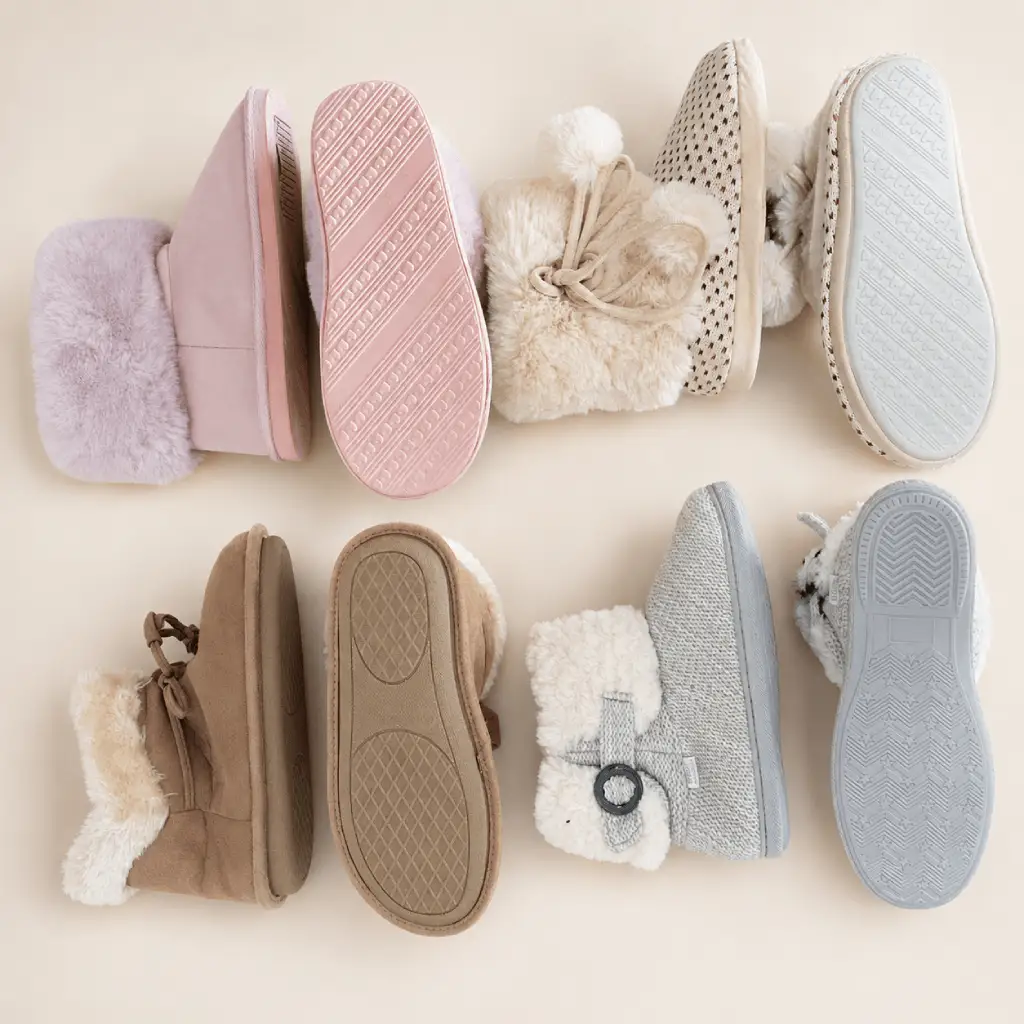
Use the actual outsole name in the specification
Buyers may search for bootie slippers with rubber soles, but “rubber sole” is often used loosely in retail language. A production brief should identify whether the proposed outsole is TPR, rubber, EVA, textile-based, or another material, together with its molding or cutting direction and attachment method.
In UTOP’s common constructions, welt-stitched uppers may be paired with TPR or EVA soles; side-stitched structures are commonly used with TPR; and cold-glued constructions are commonly used with EVA. TPR can also be cold-glued when surface treatment, adhesive, pressing, and process conditions are properly matched. The final method still depends on the specific product.
Review the sole with the upper attached
A heavier sole can make a soft bootie feel more grounded, but it can also pull against a very light upper. A flexible sole may feel comfortable while the heel and shaft lag behind the foot if their structure is too soft. Balance, flex, heel movement, and edge finishing should be checked on the finished pair.
Performance boundary: grip, abrasion, flexibility, and outdoor suitability depend on the material formulation, hardness or density, thickness, tread, attachment, floor surface, wet or dry conditions, and test method. Avoid “slip-proof” or universal outdoor claims without product-specific evidence.
For a deeper review of outsole materials, floor contact, test language, and bulk checks, use UTOP’s Slip-Resistant Outsole Guide.
6. Plan Private-Label Branding Around the Boot Construction
The extra upper area gives slipper boots more places for a logo, label, patch, cuff detail, or decorative panel. It also gives soft materials more opportunities to distort under the weight or stiffness of the branding.
Embroidery that looks crisp on flat microsuede may sink into long-pile faux fur. A heavy patch can pull a knit shaft out of shape. A woven label near the cuff may sit differently after the cuff is folded. Branding should therefore be sampled on the real material and in the real location.
| Branding area | Possible direction | What to approve |
|---|---|---|
| Shaft or vamp | Embroidery, patch, print, or decorative panel | Artwork, backing, stitch density, position, puckering, and size grading |
| Cuff or side seam | Woven label, flag label, pull loop, or trim | Folded and upright appearance, orientation, reinforcement, and left-right match |
| Footbed | Printed, woven, or embossed branding where feasible | Position, color, clarity, wear direction, and centering |
| Outsole and packaging | Molded mark, tread detail, box, band, tag, or insert | Tooling feasibility, artwork version, SKU data, barcode ownership, and final packing |
Keep the logo visually stable across sizes
A fixed distance from the sole may not look proportional when the shaft height changes. The artwork approval should show logo dimensions, placement reference points, colors, left-right orientation, and any size-specific adjustment. It should also show the product after representative packing and recovery.
For the wider sequence from product brief to artwork, labels, packaging, and production approval, see UTOP’s Private Label Indoor Slippers Manufacturing Guide.
Private-label rule: approve branding on the finished slipper, not only on a digital mockup or flat fabric panel.
7. Approve a Production-Ready Slipper Boot Sample
A sample becomes useful when the factory and buyer can reproduce and inspect it. “Looks good” is not enough for a slipper boot with a soft shaft, thick lining, shaped cuff, several panels, and a size-dependent opening.
| Approval area | What to confirm | Useful reference |
|---|---|---|
| Shape and entry | Toe, heel, shaft, cuff, opening, and ease of entry | Approved pair, measurements, and fitting comments |
| Materials | Upper, lining, trims, backing, color, hand feel, and surface | Approved swatches and material records |
| Fit and sizes | Inside length, instep, heel, ankle, sock direction, and edge sizes | Fit samples, size set, and grade record |
| Outsole | Material, dimensions, tread, flex, attachment, and edge finish | Outsole reference and finished pair |
| Branding and packing | Logo, labels, accessories, individual pack, shaping support, and recovery | Approved artwork and packed sample |
If a central component changes after approval, recheck the complete product. A new lining can make the opening tight. A thicker footbed can change instep space. A new outsole can alter balance and the way the shaft moves during walking.
For UTOP’s usual custom slipper projects, sampling typically takes 7–14 days. Material preparation, outsole tooling, revisions, testing, branding, and packaging can change the actual schedule. Buyers can review the wider process in the Custom Indoor Slipper Development Guide.
Approval practice: identify the exact approved sample and document version. Keep superseded samples and comments out of the active production reference set.
8. Control Bulk Quality and Packing Recovery
Bulk inspection should follow the features that make slipper boots different from lower house slippers. Shaft symmetry, opening consistency, lining volume, heel shape, pair height, and recovery after packing deserve their own checks.
| Inspection point | What to check | Why it matters |
|---|---|---|
| Upper materials | Correct fabric, color, pile, backing, surface, and defects | Material changes can affect appearance, structure, and fit |
| Shaft and opening | Height, opening method, entry, lean, twist, and cuff position | Boot shapes make variation immediately visible |
| Seams and panels | Alignment, puckering, skipped stitches, seam comfort, and edge finish | Soft uppers can amplify distortion |
| Pair consistency | Left-right shaft height, opening, heel, logo, trim, and color | The pair is viewed and worn together |
| Fit and sizing | Inside length, instep, heel, opening, and selected control sizes | Confirms that the approved grade is being repeated |
| Outsole attachment | Position, bond or stitch quality, edge finish, flex area, and match | Connects the sole and upper as one moving product |
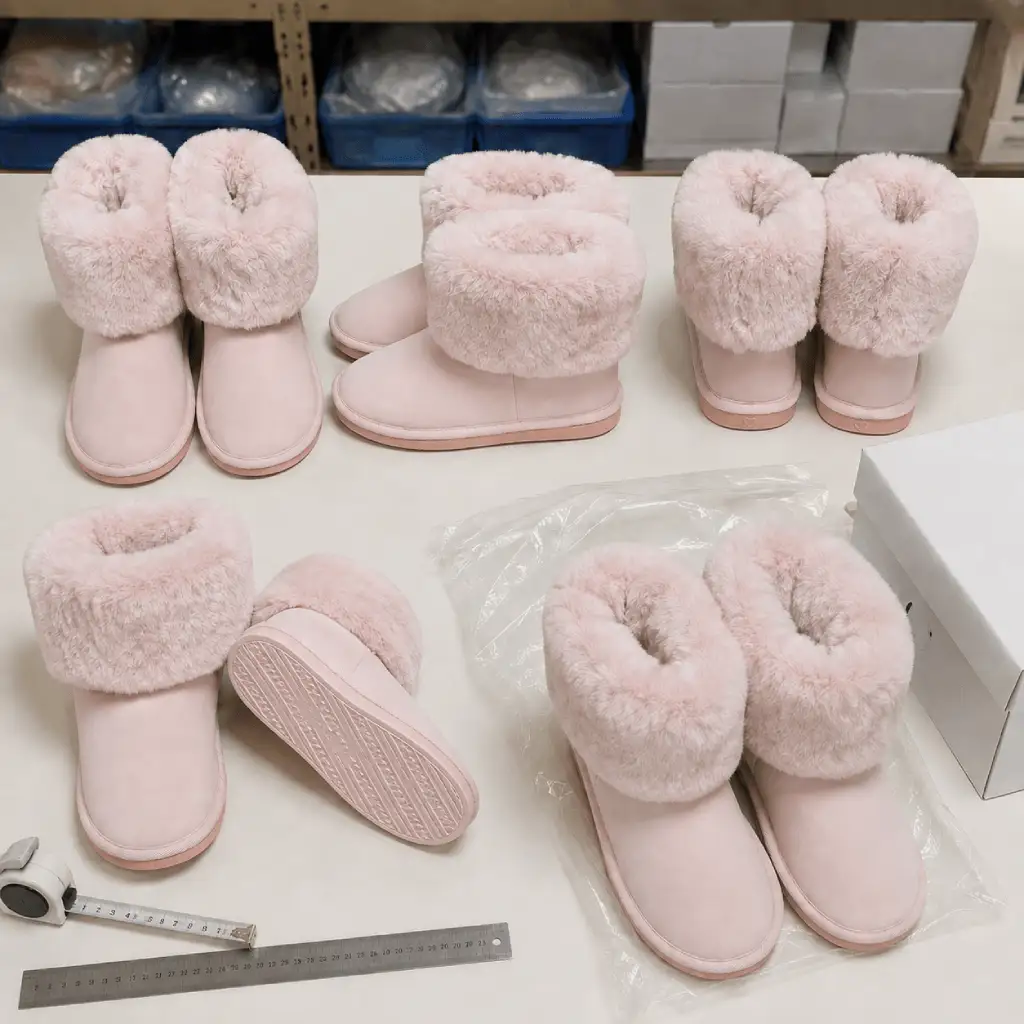
Inspect the product in the condition the buyer will receive it
Slipper booties use more upper material and carton volume than low slippers. Folding or compressing the shaft may improve packing efficiency, but the buyer should decide what level of folding is acceptable and how the product should look after unpacking.
Some soft knit or plush styles may recover with light shaping. A padded, faux-suede, or more structured shaft may need tissue, an insert, a box, or additional space. There is no universal packing method that suits every boot construction.
A useful packing trial should confirm
- the individual bag, band, insert, tissue, or box;
- how the shaft and cuff are folded or supported;
- the size ratio and orientation inside the inner pack or carton;
- representative compression and conditioning time;
- the accepted appearance after unpacking and reasonable recovery.
For typical confirmed UTOP orders, bulk production usually takes about 30–45 days after sample approval and other necessary approvals are complete. Material preparation, outsole tooling, order quantity, brand details, testing, packaging, and the agreed schedule can change the actual timing.
For broader inspection planning, use the Footwear Quality Control Guide for Bulk Slipper Orders. Packaging labels, pack ratios, carton planning, and packed-sample approval are covered in UTOP’s Footwear Packaging Guide.
Packing rule: an unpacked showroom pair does not prove that the selected packing method will protect the shaft, cuff, heel, and pair appearance through delivery.
9. Prepare a Wholesale RFQ and Review the Supplier
The phrases “slipper boots wholesale” and “slipper boots manufacturer” may have limited visible search volume, but the procurement task is real: turn a visual idea into a quotation that can be compared, sampled, and produced without ten different interpretations.
A useful RFQ gives every supplier the same product direction. It also makes gaps visible early, when they can still be discussed without delaying approved production.
| RFQ item | What the buyer should provide | Why it helps |
|---|---|---|
| Product reference | Photo, current product, physical sample, sketch, or tech pack | Defines the visual and structural starting point |
| Target market and channel | Country or region, wearer, season, retail channel, and price direction | Shapes sizing, labeling, packaging, testing, and product position |
| Quantity and assortment | Estimated total, colors, size range, size ratio, and repeat-order expectation | Supports material, outsole, MOQ, cost, and production planning |
| Construction | Shaft, opening, heel, cuff, upper, lining, footbed, outsole, and attachment direction | Prevents suppliers from quoting different products |
| Branding and packing | Logo file, placement, labels, barcodes, individual pack, ratio, and carton needs | Avoids late artwork, volume, and cost changes |
| Quality and delivery | Inspection plan, test requests, required evidence, destination, and schedule | Allows feasibility and timing to be reviewed before sampling |
Evaluate answers, not only unit price
A capable supplier should be able to explain which details are confirmed, which require a sample, and which depend on material sourcing, outsole tooling, testing, or order volume. Vague agreement to every request is less useful than a clear list of open decisions.
MOQ should be reviewed against materials, colors, size range, logo method, outsole, packaging, and the level of customization. It should not be treated as one fixed number for every slipper boot project.
Set market and test requirements before approval
The buyer should identify the destination market and confirm the product-specific legal, chemical, labeling, performance, and documentation requirements with the appropriate specialists. Official resources such as the European Commission’s REACH Regulation overview and the U.S. Consumer Product Safety Commission’s manufacturing best-practices guidance are useful starting points, not substitutes for a project-specific compliance review.
Quotation rule: compare suppliers against the same product brief. A lower number has little meaning if the lining, outsole, size range, branding, packing, or quality requirements are different.
10. Slipper Boots FAQs and Next Steps
What are slipper boots?
Slipper boots are indoor slippers with an upper that extends above the heel and covers the ankle or part of the lower leg. Shaft height, opening, lining, heel structure, footbed, outsole, and fit vary by design.
Are bootie slippers the same as slipper boots?
The terms overlap heavily. “Bootie slippers” often describes softer ankle-covering styles, while “slipper boots” can include both soft booties and more structured house-shoe directions. Production should be based on the actual construction rather than the product name alone.
Should slipper boots fit tighter than normal slippers?
Not as a universal rule. The opening and ankle may provide more retention, but the wearer still needs comfortable entry, toe space, instep room, heel position, and ankle comfort. Lining thickness and intended sock use should be included in the fit sample.
Can slipper boots use TPR or EVA outsoles?
Yes. Molded TPR can suit more defined house-shoe and indoor/outdoor-looking structures, while cut-sheet EVA can suit lightweight and flexible indoor directions. The choice depends on the complete specification, intended use, construction, weight, tread, attachment, cost, and required testing.
Can slipper boots be customized for a private-label brand?
Yes. Depending on feasibility, buyers can customize upper and lining materials, colors, size ranges, cuffs, pull loops, embroidery, labels, footbed branding, outsole direction, packaging, and other details. MOQ and tooling depend on the confirmed specification.
How should slipper booties be packed for wholesale orders?
The method depends on the shaft material and structure. Some soft styles can be folded or nested; others may need tissue, an insert, a box, or more space. Approve a representative packed sample and the accepted recovery appearance before bulk packing.
What is UTOP’s usual sample and production time?
For usual custom slipper projects, sampling typically takes 7–14 days. Bulk production usually takes about 30–45 days after the sample and other necessary approvals are complete. Materials, tooling, revisions, testing, quantity, branding, packaging, and the agreed schedule can change the actual timing.
Final takeaway: successful slipper boots are not defined by a cozy silhouette alone. Buyers need a measurable opening, a workable entry, materials that suit the shaft, a fit that grades across sizes, an outsole matched to the use, and packing that protects the final shape.
Related B2B Sourcing Resources
- Custom Indoor Slipper Product Center
- Custom Indoor Slipper Development Guide
- Private Label Indoor Slippers Manufacturing Guide
- Footwear Quality Control Guide for Bulk Slipper Orders
- Footwear Packaging Guide
Planning a custom slipper boot project?
Share your reference image, sample, sketch, or tech pack together with the target market, estimated quantity, size range, material direction, shaft and opening idea, outsole, branding, packaging, and requested schedule. UTOP can review the information needed for quotation and sampling.