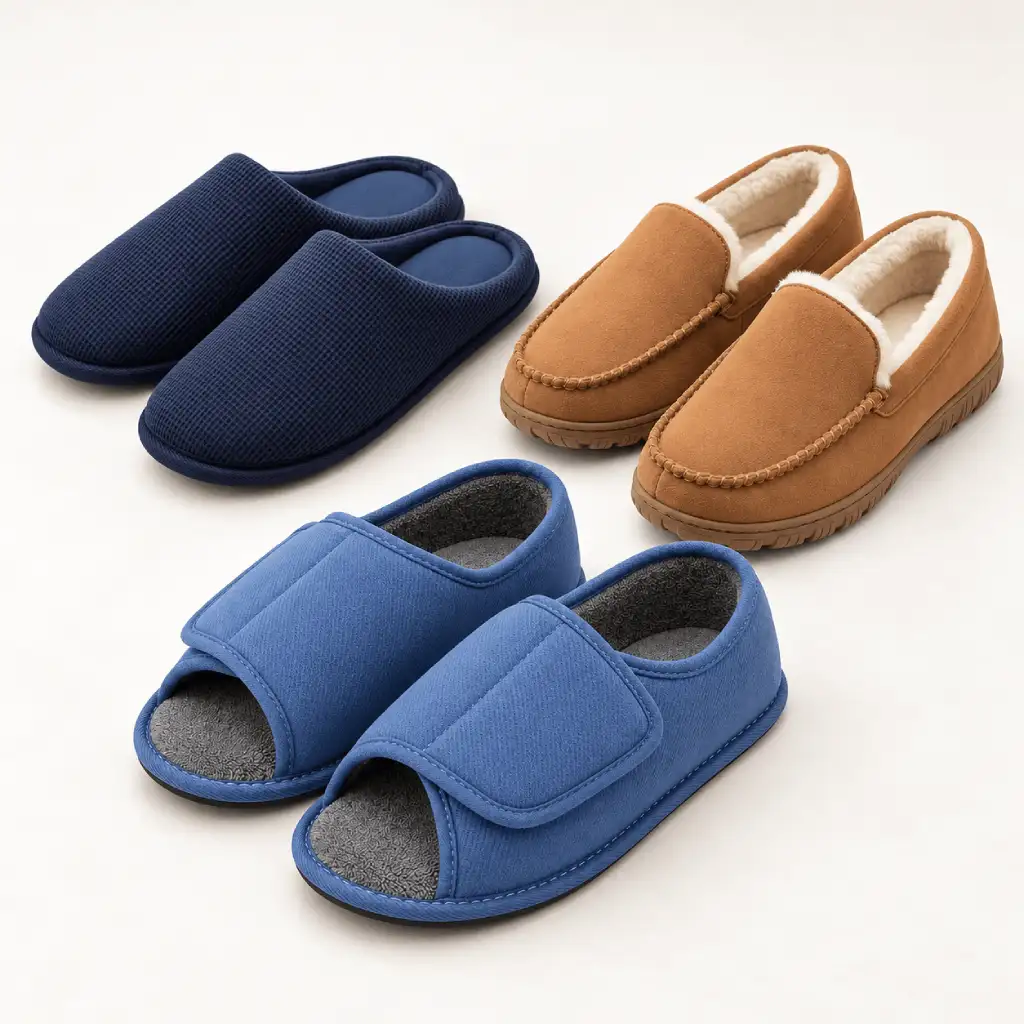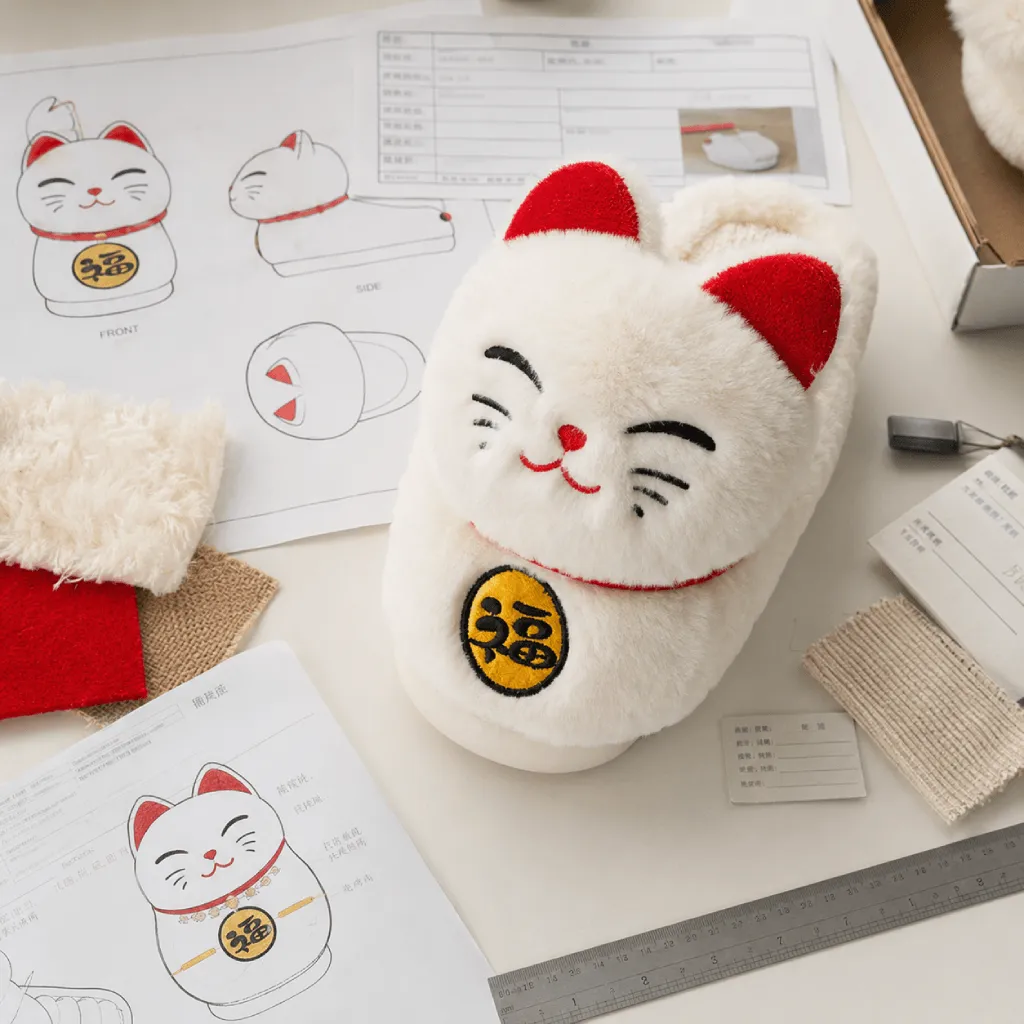
Closed toe slippers look straightforward until a buyer has to turn a reference image into a repeatable bulk product. A plush open-back mule, a structured moccasin, a full-back house shoe, and a slipper boot may all cover the toes, but they do not share the same fit, pattern, lining volume, outsole, or production risks.
That is why this closed toe slippers buyer’s guide starts with the product system rather than the silhouette alone. Toe shape, upper depth, lining thickness, cushioning, heel construction, outsole attachment, branding, and packing pressure all affect the finished pair. A late change to one component can alter fit or appearance elsewhere.
The guide is written for brands, importers, wholesalers, retailers, and sourcing teams planning closed toe slippers wholesale, private label, or custom programs. It covers the decisions that should be made before quotation, during sampling, and before bulk production is released.
Buyer takeaway: approve the upper, lining, cushioning, outsole, fit, size grading, branding, and packaging as one connected specification. A good-looking middle-size sample is only the beginning.
This is a B2B sourcing guide, not a consumer product ranking. Material names such as TPR, EVA, memory foam, plush, or sherpa-style fabric do not by themselves prove warmth, grip, durability, washability, or another measurable performance result.
Written by the UTOP Slippers Sourcing Team, with product-development and production input from our indoor slipper team.
1. Define the Toe and Heel Construction
Closed toe slippers cover the front of the foot. The term says nothing about the heel, so a closed-toe style can have an open back, a low heel wall, a full back, or an extended boot shaft. This distinction sounds basic, but it prevents a surprising number of quotation and sampling errors.
Catalog terms are not always used consistently. Closed toe house slippers, mules, scuffs, house shoes, moccasins, booties, and slipper boots may overlap, yet each name can imply a different opening, heel shape, upper depth, and fitting method. A buyer should describe both ends of the slipper and include a side view whenever possible.
| Term in a product brief | What it confirms | What still needs to be defined |
|---|---|---|
| Closed toe | The toes and forefoot are covered | Heel, opening, toe shape, lining, fit, and outsole |
| Open back | The heel remains uncovered | Upper depth, entry, heel landing, and retention |
| Full back | A heel wall encloses the back of the foot | Opening circumference, heel height, structure, and ease of entry |
| Slipper boot | Coverage extends above the heel | Shaft height, opening, lining volume, closure, and grading |
Specification rule: write “closed toe, open back, rounded toe, short-plush upper, specified lining and outsole” instead of relying on “house slipper” alone.
Buyers can use a current product such as UTOP’s teddy plush closed toe slipper as a visual starting point, then confirm the materials, dimensions, branding, size range, and packaging for the actual project.
2. Choose the Right Closed-Toe Construction
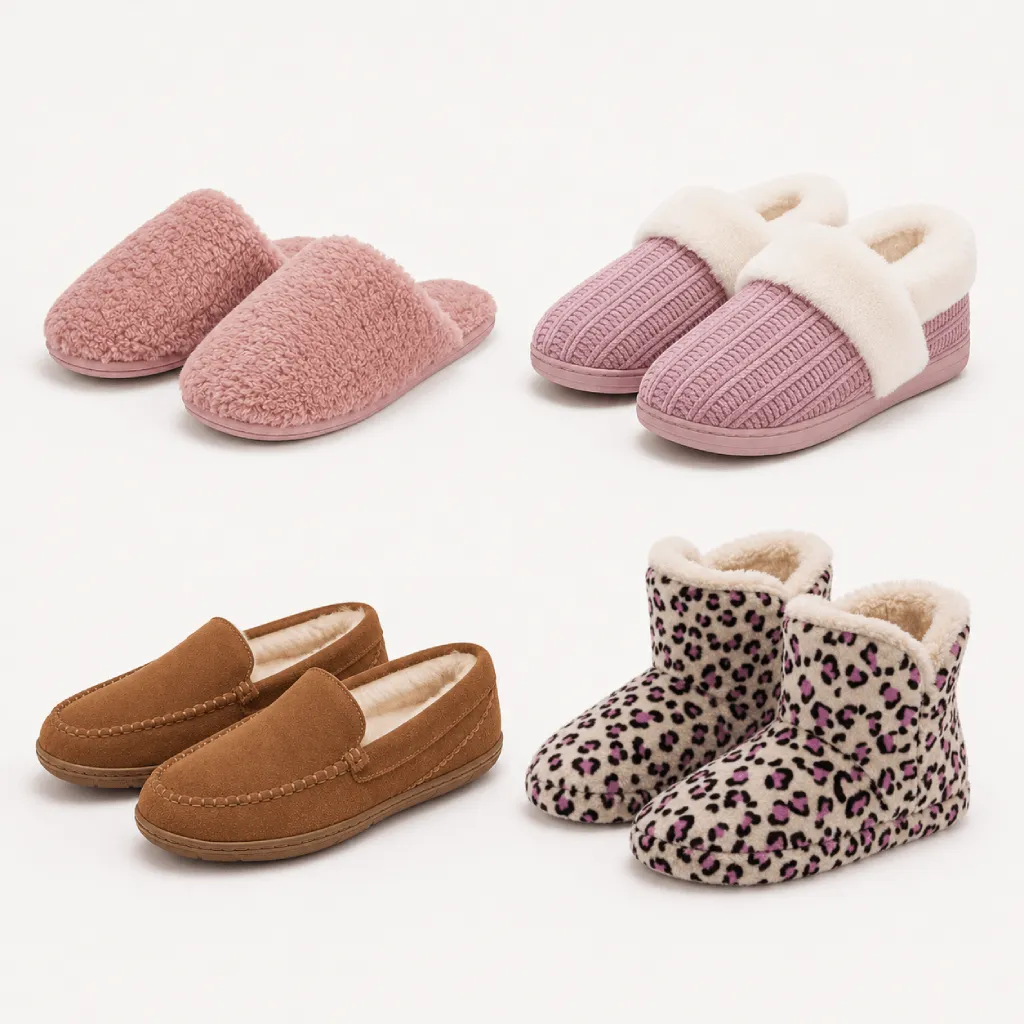
The silhouette determines where fit and workmanship risks will appear. A relaxed mule is easy to step into, but its upper depth and opening must hold the foot without feeling restrictive. A full-back style gives more heel coverage, yet it needs closer control of the opening, heel wall, and size progression.
For closed toe indoor slippers, the four directions below are useful starting points. They should not be treated as interchangeable versions of one pattern.
| Construction | Typical direction | Buyer review points |
|---|---|---|
| Closed toe + open back | Mule, scuff, easy-entry house slipper | Upper depth, opening, instep hold, heel landing, and lining volume |
| Closed toe + full back | More enclosed house shoe | Heel shape, opening circumference, reinforcement, entry, and grading |
| Moccasin style | Defined vamp and visible toe seams | Toe profile, seam position, stitch consistency, symmetry, and material stability |
| Slipper boot | Ankle or higher coverage | Shaft height, opening, entry, lining bulk, shape recovery, and packing |
The construction also changes how a product is merchandised. A soft plush mule may suit a gift-led women’s range, while a structured moccasin may suit a classic men’s program. The choice should follow the sales channel and fit target, not a broad assumption about closed toe slippers for women or men.
Do not convert one structure by adding a panel
Adding a back panel to an open-back pattern does not automatically create a well-fitting full-back slipper. The opening, heel curve, side height, reinforcement, and grade rules may all need revision. The same applies when a low house shoe is extended into a boot.
Thick lining creates another common trap. A plush upper may look roomy from the outside while the usable internal space is considerably smaller. Samples should therefore be made with the intended lining and cushioning rather than approved from an unlined trial upper.
A practical construction brief
Include front, side, rear, and outsole views; identify the toe and heel structure; and note the intended material, lining, size range, outsole direction, branding, and packing method. This gives a closed toe slippers manufacturer enough context to flag pattern or feasibility questions before sampling.
If the collection is still at the concept stage, UTOP’s custom indoor slipper product center can help buyers compare silhouettes before preparing a more detailed brief.
3. Specify Upper, Lining, and Cushioning Materials
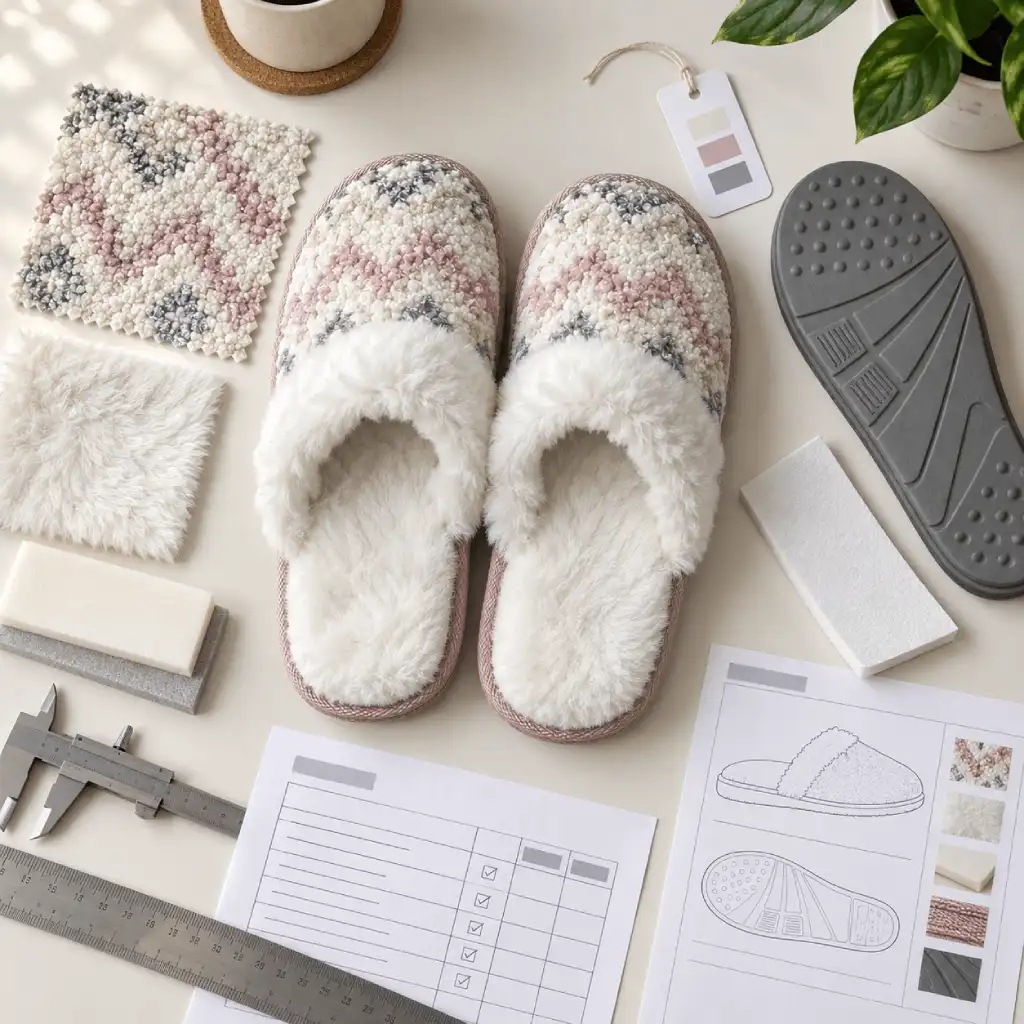
Material selection for wholesale closed toe slippers should begin with the complete product direction. The upper has to hold the intended shape, sew cleanly, support the logo method, recover after packing, and remain reasonably consistent across the bulk order. A swatch can confirm color and hand feel, but it cannot show what happens after cutting, sewing, shaping, and compression.
| Material direction | Possible use | What to confirm |
|---|---|---|
| Short plush or fleece-type fabric | Soft seasonal mules and house shoes | Pile direction, backing, shade, shedding expectation, logo clarity, and recovery |
| Sherpa-style fabric | Fuller visual texture and lining directions | Surface consistency, bulk, seam behavior, internal volume, and packing compression |
| Faux suede, corduroy, or velvet | More defined upper surfaces | Direction, reinforcement, marking, fraying, shade, and stitch appearance |
| Jersey or other knit | Flexible, lighter indoor concepts | Stretch recovery, weight, backing, edge stability, print or embroidery behavior |
| Polyester felt or wool felt | Clean-cut or structured directions | Exact material identity, thickness, surface, color, edge finish, and shape retention |
Lining changes the usable space
A thick lining occupies space around the forefoot and toe box. Replacing a light textile lining with a fuller sherpa-style fabric can make the same outer pattern feel smaller. For that reason, the lining specification should be approved together with the upper pattern, size, and cushioning.
Cushioning is a stack, not a label
A finished footbed may combine a cover material, memory foam or another comfort foam, a support layer, structural material, and the outsole. More thickness is not automatically better. A thicker stack can raise the foot into the upper and reduce toe room, while a very soft stack may compress differently during packing and wear.
Approval rule: record the upper, backing, lining, reinforcement, foam layers, footbed cover, binding, thread, and outsole as one material package. Do not approve custom closed toe slippers from loose swatches alone.
For more detail, compare the material and component directions in UTOP’s custom slipper product center, plush slippers wholesale guide, and memory foam slippers buyer’s guide.
4. Approve Fit, Toe Volume, and Size Grading
Fit is where closed-toe development differs most clearly from open-toe development. The toe box, upper height, lining, foam, and front shape directly control the usable space. Inside length matters, but it is only one part of the review.
A rounded plush toe may appear forgiving, while a tapered or structured toe can require more precise allowance. Thick winter lining may reduce usable length and width. Extra cushioning can raise the foot. A full-back construction adds opening and heel-fit questions that an open-back mule does not have.
| Fit point | Why it matters | How to approve it |
|---|---|---|
| Inside length | Shows one dimensional part of usable fit | Use an agreed measurement method and reference points |
| Toe-box width and height | Controls forefoot and toe space | Review the actual sample with final lining and foam |
| Opening and upper depth | Affects entry and foot hold | Check movement and entry in representative sizes |
| Heel structure | Changes landing, retention, and ease of entry | Approve heel height, curve, opening, and reinforcement |
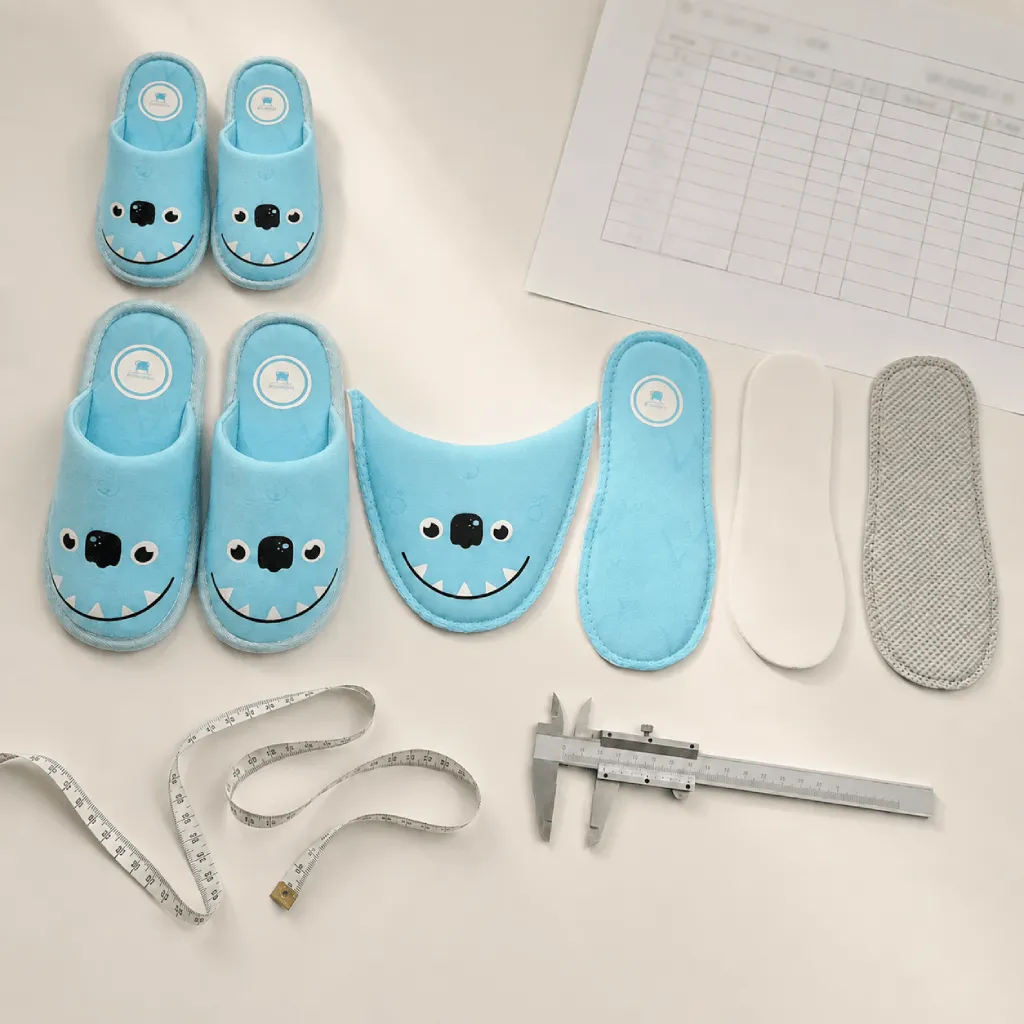
| Size progression | A middle size cannot prove the complete range | Review selected small, middle, and large sizes or an agreed size set |
Buyers ordering bulk closed toe slippers should define the size system, range, ratio, measurement method, and any critical tolerances before grading is approved. Shoe-size conversion can be used as a planning reference, but it does not replace fit approval on the actual construction.
Test more than the sample size
A style that fits well in the middle of the range may become proportionally tight in the smallest size or too open in the largest. This risk increases when the slipper has thick lining, a structured toe, a full back, or a long size range. The size-set scope should reflect the project rather than follow a fixed rule for every product.
- Confirm the intended wearer and regional size system.
- Measure defined points using the same product condition and method.
- Review toe position, forefoot space, opening, entry, and heel behavior.
- Check the sample with the final lining and cushioning package.
- Keep the approved size specification and controlled sample together.
Use conversion tables carefully
The official ISO 19407:2023 footwear sizing reference provides conversion guidance across major systems. A closed toe slippers supplier and buyer should still approve the product’s own dimensions, grading, labels, and fit because nominal size equivalence does not define internal volume.
UTOP’s slipper size chart and B2B sizing guide explains how to separate foot length, inside length, outsole length, size marking, and fit approval in a wholesale program.
5. Match the Outsole to the Construction
An outsole should be specified from the intended product, use conditions, and assembly method—not from a general belief that one material is always better. Molded TPR and cut EVA are both common in wholesale closed toe slippers, but their cost and performance depend on the actual compound or sheet, thickness, hardness or density, weight, tread, geometry, quantity, and process.
| Outsole direction | Useful characteristics to discuss | Project-specific checks |
|---|---|---|
| Molded TPR | Defined sidewall, tread, profile, and molded detail | Compound, hardness, weight, dimensions, flatness, tread, flex position, and tooling |
| Cut EVA | Lightweight bottom direction with cut-sheet construction | Sheet specification, density or hardness direction, thickness, cutting, edge finish, and attachment |
| Other lightweight bottom | Selected indoor programs with a simpler bottom structure | Complete material specification, intended use, flex, edge, attachment, packing, and required testing |
Approve the upper-to-sole interface
UTOP commonly develops welt-stitched slippers with TPR or EVA bottoms, side-stitched styles with TPR outsoles, and cold-glued styles with EVA bottoms. TPR can also be cold glued when surface preparation, adhesive, pressing, and process conditions suit the specific construction. These are production directions, not automatic guarantees of performance.
A correct upper and a correct outsole can still produce a poor pair if their sizes do not match or if positioning, stitching, bonding, pressing, or finishing is inconsistent. Sample review should include alignment, flex position, edge condition, attachment, left-right pairing, and the complete appearance of the interface.
Performance boundary: TPR is not automatically more slip resistant or durable than EVA, and EVA is not automatically the lower-cost option. Any required grip, abrasion, flex, or adhesion result needs a defined sample, method, conditions, and acceptance criteria.
Use UTOP’s TPR vs EVA sole guide to compare the main specification points before asking a closed toe slippers manufacturer to quote the bottom construction.
6. Plan Private Label and Custom Details
Private label closed toe slippers can carry branding on the upper, lining, footbed, label, outsole, hangtag, insert, individual pack, and carton. The best option is not the one with the most branded surfaces. It is the method that remains clear on the selected material, fits the construction, and can be controlled across the complete size range.
| Branding direction | Good for | Approval points |
|---|---|---|
| Embroidery | Visible upper branding on suitable panels | Artwork, stitch result, thread color, size, placement, pile or stretch effect |
| Woven or printed label | Textured materials and seam-based identity | Readability, edge, wording, fold, position, comfort, and attachment |
| Footbed print or label | Branding visible when the slipper is displayed | Surface compatibility, position, size scaling, color, and required durability |
| Molded outsole logo or tread | Integrated bottom detail | Tooling, dimensions, legibility, tread function, cost, lead time, and ownership |
| Retail packaging | Shelf presentation and SKU control | Format, artwork, barcode, labels, pair shape, packed dimensions, and carton plan |
Long-pile plush can obscure fine embroidery, while stretch fabric can distort a design if the reinforcement and stitch setup are not suitable. A logo that is balanced on a middle women’s size may also need review on smaller or larger sizes. The physical branded sample should control production, not the artwork file by itself.
Packaging needs the same early attention. Fuller custom closed toe slippers, raised trims, and structured uppers can remain compressed after a tight pack. Approve the packed presentation, recovery time, label position, pair orientation, and carton quantity before printing or bulk packing begins.
Send production-ready artwork
Provide vector artwork where available, color references, intended dimensions, placement, orientation, label wording, barcode data, and packaging dielines. Mark which files are approved and which are still for discussion.
For related planning, read UTOP’s private label indoor slippers manufacturing guide and footwear packaging guide.
7. Build a Useful Sample Approval Standard
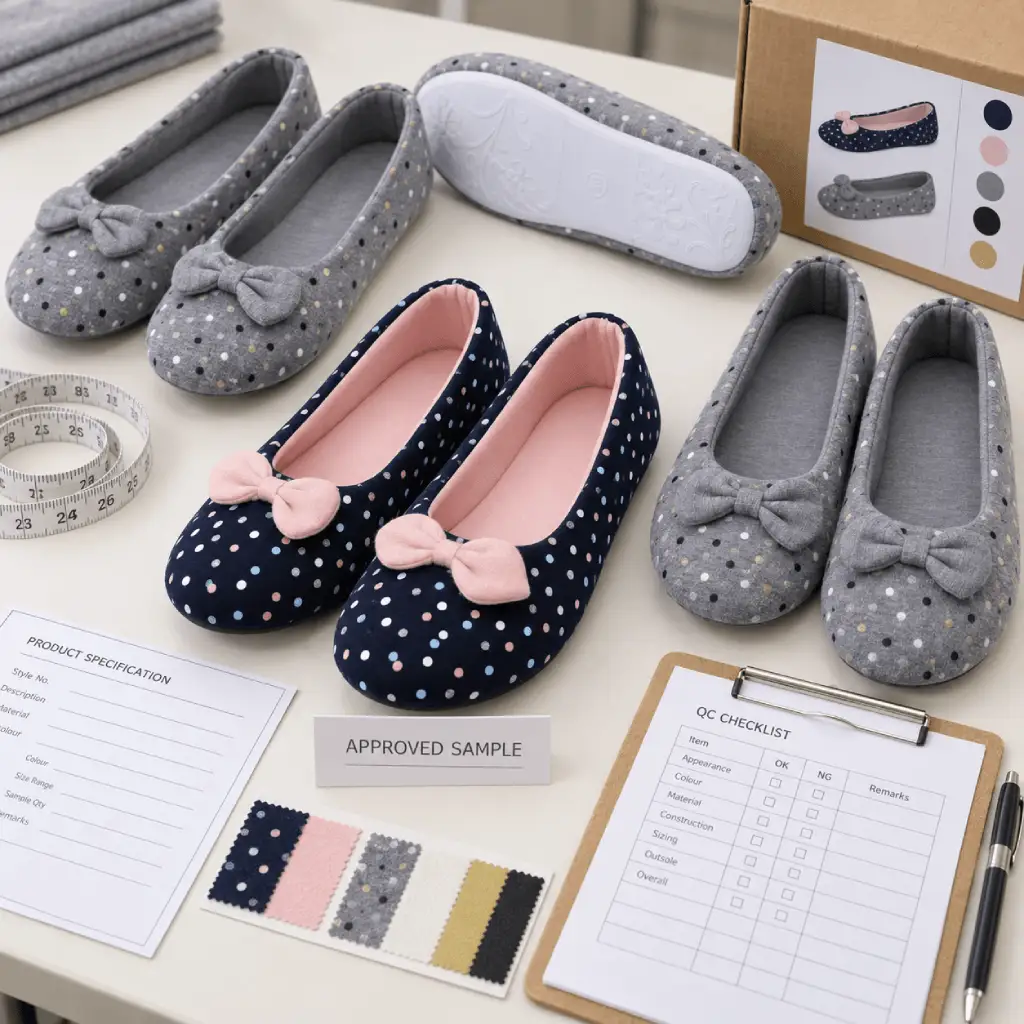
A development sample is where a visual idea becomes an inspectable product. For a closed toe slippers wholesale program, approval should cover internal fit and construction as carefully as surface appearance. Toe volume, lining bulk, pair symmetry, and packing recovery are hard to judge from a drawing.
Start with the complete pair and the latest written specification. If they conflict, resolve the difference instead of assuming which reference takes priority. When revisions are made, identify the approved version and record what changed.
| Approval area | What to check | Reference to keep |
|---|---|---|
| Silhouette and fit | Toe shape, opening, upper depth, heel, entry, fit, and size progression | Approved pair, size specification, and measurement method |
| Materials | Identity, color, surface, direction, lining, foam, trims, and hand-feel direction | Approved sample, swatches, and material specification |
| Construction | Seams, stitching, binding, reinforcement, bottom attachment, alignment, and finishing | Approved sample and construction notes |
| Branding | Method, dimensions, color, placement, orientation, clarity, labels, and wording | Artwork revision and physical branded sample |
| Packaging | Individual pack, insert, barcode, pair orientation, packed shape, recovery, and carton data | Packed sample and approved packing instruction |
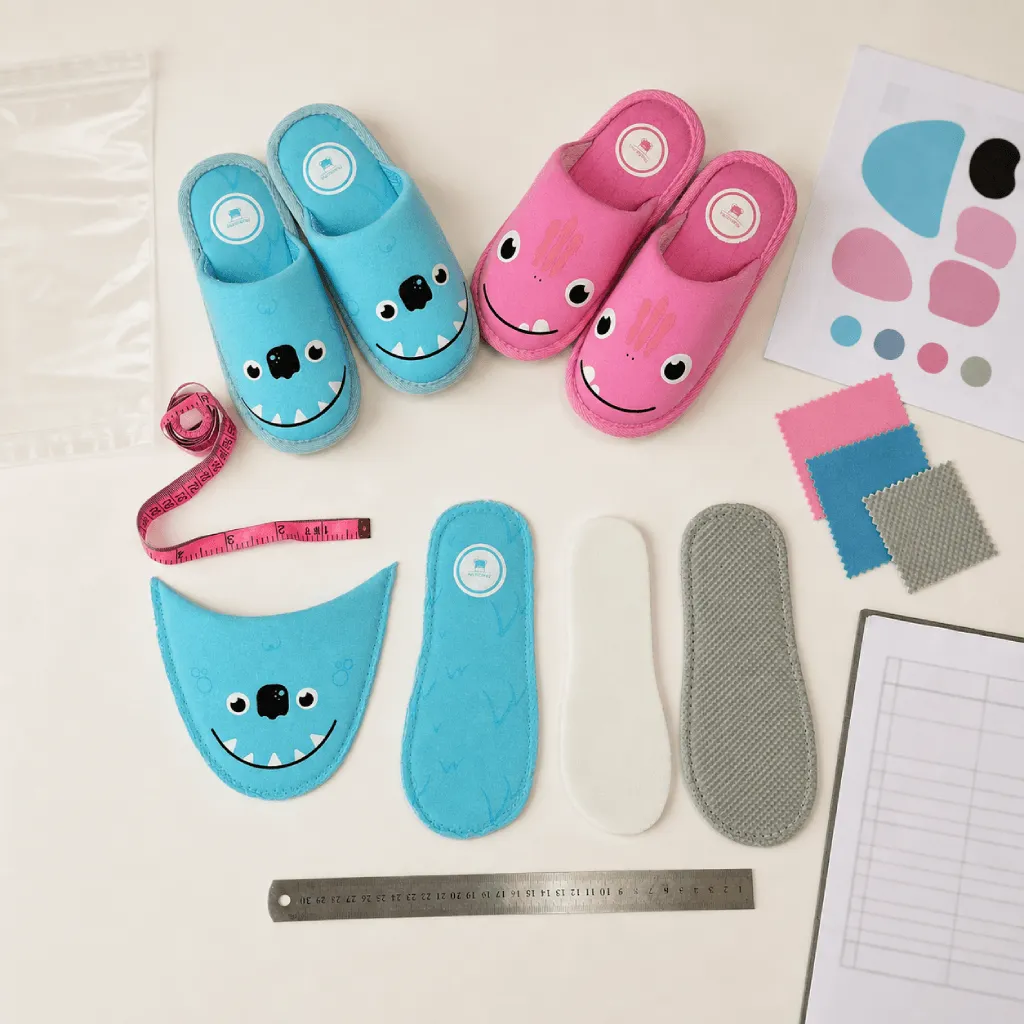
Review the packed sample, not only the display pair
A pair may look correct immediately after finishing and lose shape after a tight pack. This is especially relevant to plush uppers, full linings, structured toes, and raised decorations. Approve the individual packaging and examine how the product presents and recovers after the agreed packing condition.
During sampling, UTOP normally reviews outsole material, color, odor, pair or single weight where relevant, thickness, hardness feel, outsole length and width, flatness, tread, pairing, flex position, and upper-to-sole bonding or stitching quality as applicable. The exact scope should follow the actual bulk closed toe slippers specification and buyer requirements.
Document-control rule: the approved sample, specification, artwork, size data, comments, and packing instructions should point to the same revision. A clear approval trail is more useful than a long message history.
Sample development commonly takes about 7–14 days, but actual timing depends on material sourcing, tooling, revisions, testing, branding, and packaging. Treat the schedule as a project estimate, not a fixed promise.
The sample should also establish the quality reference used later in production. UTOP’s footwear quality control guide for bulk slippers explains how approved samples and written specifications work together.
8. Control Bulk Production Quality
Bulk quality control should verify conformity to the approved sample and current specification. A pair can look acceptable at a quick glance and still differ in toe volume, lining thickness, outsole alignment, size, branding, or pair matching. The inspection plan should reflect the actual construction instead of using the same checklist for every slipper.
Incoming materials and components
A closed toe slippers manufacturer should confirm the upper, lining, foam, outsole, trims, colors, and relevant component details against approved references before they enter production. Directional materials need particular attention because pile or nap direction can create visible shade differences under the same light.
In-process checks
Useful checkpoints may include cutting direction, component size matching, toe shaping, seam and stitch position, lining alignment, upper tension, logo placement, outsole attachment, pair symmetry, and early comparison with the approved sample. Repeated defects should trigger a process correction, not only repair of the affected pairs.
Final inspection
- Style, color, size, SKU, quantity, and assortment
- Material identity, surface, direction, shade, and approved appearance
- Toe profile, opening, heel shape, dimensions, and pair consistency
- Stitching, bonding, bottom alignment, edge condition, and finishing
- Logo, labels, barcode, wording, placement, and orientation
- Individual packaging, pair presentation, carton quantity, and shipping marks
Inspection is not laboratory testing
Appearance, measurement, workmanship, pairing, and packing checks cannot prove chemical compliance, slip resistance, abrasion resistance, or long-term durability. Destination-market, retailer, or brand requirements should identify the applicable test, sample, laboratory, timing, and acceptance criteria. Buyers selling into the EU can use the European Commission’s official REACH overview as a starting reference, then confirm their own legal obligations.
If the buyer requires AQL sampling, 100% inspection, third-party inspection, a specific report, or retailer-defined defect classes, the scope should be agreed before production is complete. A dependable closed toe slippers supplier should be able to connect inspection results to the controlled sample, specification revision, and release decision.
For related failure examples, see UTOP’s guide to common indoor slipper manufacturing defects.
9. Compare Closed Toe and Open Toe Slippers
Neither construction is universally better. Closed toe slippers provide more front coverage and give designers a larger upper area for materials, shaping, and branding. Open-toe slippers expose part of the forefoot and shift more attention to band position, opening shape, and forefoot hold.
| Comparison point | Closed toe | Open toe |
|---|---|---|
| Front coverage | Toes and forefoot are covered | Part of the forefoot or toes remains exposed |
| Main fit risk | Toe-box volume, lining bulk, upper height, and opening | Band position, front opening, pressure, toe exposure, and hold |
| Seasonal direction | Often used in covered or cold-season programs, depending on materials | Often used in lighter or warm-season programs, depending on materials |
| Material effect | Lining thickness directly reduces internal toe space | Upper thickness and stretch change band pressure and overlap |
| Collection role | Core house shoes, plush mules, moccasins, and slipper boots | Slides, cross-band styles, spa directions, and adjustable uppers |
Front coverage alone does not prove warmth or breathability. A lightly lined closed-toe mule may suit a different season from a thick, plush open-toe style. Compare the complete upper, lining, cushioning, outsole, and intended use before deciding.
Range-planning point: closed-toe and open-toe styles can complement each other in one collection. Related colors, logos, and packaging can create continuity while each construction is fitted and approved on its own terms.
For the other side of the comparison, read UTOP’s open toe slippers wholesale guide.
10. Prepare a Wholesale Sourcing Brief
A useful closed toe slippers wholesale quotation begins with more than a product photo. The image may show a silhouette and color direction, but it rarely confirms material weight, lining thickness, foam layers, outsole specification, size grading, logo method, packaging, or inspection requirements.
Buyers do not need to solve every technical detail before contacting a factory. They should, however, provide enough commercial and product context for the supplier to recommend realistic options and identify what still needs to be tested or sampled.
Information to include in the first brief
- Reference images, existing sample, sketch, or preferred product link
- Target market, sales channel, wearer, season, and retail position
- Estimated quantity, color breakdown, size range, and size ratio
- Toe and heel construction, upper, lining, cushioning, and outsole direction
- Logo artwork, label data, branding method, and placement
- Individual packaging, barcode, assortment, carton, and shipping-mark requirements
- Destination, retailer manual, required tests, inspection scope, and report format
- Target delivery window and approval milestones
Compare suppliers on the same specification
A low quotation has little meaning if it uses a different lining, foam package, outsole, branding method, size ratio, packaging, inspection scope, or trade term. Normalize the specification first. Then compare feasibility, development support, quality controls, communication, capacity, schedule, and price.
| Supplier question | What a useful answer should clarify |
|---|---|
| Which details are missing? | The information needed for an accurate quote and sample direction |
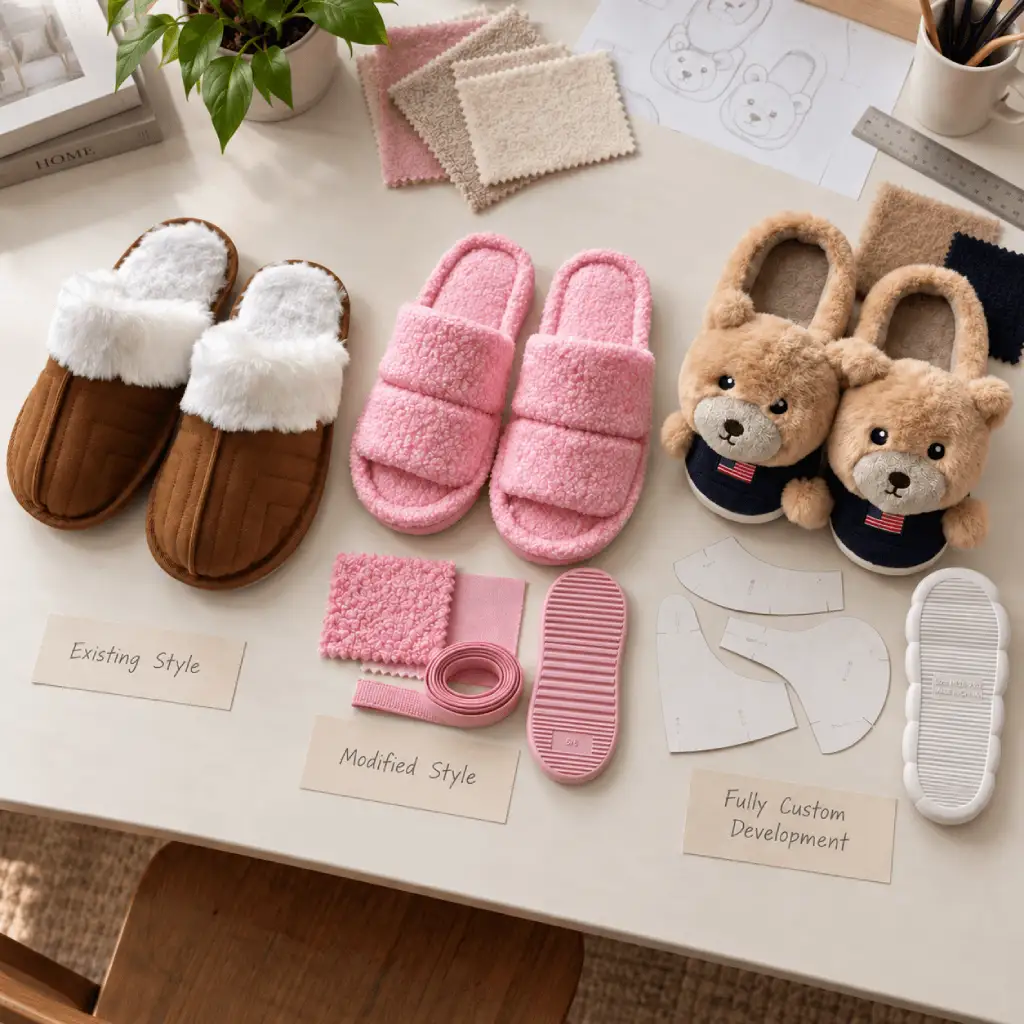
| What is standard or custom? | Existing components, modified patterns, custom sourcing, setup, and tooling needs |
| How are approvals controlled? | Sample revisions, artwork, specifications, packaging, and release authority |
| Where are the schedule risks? | Material lead time, tooling, revisions, tests, quantity, packaging, and production plan |
UTOP has nearly 15 years of indoor slipper development and export experience. Sample development commonly takes about 7–14 days, and bulk production commonly takes about 30–45 days after sample approval and order confirmation. Actual timing depends on materials, tooling, revisions, testing, branding, packaging, quantity, and the confirmed production schedule.
Buyers looking for a closed toe slippers supplier can review UTOP’s manufacturing background and current custom slipper product directions before sending a project brief.
11. Frequently Asked Questions About Closed Toe Slippers
What are closed toe slippers?
They are slippers that cover the toes and forefoot. The heel may still be open, partially enclosed, fully enclosed, or extended into a boot shaft.
Which materials are used for closed toe house slippers?
Possible upper directions include plush, fleece-type fabrics, sherpa-style fabric, faux suede, corduroy, velvet, jersey, knit, polyester felt, and wool felt. The exact material should be chosen with the construction, lining, fit, logo, target season, price direction, and packing method.
Are closed toe slippers suitable for winter collections?
They are often used in autumn and winter programs because they provide more front coverage. Actual warmth depends on the complete upper, lining, cushioning, outsole, and overall construction rather than toe coverage alone.
Can closed toe slippers be customized for private label orders?
Yes. Depending on feasibility, private label closed toe slippers may use custom materials, colors, size ranges, embroidery, labels, footbed branding, outsole detail, hangtags, inserts, and retail packaging. Molded outsole logos or tread changes may require tooling.
Which outsole is best for closed toe indoor slippers?
There is no universal best outsole. Molded TPR, cut EVA, and other suitable bottom structures should be compared by the complete specification, intended use, weight, thickness, hardness or density, tread, attachment method, price, and required testing.
What should buyers check before approving a sample?
Review the silhouette, toe shape, opening, heel, fit, size progression, materials, lining, cushioning, workmanship, outsole, branding, pair consistency, packaging, and recovery after packing. Keep the approved sample and current written specification as bulk references.
What information is needed for a wholesale quotation?
Send the product reference, target market, estimated quantity, colors, size range and ratio, materials, outsole direction, logo file, packaging, destination, testing or inspection needs, and requested schedule.
Final takeaway: use this closed toe slippers buyer’s guide to approve the product as one connected system. Toe shape, lining volume, cushioning, outsole, size grading, branding, packaging, and production controls all influence the finished pair.
Planning custom closed toe slippers for a wholesale or private label program? Send UTOP your product reference and project requirements for a practical development review.