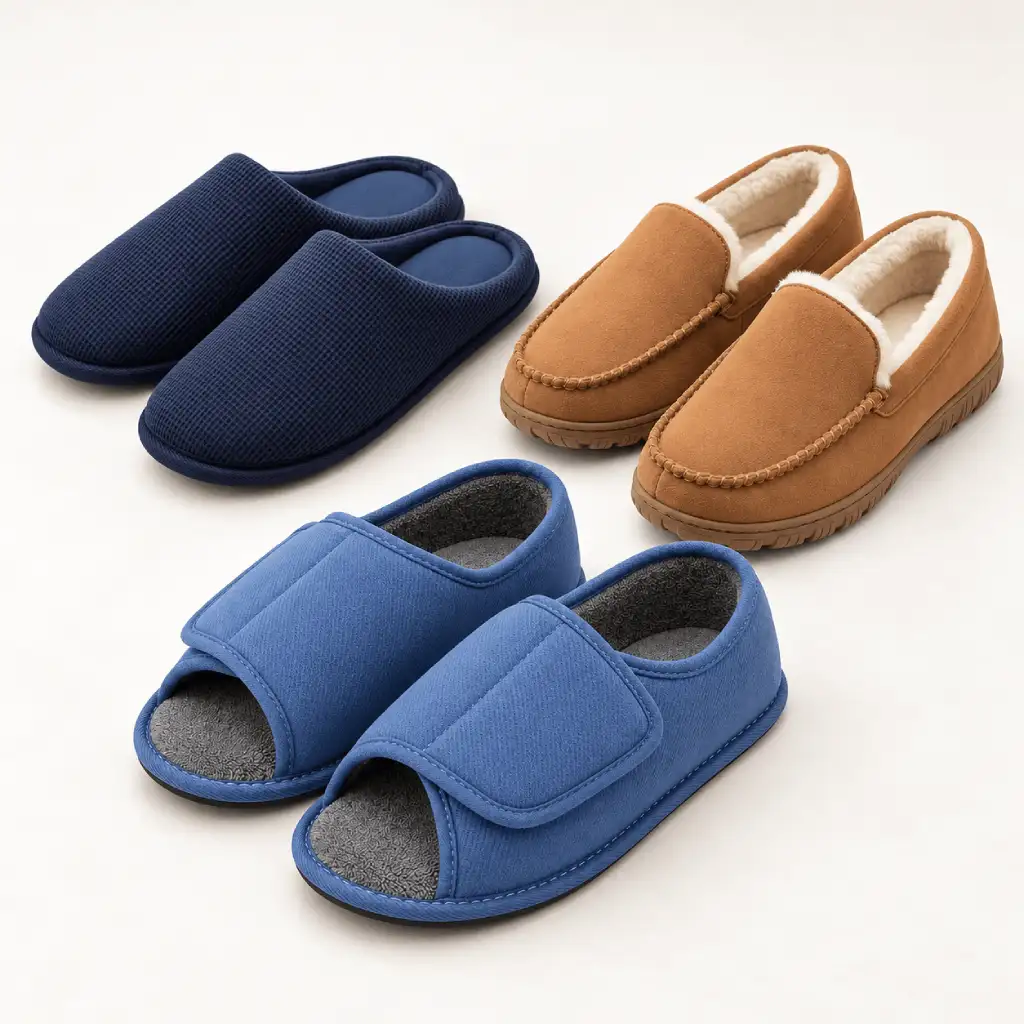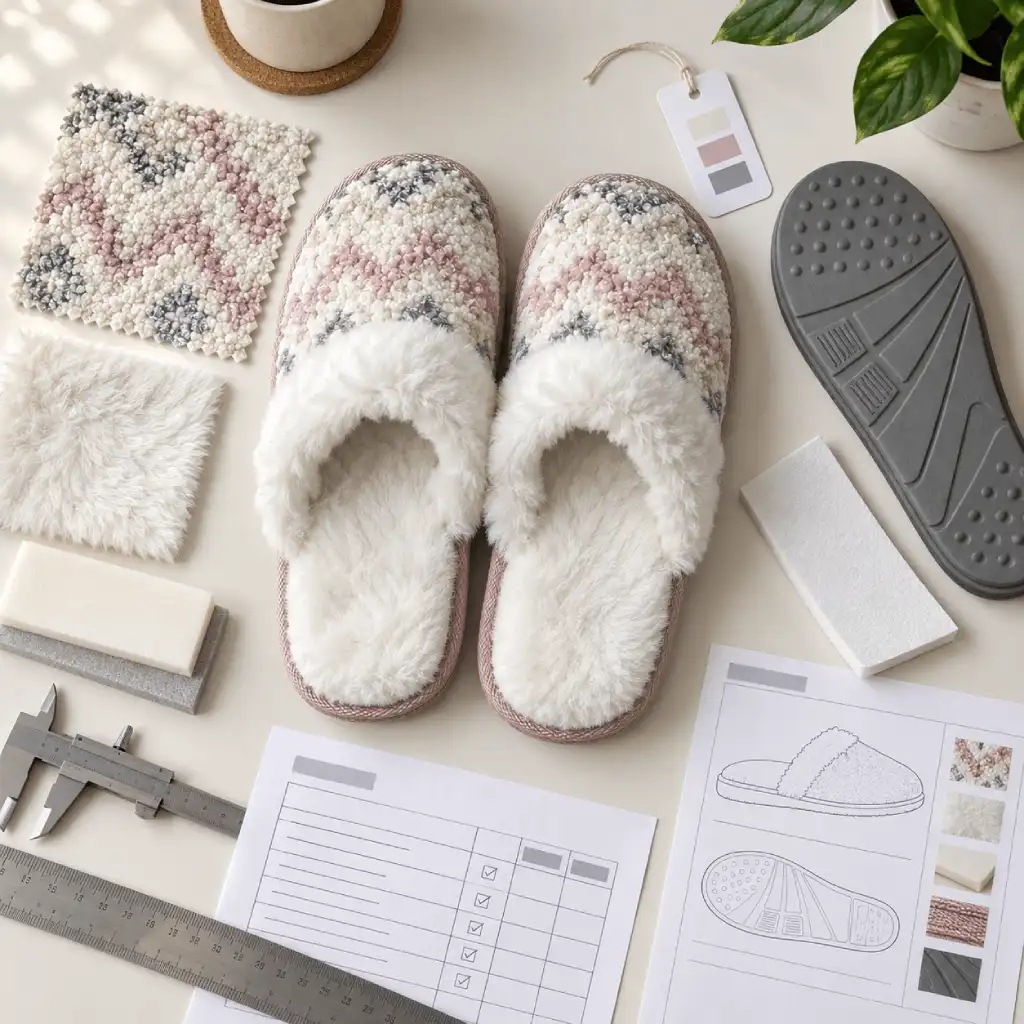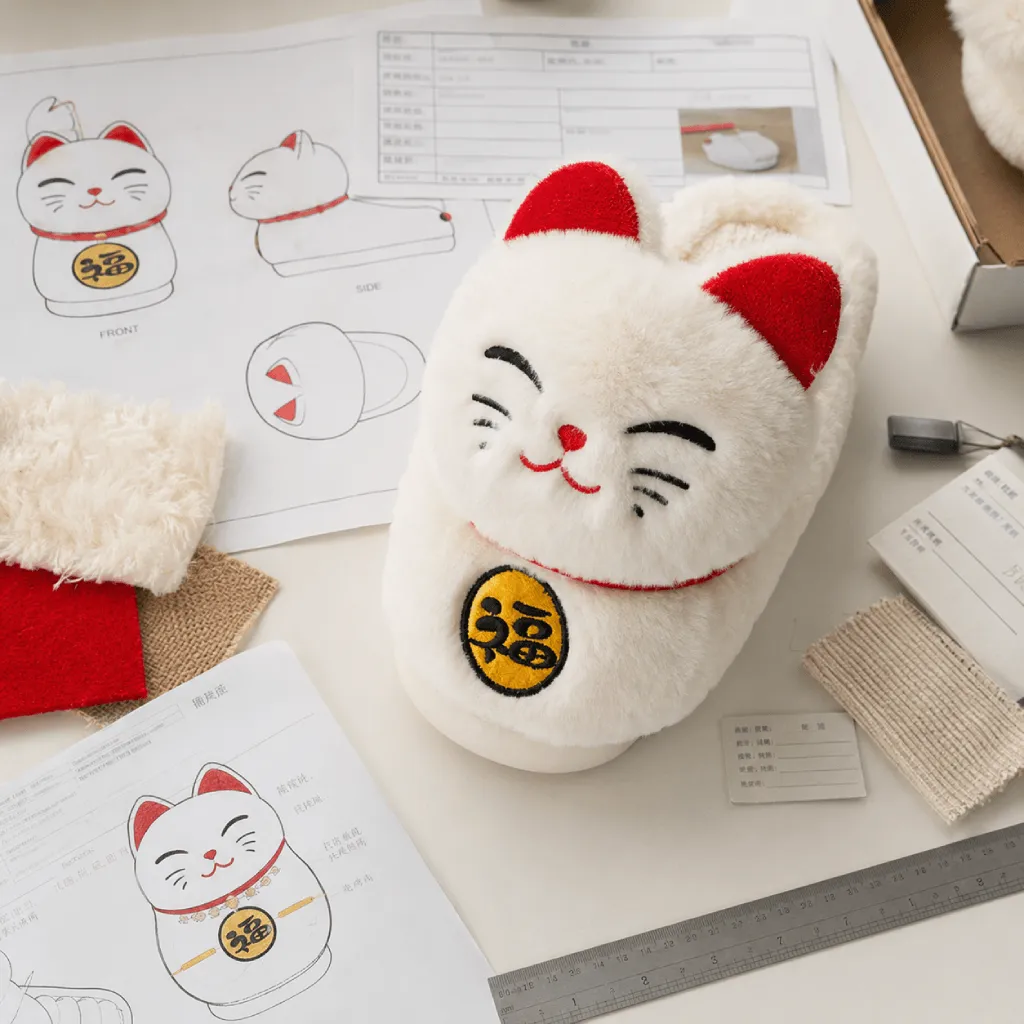
The footwear development process for a custom indoor slipper turns a product idea into a controlled, production-ready reference. It connects the buyer’s commercial brief with materials, construction, sizing, branding, packaging, sample reviews, and the final approval used for bulk production.
A sample can look attractive and still be incomplete. If the lining reduces internal space, the outsole does not match the intended construction, the logo loses clarity on the selected fabric, or the packaging compresses the upper, the product may need another development round before it is ready to scale.
This guide explains a practical custom indoor slipper development process for brands, importers, wholesalers, retailers, and sourcing teams—from the first product brief to the approved sample and production handoff.
Buyer takeaway: approve one connected product system, not a collection of separate choices. The current sample, specification, material references, size data, artwork, packaging, and approval comments should all describe the same revision.
This article focuses on product development and sample approval. It does not replace the detailed cutting, stitching, assembly, finishing, inspection, and packing controls required during bulk manufacturing. For the wider sourcing and production sequence, see UTOP’s Private Label Indoor Slippers Manufacturing Guide.
Written by the UTOP Slippers Sourcing Team, with product-development, sampling, production, and quality-control input from our indoor slipper manufacturing team.
1. What the Footwear Development Process Must Achieve
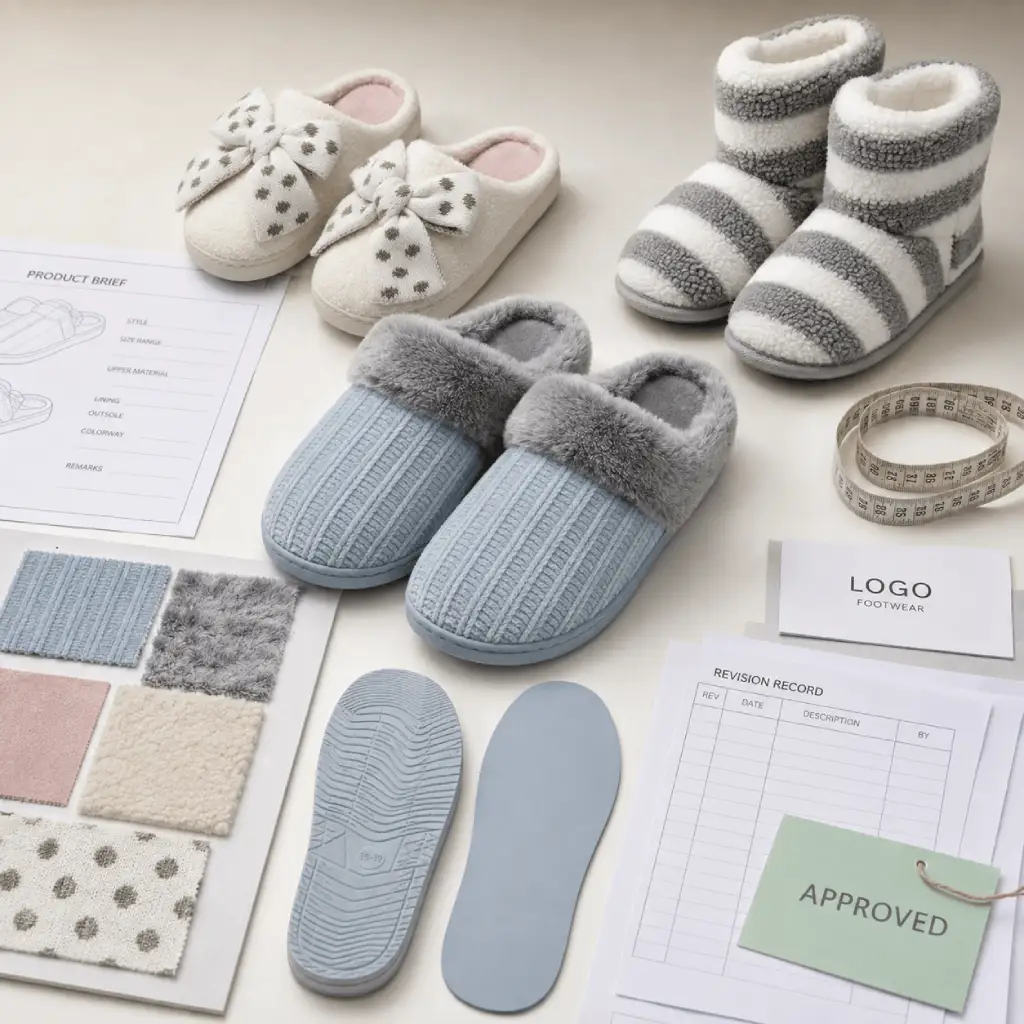
A useful footwear development process does more than produce one presentable prototype. It should define a slipper that suits the target market, can be quoted on a clear specification, can be reviewed against objective references, and can be repeated across the approved sizes, colors, branding, and packaging.
Buyers may also describe this lifecycle as the shoe development process or the footwear product development process. In this guide, all three expressions refer to the controlled work completed before a custom indoor slipper is released to bulk manufacturing.
Development and manufacturing are connected but not identical. Development decides what the product is and creates the controlled references. Manufacturing converts those approved references into a bulk order through material preparation, cutting, sewing, assembly, finishing, inspection, and packing.
| Development stage | Main decision | Useful output |
|---|---|---|
| 1. Product brief | Who the slipper is for and what the program must achieve | Commercial and product requirements |
| 2. Feasibility | Which design route, components, and tooling are practical | Feasibility comments and quotation assumptions |
| 3. Specification | Which materials, measurements, construction, and details define the product | Current tech pack or product specification |
| 4. First sample | Whether the proposed specification works as a physical slipper | Identifiable development sample |
| 5. Evaluation | What passes, what fails, and what must change | Measured and visual review record |
| 6. Revision | How approved comments are translated into the next version | Revision log and replacement sample |
| 7. Commercial details | How branding, labels, packaging, and market requirements apply | Approved artwork and packed sample references |
| 8. Final approval | Whether all controlled elements are ready for production handoff | Approved sample and current production package |
The approved sample is not the only reference
A physical pair cannot reliably carry every material identity, dimension, tolerance, artwork file, barcode, color standard, test requirement, and packing instruction. The approved sample must remain linked to the current written and digital records.
This distinction also prevents overlap with UTOP’s Custom Slipper Development Services page. The service page explains how buyers can work with UTOP; this article explains the decisions and controls within the footwear product development process.
2. Stage 1: Build the Product Brief Before Sampling
The first stage of a custom slipper development process is not choosing a fabric swatch. It is defining the business and product context that will guide every later decision. A supermarket winter promotion, a private-label homewear collection, a hotel program, and an online gift range may need different specifications even when the reference images look similar.
| Brief area | Information to provide | Why it affects development |
|---|---|---|
| Market and channel | Destination, sales channel, season, wearer, and retail position | Guides styling, labels, packaging, sizing, and review requirements |
| Product direction | Reference images, existing sample, drawing, product link, or original concept | Shows the intended silhouette, materials, construction, and visual priorities |
| Commercial plan | Estimated quantity, colors, size range, size ratio, target price direction, and delivery window | Influences sourcing, tooling, order structure, quotation, and schedule |
| Brand assets | Vector logo, colors, label copy, packaging direction, and barcode data when available | Allows the application method and artwork scale to be checked on the real product |
| Performance and compliance | Intended conditions of use, retailer manual, required tests, restricted substances, inspection scope, and acceptance criteria | Prevents testing or market requirements from appearing after the product is already fixed |
Separate priorities from preferences
Identify which requirements cannot change and which can be adjusted during development. A required target size range, licensed color, retailer barcode format, or destination-market test may be fixed. A specific plush pile, foam combination, decorative method, or packaging structure may be open to a practical alternative.
Fixed requirements
State the items that control brand identity, legal or retailer obligations, fit, delivery, or product positioning.
Development variables
Allow the factory to compare feasible materials, constructions, existing outsoles, logo methods, and packing options.
A buyer does not need a perfect tech pack before the first conversation. However, information should become more controlled as the project progresses. UTOP’s Shoe Tech Pack Guide explains the sections that help turn an early brief into usable production instructions.
3. Stage 2: Review Feasibility and Choose a Development Route
Feasibility review connects design intent with real materials, component availability, construction, tooling, quantity, target cost, and schedule. The purpose is not to reduce every idea to a standard slipper. It is to identify which details can be retained, which need development work, and which require an alternative before time is spent on a shoe prototype development route that cannot scale.
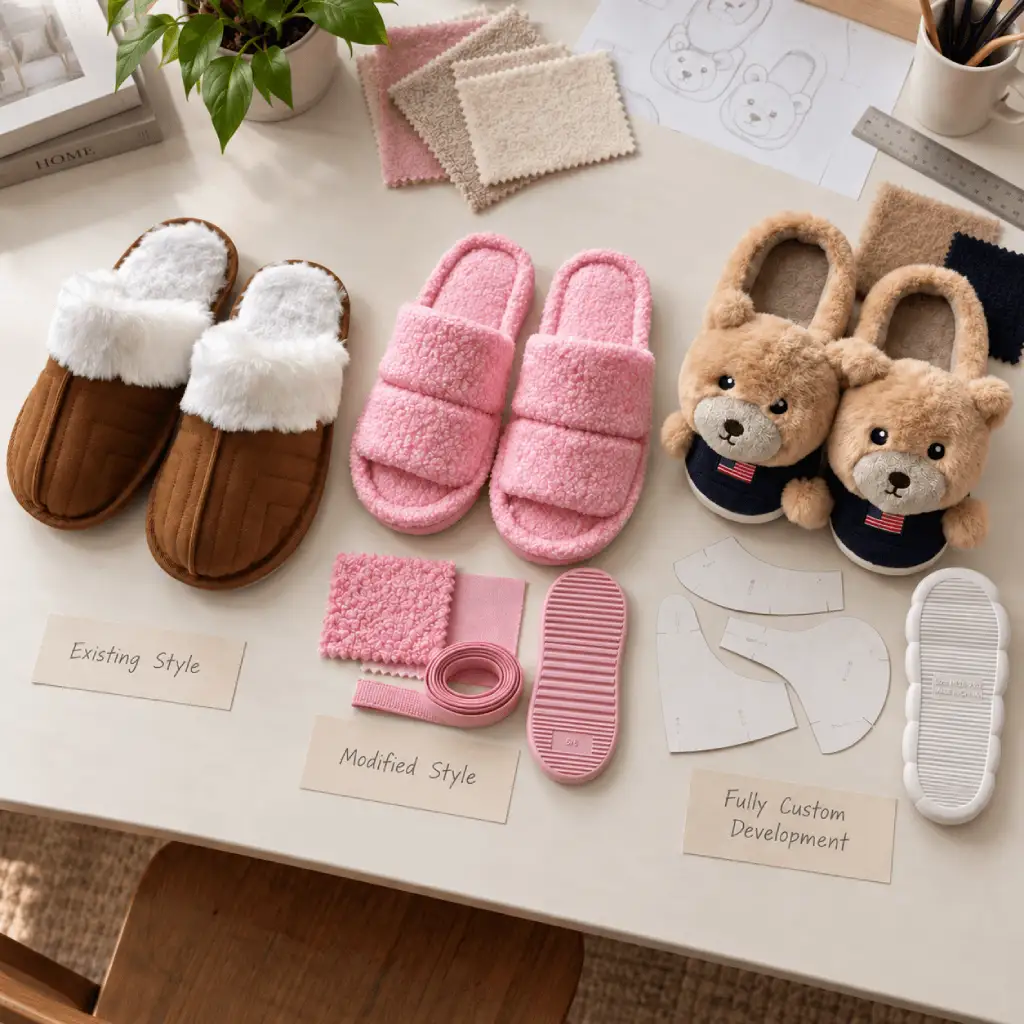
| Development route | Suitable starting point | Typical review focus |
|---|---|---|
| Adapt an existing style | A UTOP product is close to the required shape and construction | Materials, colors, branding, sizing, outsole, and packaging changes |
| Develop from a reference | The buyer supplies a physical sample, image set, or comparable product | Which features are functional references and which must be redesigned or respecified |
| Develop from a tech pack | The buyer has controlled drawings, dimensions, materials, and artwork | Manufacturability, missing instructions, material equivalents, tolerances, and sample method |
| Original concept development | A new silhouette, component combination, or visual direction is required | Pattern work, component trials, custom tooling, risk, iteration, and intellectual-property boundaries |
Review component and tooling implications early
An available molded TPR outsole may reduce development work when its shape, size range, tread, and sidewall fit the design. A proprietary outsole shape, logo, or tread normally requires a suitable mold and should be discussed with the expected sizes and quantities. Cut EVA offers a different development route, with its own material, thickness, shape, surface, and attachment decisions.
Complex embroidery, printed artwork, patches, bows, ears, or other decorations also need a stable application area and an approval method. High-pile fabrics can hide fine details; stretch materials can distort placement; a decoration that looks correct on a flat panel may change after the upper is sewn and shaped.
A feasibility answer should show its assumptions
A quotation based on an existing outsole, standard packing, and an available fabric is not equivalent to a quotation based on custom tooling, exclusive material development, and retail-ready packaging. Record the assumed components and approval scope before comparing prices.
Buyers can use UTOP’s custom indoor slipper range to identify a practical starting style. When the project direction is ready for factory review, the custom slipper development service page explains the information UTOP uses to evaluate an OEM/ODM request.
4. Stage 3: Specify Materials, Construction, and Outsole
Once the development route is agreed, the product must move from broad descriptions to identifiable components. “Soft upper,” “memory foam,” and “non-slip sole” are design intentions, not complete footwear specifications. The sample team needs to know which material, layer, dimension, construction, color reference, and approval point applies.
| Product area | Details to define | Interaction to check |
|---|---|---|
| Upper and lining | Material identity, composition when required, weight or thickness, backing, stretch, pile, color, and surface direction | Shape, sewing stability, internal volume, logo clarity, and packing recovery |
| Cushioning and footbed | Cover, foam type, layer sequence, thickness or weight where specified, support layer, and lamination | Fit, compression, feel, edge shape, and consistency across sizes |
| Outsole | Actual material type, production method, thickness, weight, hardness or density direction, dimensions, tread, color, and tooling | Flex position, floor contact, appearance, size grouping, attachment, and required testing |
| Construction | Pattern, seam allowance, reinforcement, binding, thread, welt stitching, side stitching, cold gluing, or another confirmed method | Component compatibility, shape, flex, attachment area, and visible workmanship |
| Trims and decoration | Artwork, dimensions, material, color, placement, orientation, backing, and attachment method | Readability, comfort, seam position, size grading, safety requirements, and bulk consistency |
Treat the outsole and attachment as one decision
UTOP commonly works with molded TPR and cut EVA directions for indoor slippers. Molded TPR can provide a defined outsole profile, sidewall, and tread direction. Cut EVA is often used for lightweight and flexible constructions. Neither material name alone proves grip, abrasion resistance, durability, cost, or suitability.
At UTOP, welt-stitched constructions can commonly be developed with TPR or EVA bottoms. Side-stitched styles commonly use a molded TPR outsole with a suitable sidewall. Cold-glued styles commonly use cut EVA; TPR can also be cold glued when the surface treatment, adhesive, pressing, and process conditions match the construction. The finished sample—not a general material rule—must confirm the actual combination.
Specification rule: name jersey knit and wool felt accurately; distinguish cut, molded, and injected EVA; and distinguish welt-stitched, side-stitched, cold-glued, and injection-molded constructions. Similar appearance does not make these materials or processes interchangeable.
For outsole selection, use UTOP’s TPR vs. EVA Sole Guide. If measurable grip is important, the Slip-Resistant Outsole Guide explains why tread, formulation, surface, condition, and test method must be reviewed together. Foam and footbed decisions are covered in the Memory Foam Slippers Buyer’s Guide.
5. Stage 4: Develop the First Slipper Sample
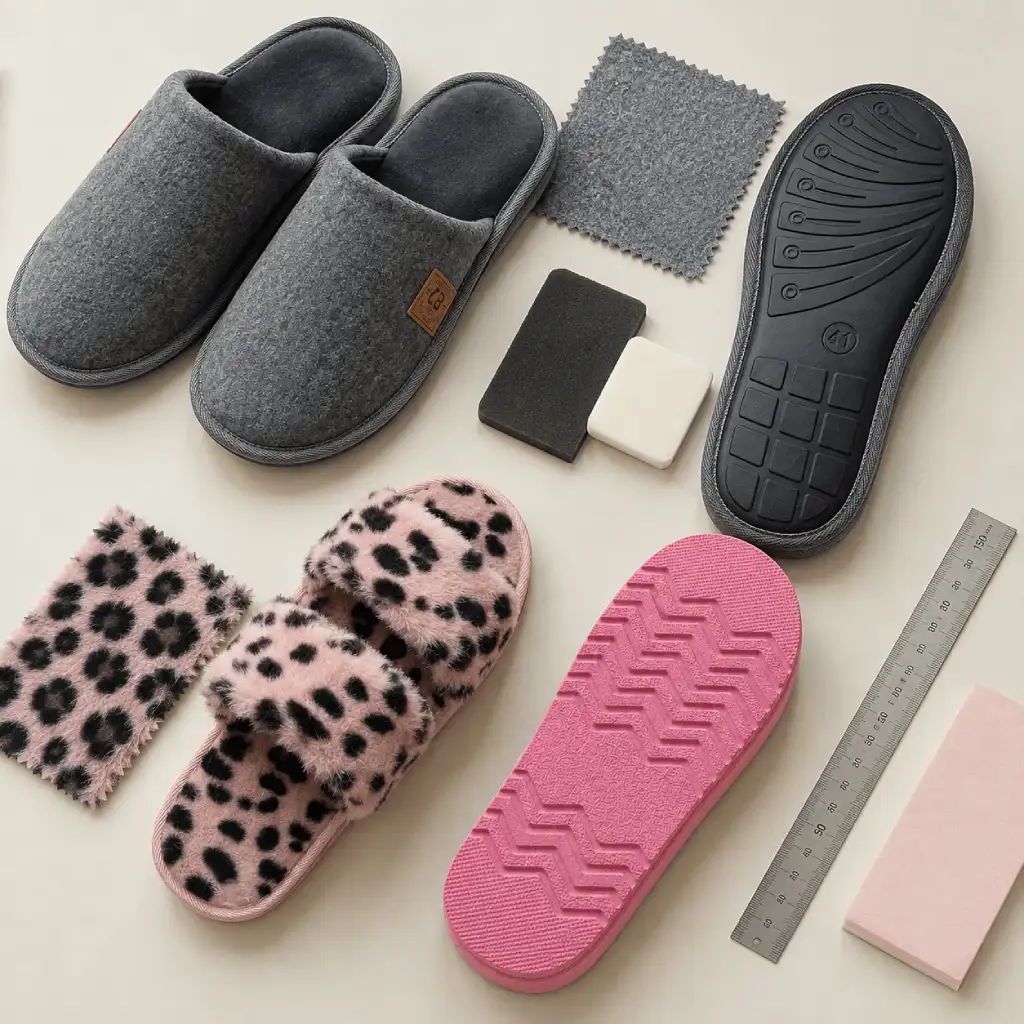
The first physical sample tests whether the current specification can become a coherent product. During slipper sample development, the sample team combines the upper pattern, lining, cushioning, outsole, construction, branding, and target size into one pair that can be reviewed.
The first sample should not be treated as an automatic production standard. Its role depends on what the project is trying to learn. One project may need an early shape sample; another may need a material and color sample; a third may require a more complete fitting or packaging sample.
| Sample purpose | What it may confirm | What may remain open |
|---|---|---|
| Concept or shape sample | Silhouette, proportions, pattern direction, and basic construction | Final material, color, logo, packaging, and size range |
| Development sample | Current materials, component combination, workmanship, and design execution | Revisions identified during review |
| Fitting or size-set sample | Inside space, foot position, size mapping, grade, and selected edge sizes | Commercial artwork or packaging if reviewed separately |
| Approval or pre-production reference | The final approved product direction and current production package | Only items explicitly recorded as pending |
Sample names vary between buyers and suppliers. Avoid approving a label such as “sales sample,” “fit sample,” or “pre-production sample” without defining its purpose. Record the style, color, size, sample version, date, material status, and which requirements it is intended to confirm.
Before the sample is shipped
- Confirm that the sample can be identified against the current specification.
- List every temporary or substitute material and explain what it may change.
- Photograph the pair, outsole, labels, and important details before dispatch.
- State the review purpose and the comments needed from the buyer.
- Do not call the sample production ready while unresolved items remain.
The same discipline applies whether the buyer begins with an existing UTOP product, a reference pair, or an original design. A traceable sample makes the next stage of the shoe sampling process faster because the reviewer knows what the pair represents and which decisions are still open.
6. Stage 5: Review Fit, Sizing, Comfort, and Function
A useful sample review separates appearance from fit and function. A well-presented pair can still have insufficient toe room, excessive heel movement, an unstable opening, incorrect size mapping, an unnatural flex point, or an outsole that does not sit flat.
Record fit observations, not only “approved” or “too small”
Identify the sample size, intended foot-length range, tester information relevant to fit, socks used, and the conditions of the review. Record toe space, heel position, width, instep, opening, footbed position, and walking security. Thick plush, fleece, or foam can reduce usable space even when the external dimensions remain unchanged.
| Review area | Useful checks | Evidence to retain |
|---|---|---|
| Size identity | Label system, intended foot range, inside length, outsole size, and sample size | Size map and named measurement method |
| Fit and movement | Toe room, heel position, width, instep, opening, foot retention, and normal walking | Fitting comments tied to an identifiable sample |
| Cushioning and feel | Layer position, hard spots, unevenness, compression, recovery direction, and effect on fit | Approved layer record and comparison pair |
| Outsole and attachment | Flatness, dimensions, left-right match, tread, flex location, alignment, stitching, or bonding | Outsole reference, measurements, photos, and sample |
| Appearance and workmanship | Shape, symmetry, seams, binding, pile direction, shade, cleanliness, logo, and decoration | Approved visual references and defect limits |
Do not convert EU, US, UK, or brand sizes by label alone. ISO 19407:2023 provides conversion guidance across major footwear sizing systems, but the finished slipper still needs a product-specific size map and fit review. UTOP’s Slipper Size Chart and Fit Guide explains inside length, size grading, and bulk size-ratio planning in more detail.
Visual checks do not prove performance
Hand flexing, walking, and visual inspection can identify obvious problems and support comparison with an approved sample. They do not prove slip resistance, abrasion resistance, chemical compliance, washability, or long-term durability. Define the applicable test method, conditions, sample, and acceptance requirement when measurable performance matters.
If the size range, outsole groups, lining volume, or pattern is new, review representative size-set or fitting samples rather than approving only one middle size. A grading problem may appear at the smallest or largest size even when the central sample looks correct.
7. Stage 6: Control Sample Revisions and Version History
Most custom developments require some adjustment. The risk is not the existence of revisions; it is losing control of which comment, file, component, or sample is current. A disciplined shoe sample development process converts buyer feedback into a numbered change record and checks how each change affects the rest of the product.
Write comments as decisions
“Make it softer,” “improve the fit,” or “logo too small” may identify a concern but not the required result. A useful comment names the sample version, location, current condition, requested change, reference, responsible party, and approval status.
| Revision record | Example of useful information | Related check |
|---|---|---|
| Sample identity | Style, color, size, version, date, and photographs | Prevents comments being applied to the wrong pair |
| Observation | Exact location, measurement, appearance, or fit result | Separates evidence from preference |
| Required change | New dimension, material, placement, construction, artwork, or approved reference | Makes the instruction reproducible |
| Impact review | Fit, size grade, cost, tooling, packaging, test, and schedule implications | Prevents one correction from creating another problem |
| Status and authority | Open, accepted, rejected, replaced, or approved; person authorized to decide | Creates one source of truth |
Recheck connected components after a change
- A thicker lining can reduce toe, width, and instep space.
- A different foam stack can change foot position and upper contact.
- A revised outsole can affect pattern dimensions, flex, attachment, weight, and packing.
- A larger logo can cross a seam or become inconsistent on smaller sizes.
- A tighter package can compress pile, cushioning, bows, ears, or the upper opening.
Version-control rule: when a later sample is accepted, state which earlier sample, drawing, artwork, comment sheet, or material reference it replaces. Never leave two conflicting “approved” versions active.
Photographs help identify a revision but do not replace the physical sample or measurable specification. Keep close-up images, marked drawings, material references, and written comments together so the factory and buyer can review the same evidence.
8. Stage 7: Approve Branding, Packaging, and Market Requirements
Branding and packaging are part of the product, not administrative details to add after the slipper is approved. Embroidery, woven or printed labels, insole artwork, hangtags, retail packaging, size stickers, barcodes, and carton marks all need current files, defined placement, and physical review where appropriate.
| Approval area | What to confirm | Common development risk |
|---|---|---|
| Logo application | Method, artwork version, dimensions, color, location, backing, and size-grade rule | Fine detail disappears in pile, stretches, crosses a seam, or changes scale |
| Product labels | Brand, size, color, composition or material information, care, origin, and required wording | Incorrect data, unreadable placement, discomfort, or mismatch with packaging |
| Individual packaging | Bag, band, hanger, insert, pouch, display pack, or box; dimensions; artwork; product orientation | Compression, abrasion, distorted decorations, hidden labels, or poor shelf presentation |
| SKU and logistics data | Barcode, style, color, size, assortment, pairs per carton, carton marks, and routing labels | One correct pair is connected to the wrong commercial identity |
| Market requirements | Destination, product category, wearer, applicable labels, tests, documents, retailer rules, and responsible party | A requirement is discovered after materials, artwork, or production are committed |
Raised decorations should be approved on the actual slipper upper rather than as loose components alone. During slipper sample development, buyers should review the decoration’s shape, position, bead alignment, attachment, left-right consistency, and appearance after packing.
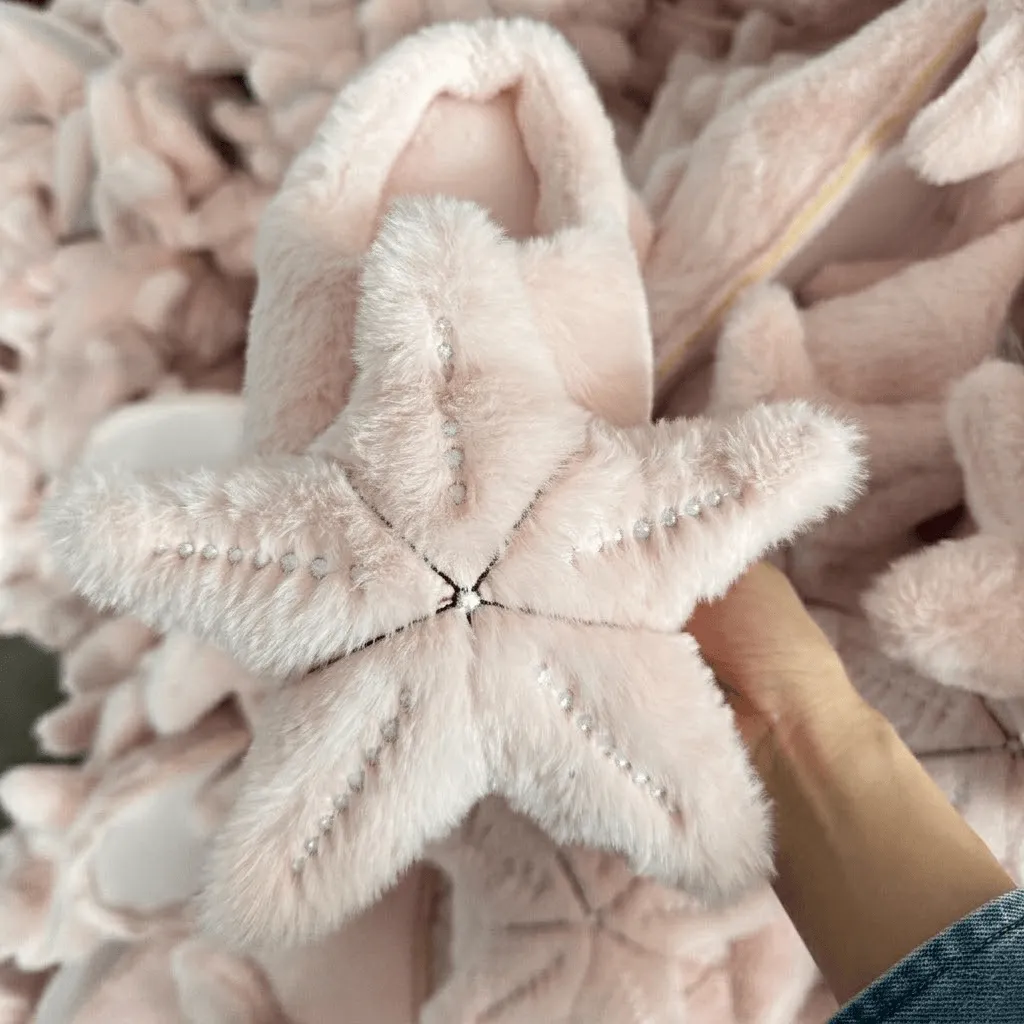
Approval boundary: A visual sample can confirm appearance and placement, but it does not prove long-term attachment strength. Any measurable durability requirement should use an agreed method, sample condition, and acceptance criterion.
For EU programs, the official Your Europe footwear labelling guidance explains the material information required for the upper, lining and insole, and outer sole. Buyers should also confirm any country, retailer, environmental, chemical, or product-specific requirements that apply to their program.
Children’s products require particular care because obligations depend on the product, age group, component, destination, and applicable rule. For U.S. programs, the U.S. Consumer Product Safety Commission’s Children’s Product Certificate guidance provides an official starting point for certification responsibilities. The buyer or importer should identify the applicable rules and required evidence rather than assuming that one generic test covers every children’s slipper.
Approve the packed product
Artwork approval confirms the file; a packed sample confirms how the physical slipper fits, recovers, presents, and carries its labels. Both may be necessary before the final quotation and production release.
UTOP’s Footwear Packaging Guide covers individual packs, shoe boxes, labels, barcodes, pack ratios, cartons, and approval checks for private-label slipper orders.
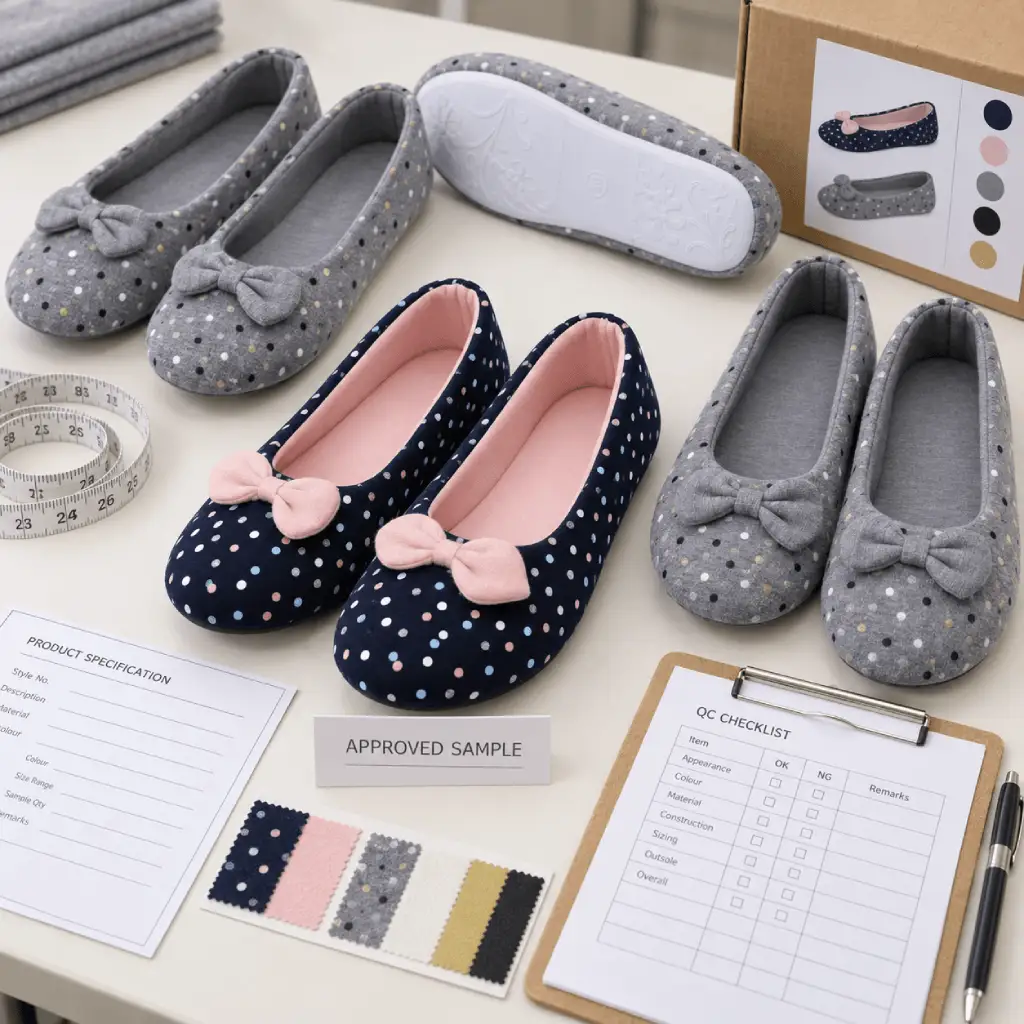
9. Stage 8: Approve the Final Sample and Production Handoff
Slipper sample approval is the point at which the authorized buyer confirms that the identified sample and its supporting records represent the required production direction. It should close the development loop; it should not hide unresolved materials, sizing, artwork, testing, or packaging decisions.
| Approval element | Minimum control | Production use |
|---|---|---|
| Physical slipper | Style, color, size, version, date, status, and approved pair identification | Visual, construction, workmanship, and comparison reference |
| Product specification | Current materials, components, construction, dimensions, tolerances, and revision | Purchasing, production, measurement, and inspection instructions |
| Size and fit record | Size map, measurement method, grade, fitting result, and approved range | Pattern, outsole, labels, pairing, and size control |
| Material and color references | Approved swatches, components, color standards, substitute status, and supplier information as applicable | Material preparation and incoming comparison |
| Artwork and packaging | Final files, placement, labels, barcode data, packed sample, assortment, and carton instructions | Branding, packing, SKU control, and logistics |
| Quality and test plan | Inspection stages, defect criteria, sample or 100% scope, tests, reports, and release authority | Production control, final inspection, and shipment decision |
Testing requirements should be defined before final sample approval rather than added after production begins. Our guide to building a custom slipper testing plan explains how to organize test items, sample stages, acceptance criteria, reports, and the connection between tested samples and bulk production.
Approve with clear status language
Possible decisions include approved, approved with listed conditions, revised sample required, or rejected. If a condition remains open, state who will close it, what evidence is required, and whether production can begin before closure. Silence should not be interpreted as approval.
Production-handoff rule: the approved pair, current specification, final artwork, size data, packaging instructions, inspection requirements, and open-item list must be issued as one controlled package. Remove obsolete versions from active use.
Final shoe sample approval does not eliminate production variation or replace quality control. It creates the reference against which materials, in-process work, finished pairs, and packaging can be checked. UTOP’s Footwear Quality Control Guide explains how approved references continue into material inspection, in-process checks, final inspection, and nonconformity response.
10. Development Timeline, Responsibilities, and Common Delays
UTOP’s usual custom slipper projects require about 7–14 days for sample development. This is a working range, not a guaranteed duration for every design. Material preparation, outsole tooling, sample revisions, testing, size-set requirements, complex branding, and packaging development can extend the schedule.
After the necessary samples and approvals are complete, bulk production usually takes about 30–45 days. Actual production timing depends on material readiness, tooling, order quantity, color and size breakdown, branding, packaging, inspection requirements, and the confirmed production plan.
| Activity | Buyer responsibility | Factory responsibility |
|---|---|---|
| Brief and priorities | Define market, channel, target user, quantity, brand requirements, required tests, and decision authority | Identify missing information and translate the brief into development questions |
| Feasibility and quotation | Confirm acceptable alternatives, target direction, and commercial assumptions | Review materials, construction, components, tooling, quantity, and schedule |
| Sampling | Provide current artwork and references; review the sample against agreed criteria | Build, identify, precheck, document, and dispatch the requested sample |
| Revision and approval | Return consolidated comments and make timely authorized decisions | Assess impact, update records, produce the revision, and close open points |
| Production handoff | Approve the final sample, specification, artwork, packing, tests, and release conditions | Issue one current production package and plan controls against it |
Common causes of avoidable delay
- Quotations begin before material, outsole, branding, packaging, or quantity assumptions are aligned.
- Different reviewers send conflicting sample comments through separate channels.
- A material or component changes without repeating fit, artwork, packing, or test checks.
- Logo and packaging files arrive after the physical product is otherwise approved.
- Size grading or edge sizes are reviewed only after bulk materials are prepared.
- Destination-market or retailer requirements are introduced near production release.
- An obsolete sample or tech-pack revision remains in circulation.
Plan approvals backward from the required delivery date
Separate time for brief review, material sourcing, tooling, sample making, transport, buyer review, revisions, tests, artwork, packaging, order confirmation, production, inspection, and shipment. A sample-making date alone is not a complete launch schedule.
11. Buyer’s Custom Slipper Development Checklist
Use this checklist before requesting the first sample and again before final approval. Not every project needs the same level of documentation, but every applicable decision should have a current owner, reference, and status.
| Checklist area | Confirm before sampling | Confirm before production |
|---|---|---|
| Market and product | Destination, channel, wearer, season, intended use, retail position, and reference direction | Final style identity and approved commercial positioning |
| Order plan | Estimated quantity, colors, size range, size ratio, delivery target, and quotation assumptions | Purchase order, variant quantities, confirmed schedule, and shipment terms |
| Materials and construction | Upper, lining, cushioning, footbed, outsole, trims, pattern, seams, and attachment direction | Current specification, approved swatches or components, and final construction reference |
| Fit and sizing | Size system, intended foot range, inside-length method, fit direction, and sample coverage | Approved size map, grade, fitting or size-set result, labels, and bulk ratio |
| Branding and artwork | Logo file, method, color, approximate placement, label content, and ownership approval | Final artwork version, physical application, scale, placement, and SKU consistency |
| Packaging and logistics | Individual pack, retail presentation, barcode, carton direction, and warehouse or retailer rules | Approved packed sample, final dielines, labels, assortment, carton quantity, and marks |
| Compliance and testing | Applicable market, product, age, material, performance, and retailer requirements | Required tests, reports, documents, acceptance criteria, and responsible parties |
| Approval and QC | Sample types, comment format, reviewer, decision authority, and expected inspection scope | Approved sample package, defect criteria, inspection plan, reporting, and release authority |
Before sending an RFQ
If some details are unknown, label them as open rather than allowing each supplier to make a different silent assumption. A comparable quotation needs the same product, packaging, inspection, and commercial scope.
For a wider order-planning checklist covering materials, sizing, logos, packaging, inspection, quantity, and delivery, use UTOP’s Bulk House Slippers Wholesale Checklist. Buyers can also review common indoor slipper manufacturing defects when defining sample and bulk acceptance points.
12. Frequently Asked Questions About the Footwear Development Process
What is the footwear development process?
It is the controlled sequence that turns a product brief into an approved, production-ready footwear specification. For custom indoor slippers, it normally covers feasibility, materials, construction, sizing, sampling, revisions, branding, packaging, final sample approval, and production handoff.
What should a buyer send before custom slipper sample development?
Send the product reference, target market, sales channel, intended wearer, estimated quantity, colors, size range, material and outsole direction, logo file, packaging requirements, required tests or retailer standards, delivery target, and any current tech pack or reference sample.
How long does UTOP usually need to develop a slipper sample?
UTOP’s usual custom slipper samples take about 7–14 days. Material preparation, outsole tooling, revisions, testing, size-set requirements, branding complexity, and packaging development can change the actual timing.
How many sample rounds are required?
There is no universal number. The required rounds depend on the starting information, design complexity, material availability, tooling, fit, size range, branding, packaging, tests, and the clarity of buyer feedback. A close existing style may need fewer revisions than a new construction or outsole.
Is an approved sample enough for bulk production?
Not by itself. The approved physical pair should be linked to the current product specification, material and color references, size data, artwork, packaging instructions, required tests, inspection criteria, and approval status. The sample cannot carry every written requirement.
Can an existing slipper style be customized?
Yes, when the requested changes are feasible. Buyers may discuss materials, colors, lining, cushioning, size range, branding, outsole, labels, and packaging. Pattern changes, exclusive molded outsoles, custom tread, or complex decorations may require additional development or tooling.
What happens after slipper sample approval?
The approved sample package is handed to production, materials and components are prepared against current references, and the order moves through the confirmed manufacturing and quality-control plan. At UTOP, bulk production usually takes about 30–45 days after the required approvals and order confirmation, subject to the actual project.
Conclusion: Build a Production Reference, Not Just a Show Sample
A reliable footwear development process connects commercial intent with physical evidence. The buyer and factory define the brief, review feasibility, specify materials and construction, develop and evaluate samples, control revisions, approve branding and packaging, and hand one current reference package to production.
For custom indoor slippers, the best development result is not simply a pair that photographs well. It is a product whose fit, materials, construction, artwork, packaging, quality requirements, and approval status are clear enough to be repeated in a bulk order.
Planning a custom indoor slipper project?
Share your reference product or design, target market, expected quantity, size range, materials, outsole direction, logo file, packaging requirements, quality needs, and requested delivery window. UTOP can review the development information and recommend a practical sampling route.